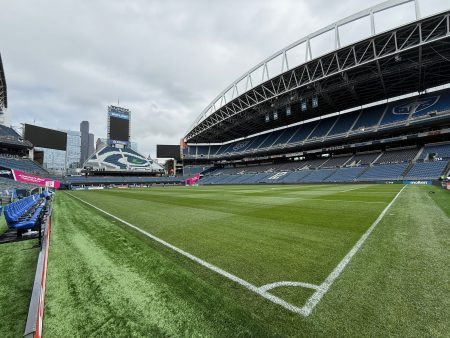



In the damp, gray winter of 1997, the sports landscape of the Pacific Northwest was on the precipice of a devastating heartbreak, as then-owner Ken Behring prepared to pack up the Seattle Seahawks and relocate them to Southern California. It was Microsoft co-founder Paul Allen who stepped forward as the ultimate civic savior, purchasing the listing franchise and anchoring them permanently to the shores of Puget Sound, an act of sheer local devotion that forever altered the trajectory of professional sports in the region. Over the next two decades, Allen poured his visionary intellect, considerable resources, and quiet passion into reshaping the Seahawks from a struggling, historically overlooked team into one of the NFL’s premier vanguard franchises. Under his stewardship, they established a culture defined by excellence, built a state-of-the-art stadium that amplified the roaring energy of their legendary fan base, the “12s,” and famously captured a historic Super Bowl championship. Following Allen’s untimely passing in 2018 at the age of sixty-five, his estate was left under the careful management of his sister, Jody Allen, with strict instructions embedded within his estate plan: his vast, multi-billion-dollar sports properties must eventually be sold, with every single penny of the net proceeds channeled back into the philanthropic foundations he loved, which fund groundbreaking research in brain science, environmental preservation, and local arts. In early 2026, hot on the heels of the team’s triumphant second Super Bowl victory, the estate officially put the franchise up for sale, initiating a transition that represents far more than a standard commercial transaction. It marks the emotional dissolution of a tech pioneer’s civic legacy, opening the door for an elite class of global investors to inherit a beloved community institution.
The financial world has taken notice of this rare offering, with economic analysts and sports business insiders projecting that the bidding for the Seahawks could culminate in a record-shattering valuation of up to $9 billion. If realized, this monumental sum would completely eclipse the previous high-water mark set by the $6 billion acquisition of the Washington Commanders in 2023, establishing a dizzying new benchmark for professional sports franchises worldwide. In the modern era, the dynamics of owning a National Football League team have undergone a radical, paradigm-shifting transformation; once considered localized vanity trophies for eccentric regional millionaires, these teams are now recognized as elite, recession-proof macro-assets. The unparalleled explosion of modern sports media rights, the legalization and integration of mobile sports wagering, steady international expansion, and massive, guaranteed long-term broadcast contracts have insulated NFL franchises from broader economic volatilities, turning them into highly coveted inflation hedges for the ultra-wealthy. Furthermore, with the NFL recently relaxing its strict ownership rules to allow institutional capital and private equity firms to acquire minority stakes, the financial playing field has expanded exponentially. This stratospheric $9 billion price tag ensures that the auction is not just a regional affair, but a high-stakes geopolitical chess game played by global billionaires, Wall Street powerhouses, and international syndicates, all competing for a scarce ticket to the most exclusive club in the world of high-concept capitalist entertainment.
Leading the pack of prospective buyers is billionaire financier Todd Boehly, a man whose public identity has become deeply intertwined with the acquisition of iconic sports brands across the globe. As the co-founder, chairman, and chief executive of Eldridge Industries, Boehly has spent his career navigating complex credit-investing spaces, a skill set he honed to perfection while helping to build the phenomenally successful credit-investing business at Guggenheim Partners. For sports fans, Boehly is a familiar and formidable presence; he currently holds substantial ownership stakes in the Los Angeles Dodgers, the Los Angeles Lakers, the WNBA’s Los Angeles Sparks, and the historic English Premier League club Chelsea FC. His approach to team management is highly analytical and deeply strategic, treating sports organizations as multi-faceted entertainment and media platforms that can be optimized through modern technology, aggressive global marketing, and intensive capital investment. While his turbulent, high-cost tenure at Chelsea FC has been a roller coaster under the constant glare of the British media, it has showcased his unwavering willingness to spend aggressively and take bold risks to build competitive rosters. His interest in the Seahawks is a natural expansion of this relentless multi-sport empire-building philosophy, proving that he views the Pacific Northwest franchise as the ultimate jewel to crown his expanding portfolio of elite financial and athletic investments.
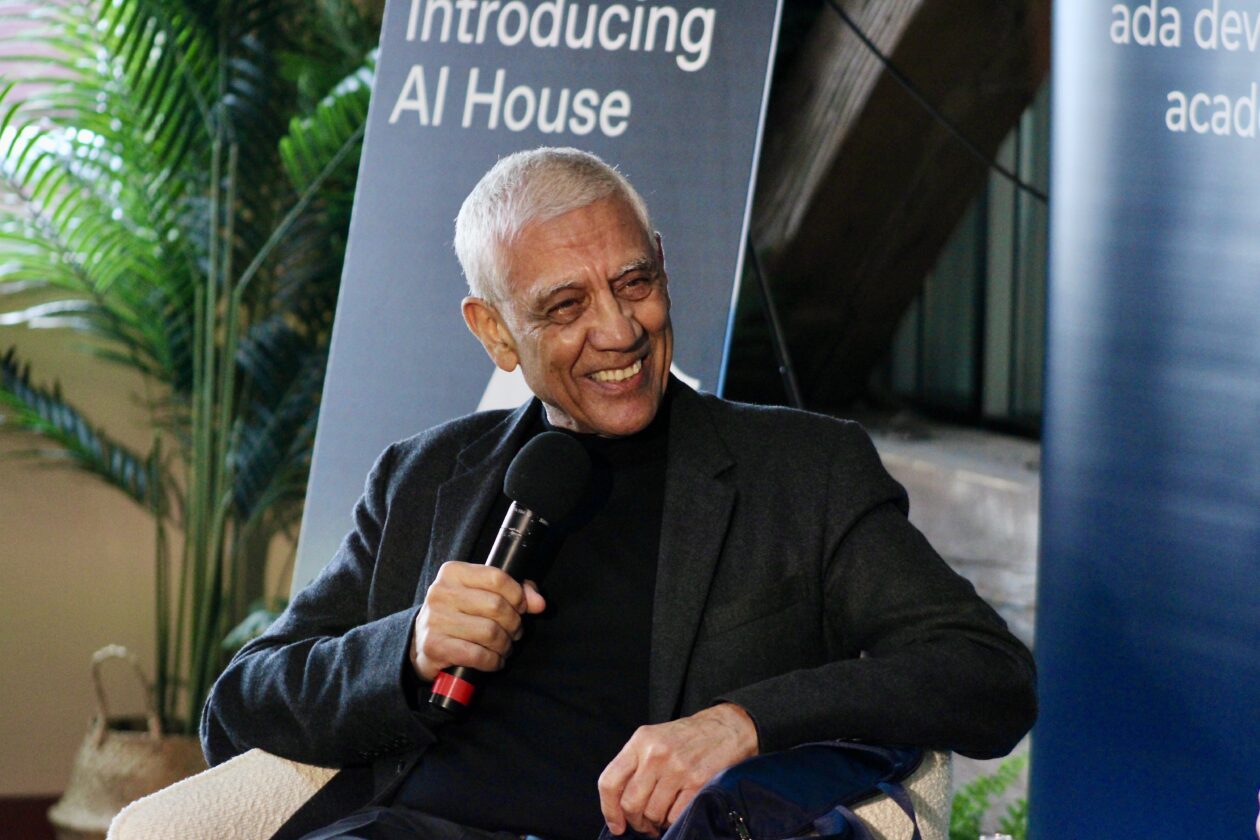
Standing as a fascinating technological counterweight to traditional Wall Street finance is Vinod Khosla, the legendary Silicon Valley venture capitalist whose career has been defined by back-to-back bets on the future of humanity. As a co-founder of Sun Microsystems and the founder of Khosla Ventures, he has spent decades identifying and nurturing disruptive technologies, serving as an early, crucial financial backer for revolutionary companies like OpenAI, DoorDash, and Stripe. Khossla’s ties to the Seattle area are already profound and active; his venture firm has consistently poured capital into the local tech ecosystem, supporting promising startups such as Loti, Mudstack, Viome, the AI2 Incubator, and Lexion, which was acquired by Bellevue-based DocuSign in 2024. During a speaking engagement in Seattle, Khosla outlined a core management philosophy that explains his interest in sports: “I have found that the person who learns faster is way better at building businesses than the person who is a deep expert.” Already boasting a minority ownership stake in the San Francisco 49ers, Khosla has reportedly submitted a formal letter of intent for the Seahawks, showing a keen interest in applying his tech-forward, agile-learning methodology to the complex ecosystem of modern football, where big data, predictive wearable technologies, and artificial intelligence are quickly becoming the new frontiers of competitive advantage on the gridiron.
The bidding pool is further enriched by other global business titans who bring drastically different, yet equally powerful, leadership styles to the equation, including steel industry heir Aditya Mittal and veteran sports executive Wyc Grousbeck. Mittal, the chief executive of ArcelorMittal—one of the world’s largest steelmaking operations—represents the hard-nosed pragmatism of traditional global heavy manufacturing, bringing decades of experience in navigating complex international trade, long-term infrastructure scaling, and massive capital management. In sharp contrast, Grousbeck, the widely respected former majority owner of the NBA’s Boston Celtics, brings the highly specialized, battle-tested expertise of direct sports franchise management. Having successfully guided the Celtics through championship runs and the complex cultural landscape of professional basketball, Grousbeck intimately understands the delicate human elements of sports ownership: how to nurture relationships with head coaches, how to draft and retain mercurial star athletes, and how to maintain the loyalty of an intense, unforgiving metropolitan fan base. The collision of these diverse personalities—spanning the steel mills of Europe, the high-tech incubators of Silicon Valley, the basketball courts of New England, and the private equity boardrooms of New York—illustrates how the Seahawks have become a magnetic focal point for the world’s most successful capitalists, each eager to prove their unique operational philosophy can lead to championship glory in America’s most popular sport.
As formal bids are set to be submitted in the coming weeks, the impending sale is bringing a profound sense of anticipation and self-reflection to the city of Seattle and its passionate, tech-driven community. For nearly thirty years, under the steady and quiet guidance of Paul Allen, the Seahawks served as a vital cultural anchor for a transforming city, mirroring its growth from a sleepy Pacific Northwest metropolis into a global epicentre of innovation, software, and electronic commerce. Instilling a sense of shared purpose, the franchise developed an incredibly unique bond with its local fan base, treating them not merely as paying ticket-holders but as active stakeholders in the team’s ongoing success. The transition from a philanthropic, legacy-driven trust to a highly aggressive, modern private ownership group represents the dawn of a challenging active era, one where the new stewards will have to walk a fine line between financial optimization and civic responsibility. As the bidding process reaches its fever-filled climax, the millions of passionate fans who wear the blue and green can only watch and hope that whoever ultimately triumphs in this historic $9 billion pursuit will recognize that the true value of the Seahawks cannot be contained on a balance sheet, but lives on in the vibrating spirit of Seattle’s streets, the thunderous roar of the stadium, and the enduring legacy of community-minded business that Paul Allen championed.