





On the historic, salt-kissed waterfront of Seattle’s Pier 70, a massive architectural transformation is mirroring a profound shift in the technological landscape. For over a decade, the AI2 Incubator operated as a quiet but potent engine for technological innovation, tucked away under the wing of the Allen Institute for Artificial Intelligence—the research house founded by Microsoft co-founder and philanthropist Paul Allen. Today, that quiet engine has fully stepped out of the shadow of its parent organization, shedding its historic name to reemerge simply and boldly as “AI House.” This rebranding is far more than a cosmetic update; it marks the organization’s complete maturation from an academic spinout into an independent, community-driven venture ecosystem. By abandoning the “AI2” moniker, the leadership team is acknowledging a new chapter in their identity, one where the physical gathering of minds and the cultivation of local talent are just as critical to company building as raw computational power or advanced research algorithms.
What began as a modest program to help deep-tech founders find their footing in the early 2010s has blossomed into a 108,000-square-foot collaborative sanctuary overlooking Elliott Bay. Opened to the public in early 2025, AI House has fast become the physical heartbeat of the Pacific Northwest’s artificial intelligence movement, welcoming over 20,000 engineers, researchers, founders, and venture capitalists through its doors in its inaugural year alone. This massive scale of engagement is the handiwork of managing director Yifan Zhang, who has worked exhaustively to forge deep public-private partnerships linking the incubator with the City of Seattle, the State of Washington, and diverse talent pipelines like the Ada Developers Academy, with crucial corporate backing from giants like Google and JPMorgan. Under this new operational model, physical proximity is treated as a non-negotiable ingredient for starting a successful business. Moving forward, every founder accepted into the incubator’s program—regardless of whether they are based in Montreal, San Diego, or New York—will be required to relocate to Seattle to work face-to-face out of AI House for at least their first month. The leadership team firmly believes that in an era dominated by distributed workforces and digital fatigue, the vital spark of innovation is still lit by serendipitous watercooler conversations and late-night, shoulder-to-shoulder troubleshooting.
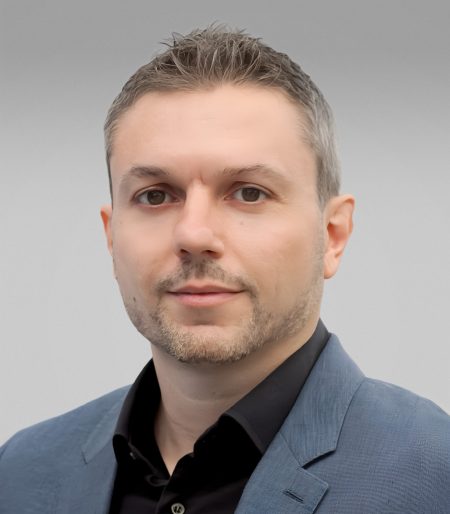
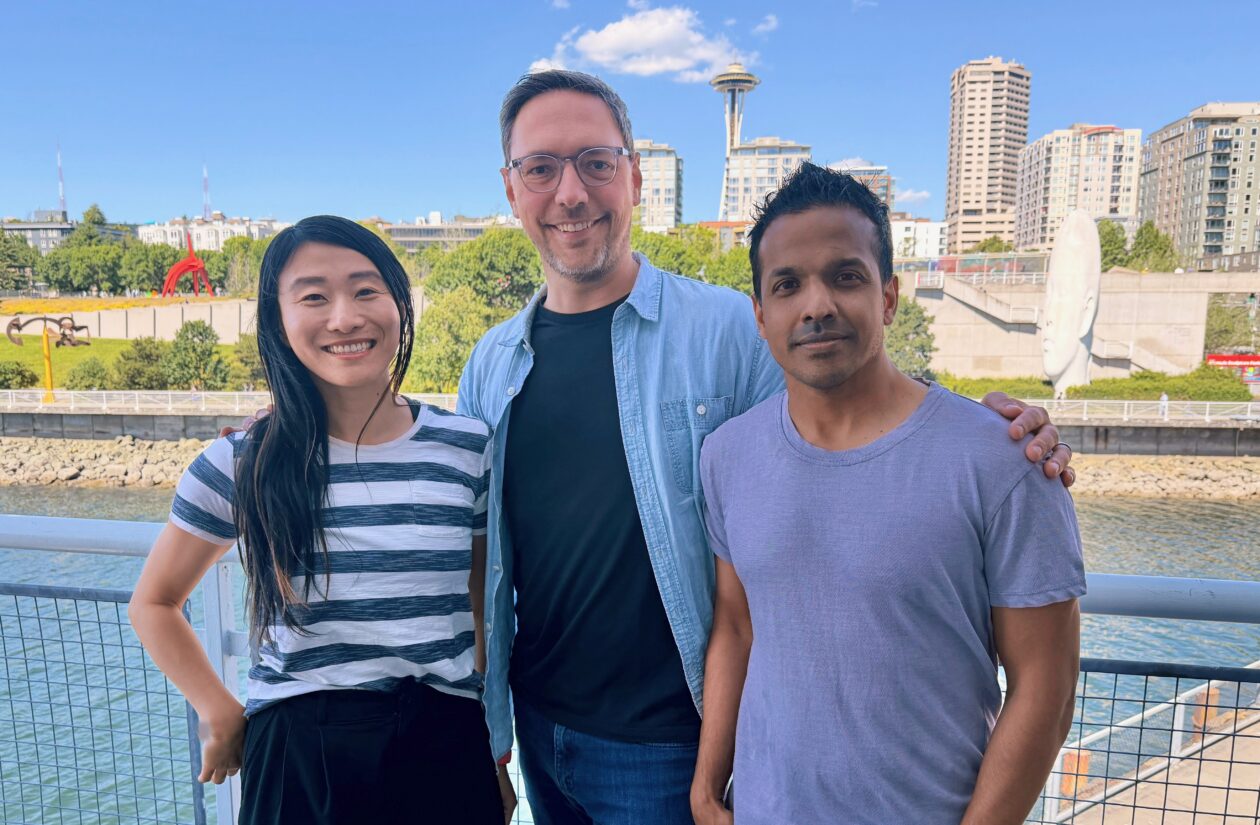
This philosophy of collective acceleration is what attracted Sri Chandrasekar to join the organization as its newest managing director, cementing a leadership trio alongside Yifan Zhang and Jacob Colker. Chandrasekar, an industry veteran who spent nearly ten years shaping the venture capital and private equity strategies at Point72 Ventures and earlier directed strategic investments for In-Q-Tel, made a highly calculated move from the Silicon Valley hub of the Bay Area to Seattle in 2021. He noticed a quiet revolution taking place: an overwhelming proportion of high-performing startups in his portfolio were quietly taking root in the Pacific Northwest. After writing the anchor check for AI House’s $80 million Fund III as an external investor last autumn, Chandrasekar realized that rather than trying to build a competitive founder community from scratch elsewhere, his energy was best spent joining the world-class foundation already thriving on the Seattle waterfront. His transition from investor to active partner signals a major vote of confidence in Seattle’s emergence as a dominant force in the global AI discourse, proving that top-tier investment talent and venture capital are shifting north to follow the true centers of engineering excellence.
To support this ambitious expansion, AI House has carefully structured its operation around three distinct, self-sustaining pillars: Community, Incubator, and Capital. The Community pillar serves as a regional town square, bringing together the brightest technical minds and industry veterans, a process now spearheaded by former GeekWire editor Taylor Soper, who recently joined the team as director of community and programming. The Incubator arm remains a high-touch environment where founders work alongside seasoned operators to refine their products, while the Capital arm deploys pre-seed investments from the newly minted Fund III directly into high-potential, applied AI companies. The academic and scientific soul of the project remains securely intact, with pioneering AI researcher and former Allen Institute CEO Oren Etzioni continuing to provide deep technical oversight in a part-time capacity. This multi-layered structure has already proven its worth over a impressive twelve-year history, during which the organization has spun out more than 40 high-growth companies—including computer vision pioneer Xnor.ai, which was acquired by Apple, and legal technology platform Lexion, which fetched a $165 million acquisition by Docusign—boasting an incredible 90% rate of graduates who successfully go on to raise institutional venture capital.
The strategy guiding this ecosystem is being written in real-time, deliberately dismantling the rigid, slow-moving startup playbooks of previous decades. Jacob Colker, a co-founder and managing director who has stewarded the incubator through its various developmental phases, points out that the operational rules which governed tech startups in 2018 have become completely obsolete in the fast-moving landscape of 2026. Today, progress moves at such a blinding pace that a breakthrough achieved by one engineering team early in the week can become an unfair market advantage for their peers sitting at the desk next to them by Friday afternoon. This rapid cycle of peer-to-peer knowledge sharing is precisely why the physical density of AI House is so vital. It transforms the lonely, isolating process of starting a company into a collaborative team sport, allowing founders to crowdsource solutions to complex scaling issues, pricing models, and technical bottlenecks in real-time, surrounded by dozens of peers who are facing the exact same trials.
Beneath the practicalities of venture capital and physical real estate lies a deeper, cultural mission to rewrite the narrative of Seattle’s tech identity. Colker has long been a vocal advocate for the Pacific Northwest, frequently pointing out the historical irony of a region that has fundamentally built the modern world while remaining quiet and humble about its contributions. From the aviation legacy of Boeing to the invention of the modern cloud, and the undeniable reality that the world’s leading AI powerhouses—like OpenAI and Anthropic—depend entirely on flying to Seattle to bargain with Microsoft’s Satya Nadella and Amazon’s Andy Jassy for computational lifeblood, the city has always been the central powerhouse of technological infrastructure. By uniting these historical advantages with the dynamic, centralized hub of AI House, the organization is giving Seattle a proud, unmistakable voice. Ultimately, AI House is proving that the future of artificial intelligence will not just be dreamed up in abstract research papers, but will be actively forged, funded, and built by a tight-knit community of real people, working together on the shores of Elliott Bay.