





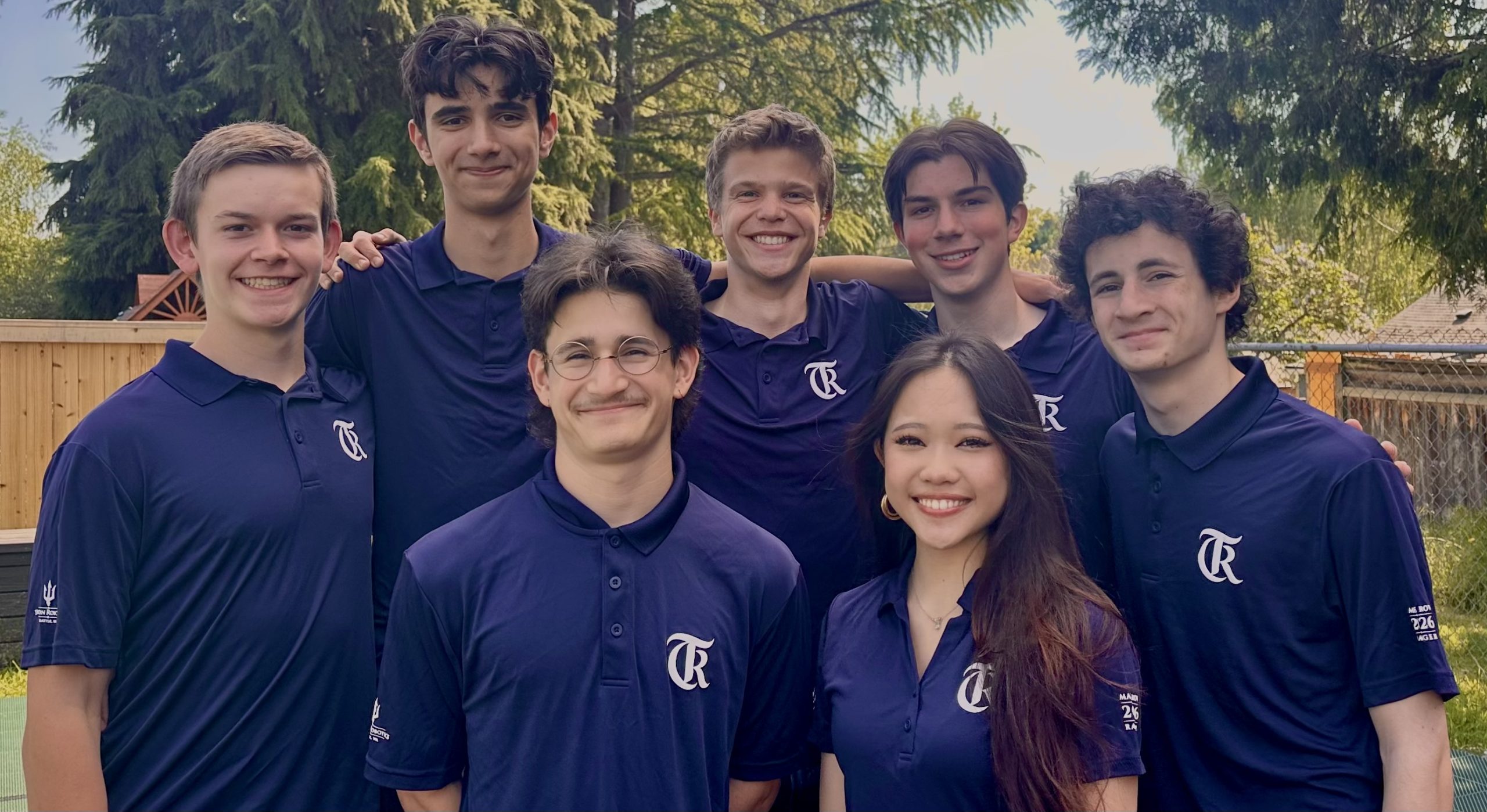
Beneath the gray skies and drizzling rain of Seattle, a city long defined by its deep relationship with maritime history and cutting-edge technology, a remarkable group of seven high school juniors is preparing to make waves on the international stage. These seven teenagers—Griffin Fisher, Tenzin Larkin, Thomas Gust, Simon Hajduk, Theo Lipson, Miles Lipson, and Emi Enoki—form Triton Robotics, an entirely independent, student-led team hailing from Seattle Academy. For the third consecutive year, these bright minds have earned a highly coveted ticket to the prestigious Marine Advanced Technology Education (MATE) Remotely Operated Vehicle (ROV) World Championships. Taking place from June 25 to 27 in the historic, fog-swept port city of St. John’s, Newfoundland, Canada, this grueling three-day competition is the ultimate crucible for young marine engineers, drawing top-tier student teams from around the world to showcase their aquatic innovations. Yet, what makes Triton Robotics stand out is not merely their technical prowess, but the human heartbeat behind their endeavor; they are a tight-knit circle of friends who have chosen to bypass traditional teenage pastimes to spend their weekends and after-school hours huddled around drafting tables, coding interfaces, and municipal test pools. They are driven by an uncommon sense of urgency regarding the health of our planet, transforming their anxiety about climate change into tangible, mechanical solutions. As they prepare to navigate the challenging journey to Newfoundland, they carry with them not only their custom-built robots but also an infectious, collaborative spirit that proves that youth is no barrier to profound scientific contribution, demonstrating how a small group of determined students can organize themselves to tackle some of the most complex engineering hurdles on earth.
The MATE ROV competition is far from a simple science fair; it is a simulated pressure-cooker environment mirroring real-world oceanographic crises, and this year’s competition tasks are more daunting than ever before. Aligning with two major United Nations initiatives focused on ocean sustainability and cryospheric research, the 2026 challenge mandates that teams confront the harsh, unforgiving realities of polar and deep-sea exploration. The students are tasked with designing and deploying technology capable of mapping fragile, cold-water coral ecosystems hidden in the dark depths, establishing ocean observatory networks, modeling offshore wind turbines to harness clean energy, and deploying profiling floats deep beneath shifting sheets of sea ice. Each of these missions represents a highly complex, actual bottleneck currently faced by professional oceanographers and climatologists. Operating in the icy, high-current environments of the world’s northernmost waters is notoriously difficult for conventional scientific instruments, which often freeze, lose communication, or suffer devastating structural failures. By challenging these young minds to create functional solutions to these real problems, the competition forces them to think not just like students aiming for a grade, but like professional engineers tasked with saving vital ecosystems. The sheer scale of the event—set against the backdrop of the rugged Canadian coast—demands that the competitors build systems that are robust, highly adaptable, and capable of operating under immense physical and atmospheric pressures, turning the competition pool into a microcosm of our planet’s most threatened aquatic frontiers.
To meet these extraordinary challenges, the Triton team did not look to pre-existing, off-the-shelf commercial kits; instead, they designed, fabricated, and refined two distinct, custom-built robotic systems from the ground up: Njord and Skadi. Named after the Norse god of the wind and sea, Njord is Triton’s primary remotely operated vehicle, a powerful underwater workhorse engineered specifically to conquer the high-turbulence wave tanks and flume tanks of the competition. Njord is built to withstand punishing, multi-directional currents and near-zero visibility, utilizing a balanced buoyancy system and high-torque thrusters to execute delicate, high-precision manipulation tasks that would challenge even military-grade marine equipment. Operating alongside Njord is Skadi, named after the Norse goddess associated with winter and ice, which is an autonomous vertical profiling float designed to execute missions beneath simulated sea ice in the National Research Council’s specialized ice tank. Skadi is a marvel of automated engineering, programmed to submerge and ascend autonomously to collect vital environmental data from sub-zero depths that traditional floating sensors simply cannot reach due to ice blockage. Together, this robotic duo represents a sophisticated dual-front approach to marine exploration, bridging the gap between active, pilot-controlled intervention and passive, automated data collection. The creation of Njord and Skadi required hundreds of hours of 3D modeling, material science research, and hydrodynamic calculations, transforming theoretical concepts from their textbooks into physical, salt-water-resistant realities that are ready to brave the chilling waters of Newfoundland.
What truly elevates Triton’s machinery is the brilliant, human-centered ingenuity found within their custom software and specialized physical tools, characterized by a playful yet rigorous process of trial, error, and unexpected methodology. Dissatisfied with standard commercial operating programs, the team wrote their own proprietary control system, dubbed TritonOS, which features advanced depth-hold stabilization algorithms and an innovative control-flip function. This software wizardry allows their pilot to instantly reverse Njord’s control scheme on the fly, making the rear manipulator arm operate as intuitively and responsively as the front arm—a seamless transition that baffled and impressed industry experts because no off-the-shelf system possesses this capability. Furthermore, their quest for precision led them to integrate cutting-edge computer vision systems to automatically identify and log invasive crab species, alongside a complex photogrammetry pipeline capable of measuring simulated icebergs with millimeter accuracy. Perhaps the most endearing example of their practical genius was their approach to calibrating the robot’s pneumatic grippers; to ensure the mechanical hands could gently retrieve fragile cold-water coral samples without destroying them, the students spent weeks testing their gripping pressure on delicate, ripe tomatoes until the machine could grasp them reliably without breaking the skin. This philosophy of playful, iterative design lies at the heart of their success, as co-CEO Tenzin Larkin explains, noting that their entire season has been defined by a hands-on cycle of building, testing, breaking things, understanding exactly why they failed, and rebuilding them better.
While many high school tech teams operate under the heavy guidance and funding of institutional school programs, Triton Robotics is entirely independent and self-managed, a structure that infuses the team with a rare sense of personal ownership and agency. These seven juniors manage every facet of their operation as if they were running a high-stakes engineering startup: they oversee their own engineering design, write their own software, balance their operational budgets, organize pool testing schedules, draft extensive technical documentation, and coordinate transport to international venues. Adult mentors are present strictly to provide workshop and safety oversight, leaving all strategic, creative, and engineering decisions entirely in the hands of the youth. This responsibility is taken incredibly seriously; over the course of the season, the team successfully conducted approximately thirty deep-water pool trials to stress-test their machines under realistic conditions, completing every single trial with an exemplary safety record of zero incidents. This level of professionalism and self-discipline underscores their overarching philosophy, summarized beautifully by co-CEO Thomas Gust, who states that their ultimate mission is to help and protect the global environment through the powerful lens of applied engineering. By embracing full autonomy, these students have not only mastered the physics of underwater robotics but have also cultivated vital life skills in leadership, crisis management, fiscal responsibility, and team cohesion, preparing them to enter the scientific community as mature, capable change-makers.
Triton Robotics is not alone in carrying the torch of Pacific Northwest innovation to Canada; they will be joined at the championships by another stellar local team from Edmonds College, known as the Triton Tech team. Comprised of Sarah Abdullah, Cooper Kang, Ty Gross, Shere Beshay, Woochan Seong, Matthew Lim, Charles Kosten, Apollo Graves, and Avary Olson, this collegiate team is also making its third consecutive appearance at the world championships, competing in the highly competitive “Pioneer” class against colleges from across the globe. The story of Triton Tech is one of inspiring grit and rapid evolution; in their inaugural year, a last-minute makeshift team cobbled together a functional ROV from basic PVC piping and managed to shock the competition by securing an incredible fifth-place finish in their category, which they followed up last year by traveling to Michigan and finishing ninth in the world. Currently in the midst of a fundraising campaign to cover their travel and material expenses, the Edmonds College team embodies a gritty, blue-collar “Pioneer” spirit that perfectly complements the high-tech, polished engineering of their high school counterparts. Together, these two teams represent a vibrant, multi-generational corridor of marine technology in the Puget Sound area, reminding the international scientific community that the next generation of ocean protectors possesses both the intellectual brilliance and the practical resilience needed to dive deep, explore the unknown, and secure a sustainable future for our oceans.