



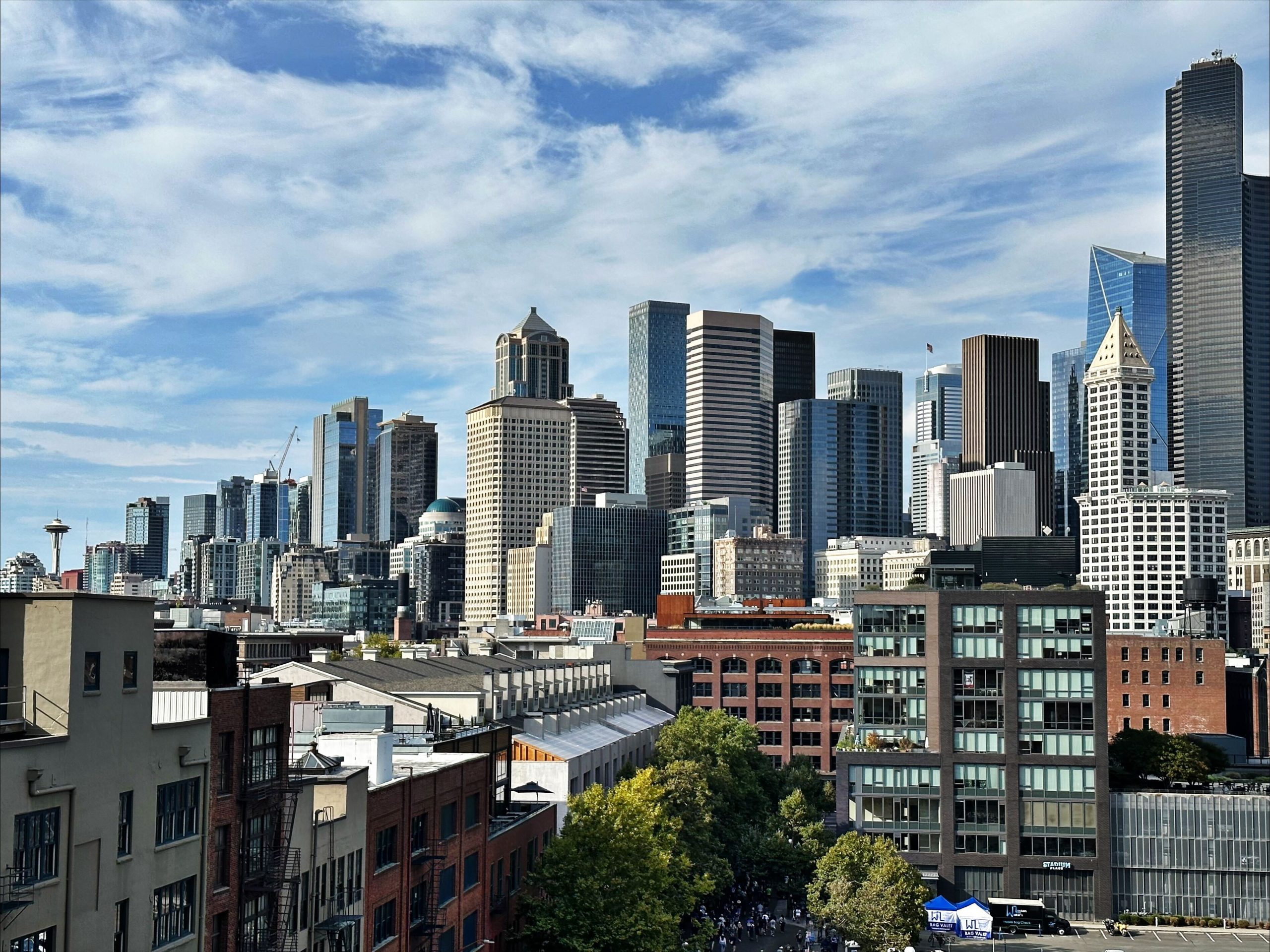
The iconic Seattle skyline, framed by the majestic snow-capped peaks of Mount Rainier and the tranquil, deep waters of Puget Sound, has long stood as a powerful visual testament to the vanguard of American innovation, global commerce, and technological dominance. Yet, beneath this picture-perfect postcard of high-tech prosperity, a growing undercurrent of anxiety regarding the city’s future business climate has been freshly ignited by a sobering new international report. In the fifth annual ranking compiled jointly by the British newspaper Financial Times and the Japanese financial media giant Nikkei, Seattle experienced a precipitous and highly controversial drop, tumbling from its stellar second-place finish last year down to thirteenth place out of ninety-five major U.S. municipalities. This sudden double-digit decline has sent a collective shiver through the Pacific Northwest’s business community, transforming what was once a quiet, polite undercurrent of frustration into a loud, highly public debate about whether the Emerald City is losing its magnetic pull for international investment. For a proud metropolis accustomed to leading the global pack in everything from pioneering cloud computing architectures to forging the world’s specialty coffee culture, this slip is more than just a minor statistical anomaly in an obscure index; it represents a sharp psychological blow to a region that has long prided itself on being an irresistible oasis for global capital, cutting-edge builders, and brilliant minds. To watch Boston leapfrog ten spots to claim the coveted number-one crown, while Seattle slides backward, has forced local stakeholders, politicians, and everyday citizens to confront some incredibly hard, uncomfortable truths about their city’s changing reputation. It highlights a widening, deeply passionate rift between those who believe Seattle’s structural foundations remain unshakably strong and those who warn that the city is resting on past achievements, ignoring critical structural warning signs that could permanently damage its long-term economic vitality. Consequently, this ranking has fast become a lightning rod, polarizing the business community and forcing a rigorous, much-needed reexamination of what it truly takes to sustain a world-class, thriving business ecosystem in an increasingly hyper-competitive, post-pandemic landscape. This transition from a top-tier global darling to a cautionary tale of urban friction is now driving an emotional conversation about urban identity, local fiscal policy, civic pride, and the fragile nature of economic prosperity.
To truly understand the mechanics behind Seattle’s sudden slip, one must dissect the complex, multi-layered web of metrics utilized by the Financial Times and Nikkei research teams. The annual ranking does not merely glance at corporate balance sheets; rather, it evaluates American cities across more than three dozen rigorous, distinct indicators designed to reflect exactly what foreign investors prioritize when deciding where to plant their capital, establish regional headquarters, build facilities, and hire long-term workforces. These benchmarks cover an expansive range of variables, including energy resilience, trade war preparedness, local talent pools, regulatory openness, overall quality of life, and macro investment trends. Interestingly, when one looks beneath the headline decline, Seattle’s scorecard presents a fascinating, highly complex paradox that complicates any simple narrative of decay. While the city’s overall average score dipped to a modest 62 out of 100, its performance actually showed an improvement in the specific category of “investment trends,” which measures the raw volume of foreign and domestic capital flowing into the city alongside its annual gross domestic product per capita. This reveals that Seattle remains, in many ways, an incredibly wealthy, highly productive engine of raw economic output, powered by the inertia of historic giants like Microsoft and Amazon who continue to pull in astronomical sums. However, what dragged Seattle down from its previous heights were more insidious, systemic factors: rising operational costs, regulatory friction, and micro-economic hurdles that make day-to-day operations increasingly difficult, especially for new and non-native companies. While the city remains a magnet for massive venture capital on paper, the practical, boots-on-the-ground environment has grown increasingly tangled and less hospitable, allowing agile East Coast competitors like Boston—with its world-class educational ecosystem and highly coordinated civic leadership—to effortlessly glide past. The updated data suggests that while Seattle possesses the raw, irreplaceable ingredients of greatness, it is struggling with administrative and operational bottlenecks that slowly chip away at its global appeal, proving that capital ultimately flows to where the path to execution is smoothest.
The publication of this report did not merely register as a dry, academic update for economic analysts; instead, it triggered a massive, highly emotional shockwave across the digital town square of the global professional community, particularly on LinkedIn. For a technology sector that is already reeling from successive waves of corporate layoffs, debates over return-to-office mandates, and a general post-pandemic vulnerability, the Financial Times graphic served as a harsh mirror reflecting their deepest, most unvoiced anxieties. Kirby Winfield, a highly respected Seattle native and the founder of the prominent local venture capital firm Ascend, acted as the primary catalyst for this massive conversation when he shared the charts detailing the city’s downward slide. Winfield’s raw, heartfelt caption—confessing that as a lifelong resident, it “kills me to see reports like this”—struck a deep, resonant chord with thousands of professionals who feel an intensely personal, emotional stake in the destiny of the Pacific Northwest. The comment section of his viral post quickly evolved into a bustling, virtual town hall, capturing the highly complex, layered emotions of a community caught in a tense tug-of-war between defensive civic pride and deep-seated, simmering frustration. Some participants sought to defend the city and contextualize the drop, pointing out that such rankings are historically volatile and rely on subjective, “fuzzy” metrics that fail to capture the true, organic spirit of innovation that still thrives in Seattle’s research labs, universities, and co-working spaces. Other long-time tech workers shrugged off the significance of the list entirely, pointing to the fact that global economic super-hubs like New York City and San Francisco ranked even lower on the list, at twenty-eighth and thirty-third respectively, which suggested to them that the index might over-penalize high-density, high-cost metropolitan areas. Yet, despite these valiant attempts to rationalize away the disappointing results, the overshadowing sentiment remained one of profound civic worry, revealing a community that is deeply, genuinely concerned that the legendary Pacific Northwest magic is beginning to lose its luster in the cold, analyzing eyes of the outside world.
Beneath the surface of this online debate lies a fierce, long-simmering grievance against the local municipal government and state-level legislative policies, which many prominent business leaders argue are actively hostile to sustainable economic growth. For years, a highly vocal segment of the business community has warned that the cumulative weight of highly progressive policy decisions is beginning to choke the entrepreneurial spirit that once defined the region, and this latest ranking has served as their ultimate validation. This perspective was echoed strongly in the reactions to the Financial Times post, where technology veterans and private wealth managers pointed directly to local political decisions as the root cause of Seattle’s slide. Charlie Anthe, a seasoned technology professional with decades of local experience, bluntly expressed that he had “never seen a city government so hostile to business, especially small businesses,” capturing the quiet exhaustion felt by independent operators trying to navigate a dense, confusing maze of local taxes and regulations. This sentiment was matched by private wealth manager Michael Hatch, who argued passionately that Seattle’s descent was far from a random statistical anomaly, but was rather the predictable lifestyle tax of systematic, long-term policy decisions. Hatch highlighted a compounding list of local grievances: the imposition of aggressive new city payroll taxes, a minimum wage scale that sits at the very absolute top of the national range, and what he characterized as a paralyzing level of street-level chaos linked to public safety and homelessness issues that no normal storefront business can absorb. From this perspective, the ranking is the logical, inevitable consequence of a political climate that treats successful corporations and wealthy founders as bottomless piggy banks while failing to deliver on the most basic quality-of-life and safety standards that make a city livable. This critique positions the current political establishment not just as passive observers of an economic cooling trend, but as active contributors to an environment that pushes away the very creative visionaries who built the city’s modern identity.
This mounting, widespread dissatisfaction is not merely confined to passionate internet commentary and corporate boardrooms; it is actively manifesting in a tangible, high-profile exodus of some of the region’s most iconic and influential business minds. In recent years, the Pacific Northwest has watched with a mixture of shock, frustration, and resignation as several of its most famous founders and executives have packed up their lives and operations to relocate to lower-tax, more business-friendly states. Amazon’s visionary founder, Jeff Bezos, captured national headlines and sent shockwaves through the local real estate market when he announced his departure for Miami, Florida, leaving behind the metropolitan area he had single-handedly helped reshape over three decades of explosive growth. Howard Schultz, the legendary former CEO who built Starbucks from a single waterfront shop into a ubiquitous global empire, similarly departed for the warmth and favorable tax climate of Florida, while Rich Barton, the co-founder of digital disruptors Expedia and Zillow, packed his bags for Las Vegas, Nevada. These high-profile departures of high-net-worth individuals are widely viewed by local critics as direct, unmistakable protests against Washington State’s newly implemented capital gains tax and Seattle’s local fiscal policies. Adding fuel to this already raging fire of resentment was a controversial incident in April, when Seattle Mayor Katie Wilson drew sharp criticism for offering a literal hand-wave and a dismissive, one-word “bye” to wealthy residents who threatened to leave the city over rising tax policies. To many in the business community, this lighthearted, casual dismissal from the city’s top executive felt like a direct slap in the face, signaling a dangerous lack of concern for the civic, financial, and philanthropic contributions of the city’s wealth creators. The optical contrast between a city hall that casually shrugs off departing billionaires and a local business community watching their global standing slip has deepened the feeling that the city’s current leadership is profoundly disconnected from the harsh economic realities required to sustain a world-class metropolis.
Despite the heated finger-pointing, deep structural challenges, and the undeniable sting of slipping in these prestigious rankings, a strong, resilient current of hope and determination still runs deep through the veins of Seattle’s entrepreneurial class. Rather than throwing up their hands in defeat or planning their own departures to the Sun Belt, many local leaders and creators are channeling their frustration into a powerful, collaborative rallying cry to reclaim the soul of the city that quite literally changed the world. This sentiment of defiant optimism is perhaps best captured by startup founder Curtis Crimmins, who passionately reminded his peers of Seattle’s extraordinary history of disrupting global norms, pointing out that from the devices we touch daily to how we shop and communicate, the world runs on Seattle’s innovations. While Crimmins acknowledged that the recent “kneecapping of this culture has been swift and cruel,” his focus remains entirely on the future, expressing a deep obsession with figuring out how the local community can band together to restore Seattle to its rightful place as an unobstructed, welcoming beacon of global innovation. This perspective suggests that while rankings may fluctuate annually and political administrations may come and go, the foundational DNA of Seattle—its raw intellect, natural beauty, creative curiosity, and proximity to the world’s most critical industries—cannot be easily erased by temporary policy missteps. The ongoing debate, sparked by a simple newspaper list, may ultimately serve as the precise, uncomfortable wake-up call the region needs, forcing a constructive, long-overdue partnership between a defensive public sector and an alienated business community. If Seattle can bridge this trust divide, find common ground on local fiscal policy, and address its urban challenges with the same genius it applied to cloud computing and global logistics, this thirteenth-place finish might someday be looked back upon not as the beginning of a sad decline, but as the spark that ignited a brilliant civic renaissance.