





For those who suffer from migraines, the condition is not merely a severe headache, but a thief of time, presence, and life. A single attack can launch a devastating physiological cascade that unfolds over several agonizing days: beginning with visual auras, flashing lights, or a terrifying partial loss of vision; escalating into a pounding, unilateral head pain accompanied by intense nausea and debilitating sensitivity to light and sound; and finally culminating in a prolonged hangover of cognitive fog, memory disruption, and profound physical exhaustion. To live with migraines is to live in constant anticipation of the next assault, perpetually modifying plans, missing irreplaceable family moments, and navigating a world that often dismisses the neurological severity of the disorder. It is into this quiet epidemic of pain that Seattle-based startup Vedana Therapeutics has stepped, emerging from stealth mode with a war chest of $46 million and a singular, audaciously empathetic mission. Led by some of the most accomplished and pioneering minds in modern neurology, Vedana is dedicating its vast scientific expertise to developing next-generation antibody therapies that patients can easily self-administer via at-home injections, offering a lifeline to millions of people trapped in the cycle of chronic pain.
To appreciate the disruptive potential of Vedana’s scientific approach, one must first understand the triumphs and limitations of the current migraine treatment landscape. For decades, patients relied on generic pain relievers or triptans, which offered only temporary relief and did nothing to prevent attacks from occurring in the first place. The scientific community celebrated a historic breakthrough with the discovery of Calcitonin Gene-Related Peptide (CGRP), a key neurotransmitter responsible for transmitting pain signals and dilating blood vessels in the brain during a migraine event. This discovery led to the creation of the first-ever preventative biologics designed specifically to block CGRP pathways. Despite the revolutionary nature of these CGRP inhibitors, a painful clinical reality persisted: approximately two-thirds of migraine sufferers still fail to find complete relief, continuing to experience debilitating breakthrough attacks. Driven by this therapeutic gap, researchers turned their attention to Pituitary Adenylate Cyclase-Activating Polypeptide (PACAP), a sister signaling pathway that acts as another major instigator of cranial pain. Vedana has positioned itself at the absolute frontier of this dual-target paradigm, engineering sophisticated therapies that aim to neutralize both CGRP and PACAP pathways simultaneously, acknowledging that a modern solution must address the full spectrum of the brain’s complex pain signaling networks.
At the core of Vedana’s scientific philosophy is the recognition that the human brain during a migraine is an intricate, shifting ecosystem that cannot be tamed by a single-track solution. As Dr. Ernesto Aycardi, Vedana’s chief medical officer, points out, the pathology of a migraine does not originate from a single, isolated protein or neurotransmitter, but rather from a complex web of overlapping biochemical triggers. Consequently, what provokes an attack on one day may differ from the trigger of the next, and what brings relief to one patient may prove completely ineffective for another. To conquer this biological volatility, Vedana is advancing two primary, state-of-the-art drug candidates: a highly optimized, next-generation antibody therapy that specifically targets the PACAP pathway, and a groundbreaking dual-action antibody program designed to block both PACAP and CGRP concurrently. By layering these therapeutic strategies together, Vedana’s leadership intends to create a comprehensive shield for the brain, aiming for a clinical outcome once thought impossible: achieving zero migraine days for patients. The convenience of an at-home, self-administered injection further humanizes this approach, shifting the power dynamic back to the patient and allowing them to manage their prevention routine outside of clinical walls, reclaiming their autonomy and peace of mind.
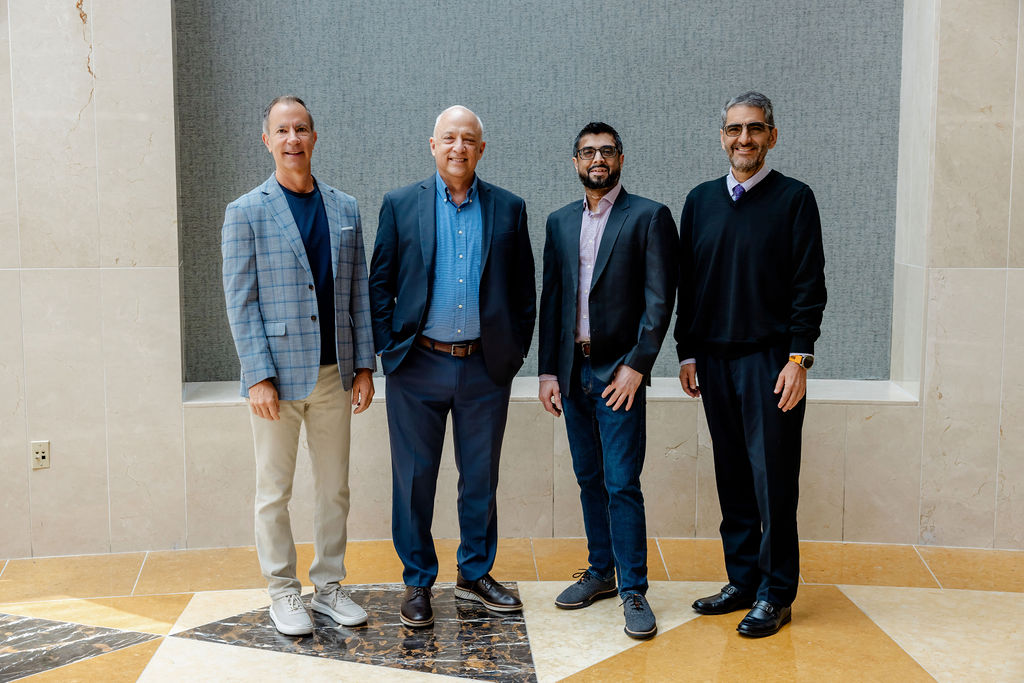
The capability of a startup to successfully navigate the treacherous path of drug development is directly tied to the caliber of its people, and Vedana has assembled a virtual dream team of migraine drug development veterans. These are not merely administrative executives; they are the literal architects of the modern migraine therapeutic market. Chief Executive Officer and co-founder Anurag Agarwal brings a wealth of strategic experience from his time as an investor at Osage University Partners, where he specialized in translating complex academic discoveries into viable, life-saving marketplace therapies. Working alongside him is co-founder and Chief Scientific Officer Leon Garcia, a legendary figure in the Seattle biotech community who previously spearheaded the discovery of both CGRP and PACAP antibodies at Alder Biopharmaceuticals, which was acquired by Lundbeck for a staggering $1.95 billion. The clinical trajectory is guided by Chief Medical Officer Dr. Ernesto Aycardi, who previously led the clinical development of the blockbuster migraine drug AJOVY at Teva, while the board of directors is chaired by Dr. Rob Lenz, the former head of global development at Amgen who famously orchestrated the development of Aimovig, one of the primary pioneers in CGRP inhibition. This unique convergence of former commercial rivals and industry veterans under a single banner represents a rare alignment of intellectual capital, united by a profound collective desire to finish the work they started decades ago and deliver a definitive cure.
In an era where the biotechnology sector is increasingly dominated by the hype of artificial intelligence, machine learning, and purely digital molecular design, Vedana stands out for its elegant, deeply humanistic approach to drug discovery. While the company fully intends to utilize advanced computational tools and artificial intelligence to refine testing, scale production, and streamline the logistical phases of drug development, its leadership maintains a profound reverence for the wisdom of natural evolution. Anurag Agarwal beautifully articulates this core philosophy by pointing out that the natural antibodies produced by living organisms are, in essence, highly sophisticated neural networks in their own right—exquisite molecular structures that have been iteratively designed, tested, and optimized over billions of years of biological history. To bypass this evolutionary genius in favor of purely synthetic, computer-generated predictions is to ignore the ultimate open-source library of life. By focusing their efforts on leveraging, understanding, and subtly enhancing these incredibly robust, biologically proven antibody structures, Vedana’s fourteen-person team is prioritizing organic efficacy and patient safety, ensuring their therapies are deeply harmonized with human biology from the very beginning.
This combination of scientific innovation, philosophical clarity, and unmatched leadership has garnered substantial confidence and financial backing from the venture capital community. Vedana’s impressive $46 million Series A funding round was co-led by premier life sciences investors Westlake BioPartners and Canaan Partners, with enthusiastic participation from Dawn Biopharma and Alexandria Venture Investments. This robust influx of capital will provide the necessary runway to propel their lead candidates through rigorous clinical trials, positions they must defend vigorously in an increasingly competitive landscape. As they advance, Vedana will face formidable competition from major established pharmaceutical giants like Amgen, Eli Lilly, Teva, and Lundbeck, alongside agile biotech peers such as Mentari Therapeutics and Slate Medicines. Yet, the leadership of Vedana views this competitive arena not as a deterrent, but as proof of the vital urgency of their work. Ultimately, the story of Vedana Therapeutics is not just a story of corporate funding, intellectual property, or laboratory breakthroughs; it is a profoundly human endeavor aimed at unlocking the invisible cells of chronic illness, restoring stolen time, and illuminating a path toward a brighter, pain-free future for millions of silent sufferers worldwide.