





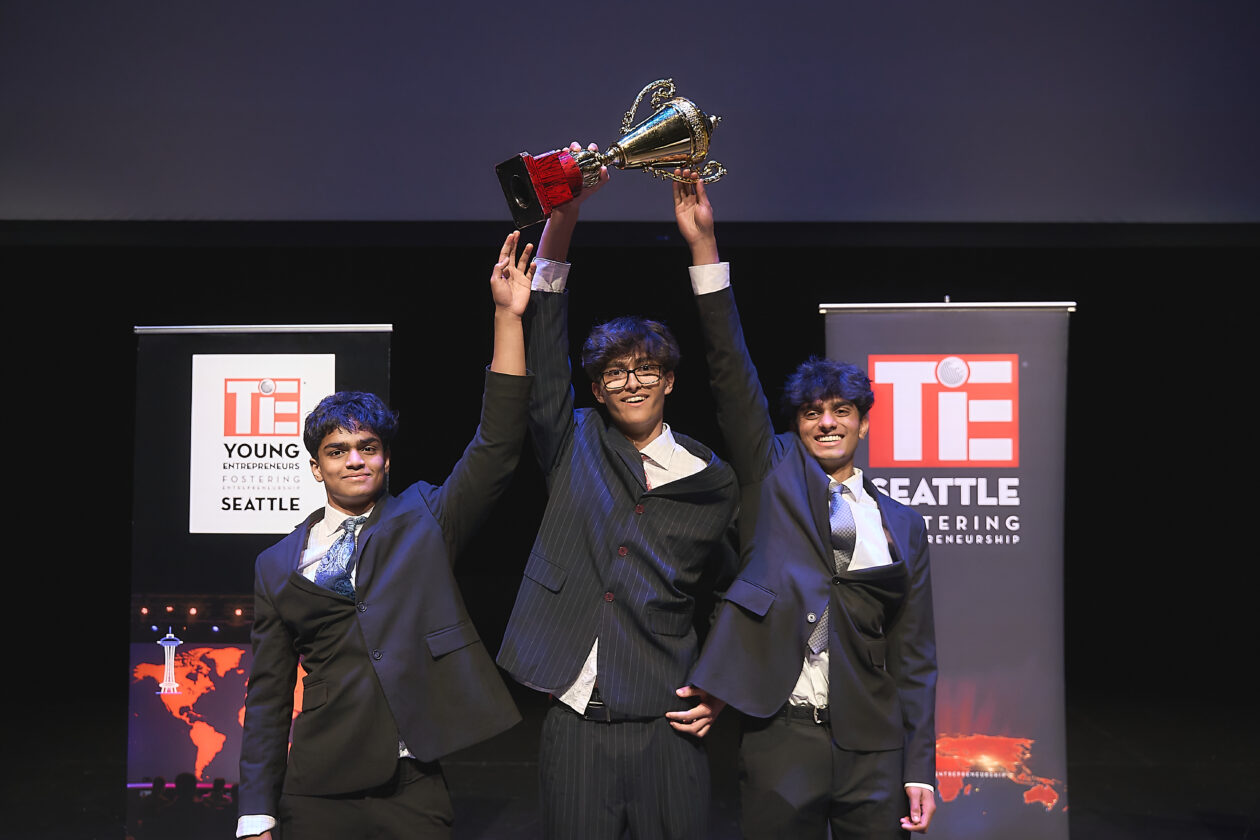
Imagine the sheer electricity and nervous anticipation that filled the air at Bellevue College in Washington state, where a sudden burst of cheers from a group of high schoolers marked the culmination of months of grueling strategy sessions and code-writing. It was the closing ceremony of the prestigious 2026 TiE Young Entrepreneurs (TYE) Global Pitch Competition, and Seattle’s young business prodigies had once again captured the world’s attention. Competing against more than 35 formidable teams hailing from 27 chapters across the globe, the local Seattle representation did not just compete; they dominated, securing a historic “three-peat” for their home chapter. This monumental accomplishment was not merely about winning trophies or claiming financial rewards; it symbolized a rite of passage into the global professional arena for teenagers who, while still navigating high school exams, are already building viable solutions to some of humanity’s most complex challenges. The competition itself was a breathtaking global spectacle, unfolding simultaneously across two continents—divided by oceans yet deeply connected via live technology between the scenic high-tech corridors of Bellevue, Washington, and the bustling tech hub of the Kerala Startup Mission (KSUM) in India. From June 11 to June 13, young innovators spoke with the poise of seasoned executives, articulating visions of a better, more efficient, and more sustainable future. For the Seattle chapter, which also managed to secure a third-place finish alongside their grand prize, this double victory solidified an ongoing legacy of entrepreneurial excellence, bringing their total to an astonishing five winning teams at the global finals over the short span of just three years. The atmosphere was a rich blend of raw passion, intellectual vigor, and youthful optimism, proving that when teenagers are given the resources, the mentorship, and the platform to build, they can dismantle traditional barriers and redefine the pace of global innovation.
Standing proud at the very top of the global podium was Team DuggAI, a brilliant trio of students from Skyline High School in Sammamish, Washington, consisting of Ashish Naik, Shaurya Duggal, and Kruthik Ankam. Their journey to the global championship trophy and the coveted $3,000 grand prize began with a simple but profound observation of the software industry: developers, who are paid to create and innovate, spend an exorbitant amount of time bogged down by administrative sludge. Recognizing that the “unglamorous side” of software engineering—such as manually triaging, contextualizing, and resolving messy customer and internal engineering tickets—was acting as a massive bottleneck to progress, these three high schoolers set out to build an advanced, context-aware AI agent designed specifically to handle these tasks autonomously. For Ashish, Shaurya, and Kruthik, DuggAI was more than just a class project; it was a crusade to liberate software developers so they could return to what they love most: writing clean code and shipping innovative products. The judges at the competition were thoroughly captivated by the sophistication of DuggAI’s underlying technology, as well as the maturity and clarity with which the Skyline High students defended their business model, customer acquisition strategies, and technical architecture. In humanizing this victory, one can visualize the late-night discord calls, the frantic debugging of code, the collaborative whiteboarding sessions, and the nervous adjustments of their blazers before stepping onto the brightly lit stage. The sheer joy that erupted when their team name was announced as the first-place winner was a testament to their dedication, proving that teenagers can build complex software that seasoned Silicon Valley veterans would be proud to claim as their own, while inspiring other kids in Sammamish to look at code as a tool for real-world disruption.
Not far behind in this celebrated showcase of youth innovation was Team Hydrobin, an equally impressive group of visionaries from Interlake High School in Bellevue, Washington, who secured a well-deserved third-place finish and a $1,000 prize. Comprising Ananya Sharda, Aarav Narayan, Yatharth Kothari, Adithya Gogini, and Nissi V., and operating under the ecological banner of EcoProducts LLC, this passionate team set their sights on resolving one of the most critical environmental crises of our time: plastic pollution. Rather than despairing over the millions of tons of single-use plastics that clog our oceans and landfills, these Interlake students decided to take direct, entrepreneurial action by designing a system that converts ocean-bound waste plastic into highly durable, reusable, and cost-effective packaging solutions. Their ultimate goal is to dislodge single-use containers across a wide variety of consumer-facing and industrial shipping use cases, offering a completely circular, sustainable alternative that doesn’t compromise on durability or functionality. The narrative of Hydrobin is deeply human, driven by a generation of young people who feel a profound, personal responsibility for the stewardship of the planet and refuse to wait for adults to solve the environmental crises they are inheriting. Standing on the stage in Bellevue, Ananya, Aarav, Yatharth, Adithya, and Nissi did not just pitch a business; they pitched a roadmap for a healthier earth, demonstrating to a panel of expert judges that financial viability and profound environmental consciousness can comfortably exist hand-in-hand within a single, highly scalable business model. The pride felt by their parents, peers, and teachers in Bellevue was palpable, illustrating that corporate responsibility is no longer a buzzword for the distant future, but a standard being actively forged right now by high school teenagers who refuse to let the planet decay.
While the spotlight naturally shines brightest on the student founders, the extraordinary and consistent success of the Seattle chapter of TiE Young Entrepreneurs is deeply rooted within a rich, supportive ecosystem of local tech leaders, dedicated mentors, and generous sponsors. A “three-peat” championship run and five global victories in three years are not accidental occurrences; they are the direct result of a highly structured, wonderfully warm network of community support designed to groom young talent. For the 2025-2026 cohort alone, the Seattle chapter mobilized a powerful corporate force of 22 mentors drawn directly from the upper echelons of Seattle’s world-renowned technology leadership pool, alongside more than 25 dedicated sponsors who provided the necessary capital, resources, and emotional runway to keep the program accessible to all. These mentors, many of whom are active founders, venture capitalists, and top engineering executives at global giants like Microsoft, Amazon, and various cloud startups, volunteered countless hours of their personal time to guide these high schoolers through the rigorous realities of market validation, prototyping, financial modeling, and customer discovery. Crucially, the competitive structure also brought in 10 highly critical yet deeply encouraging judges for the local finals and global semifinals, providing the contestants with the realistic, no-nonsense feedback needed to refine their ideas into market-ready pitches. These judges pushed the teams hard on their unit economics, forcing the teenagers to defend their balance sheets with the rigor of executives seeking Series A funding. This unique bridge between Seattle’s mature tech ecosystem and its aspiring teenage innovators creates a beautiful, reciprocal flow of energy where seasoned veterans find themselves deeply inspired by the raw curiosity and fearless imagination of the youth, while the students gain an invaluable, real-world business education that simply cannot be replicated inside a traditional high school classroom.
The TiE Young Entrepreneurs program is a vital initiative run under the global network of The Indus Entrepreneurs (TiE), an organization that has spent more than two decades fostering entrepreneurship across the globe, currently spanning over 40 cities across numerous countries. By focusing specifically on students in grades 9 through 12, TYE demystifies the intimidating process of building a company from scratch, transforming abstract business theories into tangible, life-changing experiences for teenagers. The 2026 global tournament served as a dramatic testament to the scale and depth of this network, bringing together 18 top-tier teams from the United States, Canada, and Singapore to compete in the intense semifinal rounds hosted on June 12 at Bellevue College. Out of this highly competitive international pool, judges had the incredibly difficult task of selecting just three elite teams to advance to the grand finals. The following day, June 13, the stakes reached a fever pitch as these three North American and Singaporean finalists went head-to-head in a live, cross-continental digital showdown against the top three teams hailing from the Indian chapters, hosted at the Kerala Startup Mission (KSUM). This global orchestration was not just a logistical masterpiece, but a beautiful cross-cultural bridge that allowed teenagers from remarkably different backgrounds to bond over shared entrepreneurial anxieties, celebrate each other’s technical triumphs, and participate in a high-stakes arena that mirrored the globalized, digital-first economy they will eventually inherit and lead. For these young students, pitch day meant overcoming severe stage fright, answering rapid-fire questions from international venture capitalists under bright studio lights, and realizing that their voices had the power to command rooms filled of industry titans, transforming them from quiet classroom students into confident global leaders over the course of a single, unforgettable weekend.
Behind the incredible architecture of the Seattle chapter’s success is a deeply dedicated leadership team comprising Aravind Bala as instructor, Kishor Panpaliya as board member, Yashovardhan Wagh as program chair, and Aalok Doshi as program co-chair. Many of these leaders are successful entrepreneurs themselves, such as Yashovardhan Wagh—the visionary founder of the Renton-based recommerce company gone.com—and they have spent years meticulously crafting and refining a blueprint for mentoring teenagers in customer discovery, prototyping, and pitch preparation. These leaders are motivated by a shared, powerful philosophy that in the rapidly evolving era of artificial intelligence, traditional education must be actively supplemented with fast-paced, real-world entrepreneurial experience. As Wagh passionately explains, inviting younger students into entrepreneurship does not merely prepare them to build profitable companies; it fundamentally changes how they think, putting them in the driver’s seat to actively solve world-scale problems while they are still in school. The grand, ultimate vision of the TYE Seattle leadership team extends far beyond local trophies; they hope to build a nationwide startup ecosystem that allows high school students across the country to step out of the classroom, crash-test their wildest ideas in the real market, and bring that invaluable, hardened experience back into their academic journeys. By fostering this mindset, they are not just teaching business—they are nurturing a resilient generation of human beings who view every obstacle as a solvable problem, ready to confidently lead humanity into the next frontier of technological and social evolution. This dedication ensures that the Seattle chapter’s triumph is not the end of a beautiful journey, but rather the exciting prologue to a nationwide revolution in how we teach, support, and believe in the capabilities of the younger generation.