



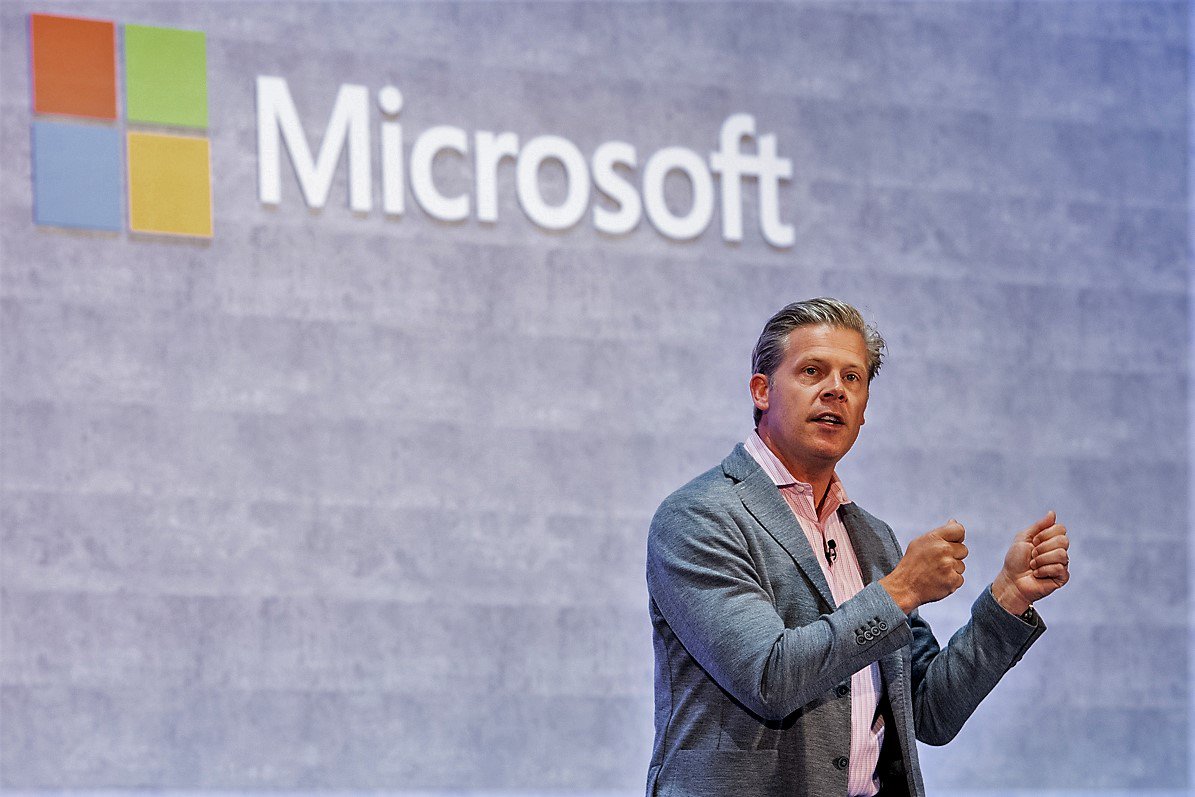
The global technology landscape of the mid-2020s is defined not merely by lines of code, massive data centers, or advanced silicon wafers, but by a relentless, high-stakes migration of human talent that mirrors the shifting of tectonic plates. In this climate of feverish innovation, the announcement that Nick Parker is leaving Microsoft after twenty-six years to join Nvidia as its new sales chief represents far more than a standard executive transition; it is a seismic event at the very intersection of the artificial intelligence revolution. For over a quarter of a century, Parker has been a beloved fixture of Redmond’s corporate culture, anchoring Microsoft’s formidable commercial sales engine through multiple eras of computing history, from the initial dominance of desktop operating systems to the complex transition to cloud infrastructure. His decision to step away from his deeply rooted professional home to join Nvidia—the undisputed hardware architect of the modern AI era—symbolizes the shifting center of gravity in the technology sector, where the companies providing the fundamental computational engines are commanding unprecedented influence. Leaving a company where one has built a life and a legacy over two and a half decades requires not just a cold calculation of career growth, but a profound willingness to embrace personal disruption and test one’s capabilities on the most demanding stage in modern business. This transition illustrates the intensely human dimension of the global technology race, where long-standing relationships, personal ambition, and the allure of shaping the future collide in the pursuit of defining what comes next. As Parker prepares to assume his new role as Executive Vice President of Worldwide Field Operations, he steps directly into the eye of an economic hurricane, charged with managing the global commercial relationships that will dictate how quickly and deeply artificial intelligence integrates into the fabric of everyday human life.
To truly understand the weight of this move, one must trace the long, steady arc of Nick Parker’s journey through Microsoft, a tenure that reflects the broader evolution of the modern enterprise software market. Joining the company in the late 1990s, Parker arrived at a time when Microsoft was primarily focused on personal computers, navigating the complex world of Original Equipment Manufacturers (OEMs) and hardware partnerships to ensure Windows was pre-installed on every desktop in the world. Over the years, he demonstrated a rare, chameleon-like capacity to adapt to successive waves of technological disruption, steadily climbing through a series of increasingly critical executive roles within the partner, device, and design ecosystems. By 2022, his strategic acumen and reputation for building deep customer trust had earned him the role of President of Industry and Partner Sales, which eventually culminated in his promotion to Executive Vice President and Chief Business Officer of Microsoft’s Worldwide Sales and Solutions organization. In this latest capacity, reporting directly to Judson Althoff, Parker was responsible for steering the commercial engine of a multi-trillion-dollar giant during one of its most transformative chapters, overseeing the global deployment of Microsoft’s cloud and AI offerings. His leadership style was never defined by rigid corporate dogmatism, but by an empathetic, relationship-driven approach that recognized that technology is ultimately adopted through human trust, shared goals, and mutual benefit rather than sheer technical superiority. Departing such a deeply institutionalized environment, where his professional identity and personal networks were woven into the very drywall of Redmond, represents a profound emotional and professional pivot—a conscious choice to leave the safety of an established legacy to write an entirely new chapter in unfamiliar territory.
At Nvidia, Parker inherits a mantle shaped by another titan of the industry, Jay Puri, whose retirement at age seventy-one marks the end of an extraordinary, generation-defining epoch. Puri’s twenty-one-year tenure as the head of Nvidia’s global sales operation is the stuff of Silicon Valley legend, representing a masterclass in long-term strategic vision, operational discipline, and quiet persistence. When Puri joined Nvidia in the early 2000s, the company was primarily known as a niche manufacturer of graphics processing units tailored for computer gaming enthusiasts and visual artists. Through Puri’s relentless focus on anticipating future market needs and building an enterprise-grade sales architecture from scratch, Nvidia successfully navigated the transition from gaming hardware into the bedrock infrastructure of scientific computing, massive data centers, and ultimately, deep learning models. This organizational evolution required convincing skeptical CEOs and conservative enterprise buyers to invest in a completely different paradigm of parallel processing architecture years before the market even fully understood its potential. As Puri transitions into a senior advisory role to ensure a smooth, stable handoff, the passing of the baton to Parker represents a critical moment of maturation for Nvidia. No longer a nimble challenger trying to establish itself, Nvidia is now the defining titan of the global computing world, facing the immense challenge of maintaining its market leadership amid intense competition, regulatory scrutiny, and complex supply chain constraints. Parker’s mandate is not to build a sales culture from the ground up, but to scale, institutionalize, and protect an empire, ensuring that Nvidia’s deep partnerships—most notably its critical, symbiotic relationship with Microsoft—continue to thrive in an era of heightened market complexity.
The immense scale of the responsibility Parker is assuming is reflected in the eye-popping financial terms of his compensation package, structured to align his personal success with the long-term fortunes of his new employer. According to recent regulatory filings, Parker’s compensation is a testament to the astronomical value placed on proven business leadership in the current tech ecosystem, commanding a $1 million base salary, a $5 million signing bonus, and a massive target equity grant of $40 million. The majority of this equity, valued at $35 million in restricted stock units, is designed to vest over a four-year period, serving as a powerful incentive to ensure his long-term commitment to Nvidia’s multi-year strategic roadmap. Meanwhile, the remaining $5 million is tied directly to performance metrics, requiring Nvidia to outperform the S&P 500 index over a three-year period—a high bar for a company that has already experienced some of the most rapid market capitalization expansion in corporate history. However, beyond the staggering monetary figures, the true allure of the position lies in its reporting structure, placing Parker in direct alignment with Nvidia’s legendary co-founder and CEO, Jensen Huang. Working alongside Huang, a visionary leader known for his intense work ethic, demanding standards, and hands-on management style, is both an extraordinary privilege and a professional crucible. In this role, Parker will be the primary customer-facing architect of Nvidia’s global expansion, managing the incredibly delicate task of allocating highly coveted, supply-limited processing chips to eager hyperscalers and enterprises worldwide. It is a role that demands not just analytical brilliance, but profound emotional intelligence, as Parker must negotiate complex allocation diplomacies while maintaining healthy, trusting relations with clients who are simultaneously Nvidia’s biggest customers and, increasingly, its prospective competitors.
While Nvidia celebrates this major talent acquisition, Microsoft is far from standing still, pivoting rapidly to address the high-profile vacancy and reinforce its own strategic positioning in the enterprise AI sales arena. Coinciding with the news of Parker’s departure, Microsoft unveiled a bold, $2.5 billion initiative named the Microsoft Frontier Company, designed to bridge the gap between abstract artificial intelligence capabilities and real-world industrial deployment. This ambitious venture will be led by Rodrigo Kede Lima, a seasoned veteran of Microsoft’s international enterprise operations, who most recently served as the President of Microsoft Asia and has spent his career navigating complex corporate transformations. Under Lima’s leadership, the Frontier Company seeks to pioneer a deeply human approach to technology integration by physically embedding Microsoft’s elite AI software engineers directly inside the operations of its corporate clients. This move represents a paradigm shift in how enterprise technology is sold; rather than simply licensing software or selling cloud computing credits from a distance, Microsoft is positioning itself as an active co-creator of value inside its customers’ organizations. It is a direct acknowledgment that the true bottleneck to widespread AI adoption is not a lack of computational power, but a deficiency in the organizational capability to implement, customize, and trust these complex systems on a day-to-day basis. By placing engineering talent side-by-side with industry executives, Microsoft aims to build deep, unshakeable customer loyalty, effectively insulating its client base from competitor encroachment while driving the practical monetization of its hefty AI investments.
Looking at the broader horizon, the movement of executives like Nick Parker and the strategic reorganizations at companies like Microsoft highlight the fundamentally human element driving our digital future. Behind the cold, quantitative realities of tensor cores, large language models, and multi-billion-dollar infrastructure budgets lie the interpersonal relationships, individual ambitions, and collaborative loyalties that truly shape history. Parker’s transition from Redmond to Santa Clara serves as a poignant reminder that even the most advanced technological systems are built on a foundation of human trust, execution, and shared vision. His public commitment to nurturing the deeply symbiotic partnership between Microsoft and Nvidia underscores the complex “coopetition” that defines the modern tech sector, where companies must collaborate intensely on engineering standards while fiercely competing for market share and talent. As these two giants navigate their overlapping paths, the success of their endeavors will depend less on the sheer speed of their processors and more on the wisdom of the leaders steering their course. In an era where artificial intelligence threatens to automate many aspects of human labor, this high-profile executive reshuffle proves that authentic human leadership, strategic negotiation, and relational empathy remain the ultimate, irreplaceable currencies of the global economy. By stepping into this monumental new role, Parker is not just changing jobs; he is illustrating the timeless human pursuit of growth, taking on the responsibility of guiding humanity’s most transformative technology from the labs of engineers to the heart of the global marketplace.