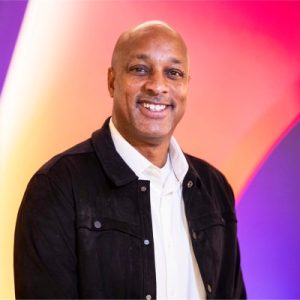






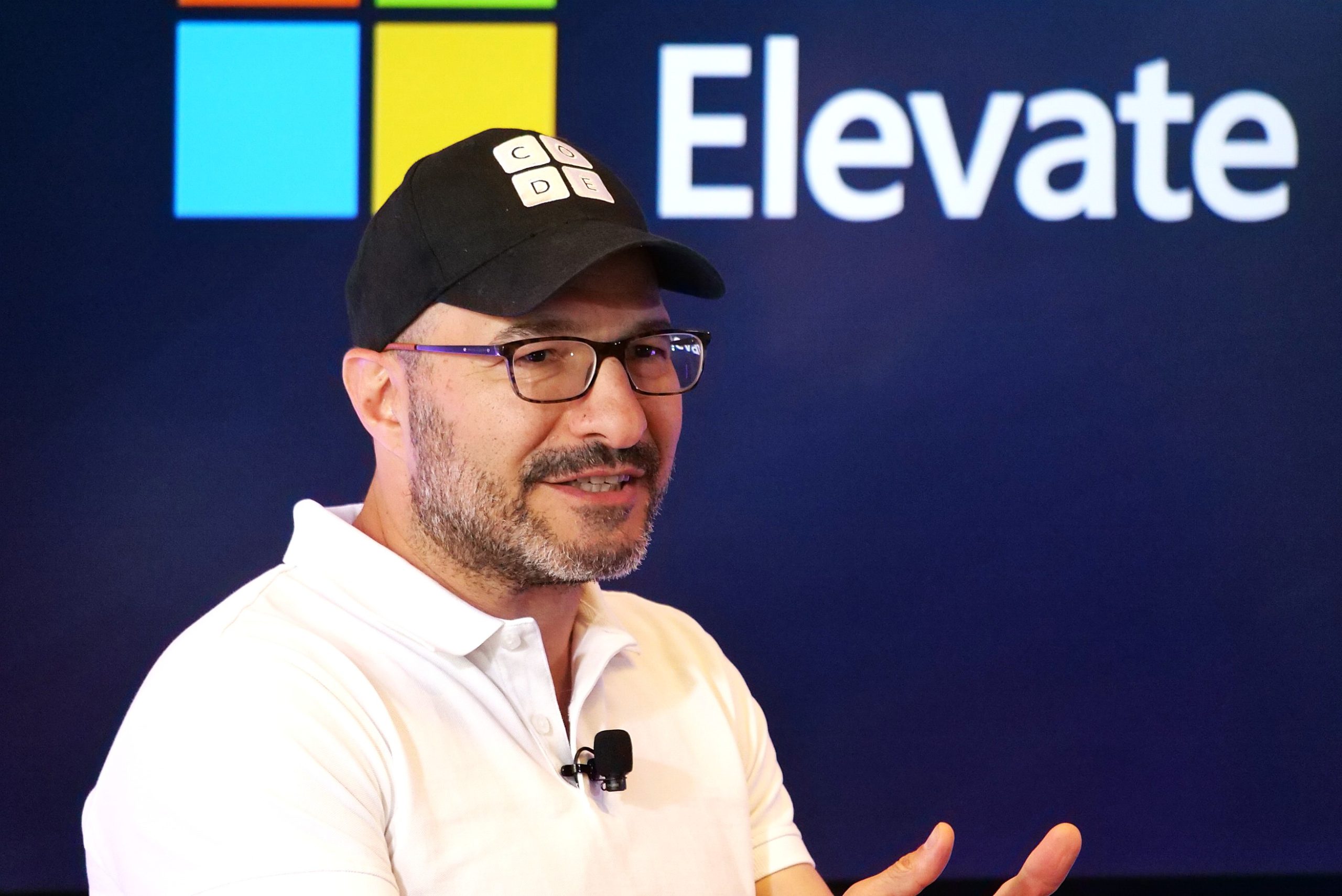
Hadi Partovi’s remarkable life has always been defined by a restless, passionate drive to demystify complex languages and make them accessible to everyone. For over a decade, as the co-founder and pioneering force behind the global nonprofit Code.org, he revolutionized the educational landscape by proving that computer programming was not an elite club reserved exclusively for math geniuses, but a highly creative and exciting playground open to millions of curious children worldwide. Now, having recently handed off his leadership responsibilities at the global nonprofit, Partovi is turning his visionary sights from the digital syntax of computers to the universal, emotional language of music. Over a landmark weekend, he announced his exciting new role as the Chief Executive Officer of Payam Music, a rapidly growing, Bothell, Washington-based piano school that he plans to systematically expand across the entire United States. Far from a quiet retirement project, this new venture represents a beautiful convergence of advanced tech-disruption methodology, deep childhood nostalgia, and human-centric educational philosophy. Highlighting the massive disruptive potential of this new educational paradigm, the startup has already secured major financial backing and passionate personal advocacy from an iconic, powerhouse lineup of investors, including billionaire entrepreneur Mark Cuban, Uber CEO Dara Khosrowshahi (who is also Partovi’s cousin), and the legendary, Academy Award-winning film composer Hans Zimmer. Coinciding with high-profile features on CBS’s acclaimed 60 Minutes and in USA Today, this announcement signals a defining milestone where tech-driven pedagogical disruption meets artistic expression. It highlights a shared belief among these prominent backers that the traditional, often joyless methods of music instruction are ripe for a human-centric evolution that prioritizes early success and emotional connection over rigid, bureaucratic compliance.
To truly appreciate why Partovi is dedicating this exciting next chapter of his life to a localized piano school, one must look back to his own childhood in Iran during a time of immense fear, national turmoil, and domestic confinement. Following the historic and chaotic upheaval of the Islamic revolution, Partovi and his twin brother, Ali, often found themselves trapped inside their home under the shadow of conflict and social restriction. It was during these dark, uncertain days, with no safe access to the outside world, that their resourceful father sought a creative escape for his sons; he took a rudimentary paper template, hand-cut individual musical notes, and taped them directly onto the keys of their piano so the young boys could teach themselves to play. This survivalist, self-directed introduction to music left a permanent, beautiful imprint on Partovi’s soul, proving to him that the joy of creation did not require elaborate, formal gatekeeping. When his family eventually immigrated to the United States as refugees, they faced the classic, grueling financial struggles of newcomers adapting to a completely foreign land. Living under their grandmother’s roof, formal, expensive music lessons were a far-off luxury that the family simply could not afford. Yet, the complete lack of professional tutoring never diminished Partovi’s deep, daily relationship with the piano; instead, he continued to play, improvise, and eventually compose his own music entirely by ear, finding safety and expression in the keys. This personal history shaped his firm belief that creativity is an inherent human right, one that should never be gated behind expensive barriers or exclusionary academic traditions. By taking the reins at Payam Music, Partovi is not merely assuming a corporate title; he is stepping into a deeply personal mission to provide children everywhere with the same organic, empowering pathway to musical literacy that saved him during his youth.
The immediate spark for this major business venture occurred close to home, born out of a father’s frustrating quest to help his own child succeed where traditional educational paths had failed. Partovi’s young son, Darius, had spent years struggling under the heavy, dogmatic weight of conventional, classical piano lessons, finding the endless repetition of dry scales, finger gymnastics, and abstract sheet music to be an agonizing chore rather than a joy. That fatigue changed entirely when Partovi enrolled Darius at Payam Music, a local suburban school founded by Payam Khastkhodaei, a visionary thirty-two-year-old music teacher who had been quietly developing a revolutionary approach while giving lessons out of a converted residential home in Bothell. Almost overnight, Darius’s frustration transformed into absolute obsession, as his playing skills, creative confidence, and natural musicality skyrocketed under Khastkhodaei’s unique system, known simply as the Payam Method. Witnessing this profound, rapid transformation struck a deep, familiar chord within Partovi, who immediately recognized the exact cognitive scaffolding he had spent years perfecting at Code.org. In his interview on 60 Minutes, Partovi drew a direct and powerful parallel between the two learning structures: just as Code.org bypassed the confusing, frustrating minutiae of syntax, semicolons, and binary code by starting children with intuitive, visual drag-and-drop programming blocks, the Payam Method bypasses the initial intimidation of complex staves, clefs, and formal music theory. It is a philosophy that honors the natural way humans learn, securing a foundation of practical joy before demanding technical perfection, allowing students to experience the magic of outcomes before being bogged down by the mechanics of execution.
The underlying genius of the Payam Method lies in its radical modern simplicity and its profound understanding of core student psychology, completely flipping the script on traditional music education. For centuries, the standard approach to learning instruments has demanded that beginners first master the academic mechanics of sight-reading classical scores—a pedagogical barrier that leaves countless aspiring musicians feeling defeated before they ever experience the thrill of creating a beautiful sound. In contrast, the Payam Method invites students to sit at the keyboard and immediately play songs they already know, love, and listen to on a daily basis, utilizing an intuitive system of letters and numbers mapped directly to the keys. This initial phase focuses entirely on ear training, kinetic coordination, motor memory, and, most importantly, the intoxicating feeling of early artistic success. Only after a student has built a strong physical and emotional bond with the instrument do they slowly transition to reading traditional sheet music and studying advanced music theory across an 18-level progressive curriculum. The real-world results of this modern model are nothing short of staggering: while a devastating eighty to eighty-five percent of children quit traditional piano lessons within their first year, Khastkhodaei reports an unprecedented ninety-seven percent retention rate among his students. By replacing abstract frustration with immediate, tangible rewards, the school transforms what was once an agonizing homework chore into a beloved daily ritual of self-directed expression, showing that when students are allowed to start with what they love, they develop a lifelong passion for the craft.
Leveraging this astonishing rate of student retention and engagement, Partovi’s master plan is to transform Payam Music from a beloved regional secret into a household brand from coast to coast. Currently, the company operates eight learning centers strategically positioned across Washington, California, New York, and Maryland, proving that the business model can scale and succeed across diverse socioeconomic and metropolitan landscapes. To fuel this ambitious nationwide expansion, the startup has recently closed a highly competitive seed funding round in the single-digit millions, attracting capital from some of the most astute minds in tech, finance, and the arts. These high-caliber investors are not just buying into a local business; they are investing in a system that tackles a legacy market ripe for disruption. While individual lessons are currently priced at a premium rate of seventy-five to one hundred dollars per session, the core objective of the leadership team under Partovi is to find ways to refine and scale the infrastructure to make this unique pedagogy widely available. Critics of traditional arts education often point out that it has remained static and stagnant for over a century, relying on archaic, high-stress systems that alienate the modern, digitally-native student. By combining Khastkhodaei’s innovative curriculum with Partovi’s unparalleled experience in building globally scalable educational platforms, Payam Music is uniquely poised to bridge the gap between premium private tutoring and accessible, large-scale educational systems, showing that business ingenuity can be used to democratize the beautiful world of artistic creation.
Ultimately, this exciting new chapter for Hadi Partovi represents much more than a career transition from computer science to music; it is a profound testament to the power of humanized, empathetic education. By dismantling the elite, intimidating gatekeepers of both programming and the performing arts, Partovi is championing a future where every child is empowered to create, express, and communicate without fear of immediate failure. True learning, whether it involves writing a sophisticated line of software code or playing a moving, lyrical melody, begins when we give students the room to play, experiment, and find their unique voice first, rather than forcing them into boxes designed for a bygone era. As Payam Music expands its reach across the nation, it carries with it a beautiful reminder that our most complex human endeavors can always be broken down into simpler, more intuitive patterns if we only have the courage to teach with empathy, patience, and love. By honoring the natural curiosity of the human mind and wrapping it in a nurturing community of encouragement, Partovi and Khastkhodaei are not just teaching children how to play songs on a keyboard. They are actively restoring the joy of discovery to the learning process, proving that when you remove the barriers to entry, you unlock a symphony of human potential that can change the world, one beautiful note at a time.