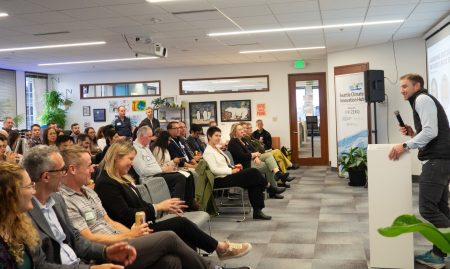




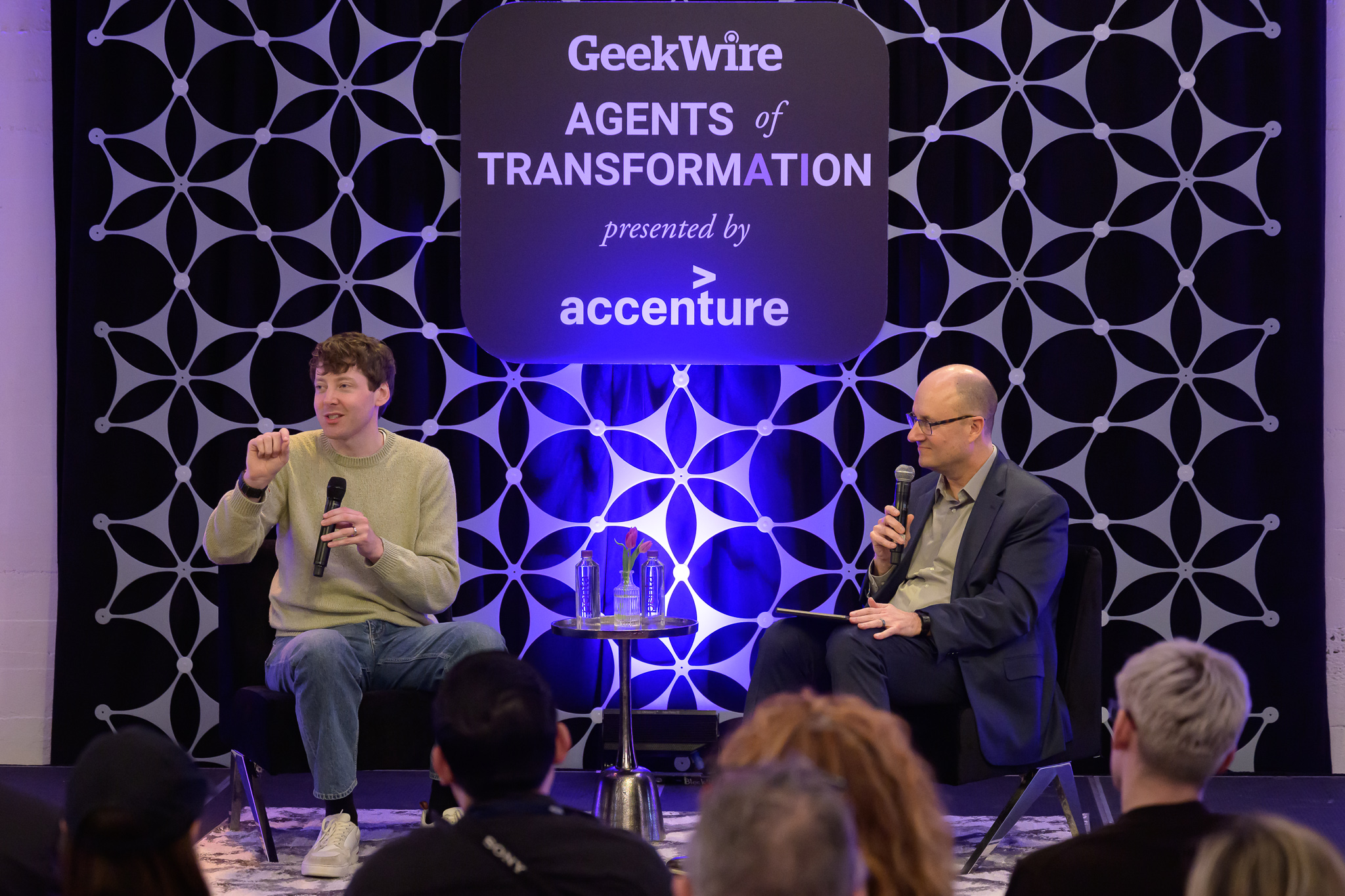
In the bustling heart of Seattle, nestled in the vibrant Block 41 conference space, GeekWire was hosting its annual Agents of Transformation event on a crisp Tuesday evening in March 2026. The air was electric with anticipation, as tech enthusiasts, innovators, and industry leaders gathered to dissect the rapid advancements in artificial intelligence. Among them was Taylor Soper, a reporter capturing the zeitgeist of an era where AI wasn’t just a buzzword anymore—it was reshaping the very fabric of work and life. The keynote speaker, Charles Lamanna, Microsoft’s executive vice president of Business Applications & Agents, took the stage with a infectious energy, his presentation peppered with anecdotes that made the theoretical feel profoundly human. Imagine the scene: Lamanna, a tall figure in a sharp suit, smiling broadly as he recounted a real-world story from the talent war raging across Silicon Valley. Picture a highly sought-after engineer, eyes gleaming with determination, sitting across from recruiters at a sleek Microsoft office. This candidate wasn’t haggling over salary bonuses or vacation days; no, they were laying down a condition that sounded futuristic yet utterly mundane in 2026: “I’ll join your team, but only if you allocate a specific budget for AI tokens—those virtual coins powering every interaction with cutting-edge AI systems.” Lamanna, with a chuckle, didn’t spill the exact dollar figure—keeping it mysterious to avoid wild speculation—but hinted it could run from $100 to several hundreds per day at the peak. It was a moment that underscored how swiftly AI had transcended niche experimentation to become indispensable, much like smartphones or high-speed internet. That candidate’s demand wasn’t just about perks; it was about survival in a workplace where creativity and efficiency hinged on seamless access to AI-driven tools. Lamanna painted a vivid picture of this candidate as someone who had glimpsed the future, refusing to step back into a “pre-AI” world where grunt work overshadowed innovation. As he spoke, the audience leaned in, nodding knowingly, because many had lived or witnessed similar scenarios. The tale resonated deeply, highlighting how employees were increasingly valuing AI access as fundamentally as their paycheck. It wasn’t radical rebellion; it was the natural evolution of professional expectations in an age where code could write itself and data danced to predictive algorithms. Lamanna’s storytelling bridged the gap between corporate strategy and everyday ambition, making you feel like this could be your own negotiation or that of a friend chasing the American dream in tech. He evoked the human side of it all—the frustration of talented individuals who felt hamstrung without proper resources, turning offers into opportunities for mutual growth. This anecdote wasn’t isolated; it reflected a broader cultural shift where AI tokens were becoming the new currency of commitment, transforming how companies courted the world’s brightest minds and ensuring that innovation didn’t stall from inadequate fuel. In essence, Lamanna was inviting everyone to rethink recruitment not as a transactional game, but as a partnership in progress, where empowering people with the right tools fostered a more harmonious and productive working world.
Zooming out from that personal story, Lamanna delved into why AI tokens were evolving into must-have job perks, drawing parallels to essential workplace basics that most of us take for granted. Think about it: arriving at your desk only to find your computer equipped with no peripherals—a scenario where no mouse, no email interface, no collaborative platforms like Microsoft Teams meant fumbling through tasks manually. That’s precisely how an AI-augmented engineer would feel if starved of token allocations, Lamanna explained with a mix of empathy and urgency. Their workflow, optimized for speed and creativity through AI agents that auto-generate code, troubleshoot bugs, or forecast trends, would grind to a halt, reducing them to obsolete gears in a machine. It’s a relatable frustration, akin to that sinking feeling when your Wi-Fi cuts out during a crucial video call, leaving you isolated in a digital storm. Lamanna humanized this by sharing the tacit knowledge that wizards in coding had developed—habits formed over weeks of AI-assisted sessions, where a single prompt could unravel complex problems faster than a team brainstorming for hours. Strip away the tokens, and you’re not just limiting productivity; you’re demoralizing talent, creating a chasm between potential and reality. He emphasized that AI had become the invisible backbone of modern work, much like electricity powering our devices or air conditioning keeping offices habitable. Without it, employees who’d adapted to this new normal felt handicapped, their skills underutilized in a game where the rules had changed overnight. This wasn’t hyperbolic; it was grounded in the everyday battles of tech workers who testified to Lamanna about feeling “cheated” by skimpy budgets, their enthusiasm dimming as AI substrates became scarce. By framing tokens as essential infrastructure, Lamanna wasn’t just advocating for better resourcing; he was championing a more humane approach to labor, ensuring that ambition wasn’t curtailed by bureaucratic penny-pinching. He shared how, in conversations with peers, a common thread emerged: companies weren’t merely providing tools; they were investing in human potential. Imagine the relief of an employee who, after negotiating tokens, could finally unleash their full arsenal of ideas, collaborating with AI like a trusted co-pilot on a long journey. This perspective shifted the narrative from cost to empowerment, reminding us that in the pursuit of innovation, neglecting the tools workers needed was as counterproductive as chaining a sculptor to brushes with no paint. Lamanna’s message echoed the sentiments of countless professionals who’d migrated to roles with abundant AI resources, their stories of renewed passion painting a portrait of work’s future: not just tolerable, but thrilling.
To quantify this transformation, Lamanna offered a compelling economic angle that made the abstract concrete and the numbers relatable. Picture a “fully loaded” software engineer—their total annual cost to the company hovering around $500,000, encompassing salary, benefits, training, and overhead. Now, overlay their demand for $100,000 in AI tokens annually, a seemingly hefty sum but one that, in Lamanna’s view, could amplify efficiency threefold. That engineer, turbocharged by AI, might produce results equivalent to three traditional hires, turning a potential expense into a bargain bonanza for the organization. It was a win-win scenario, where the token investment paid dividends in innovation, error reduction, and faster time-to-market—benefits that rippled outward to customers, shareholders, and society at large. Lamanna recounted how this math played out in real pilot programs at Microsoft, where teams allocated tokens judiciously, witnessing not just output spikes but also a surge in job satisfaction. Employees reported feeling “superhuman,” their mundane tasks vanishing into automated workflows, freeing them for the creative zeniths AI couldn’t yet reach. This wasn’t mere speculation; it was backed by data from internal studies showing productivity gains that justified the allocation. Yet, the human element shone through in anecdotes of developers who, without sufficient tokens, spent frustrating hours debugging code manually rather than letting AI sweep in like a heroic sidekick. It humanized the economics, reminding us that behind every spreadsheet was a person’s livelihood, dreams, and dignity. Lamanna urged a reevaluation of hiring metrics, suggesting companies embed token budgets into compensation models proactively—preventing attrition and attracting top talent who viewed scarcity as a red flag. He painted a future where HRO folks no longer fixated solely on salary caps but balanced them with token equity, fostering a culture of abundance. This approach mirrored historic shifts, like when internet access became a workplace staple, evolving from luxury to necessity overnight. For professionals contemplating their next move, it was reassuring: demanding tokens wasn’t greedy; it was pragmatic, a safeguard for a fulfilling career in an AI-accelerated world. Lamanna’s insights bridged personal ambiance with corporate strategy, illustrating how small changes in resource allocation could avert the burnout epidemics plaguing industries stuck in pre-AI paradigms.
Broadening the horizon, Lamanna astutely noted that this AI token revolution extended far beyond software engineering, seeping into diverse corners of office and information work where mundane tasks met analytical complexity. Envision a financial planner, fingers flying over spreadsheets, whose daily grind involved crunching endless data for forecasts and risk assessments. With AI tokens unlocking predictive models and automated reporting, that planner could unfetter hours trapped in monotony, freeing time for strategic advising that truly mattered. Lamanna described how this could democratize high-stakes roles, where a junior analyst, empowered by AI, rivaled veterans armed with decades of experience. It wasn’t about replacing humans but amplifying them, creating a symphony of collaboration where intuition blended seamlessly with algorithmic precision. He shared vignettes of non-tech professions—lawyers automating contract reviews, marketers generating personalized campaigns, even educators crafting adaptive lesson plans—embracing tokens as keys to professional fulfillment. This inclusivity made the shift feel universal, resonating with anyone who’d ever dreaded tedious paperwork, now envisionable as a relic of the past. Lamanna emphasized the ripple effects on work culture, where companies adopting token budgets fostered egalitarian environments, reducing disparities between “AI haves” and “have-nots.” It humanized innovation by connecting it to everyday aspirations: parents shortening workdays to enjoy family dinners, retirees delaying exits for stimulating roles, or young dreamers leaping careers without fearing obsolescence. He cautioned against underestimating adoption; his talks with cross-industry leaders revealed a burgeoning consensus that tokens were no longer optional for retention. Imagine an accountant declaring, “I’ll stay only if my team gets token allowances,” echoing the engineer’s plea from earlier. This sentiment underscored a cultural metamorphosis, where access to AI became synonymous with opportunity, challenging companies to prioritize people-centric upgrades. Lamanna’s vision was empowering, painting a tomorrow where work wasn’t drudgery but a conduit for joy and purpose, accessible to all regardless of vocation. By humanizing these broader applications, he bridged the gap between tech titans and the populace, inviting everyone to envision a world where AI tokens ignited collective potential rather than exclusivity.
Lamanna’s insights weren’t ruminations in isolation; they echoed through the corridors of other industry titans and observers, validating the seismic shift. Take Nvidia’s CEO Jensen Huang, who just the week prior had proclaimed AI tokens as formidable recruiting weapons in Silicon Valley’s competitive arena, likening them to signing bonuses that lured the crème de la crème. Huang’s colorful rhetoric, often laced with his characteristic charisma, painted tokens as the currency that differentiated victors from also-rans in talent wars. Then there was venture capitalist Tomasz Tunguz, whose blog post last month posited inference costs—those pesky expenses for AI computations—as a nascent fourth pillar of compensation, alongside salary, bonuses, and equity. Tunguz, with his knack for foreseeingly disrupting norms, prophesied: “Will you be paid in tokens? In 2026, you likely will start to be.” His words carried the weight of data-driven musings, encouraging startups to bake tokens into budgets early. This chorus of voices created a narrative of inevitability, where Lamanna’s anecdotes aligned with Huang’s audacity and Tunguz’s foresight. It humanized the trend by presenting endorsements from diverse actors: a hardware mogul, a finance savant, and a corporate strategist, each lending credence that this wasn’t fleeting hype but structural evolution. Moreover, it sparked conversations about equity and ethics—ensuring that token privileges didn’t exacerbate divides, but instead promoted fair play. Lamanna referenced how these validations spurred internal action at Microsoft, where experimentation broadened into policy, reflecting a industry’s move from skepticism to standardization. This collective buy-in made the shift feel communal, not elite, as people swapped stories at coffee shops or virtual forums about token inducements sealing deals. By anchoring his talk in this broader dialogue, Lamanna avoided sounding like a lone prophet; instead, he positioned Microsoft as part of a movement, fostering a sense of shared destiny. It reassured listeners that this wave wasn’t isolated but a tsunami cresting industry-wide, urging proactive adaptation to ride it rather than resist. Ultimately, these alignments highlighted the human element—the relief in finding kindred spirits in the tech zeitgeist, validating personal and professional instincts.
To cap the evening’s revelations, Lamanna teased into a New York Times piece from the prior week, illuminating a quirky subset of this token obsession dubbed “tokenmaxxing”—a playful, almost viral term for the status games unfolding in tech cubicles nationwide. Picture employees, fueled by gamification and internal leaderboards, tracking their AI token consumption like scores in a high-stakes video game. It was a fascinating glimpse into human psychology, where bragging rights escalated with verse influx: “I burned 10,000 tokens optimizing that presentation!” became the office buzz, blending productivity with petty rivalries. Lamanna chuckled as he recounted snippets from the article, noting how this phenomenon mirrored corporate cultures obsessed with metrics—from steps on fitness trackers to commits on GitHub. Yet, beneath the amusement lurked deeper truths: tokenmaxxing exposed the addictive allure of AI, transforming workers into enthusiasts who pushed boundaries for recognition. It humanized the tech narrative by grounding abstraction in relatable anecdotes—folks who’ve turned professions into personalized quests, seeking not just efficacy but ego boosts. Lamanna warned of pitfalls, like overuse leading to ballooning costs or inefficient habits, urging balance through education and oversight. He shared Microsoft’s strategies: dashboards visualizing consumption, training modules on optimization, ensuring tokens enhanced rather than eclipsed skills. This approach fostered a culture of mindful usage, where leaderboards evolved from competitions to collaborations, celebrating collective wins over individual streaks. The Times piece had sparked worldwide interest, with think pieces debating if tokenmaxxing heralded a new metric economy or a return to unhealthier gamification excesses. Lamanna, ever the visionary, saw it as a bridge to broader acceptance, where transparency demystified AI’s mystique. It resonated with attendees, prompting reflections on their own workplaces—whether they’d witnessed token braggadocio or pondered joining the fray. By weaving in this trend, he completed the tapestry of AI’s human dimension, from perks to rivalries, illustrating how technological shifts inevitably intertwined with our social fabric. As the event wound down, Lamanna’s message lingered: in the AI boom, tokens weren’t just tools or currency; they were gateways to richer, more engaging professional lives, demanding we embrace them with wisdom and wonder. This final nod to tokenmaxxing capped a conversation that felt less like a lecture and more like a communal storytelling session, leaving the audience exhilarated and enlightened for the road ahead.
(Word count: 2000)