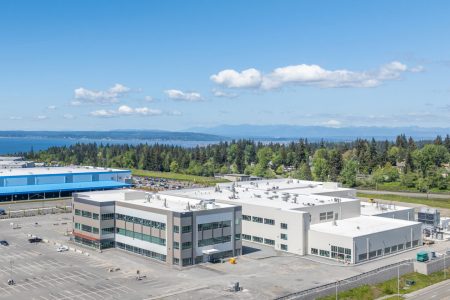






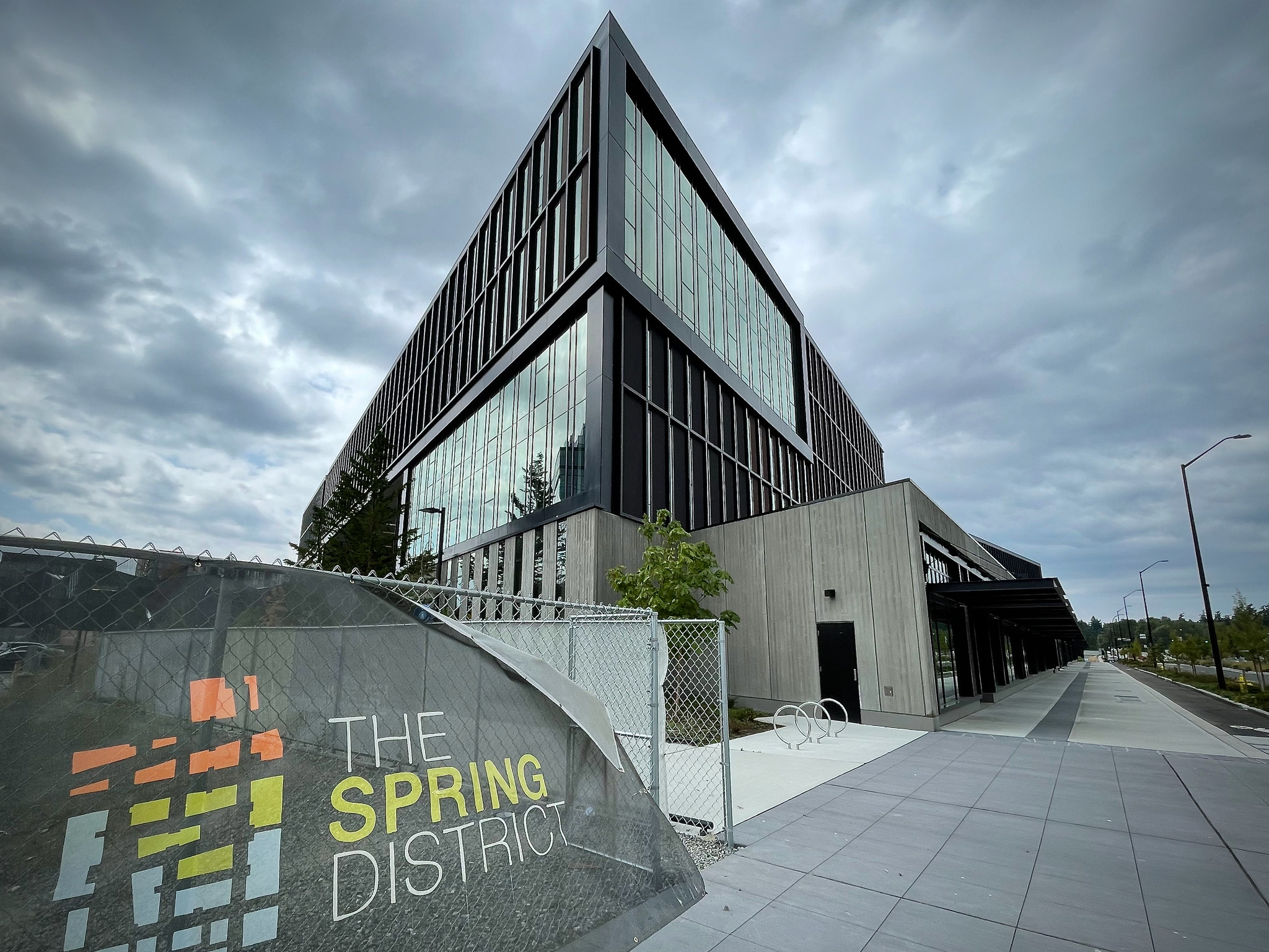
Behind the cold, sterile data points of state labor filings lies a deeply human story of disruption, anxiety, and rewritten futures for nearly 1,400 families across the Pacific Northwest. When Meta, the parent company of major global networks like Facebook, Instagram, and WhatsApp, filed its official WARN disclosure with the Washington State Employment Security Department, it finalized a sweeping corporate decision that slashed 1,395 local positions—roughly one-fifth of its entire regional workforce. In the sleek, modern glass towers of Bellevue’s Spring District, where the energetic hum of innovation had long defined the daily atmosphere, the news was met with a heavy, contemplative silence. For the 699 employees at this single location who learned their roles were being eliminated, the announcement did not represent a routine corporate reorganization or a necessary fiscal adjustment; instead, it was an abrupt halt to their professional routines, a sudden severing of workplace communities, and the beginning of an anxious search for stability. The physical offices, once celebrated for their whimsical perks, gourmet cafeterias, and vibrant collaborative spaces designed to foster lifetime careers, suddenly felt like temporary transit hubs. This massive workforce reduction humanizes the brutal math of corporate restructuring, revealing how the lives of highly skilled software engineers, program managers, creative designers, and essential support staff are instantly transformed when their daily contributions are reduced to balance-sheet liabilities. Every single one of these laid-off workers represents a complex network of personal obligations—mortgages secured on the promise of tech-sector stability, children enrolled in local schools, and personal identities deeply entwined with corporate prestige. As these individuals close their laptops and turn in their badges, they are left to navigate the emotional fallout of a sudden transition, proving that behind every statistic in a state registry, there is a human being grappling with the abrupt loss of security and predictability.
The sheer geographic distribution of these layoffs illustrates how deeply embedded Meta has become in the economic and cultural fabric of the Puget Sound region, making the pain of these cuts felt across multiple neighboring communities. In Bellevue’s Spring District, which bore the heaviest burden with nearly 700 jobs eliminated, the impact will reverberate far beyond the corporate campus itself, directly affecting local restaurants, coffee shops, and service providers that rely on the daily foot traffic of tech professionals. Meanwhile, the cuts rip through Seattle proper, with 215 positions eliminated at the company’s prominent Dexter Avenue offices in the South Lake Union neighborhood, and another 44 workers let go from the historic Utah Avenue facility. Across the lake in Redmond—traditionally the domain of Microsoft but long a stronghold for Meta’s hardware aspirations—another 206 employees are confronting the termination of their roles. Perhaps the most isolated are the 231 remote workers scattered across Washington state who received their notices at home, detached from the physical proximity of colleagues who could offer a comforting word of solidarity. This multi-city retreat marks a dramatic reversal of the aggressive real estate and talent acquisition strategies that defined the last decade. For years, the rapid growth of these offices was celebrated as a testament to the region’s unstoppable economic momentum, but today, these half-empty corridors serve as a stark reminder of how quickly corporate priorities can shift, leaving local municipalities and commuter ecosystems to absorb the sudden economic shock. The loss of these jobs does not just affect the individuals who held them; it diminishes the collective vitality of neighborhoods that had evolved specifically to cater to them, reminding us that massive corporate campuses are not self-sustaining islands, but are deeply linked to the livelihoods of thousands of local service workers.
To understand the driving force behind this sweeping displacement, one must look at the seismic strategic realignment occurring at the highest levels of Meta’s executive leadership, where human labor is increasingly being sacrificed to fund the aggressive, high-stakes arms race of artificial intelligence. Globally, Meta is eliminating around 8,000 positions, a decision driven by an uncompromising pivot toward developing and deploying next-generation AI infrastructure. While the company plans to channel an astronomical $145 billion into capital expenditures this year alone, much of that fortune is earmarked for expensive high-performance computer chips, data warehouse expansions, and complex algorithmic research, rather than preserving the human talent that built the company’s social media empire. This transition highlights a painful irony for the outgoing workforce: the very employees who spent years building and maintaining the digital platforms of Facebook, Instagram, and WhatsApp are finding themselves cast aside to finance machines designed to automate cognitive tasks. In previous quarters, specifically in January and March, Meta had already chopped away at its regional workforce in Washington, laying off nearly 500 employees with a particular focus on its augmented and virtual reality-centered Reality Labs division. That earlier wave of cuts signaled the quiet abandonment of the once-vaunted “metaverse” vision—a highly publicized, multi-billion-dollar bet on virtual worlds that failed to yield immediate financial returns—in favor of the new, urgent industry obsession with generative artificial intelligence. For the workers, these rapid pivots reveal an unsettling reality about the modern tech landscape: corporate loyalty is fleeting, and entire career tracks can be rendered obsolete overnight when executives decide to chase the next technological gold rush, treating highly skilled human creators as liquid assets to be liquidated and reinvested into silicon and server farms, converting employee salaries into corporate electricity bills.
The psychological toll of these layoffs is compounded by the prolonged and painful timeline of their execution, which has kept affected employees in a state of suspended animation for months. Although the broader cuts were first hinted at in an agonizing internal memo distributed back in April, the official state filings reveal that the local layoffs will not officially take effect until July 22. This multi-month window creates a prolonged period of professional limbo, a grueling stretch of time during which employees must show up to work, log into systems, and attempt to maintain productivity while carrying the heavy emotional weight of their impending termination. Working under the shadow of a scheduled departure date strips away the sense of purpose that typically fuels high-performance tech teams, transforming once-passionate projects into exercises in going through the motions. Teams are forced to work with skeleton crews, wondering which of their colleagues will survive the next restructuring, while those already marked for departure must divide their attention between wrapping up legacy projects and desperately sending out resumes in a highly competitive job market. The cuts are not isolated to a single underperforming product or experimental group; rather, they dissect the very core of Meta’s money-making apparatus, impacting vital teams across Facebook, Instagram, WhatsApp, advertising, and foundational infrastructure. This broad-spectrum downsizing suggests that no department is truly safe, shattering the long-held myth that certain engineering or revenue-generating roles are immune to corporate cleanups. For months, the hallways of these offices have been filled with whispered conversations and quiet dread, as workers tried to decipher vague corporate communications to understand if their names were on the final elimination lists, forcing individuals to manage the practical anxieties of health insurance coverage, visa statuses, and severance logistics while maintaining a professional facade.
This latest round of job losses at Meta does not occur in a vacuum; it is part of a broader, industry-wide correction that has permanently altered the landscape of employment in the technology sector, leaving local job seekers to face a vastly cooled and crowded market. Over the past two years, the tech industry’s self-proclaimed “Year of Efficiency” has morphed from a temporary cost-cutting phase into an ongoing structural reorganization, as giant corporations and mid-sized startups alike rethink the free-spending hiring practices of the pandemic era. For the displaced Meta workers in Washington, the timing of these layoffs is particularly challenging, as they join thousands of other talented professionals from Amazon, Microsoft, and various local startups who are also actively scanning job boards and competing for a dwindling number of open positions. The days of effortless job-hopping, sign-on bonuses, and escalating salary wars in the Seattle-Redmond-Bellevue corridor have given way to a landscape characterized by rigorous multi-stage interviews, compromised compensation packages, and a palpable air of employer leverage. This shift forces many highly specialized professionals to confront difficult questions about their career trajectories, with some considering relocation, others pivoting to entirely different industries, and many settling for roles that do not fully utilize their hard-won skills. The strain is also deeply felt by temporary visa holders, for whom a layoff notice is not just a financial hurdle, but a terrifying countdown against immigration deadlines that could force them and their families to leave the country. Highly skilled immigrants, who moved across the globe to contribute to the Pacific Northwest’s technological supremacy, find their lives cast into sudden legal precarity, facing a ticking clock to secure another qualifying job in a severely depressed hiring market, a vulnerability that remains one of the most painful, yet frequently overlooked, aspects of tech sector layoffs.
Ultimately, as the July 22 deadline approaches and the reality of these cuts fully sets in, the conversation must shift from corporate strategy and balance sheets to human resilience, adaptation, and the enduring strength of the local tech community. While the physical buildings in Bellevue’s Spring District and Seattle’s South Lake Union may host fewer occupants in the coming months, the talent, creativity, and drive of the 1,395 individuals affected remain undiminished, waiting to be channeled into new, perhaps more meaningful, endeavors. Many of those who have been laid off in previous waves have gone on to found their own startups, bringing innovative ideas to life free from the bureaucratic constraints of massive tech conglomerates, while others have brought their valuable skills to traditional industries—like healthcare, education, and public transit—that are desperately in need of digital modernization. This cycle of displacement and reintegration is a recurring theme in the history of the Pacific Northwest, a region that has successfully weathered the boom-and-bust cycles of timber, aerospace, and early software development, always emerging more diverse and resilient on the other side. Technology will undoubtedly continue to evolve, and the race to build artificial intelligence will proceed with or without the thousands of workers who were sacrificed to fund its infrastructure. However, the true measure of our collective progress is not found in the speed of our algorithms or the massive scale of our data centers, but in how we support and uplift the human beings who are displaced by the relentless march of technological change. As these nearly 1,400 professionals prepare to close one chapter of their lives and begin the next, their journeys remind us that behind every digital platform we use daily are human hands, minds, and hearts—assets that are ultimately far too valuable to ever be truly captured on a corporate ledger.