



Behind the glittering glass facade of glass skyscrapers and the complex algorithms of modern finance lies a fundamental human challenge: how do we adopt revolutionary technology without losing our independence? This is the question currently occupying the mind of Lori Beer, JPMorgan Chase’s global Chief Information Officer. During a recent visit to Seattle, Beer detailed the financial giant’s quiet but highly strategic campaign to construct a specialized artificial intelligence software infrastructure team. This elite group, heavily anchored in the Pacific Northwest’s fertile tech ecosystem, is tasked with a monumental mission. They are building the invisible scaffolding that will allow the world’s largest bank to deploy AI across its vast global network—all while keeping a tight grip on its budget, protecting its proprietary intellectual property, and fiercely guarding against the danger of becoming overly dependent on any single tech monopoly.
The stakes in this technological chess match could not be higher. Beer’s insights arrive at a critical cultural and economic moment, as prominent industry voices like Microsoft’s Satya Nadella and Palantir’s Alex Karp increasingly sound the alarm about a looming digital feudalism. They warn that a tiny handful of elite ai vendors could soon hold absolute dominion over corporate data, operational costs, and the very software tools businesses rely on to survive. By establishing this new software-focused infrastructure group, JPMorgan is drawing a line in the sand. Rather than managing physical servers or buying raw hardware, this team acts as a highly intelligent traffic controller. They are designing proprietary software layers that can dynamically evaluate an ai task and decide the absolute best place to run it—whether that means keeping sensitive data inside JPMorgan’s private, highly secure data centers, routing it to a major public cloud, or leveraging emerging, specialized computing providers.
A prime example of this protective strategy is how the bank is approaching the rise of autonomous AI agents. Instead of renting ready-made agent ecosystems from external tech giants, JPMorgan is committed to building and owning the core software that directs these digital assistants. To Beer, the logic is simple: the intelligence that understands JPMorgan’s unique clients, regulatory requirements, and business logic is the soul of the company and must be built in-house. In contrast, the underlying large language models themselves are treated as interchangeable commodities. If a hot new AI model enters the market tomorrow that is faster or cheaper, the bank wants the absolute freedom to swap out the old model and plug in the new one instantly, without having to rebuild their entire proprietary business system from scratch.
Managing this transition isn’t just about code; it requires a deep understanding of human habits and financial discipline. Left to their own devices, software engineers naturally gravitate toward the newest, most powerful, and often most expensive AI models to solve basic problems—the computational equivalent of using a sports car to drive down the block for milk. The new infrastructure team is creating smart routing systems that automatically direct simple tasks to smaller, highly efficient, and less expensive models, reserving costly high-performance computing power only for the most complex problems. To build these sophisticated guardrails, JPMorgan is heavily recruiting in Seattle, drawing on a rich pool of seasoned engineering talent who spent years building the cloud platforms of Amazon and Microsoft before bringing their invaluable expertise to the banking sector.
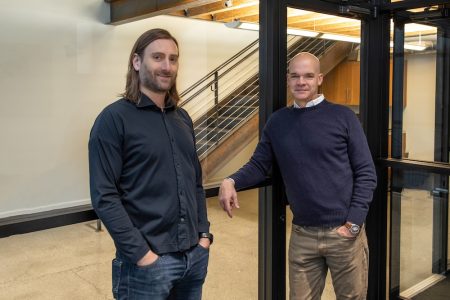
This push is fueling massive growth at JPMorgan’s Seattle Tech Center, which has expanded to roughly 400 professionals since its inception in 2018. To guide this next chapter, the bank recently appointed Ture Armas, an experienced technology executive, to lead the center’s strategy and community engagement. Over the next month, the entire Seattle team will pack up and move into a newly expanded, state-of-the-art workspace inside the newly renamed JPMorganChase Center. This physical relocation is highly symbolic and practical; by bringing software engineers into close, physical proximity with everyday business teams, the bank hopes to foster a culture of rapid, collaborative experimentation where technology is built in tandem with real human needs.
At the center of this massive machine is Lori Beer herself, whose career journey began in the meticulous world of nuclear facility software engineering before she ascended to become the first CIO to sit on JPMorgan’s prestigious Operating Committee. Today, she leads a colossal tech army of 70,000 employees—including 45,000 engineers—powered by an astronomical $20 billion annual budget. The wisdom of her cautious, value-driven strategy was echoed by CEO Jamie Dimon and CFO Jeremy Barnum during the bank’s stellar second-quarter earnings call. With nearly 1,000 active AI projects already driving efficiency in fraud detection, risk assessment, and document analysis, the bank’s northern star remains steady: leverage the vast potential of artificial intelligence to empower human workers, but always do so with the fiscal prudence, independence, and strategic control required to safeguard the institution’s future.