




The insatiable hunger of modern technology is rapidly colliding with the physical limitations of our planet, creating an unprecedented existential crisis for the architects of the artificial intelligence revolution. Every query run through a large language model, every frame of synthetic video generated, and every digital world simulated in a neural network demands an immense, unceasing rush of electricity. As tech giants deploy hundreds of thousands of advanced microchips in football-field-sized data centers, they are running headfirst into severe grid capacity limits, local community backlashes, and government moratoriums. In places like Central Washington and Oregon, once favored for their abundance of cheap hydroelectric power, the sheer volume of computing infrastructure has turned water rights and electricity allocations into highly contentious political battlegrounds. This soaring demand for power is threatening to completely derail the ambitious net-zero climate commitments made by some of the world’s most influential corporations, who find themselves running out of traditional renewable options like wind and solar. In response, a quiet but incredibly intense energy race has ignited in the Pacific Northwest. Nestled among the evergreen forests and industrial corridors of Washington State, private companies are attempting to achieve what was long deemed a scientific impossibility: capturing the primal power of the stars. By aiming to commercialize nuclear fusion—the physical process that powers the sun—these companies are hoping to solve the existential clean energy deficit of the AI age, transforming a classic scientific holy grail into a tangible, grid-scale reality within the decade.
Inside the high-security walls of Helion Energy’s research facility in Everett, Washington, the quest to build the world’s first commercial fusion plant is driving a relentless, twenty-four-hour engineering effort. Led by co-founder and CEO David Kirtley, Helion has positioned itself at the absolute forefront of this clean-tech rush, fueled by a staggering $1.5 billion investment pool and a historic, first-of-its-kind agreement to sell fusion electricity directly to Microsoft by 2028. This partnership has turned the startup’s timeline upside down, transforming a ambitious laboratory experiment into a high-stakes corporate delivery contract. Visitors to the facility must first navigate a gauntlet of outdoor guard booths, biometric identification checks, and secure phone lockers before catching a glimpse of Helion’s flagship technology: Polaris. This sixty-foot-long, cylindrical prototype serves as a testing ground for a unique magnetic compression technique. The machine uses incredibly strong, pulsed magnetic fields to shoot small, ionized rings of deuterium and helium-3 plasma from opposite ends of the chamber. These rings speed toward the center at an astonishing one million miles per hour, where they collide in a violent, highly controlled implosion. Compressed to more than two hundred million degrees Celsius—ten times hotter than the center of the sun—the ions fuse, releasing energy that pushes back against the magnetic fields. Using a principle remarkably similar to regenerative braking in electric vehicles, Helion directly captures this movement as electricity, completely bypassing the expensive, steam-condensing turbines that define traditional nuclear power plants.
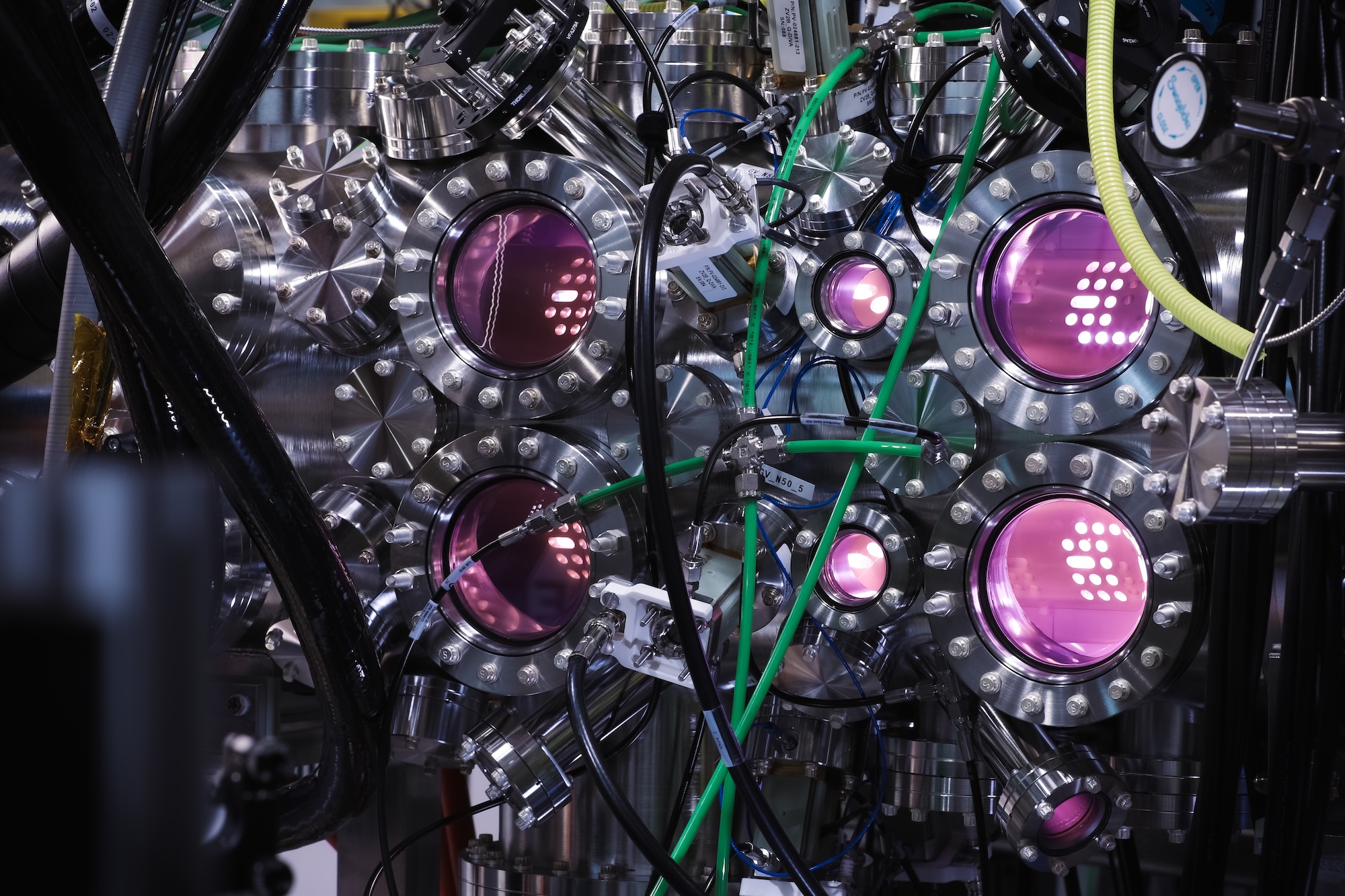
But transitioning from dynamic laboratory demonstrations to a fully reliable, fifty-megawatt commercial plant like Helion’s “Orion” facility in Malaga, Washington, requires navigating brutal engineering realities. Malaga, a small, unincorporated agricultural community near Wenatchee, is currently witnessing a massive transformation as construction crews break ground on the facility, but the pressure to meet the two-year deadline has forced Helion’s engineering team to think on their feet. This high-wire act recently led to an intriguing detour. Hidden away behind a massive, towering fabric partition that employees jokingly refer to as the “Wizard of Oz” curtain, Helion has constructed “Tiny Merge,” a miniature fusion device just one-eighth the size of Polaris. Led by director of electrical engineering Manav Singh, this downsized, tubular machine is covered in a complex network of metal ports, heavy cabling, vacuum pumps, and exposed capacitor banks. While some outside observers might view the creation of a smaller machine as a sign of technical backtracking, Helion’s team maintains that this rapid prototyper is a crucial asset, allowing them to conduct deep investigations into plasma behavior and run tests far more quickly than on the giant Polaris. Singh’s team uses the smaller machine to resolve key physics questions on a faster iteration loop, hoping these lessons will prevent expensive mistakes when scaling up the Malaga plant.
Just a four-minute drive down the road, rival startup Zap Energy is taking a radically different pathway to the fusion crown, relying on a beautiful, minimalist approach to plasma physics. Where Helion relies on complex, costly, and delicate external magnetic grids to squeeze hydrogen atoms, Zap’s technology utilizes an elegant natural phenomenon known as the “Z-pinch.” Historically, Z-pinch devices struggled with instabilities that caused the plasma to break apart in microseconds, but Zap has overcome this by introducing fluid flows that smooth out the plasma column like a fast-moving river. Inside their compact, twelve-foot-long testing devices, such as the advanced FuZE-Q prototype, Zap’s system injects a stream of hydrogen gas and blasts it with a massive, concentrated pulse of electricity. This power surge creates a highly stable, two-foot-long column of plasma that resembles a glowing, violet-hued bolt of tamed lightning. By passing the electric current directly through the plasma itself, the current generates its own powerful electromagnetic field, self-compressing the plasma to the extreme temperatures and densities required for nuclear fusion. Capturing the resulting energy involves surrounding the reaction chamber with an innovative liquid metal blanket, using bismuth in early designs and liquid lithium for eventually scaled commercial reactors. The hot neutrons emitted during the fusion reaction smash directly into this liquid metal, heating it up so that it can be circulated through heat exchangers to generate clean, highly reliable steam power.
While Zap’s Z-pinch design is remarkably elegant and physically compact, the company’s leadership has always maintained a deeply pragmatic view of the unforgiving timelines of deep-tech development. Understanding that commercializing fusion is filled with unpredictable engineering obstacles, Zap recently stunned the scientific community by announcing they will co-develop nuclear fission—fusion’s older, proven cousin—as a near-term revenue generator and a strategic hedge on their fusion roadmap. Led by president Benj Conway, CEO Zabrina Johal, and fission vice president Matthew Thompson, this dual-core approach makes Zap the very first fusion startup to officially embrace fission technology. The company plans to deploy a highly compact, ten-megawatt fission microreactor based on highly reliable, legacy designs from Toshiba. Far from being a pivot away from their ultimate goal of fusion, Zap explains that the two nuclear technologies share critical engineering overlaps that will accelerate the deployment of both systems. Specifically, the fission microreactor’s liquid sodium cooling system behaves almost identically to the liquid bismuth and lithium blankets designed for their fusion systems, allowing Zap’s engineers to master liquid metal plumbing, regulatory safety approvals, and electrical grid synchronization in the real world today, while using the revenue to fund their long-term fusion ambitions.
This strategic pragmatism highlights the evolution of a global clean energy race that now features more than fifty private fusion ventures competing alongside massive state-funded projects in Europe and Asia. From well-funded competitors like Commonwealth Fusion Systems in Massachusetts—which is leveraging nearly three billion dollars in capital to build a reactor in Virginia’s data center heartland—to undisclosed billions of dollars flowing into state-run programs in China, the race has assumed geopolitical proportions. Independent plasma physicists and research directors, like Laura Berzak Hopkins from the Princeton Plasma Physics Laboratory, watch this massive influx of private capital and engineering talent with a mixture of excitement and cautious optimism. While experts acknowledge that immense physical hurdles still remain before we can achieve cost-competitive, continuous fusion power on our grids, they agree that our understanding of plasma dynamics has entered a golden age, driven by advanced computational modeling, machine learning, and new materials. As the artificial intelligence boom continues to strain our electrical grids to their breaking points, the work taking place in the Pacific Northwest represents much more than a localized scientific rivalry; it is a high-stakes, real-world test of whether humanity can finally domesticate the power of the stars to secure its digital future.