



The Humble to the High-Tech: How Alternative Proteins Went from Dehydrated Drama to the Dinner Table
Forty years ago, the first commercial veggie burger hit London markets—a modest invention, consisting of little more than a dehydrated powder that shoppers mixed with water and pressed into patties by hand. It was the food of pure optimism, tasting faintly of desiccated vegetables and not much else. Today, the category of alternative proteins has evolved into something unrecognizable, even wondrous: fillets of tomato that mimic the texture of sushi-grade tuna, plant-based burgers that sizzle and “bleed” under the broiler, and whole cuts of chicken grown in steel brewery-style tanks from real animal cells, no slaughter required. The sector surged to a $1 billion market in the early years of this decade, triggering a gold rush of venture capital and a dizzying wave of new products. Then came the inevitable hangover: Beyond Meat’s stock, which once soared after its 2019 IPO, plummeted; last year, only 11 percent of U.S. households purchased faux meat at all. On the surface, the dream looked like it was crumbling. But look closer, and a more hopeful picture emerges. Repeat purchases among those who do try these foods remain strikingly strong. Global demand is rising, not falling. Academic researchers are digging deeper into the science, and a scrappy new generation of startups is advancing the art of appealing to skeptical palates. “Any new emerging technology always goes through challenges in scaling, economics, [and] consumer acceptance,” says Rohan Shirwaiker, director of the Bezos Center for Sustainable Protein at North Carolina State University, with the measured calm of a man who has seen hype cycles before. “The trajectory, I think, is in the right direction.”
To understand where this endlessly debated industry is heading, it helps to meet the players, and the foods themselves, up close. Alternative proteins fall into three main categories that increasingly overlap: plant-based products crafted from soy, beans, peas, lentils, and wheat; fermentation-produced proteins where organisms like fungi, bacteria, yeast, and algae act either as the ingredient itself or as microscopic factories churning out specific fats and proteins; and cell-cultivated meats grown from actual animal cells in nutrient-rich broths, gradually shaped into fat and muscle tissue. Consumers are drawn to these foods for reasons that are both rational and deeply heartfelt: anxiety over the climate crisis, the staggering land and water footprints of livestock, worries about cholesterol and saturated fats, and a visceral ethical discomfort with factory farming. Add to that the fundamental arithmetic of a warming planet: the global population is expected to balloon toward ten billion, and experts agree that no conceivable amount of conventional beef, chicken, and fish will ever feed everyone. Yet significant hurdles block the path. These foods generally cost more than their animal-derived counterparts—sometimes astronomically so. Shoppers are nervously uncertain about the technologies that produce their dinners, uncertain about the taste and texture, and increasingly cottoning to the alarming phrase “ultra-processed.” For every triumph, there’s a stumble; for every new science-backed solution, there’s a whisper campaign of skepticism. But as Shirwaiker suggests, every new technology endures its fall from grace before it reaches the promised land of mass adoption. The entrepreneurs in this space have heard the doubts, shed the rose-colored goggles, and gotten to work.
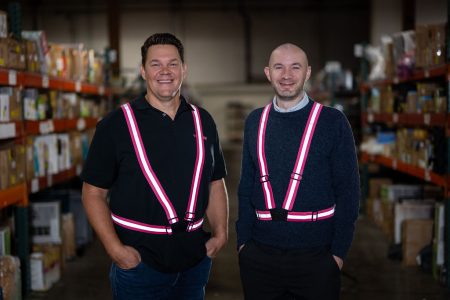
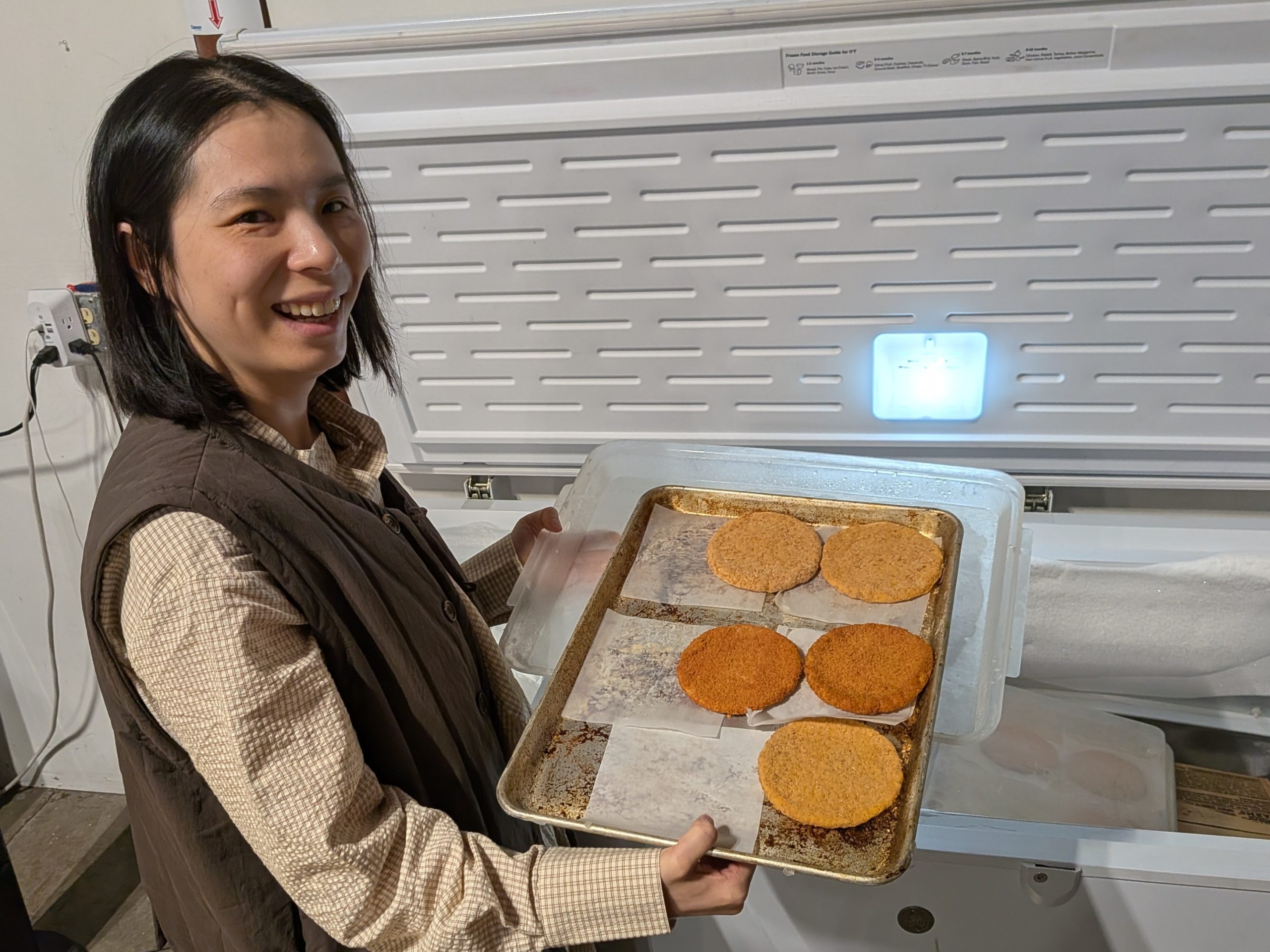
At a nondescript office park south of Seattle, Christie Lagally Bradburn is doing that work one school lunch at a time. The founder and CEO of Rebellyous Foods, Lagally Bradburn runs her research and development operations alongside senior food scientist Taoran Wang, surrounded by trays of experimental chicken patties cooling under fluorescent lights. Her company churns out faux chicken nuggets for six million U.S. school kids, and if that ambition impresses, the mission behind it goes even deeper. A former Boeing engineer who designed manufacturing tools to build airplanes faster, better, and cheaper, Lagally Bradburn left aerospace for a different kind of flight—one that would allow her ethical veganism to transform the food system. “We want people to feel good about what they eat,” she says, gesturing to the company’s tidy ingredient list: soy protein, yeast-based flavoring, salt, oil, water, and a binder called methyl cellulose, the same substance found in bread and salad dressing. The kickin’ nuggets have a satisfyingly meaty texture, absent the gristle and mystery bits that put some people off real chicken, and the flavor, she says with a hint of pride, is often compared to Campbell’s chicken noodle soup. Rebellyous has developed an automated system, the Mock 3, capable of producing more than 5,000 pounds of faux chicken per hour. When the facility housing it shut down on short notice, the company scrambled, partnering with an existing manufacturer in New Mexico while it develops the Mock 4, a smaller, cheaper, simpler machine intended to ramp up production. Through it all, Lagally Bradburn keeps her goals sternly practical: “Our goal is to run a financially sound company, to be there for the schools,” she says, even as she quietly admits that she’s also trying to address climate change, public health, and animal welfare, one nugget at a time.
About a decade ago, Anne Carlson was sitting at her kitchen table, planning a career change, when her daughter made an announcement that shifted the tectonic plates of her life: she didn’t want children because she was terrified about what the future held for the planet. “I realized that I couldn’t just do a normal job after that,” Carlson remembers. “Building a better future for her was everything.” With a background in the pet food industry, Carlson started digging into the environmental impact of our four-legged family members. What she found was startling: according to UCLA research, American pets account for 25 to 30 percent of the environmental impact of U.S. meat consumption. And so she began to pursue a strikingly unconventional solution—insects. In 2020, her company, Jiminy’s, became the first in the nation to receive federal approval to sell cricket-based dog food, made primarily from crickets and black soldier fly larvae. The idea is almost absurdly logical: “It’s less land, less water and almost no greenhouse gases,” Carlson points out, and the yield is staggering—one acre of land used for chicken yields 265 pounds of protein per acre, whereas the same acre produces 60,000 pounds of cricket protein. Jiminy’s now sells cricket-based kibble, treats, and dental chews that provide essential amino acids and, according to some customers, ease allergies and digestion issues. But the company’s biggest challenge has nothing to do with nutrition. “People think that when they open the bag, it’s going to be a bag full of bugs,” Carlson says, laughing. “It is absolutely not that.” The product looks, smells, and tastes like conventional dog food, which makes it, in her words, “not scary at all”—except perhaps to the dogs, who tend to love it enthusiastically, and to the human owners, who need a few minutes to wrap their heads around this bizarre twist on an ancient food chain.
Nowhere is the debate trickier than around the buzzword that has spooked consumers and captivated regulators: ultra-processed food. Are alternative proteins “ultra-processed”? Yes, some are, leading to concerns about excessive salt, saturated fats, and chemical additives in a sector that promises health. But the Bezos Center’s Shirwaiker cautions against a one-size-fits-all judgment. “If we are using processing to get the right texture, something that consumers will like without sacrificing the nutrition, I don’t think that’s a bad thing at all,” he explains, noting that processing itself isn’t inherently harmful—it can remove unwanted elements, extend shelf life, boost protein digestibility, and preserve vital nutrients. “It’s really a matter of perspective and trying to separate process from nutrition in some way.” Both Rebellyous and Jiminy’s lean hard into this nuance, keeping ingredients simple and proudly disclosed. Carlson says she wants pet parents to know exactly what’s in the bag; Lagally Bradburn echoes the same commitment to radical transparency. Yet the most stubborn hurdle is macroeconomic: cost. The companies are on the verge of profitability—Rebellyous, which serves schools during the academic year, turns a profit for much of the year, though summertime doldrums slow it down; Jiminy’s runs in the black in some months and grows faster than the pet industry as a whole—but both face rising supply chain prices that make profitability feel like a slippery goal. For all their ambition, the founders are realists who recognize that consumer acceptance is a marathon, not a sprint, and that they’re racing against time as much as spring.
And yet, for all the exhausting, grinding work, there is a strangely persistent optimism that bubbles up from the floorboards of this young industry. Lagally Bradburn, who has seen her share of false starts and dead ends, returns to a homespun metaphor her father used to tell her: “Sometimes when you’re in it, it can be hard to see the forest for the trees.” The forest, in this case, is the stubborn, undeniable truth that the world is becoming more sustainable, one small step at a time. Carlson, who started this journey not with a spreadsheet but with a conversation with her daughter, now has a front-row seat to the change she helped will into existence. Shopper by shopper, bite by bite, the world is starting to adapt. The future of food will not be a single, radical invention that rewrites the menu overnight. It will be the cumulative weight of incremental changes—a better texture here, a lower price there, a school district that finally accepts the nuggets, a pet owner who the skeptic becomes a convert. There are no easy answers in this emerging field, but there is plenty of room for hope. The journalists reporting this story, the scientists testing the Thanksgiving patties, the families pinching pennies to afford a more ethical gallon of milk, the dogs chomping down on insect-based kibble—they are all part of the same collective experiment. And if the proof is in the pudding, perhaps the sweetest confirmation is a simple one. The next time you bite into a meatless patty that sizzles, a piece of cell-cultivated filet, or a nugget that actually tastes like freedom, you can be sure that somewhere, someone like Christie Lagally Bradburn or Anne Carlson is standing in a fluorescent-lit lab, looking at the same product with a tired smile, quietly convinced that the world is just beginning.