


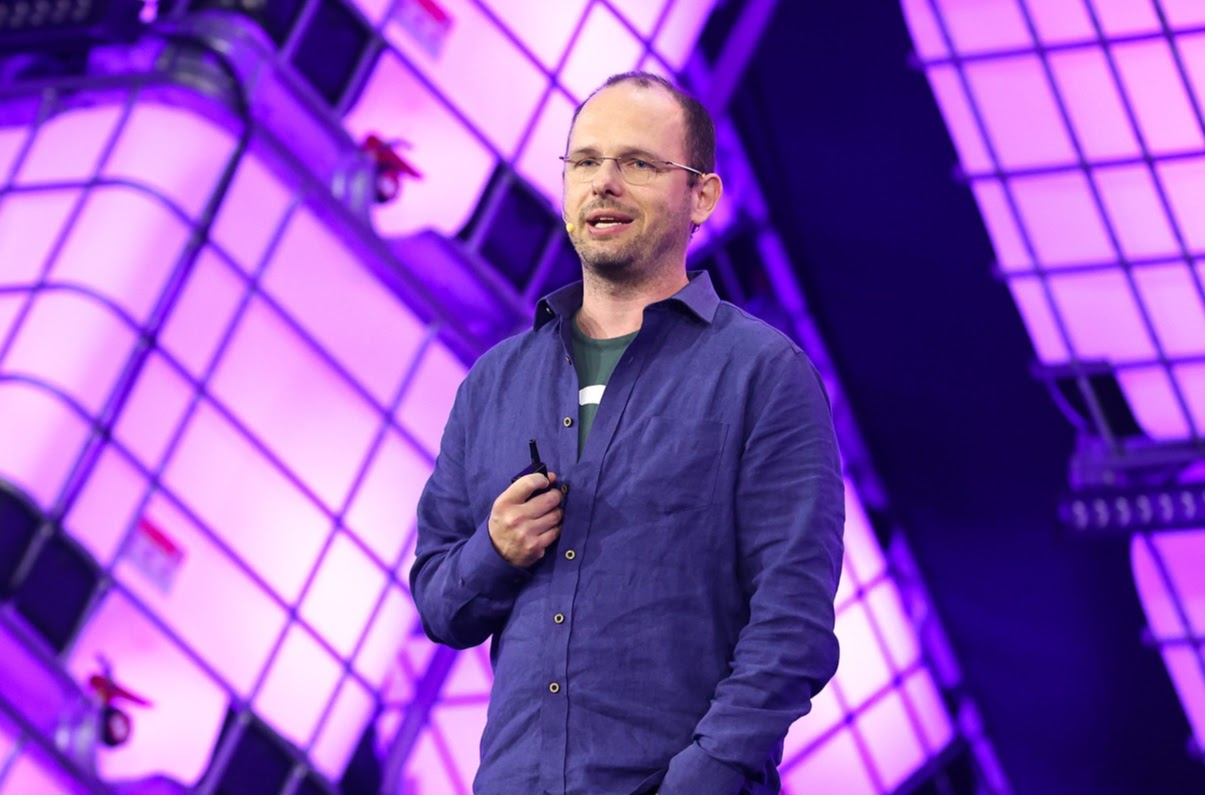
For decades, the world of software development has orbited around centralized hubs, with GitHub standing as the undisputed gravity well for collaborative coding. Yet, as artificial intelligence transitions from a novelty assistant into an army of autonomous “agents” capable of writing, testing, and committing code at humanly impossible speeds, the infrastructure supporting this ecosystem is beginning to buckle. Former GitHub CEO Thomas Dohmke, who spent years steering Microsoft’s $7.5 billion acquisition through the peak of the web-development boom, recognized this impending bottleneck early on. Stepping down from his leadership post last year, Dohmke teamed up with his former deputy chief of staff, Cole Driver, to build a solution tailored for this new era. Their answer is Entire, a freshly minted startup designed to fundamentally redesign how codebase repositories are stored, shared, and queried in an AI-dominated landscape.
The core thesis behind Entire rests on a classic philosophy originally championed by Linus Torvalds, the creator of Linux and the Git version control system: software development is inherently healthiest when it is decentralized. While GitHub built an empire by centralizing Git hosting for convenience, the rise of AI agents like Claude Code, Cursor, and GitHub Copilot has introduced a massive logistical challenge. Instead of a few human developers occasionally pulling and pushing code, thousands of automated agents can now hammer a central server simultaneously, causing crippling latency, strict rate limits, and system-wide outages. To combat this, Entire is debuting its distributed Git network across active regions in the United States, Europe, and Australia. This framework allows developers to mirror their existing GitHub repositories onto Entire’s network in a single step, ensuring that AI agents can clone, pull, and execute code from a localized, ultra-fast copy while the primary source remains safely housed on GitHub.
Investors have shown quiet but immense confidence in Dohmke’s vision, backing Entire with a staggering $60 million seed round—historically recognized by lead investor Felicis as the largest seed investment ever secured by a developer tools startup. This funding round, which valued the young company at $300 million, drew participation from Seattle’s Madrona Venture Group, Microsoft’s venture arm M12, Basis Set Ventures, and prominent tech figures like Yahoo co-founder Jerry Yang and Y Combinator CEO Garry Tan. This diverse backing, particularly from Microsoft, highlights Entire’s unique cooperative positioning. Rather than trying to outright destroy or replace GitHub on day one, Entire is framing its network as a vital structural companion. By offloading the heavy, repetitive traffic generated by AI agents to Entire’s distributed locations, GitHub is shielded from operational strain, creating a win-win scenario for Microsoft’s broader developer ecosystem.
While the startup’s immediate utility lies in acting as a high-performance mitigation layer, its creators harbor much larger ambitions. Madrona’s managing director, Tim Porter, along with the late legendary tech executive S. “Soma” Somasegar—who previously spearheaded Microsoft’s developer division—have pointed out that while GitHub remains incredibly important, it risks becoming a legacy platform if it cannot natively scale to meet AI demands. Madrona’s investment thesis asserts that Entire isn’t just looking to coexist with GitHub, but to eventually “superset” it. The company’s long-term roadmap includes allowing developers to bypass external mirrors entirely and host their new project repositories natively on Entire’s distributed network. To support a wide user base, the startup plans to roll out commercial and individual tiers following its preview phase, utilizing a hybrid pricing model of seat-based and consumption-based plans, supported by a robust free tier and open-source foundation.
Beyond offering a physical speed boost to code retrieval, Entire is tackling a deeper, more conceptual crisis born of the AI revolution: the loss of human context. When humans write code, they leave a trail of commit messages, pull requests, and Slack conversations explaining why they made certain choices. When an AI agent generates thousands of lines of code in seconds, that contextual history is often lost, leaving human developers with a black box of functional but mysterious logic. To bridge this gap, Entire has built tools that automatically record the reasoning, prompts, and step-by-step decision-making process of AI coding agents, treating these session logs as vital development artifacts. These logs are stored directly inside the repository alongside the raw code, creating a comprehensive digital paper trail that integrates seamlessly with major tools like Factory AI, Codex, and Claude Code.
To make this historical data immediately actionable, Entire has introduced a suite of features designed to humanize and demystify machine-generated repositories. Key among these is “Entire Blame,” a tool that allows developers to click on any single line of code and instantly trace it back to the exact AI conversation and prompt that generated it. This is complemented by “Entire Review,” which conducts automated code reviews by cross-referencing new updates against the stored context of prior agent sessions, and a specialized Semantic Search tool that lets teams query the history of code changes based on the abstract reasoning behind them rather than just keyword matches. As Dohmke summarizes, session logs have rapidly evolved to become the second most important resource in modern software development. By anchoring these interactive, human-readable AI histories directly alongside the source code, Entire is ensuring that as software creation accelerates into the future, the human developers steering the ship will never lose their bearings.