


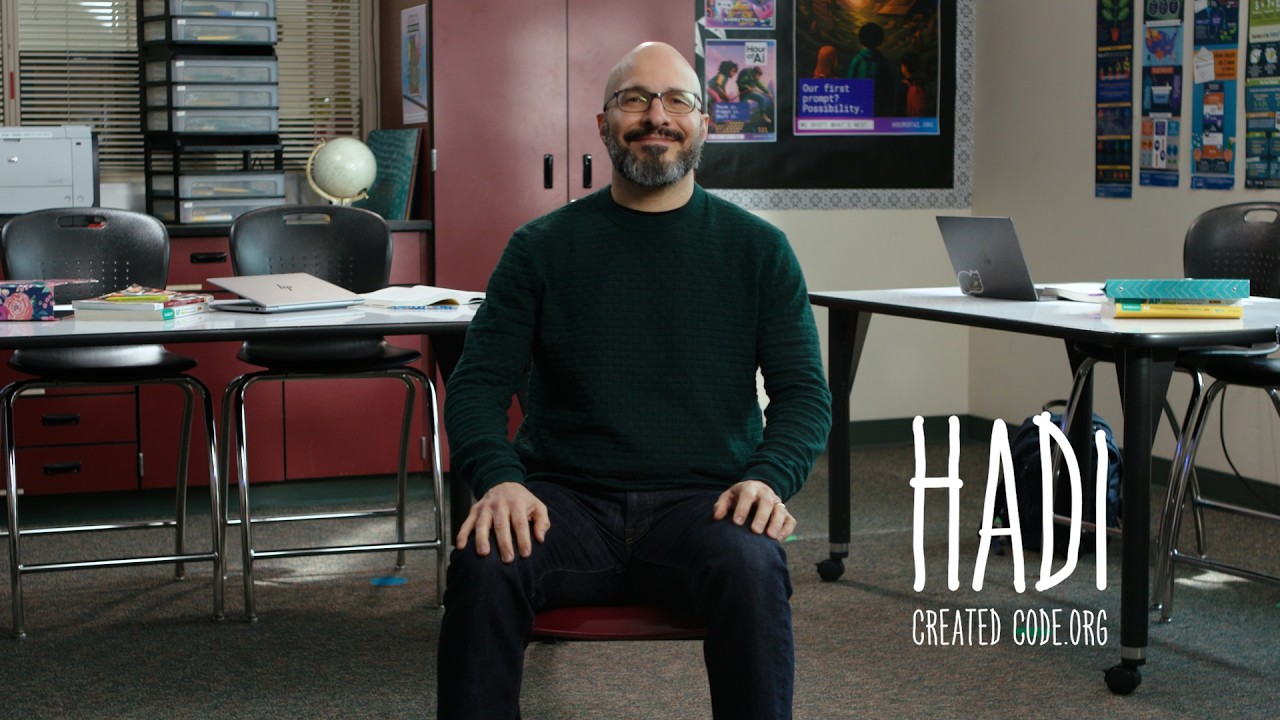
The relentless acceleration of our digital landscape has brought humanity to a historic crossroads, where the tools we use to navigate reality are evolving far faster than the systems designed to teach them. For more than a decade, the Seattle-based educational non-profit Code.org served as the premier champion of digital literacy, convincing educators, parents, and lawmakers worldwide that learning to write lines of computer code was the definitive superpower of the twenty-first century. Yet, over the past two years, the ground beneath our virtual feet has shifted dramatically with the sudden, explosive rise of consumer-facing artificial intelligence. Recognizing that the nature of human-computer interaction has undergone a structural paradigm shift, the organization has officially rebranded itself as CodeAI. This change is far more than a timely corporate makeover; it is a profound philosophical realignment that redefines what it means to be educated in a highly automated society. As co-founder Hadi Partovi passionately articulated in a recent video address, the historical focus of computer science was teaching the syntax of coding—the tedious process of translating human ideas into machine-readable instructions. Today, however, the real educational horizon is artificial intelligence: learning how these complex neural networks function, figuring out how to build and direct new technologies, learning how to solve massive societal problems using advanced data models, and, perhaps most importantly, discovering how to remain an empathetic, ethical, and responsible citizen in a world increasingly governed by automated algorithms. The rebrand to CodeAI marks a transition from an era where humans had to conform to the strict logical structures of machines to one where machines have learned to understand human language, thereby shifting the academic premium away from basic coding mechanics and placing it squarely on higher-order critical thinking, creative collaboration, and digital citizenship.
To truly grasp the weight of this historic transformation, one must examine the remarkable evolutionary trajectory of the organization itself. Founded in 2013 by twin brothers Hadi and Ali Partovi, Code.org began as an ambitious, grassroots effort to democratize a field of study that had long been gatekept by socioeconomic privilege and geographic barriers. Driven by a deep-seated belief that computer science should be a foundational part of every child’s core curriculum—just like algebra, chemistry, or biology—the brothers set out to make coding accessible to all. Over the past eleven years, this noble mission has secured nearly $60 million in financial support from global technology titans and philanthropic powerhouses, including Microsoft, Amazon, Google, and The Ballmer Group. This unprecedented level of institutional backing allowed the organization to scale up in a way that is virtually unmatched in the history of educational technology. Today, the newly christened CodeAI platform serves a jaw-dropping global ecosystem of more than 150 million active students and 3 million dedicated teachers, representing a massive community of learning that spans across continents, languages, and diverse cultural landscapes. To date, students utilizing this free platform have built an astonishing 232 million individual projects, turning abstract lessons into tangible, creative software, interactive games, and digital art. By leveraging this colossal, pre-existing international network, CodeAI is uniquely positioned to execute one of the most rapid and expansive educational course corrections in human history, instantly bringing state-of-the-art artificial intelligence literacy to millions of classrooms that would otherwise be left stranded in the wake of Silicon Valley’s relentless, breakneck cycle of technological disruption.
Steering this ambitious new chapter is Karim Meghji, a seasoned technology executive who stepped into the role of president and Chief Executive Officer in February. Meghji, who originally joined Code.org in 2022 as its Chief Product Officer, has been the main architect of the organization’s shift toward an AI-centered curriculum, drawing on a rich career that includes a decade-long tenure at RealNetworks and serving as Chief Technology Officer for the Seattle-based digital remittance company Remitly. For Meghji, the rise of powerful generative AI tools does not render teachers or traditional learning obsolete; rather, it fundamentally elevates the human element of education. Because artificial intelligence has made the literal “doing” of tasks—such as writing code, generating text, or organizing databases—incredibly simple, the true work of education must pivot toward protecting and cultivating critical thinking skills. Meghji believes that giving children the knowledge to actively question these tools, analyze their flaws, and deliberately decide what purposes they should serve is the most vital educational challenge of our lifetime. He notes that the current generation of students will ultimately be the ones to write the rules and set the permanent parameters for how artificial intelligence is integrated into our global society. While a select group of students from affluent backgrounds are currently being taught to direct, question, and create with AI, the vast majority of the world’s children are being left in the dark as passive consumers, and it is precisely this dangerous socioeconomic chasm that CodeAI exists to bridge.
The transition of this massive organizational machinery from theory to everyday classroom practice is already well underway, highlighted by the strategic evolution of CodeAI’s most iconic and beloved programs. The world-famous “Hour of Code” campaign, which historically introduced hundreds of millions of children to their very first line of programming through playful, block-based tutorials, has been purposefully transformed into the “Hour of AI.” This updated, interactive learning event has already reached over 33 million curious students worldwide, demystifying complex concepts in a single, accessible sitting. Furthermore, the organization has rolled out a free, groundbreaking high school curriculum called “AI Foundations,” which has already been adopted by more than 75,000 eager students globally. This masterfully designed, comprehensive course goes far beyond the surface level of teaching kids how to write simple chat prompts, diving deep into the intricate machinery of machine learning algorithms, computational thinking, data literacy, and the profound, often troubling ethical impacts that artificial intelligence has on issues ranging from systemic bias to personal data privacy. Beyond these direct-to-student educational offerings, CodeAI has firmly established itself as an influential policy champion in the halls of government. By spearheading the creation of an updated, forward-looking policy framework designed to guide state-level implementation of digital science education, their tireless advocacy has successfully influenced policy decisions across all 50 U.S. states and paved the way for systemic guidelines that are actively being adapted by global ministries of education. These legislative achievements help ensure that school systems treat artificial intelligence not as a temporary novelty or a high-tech elective for wealthy districts, but as a core pillar of modern public instruction that must be funded and staffed equitably across all zip codes.
The urgency of CodeAI’s revised mission is starkly illuminated by the organization’s newly released survey data, which points to a massive, troubling disconnect between the daily realities of modern teenagers and the outdated structures of standard public education. According to the data, high school students possess an incredibly mature and realistic understanding of their future prospects: a staggering 75% of them firmly believe that fluency in artificial intelligence will be far more critical to their long-term success than many of the traditional academic subjects currently mandated by public schools, with 63% stating that AI literacy is directly tied to their readiness for life after graduation. Even more compelling is the fact that 84% of high school students are already actively using generative AI tools in their daily lives to write, study, create, and explore. However, despite this near-ubiquitous adoption by youth, the formal educational system remains paralyzingly slow to adapt; a depressing 16% of high school administrators and leaders report that all of their students are actually receiving structured instruction about artificial intelligence in their classrooms. This massive discrepancy turns AI into a mysterious, unmonitored force in children’s lives. To solve this, Meghji advocates for a radical shift in perspective, arguing that artificial intelligence can no longer remain a mysterious, impenetrable “black box” where users type in a prompt and passively accept whatever output is generated. Instead, he believes education must transform AI into a “glass box,” handing kids the conceptual screwdrivers and hammers they need to take the machine apart, understand its gears, and command it with confidence.
Ultimately, the renaming of Code.org to CodeAI is a call to action powered by a profound realization that the stakes of this educational revolution extend far beyond the borders of computer science or the creation of future software engineers. Hadi Partovi, who has spent the last two years serving as the chairman of the board after a brilliant career as an early investor in category-defining giants like Facebook, Dropbox, Airbnb, and Uber, argues that the current technological shift represents the single most significant disruption to human development since the very invention of public schooling. In a world where no industry analyst or career counselor can predict with absolute certainty what the job market will look like in ten, fifteen, or twenty years, the only safe and responsible bet is that every single human occupation—from medicine and law to agriculture and the creative arts—will eventually be deeply intertwined with artificial intelligence systems. The mission of CodeAI is to guarantee that as this inevitable technological wave sweeps across our global civilization, it does not widen existing societal inequalities or leave marginalized communities stranded, but rather serves as a powerful equalizer that empowers every child to understand, critique, and shape the digital world. By transforming classrooms from spaces of passive consumption into vibrant laboratories of critical design and ethical inquiry, CodeAI is not just teaching kids how to survive in the digital future; they are equipping a diverse new generation with the tools, the human-centric ethics, and the cognitive confidence to actively build a fairer, more compassionate, and highly intelligent world where technology serves humanity, rather than the other way around.