





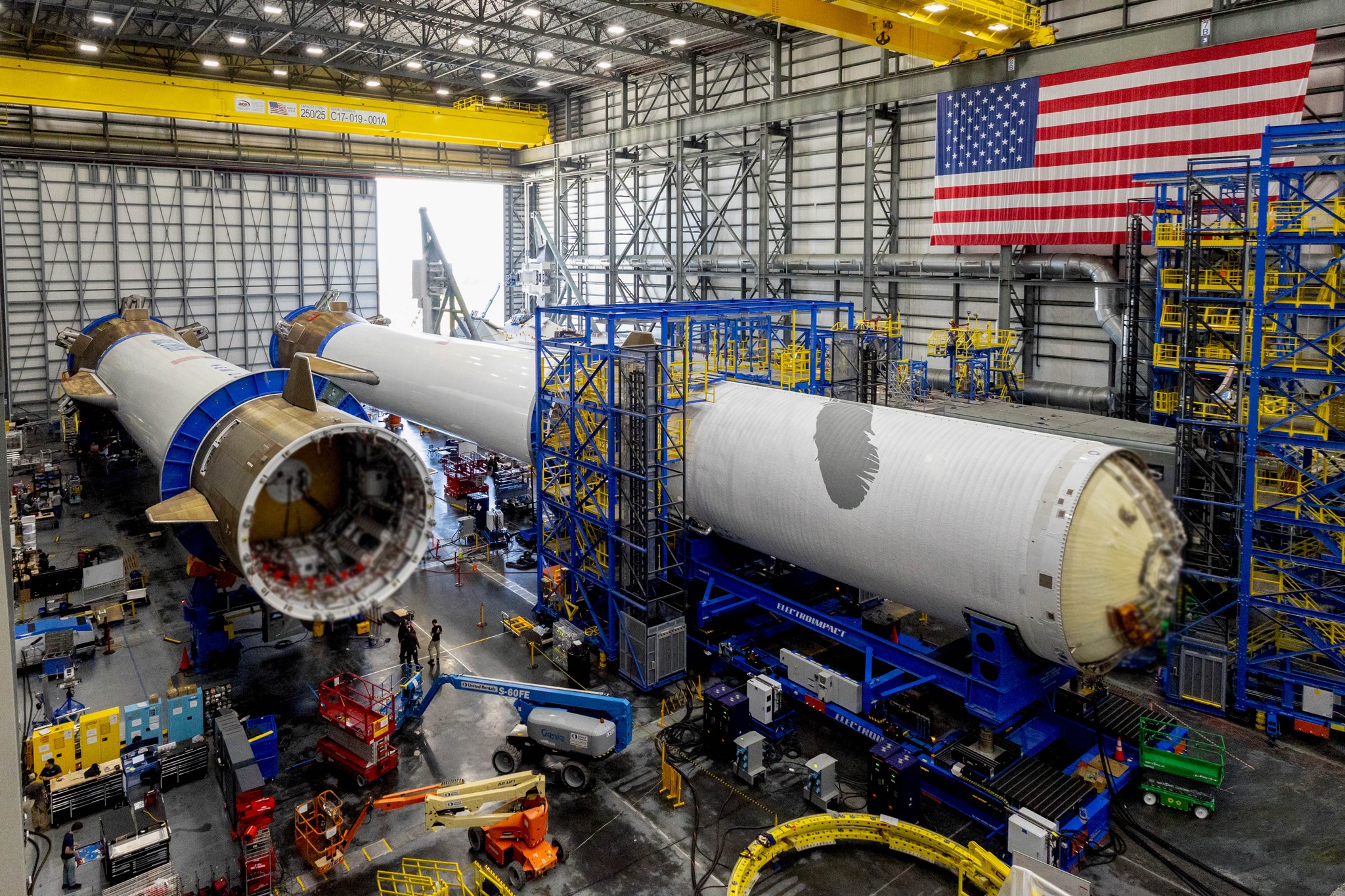
The story of modern space exploration is rarely a straight line of uninterrupted triumphs; rather, it is a human drama defined by setbacks, resilience, and the relentless pursuit of the next frontier. Just five weeks after a sobering launch failure that temporarily grounded its ambitions, Blue Origin is standing on the precipice of redemption at its state-of-the-art Florida processing facility. The Kent, Washington-based aerospace company, founded by billionaire Jeff Bezos, is actively preparing its towering, heavy-lift New Glenn rocket for a highly anticipated return to flight. This pivotal upcoming mission, dubbed NG-4, carries a deep significance that goes far beyond merely proving the rocket’s mechanical flight worthiness. It represents the first time Blue Origin will launch a payload for its sister giant, Amazon, carrying 48 internet-beaming satellites into low Earth orbit for the rapidly expanding Amazon Leo constellation. This historic alignment points to a powerful corporate synergy, bringing together Bezos’s two most prominent business empires under the watchful eye of Blue Origin CEO Dave Limp. Having previously run Amazon’s satellite division back when it was known as Project Kuiper, Limp now finds himself in the unique position of commanding the very rocket company tasked with lifting his former project’s dreams into the stars. The first-stage booster chosen for this monumental task has been affectionately nicknamed “No, It’s Necessary”—a dramatic nod to a famous line from the film Interstellar that underscores the bold, calculated risks required to conquer the cosmos.
Getting back to the launchpad so quickly required an intense, transparent collaboration between Blue Origin’s engineering teams and federal safety regulators. The rocket line had been quietly grounded following an unsuccessful flight last month, which was carrying a payload for AST SpaceMobile, leaving the team with the daunting task of diagnosing what went wrong high above the Earth. After a thorough investigation, the Federal Aviation Administration (FAA) officially accepted Blue Origin’s detailed findings, which pinpointed the root cause of the failure to a highly specific mechanical vulnerability: a cryogenic leak. This freezing fluid escaped and subsequently blocked a crucial hydraulic line, which ultimately triggered a thrust anomaly during the critical second-stage engine burn of the rocket. Instead of fracturing under the weight of this setback, Blue Origin’s engineers worked tirelessly to formulate a comprehensive roadmap of nine distinct corrective actions designed to entirely eliminate this vulnerability from future flights. Satisfied with these rigorous engineering adjustments and safety protocols, the FAA granted the necessary authorization for Blue Origin to return to active flight operations. With an official FAA advisory suggesting that the thunderous roar of the New Glenn engines could shake the Florida coastline as early as next week, the pressure is palpable, but the path to orbit has once again been cleared.
The payload waiting to climb into the sky represents a crucial cornerstone of Amazon’s ambitious, long-term global internet strategy. Known as the LN-01 mission, this launch will see 48 Amazon Leo satellites packed into a massive, four-tier stack, completely encapsulated within the cavernous seven-meter fairing of the New Glenn rocket. This launch serves as the first of 24 scheduled missions that Amazon has reserved with Blue Origin to progressively build out its sprawling orbital web. Currently, the Amazon Leo constellation is in its infancy, with slightly more than 300 active satellites functioning in low Earth orbit, meaning the company needs to deploy thousands more over the next three years to achieve its grand design. This creates an intense regulatory race against time, as Amazon’s original operating license from the Federal Communications Commission (FCC) mandated that at least 1,600 satellites had to be successfully operational in orbit by June 30. Recognizing the logistical bottlenecks of spaceflight, Amazon has formally petitioned the FCC for a crucial two-year deadline extension to avoid regulatory penalties. To dramatically accelerate their deployment schedule over the coming year, Amazon is transitioning from its reliance on United Launch Alliance’s reliable but aging Atlas 5 rockets to a powerful vanguard of next-generation heavy-lifters, including Blue Origin’s New Glenn, ULA’s brand-new Vulcan, and Arianespace’s European Ariane 6 booster.
This frantic orbital land grab is fueled by a desire to challenge the status quo of global telecommunications and bring high-speed internet to underserved populations. Amazon Leo is aiming to enter the commercial broadband market as early as this summer, initially rolling out its connectivity services to communities located in the mid-northern and mid-southern latitudes of the globe, with plans to expand coverage as more satellite batches are successfully deployed. However, the company has kept its cards close to its chest regarding consumer pricing, leaving potential users and industry analysts guessing how it will stack up financially. The market they are entering is currently dominated by a monolithic rival: SpaceX’s Starlink network, which has established an astonishingly firm grip on the industry with more than 10,000 active satellites in orbit and a staggering subscriber base exceeding 12 million globally. This fierce rivalry has also birthed one of the most intriguing examples of corporate “coopetition” in the modern business world. In order to meet its aggressive deployment goals, Amazon has actually contracted SpaceX as a launch provider, demonstrating that in the high-stakes, multi-billion-dollar theater of commercial spaceflight, even the most bitter rivals must sometimes lock hands as pragmatic business partners to achieve their celestial goals.
Beyond the immediate horizon of satellite broadband, Amazon is quietly laying the groundwork for a massive, multi-billion-dollar expansion into mobile connectivity. In a highly detailed regulatory filing submitted to the FCC, the tech giant shed light on its complex, $10.8 billion plan to acquire Globalstar, a move designed to secure a robust foothold in the emerging direct-to-device (D2D) satellite sector. Under the terms of this intricate corporate transaction, which is currently awaiting formal FCC approval, Apple is set to transfer its existing 20% stake in Globalstar directly to Amazon through a newly registered corporate subsidiary colorfully named “Grapefruit.” Once the acquisition successfully concludes, Globalstar’s physical ground infrastructure and highly coveted satellite spectrum licenses will be fully absorbed by Amazon, which will then seek its own regulatory licenses to operate a proprietary, global D2D system designed to seamlessly link standard mobile phones to orbit. This mobile-first system is envisioned as an elegant, highly cohesive complement to the high-bandwidth broadband services offered by the Amazon Leo constellation, offering consumers continuous, dead-zone-free coverage regardless of how far off the grid they wander. Though the massive acquisition deal was first made public last month, Amazon’s regulatory filings indicate that the complex transition is not expected to officially cross the finish line until sometime in 2027.
While Blue Origin prepares its comeback and Amazon drafts its global telecom blueprint, the broader space launch industry continues to experience its own dramatic trials to remind everyone how difficult spaceflight remains. The FAA recently announced that it will actively oversee a formal investigation into the latest high-altitude flight test of SpaceX’s massive Starship V3 rocket. During this highly publicized trial, the colossal Super Heavy first-stage booster suffered a critical system malfunction, failing to properly ignite its powerful engines following stage separation for its planned, controlled descent. Unable to decelerate, the towering booster began to tumble uncontrollably through the extreme environments of atmospheric re-entry, ultimately disintegrating and raining debris down into the waters of the Gulf of Mexico. This dramatic mishap serves as a vivid reminder that even the industry’s frontrunners are constantly wrestling with the volatile laws of physics. Just like Blue Origin, SpaceX’s return to flight for its flagship booster will be strictly dependent on satisfying the FAA that its processes, hardware, and safety protocols pose absolutely no risk to public safety. As these corporate titans navigate failing engines, regulatory hurdles, and multi-billion-dollar mergers, they are collectively writing an extraordinary chapter of human history, working through the inevitable fires of failure to build a permanent, busy highway into the stars.