


In recent years, the university commencement podium has shifted from a platform of celebratory reflection into a high-stakes cultural battleground. As the graduating classes of the mid-2020s cross the stage, they bring with them a deep-seated fatigue born of unprecedented academic, social, and technological disruptions. This weariness makes them uniquely sensitive to corporate platitudes and forced technological optimism. The tension became glaringly obvious during recent graduation seasons, when several high-profile figures from the tech and entertainment sectors were met with choruses of boos from the very students they were invited to inspire. At the University of Arizona, former Google CEO Eric Schmidt was loudly jeered when he confidently asserted that the primary question facing the next generation was not whether artificial intelligence would rewrite their futures, but rather how they would help shape it. Similarly, at Middle Tennessee State University, music industry executive Scott Borchetta dismissively told students protesting automated creative tools to simply “deal with it,” branding AI as just another routine industrial transition. These clashes reveal a growing societal rift: graduates are not necessarily rejecting innovation itself, but rather the condescending delivery of executives who hold an obvious financial stake in the automated futures they describe. This spring, however, the University of Washington’s 151st Commencement promises a starkly different kind of address. Stepping up to the podium as the 2026 speaker is Dr. Mary E. Brunkow, a local alumna and groundbreaking scientist who represents a refreshing alternative to the prevailing technocratic class. Unlike the venture capitalists and Silicon Valley prophets who promise disruption without empathy, Dr. Brunkow approaches the podium with the profound humility of a life dedicated to rigorous, quiet scientific inquiry, offering a message of shared humanity that will find a welcome audience rather than an arena of skeptics.
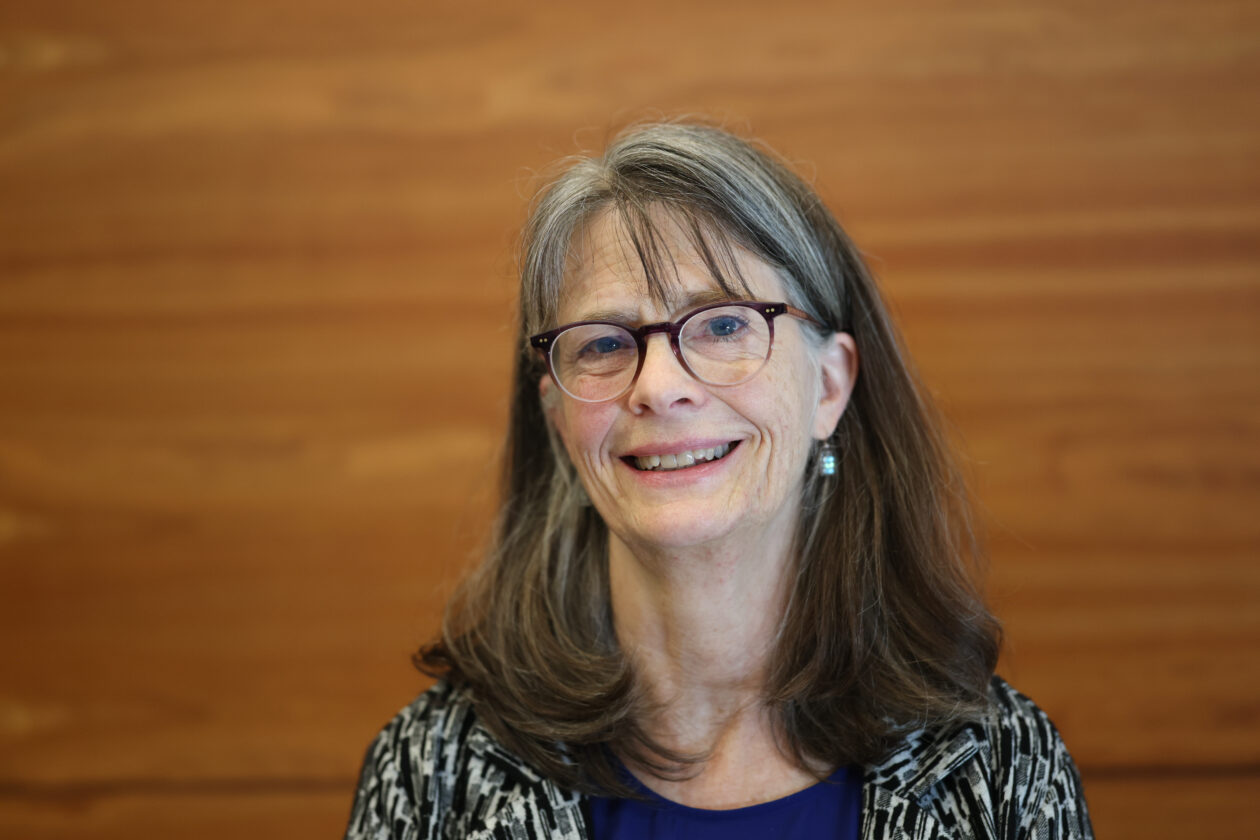
Dr. Brunkow’s return to her alma mater is a homecoming of the grandest scale, marked by a lifetime of contribution to global health and human understanding. A proud graduate of the University of Washington herself, she has spent decades operating at the highest levels of biological research, ultimately securing the 2025 Nobel Prize in Physiology or Medicine alongside her colleagues. This prestigious accolade recognized her pioneering research into the intricate mechanics of immune system regulation, specifically how our bodies masterfully govern their own internal defenses to fight off deadly pathogens without destroying healthy tissues. Today, she continues her vital work at Seattle’s renowned Institute for Systems Biology, a multidisciplinary research hub where advanced computational methodologies, machine learning, and artificial intelligence have been integrated into the scientific toolkit for decades. Yet, despite operating at the vanguard of this computational revolution, Dr. Brunkow does not carry herself with the aggressive swagger of an industry disruptor. She is not active on the venture capital circuit, nor is she in the profitable business of selling algorithmic futures to an anxious, transitioning workforce. Instead, her worldview remains grounded in the exhaustive, meticulous labor of laboratory science, where progress is measured not in stock valuations or quarterly active users, but in peer-reviewed breakthroughs that genuinely improve human lives. This deep-seated credibility makes her uniquely suited to speak to a generation of students who have grown weary of empty corporate hype, offering them a narrative of progress that is deeply rooted in human endeavor and collaborative patience rather than commercial exploitation.
To understand why Dr. Brunkow’s message is so vital today, one must first look at the unique emotional landscape of the graduates she is addressing. The class of 2026 has witnessed their entire higher education journey unfold in the shadow of rapid, often unsettling technological transitions. They have watched generative artificial intelligence infiltrate their classrooms, upend traditional methods of writing and evaluation, transform the entry-level job market into an algorithmic gauntlet, and cast a shadow of uncertainty over creative and analytical career paths. For these students, the aggressive push to adopt AI does not feel like an exciting frontier; it feels like an existential pressure cooker managed by executives who will never have to compete with the code they are selling. When tech leaders dismiss student anxiety with trite slogans or command them to adapt to a landscape that diminishes the value of original human thought, they expose a profound disconnect. The graduates are not booing the algorithms themselves; they are pushing back against a specific brand of absolute certainty delivered by people who look at the labor market with cold utility. Students who have spent years studying the nuances of history, art, literature, and science are looking for leaders who acknowledge the messy, complicated reality of being human in an era of automation. They are searching for voices that favor thoughtful inquiry over corporate inevitability, and in Dr. Brunkow, they find an ally who understands that real progress cannot be achieved by ignoring the ethical, intellectual, and psychological vulnerabilities of the people tasked with implementing it.
In her discussions regarding the rise of artificial intelligence, Dr. Brunkow approaches the technology with an elegant blend of seasoned pragmatism and healthy scientific skepticism that stands in sharp contrast to industry hype. Rather than invalidating the anxieties of the younger generation, she openly validates their exhaustion, acknowledging that when AI is presented in stark, ominous, or hyper-commercialized terms, a defensive public backlash is not only understandable but entirely rational. Her balanced perspective stems from her long-standing relationship with computational tools inside research environments, where advanced mathematical modeling has been driving discovery long before generative AI became a household word. Through this lens, she recognizes that while machine learning is an incredibly powerful catalyst for parsing massive biological datasets, its utility is strictly bound by human oversight. “If you’re going to throw something into your analysis that you don’t have a complete understanding of how it works,” she points out, “then how are you going to judge the results that come out in the end?” This fundamental question cuts directly through the magical thinking that often surrounds artificial intelligence. In the rigorous domain of scientific research, a new tool is never treated as an infallible oracle; it must be subjected to intense scrutiny, validation, and replication. By treating AI as an advanced computational partner rather than an autonomous savior, Dr. Brunkow strips away the intimidating mystique of the technology, reminding graduates that all tools, no matter how sophisticated, must ultimately answer to the standards of human logic, safety, and ethical responsibility.
The core of Dr. Brunkow’s philosophy lies in her unyielding belief in the irreplaceable value of the human mind, particularly its capacity for curiosity and contextual judgment. While tech executives often predict a future where algorithms will autonomously solve society’s greatest ills, she paints a far more collaborative and grounded picture of the relationship between humanity and machines. In her view, the emergence of faster, stronger computational tools does not signal the obsolescence of the human thinker; rather, it elevates the significance of human critical thinking to an unprecedented level. She emphasizes that while a neural network can process petabytes of genomic data in seconds, it lacks the lived experience and intuitive spark required to understand what those patterns truly signify for a patient, or what questions should be investigated next. “You’re still going to need the subject matter experts,” she insists, pointing out that the human brain remains the ultimate architect of scientific inquiry. AI can drastically accelerate the speed at which we find answers, but it cannot decide which answers are worth pursuing, nor can it possess the ethical compass required to deploy those answers safely. By re-centering the narrative on the human agent, she transforms AI from a threatening force designed to replace people into a supportive scaffolding meant to amplify human capability, ensuring that curiosity, empathy, and intellectual rigor remain the driving forces of global progress.
Ultimately, Dr. Brunkow’s address to the University of Washington’s class of 2026 will not be a technical lecture on algorithms or a roadmap for corporate survival, but rather an invitation to embrace the beautiful unpredictability of life. As she looks out at the ocean of purple cap and gown-clad graduates, her message will champion a quality that cannot be programmed, optimized, or automated: the power of serendipity. Looking back at her own remarkable trajectory—from a curious UW student to a Nobel Prize-winning scientist at the vanguard of immunology—she recognizes that her greatest breakthroughs did not emerge from rigid, predetermined scripts, but from paying attention to the unexpected anomalies along the way. “Serendipity is an underrated part of a person’s life,” she reflects, urging the graduates to keep their minds open to the unexpected detours and spontaneous opportunities that a hyper-curated, algorithmic world so often seeks to minimize. In a society fixated on metrics, optimized career planning, and endless forecasting, her call to lead with organic curiosity and adaptive resilience serves as a powerful reminder of what makes human life fundamentally meaningful. By stepping onto the commencement stage not as an aggressive prophet of automated disruption, but as a humble champion of human wonder, Dr. Brunkow is set to deliver an address that will resonate long after the caps are thrown, demonstrating that while technology may change the speed of our lives, it is our shared humanity, curiosity, and capacity for connection that will always define our destination.