



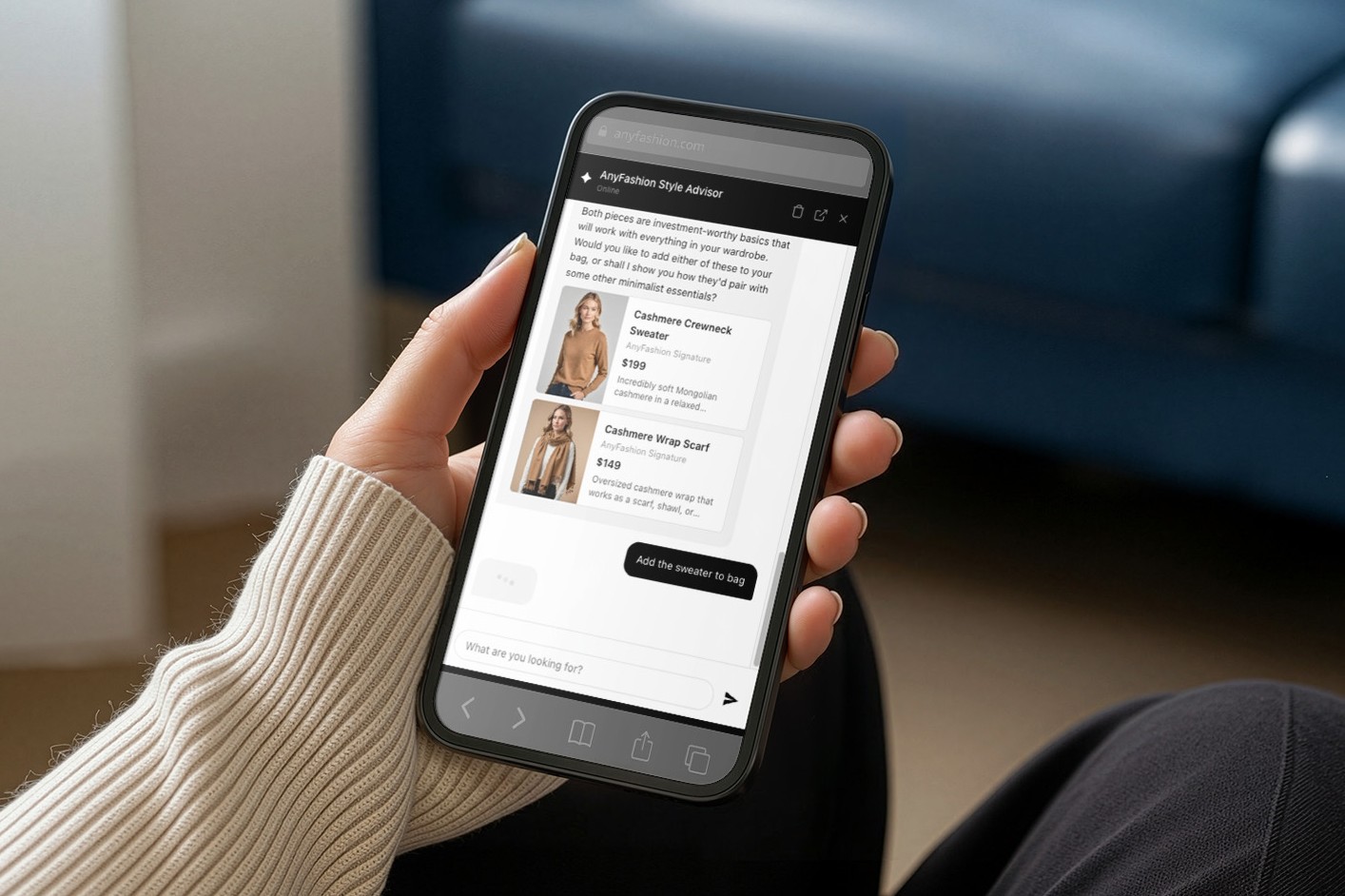
Shopping has always been far more than a basic, transactional exchange of currency for goods; it is a deeply human, emotional narrative of self-identity, cultural connection, and personalized curation. For generations, the true magic of retail lived within the physical walls of local boutiques, where a customer was welcomed warmly by name, guided by an intuitive shopkeeper, and introduced to products tailored to their precise tastes, moods, and lifestyle. This fundamental human connection was temporarily lost during the initial rise of the internet, which traded warm, conversational advice for the cold, clinical efficiency of massive online databases, rigid search bars, and sterile product grids. However, as reported by technology journalist Todd Bishop, we are witnessing a massive technological effort to restore that lost human element to the digital landscape. Amazon Web Services (AWS) has officially launched the AWS Agentic Shopping Assistant, an advanced conversational tool designed to let retailers establish highly intuitive, humanlike shopping assistants directly on their mobile websites and e-commerce platforms. A recent public demo highlighted the system operating smoothly as an AI-powered style advisor running on a retail brand’s mobile site, illustrating how seamlessly a computer program can mimic the supportive presence of a live boutique employee. Rather than forcing buyers to wrestle with impersonal keyword searches and endless scrolling, this solution allows them to engage with integrated digital advisors that understand linguistic nuances, interpret human style constraints, and recommend products elegantly from a brand’s actual live inventory. This milestone is another example of Amazon’s classic strategy of packaging its powerful internal infrastructure into commercial products for external businesses. By bringing sophisticated, conversational AI tools to the wider retail market, AWS is spearheading a massive paradigm shift, transforming online shopping from a quiet, solitary database search into an engaging, empathetic, and truly personalized dialogue.
To appreciate the incredible operational scale and technological pedigree behind this new tool, we must trace its development back to Amazon’s massive, consumer-facing testing grounds. The core architecture of the AWS Agentic Shopping Assistant is forged from the exact same proprietary engineering that powers Amazon’s own consumer-facing AI assistant on Amazon.com—the conversational helper formerly known as Rufus, now operating under the unified Alexa for Shopping umbrella. Last year alone, this internal shopping assistant generated a staggering $12 billion in incremental sales for Amazon. This eye-popping commercial figure is not merely a testament to financial performance; it represents a profound validation of shifting consumer psychology. It proves that modern shoppers are not only willing to converse with artificial intelligence, but are actually eager to rely on its guidance when making purchasing decisions, provided those recommendations feel organic, contextually accurate, and helpful. Instead of scrolling through hundreds of disjointed consumer reviews, customers have shown they prefer a singular, clear, conversational synthesis that explains why a specific brand or item fits their personal lifestyle. By transitioning this highly refined engine from an internal retail mechanism to an external AWS offering, Amazon is giving other businesses access to a tool that has already been stress-tested on hundreds of millions of actual purchases. This monetization model allows AWS to democratize enterprise-grade conversational commerce globally. Consequently, independent brands can bypass years of expensive research and development, instantly inheriting the predictive power, natural language comprehension, and sales-driving prowess of a system that has already redefined consumer expectations on a planetary scale. For independent retailers who have struggled to keep pace with Amazon’s sheer engineering dominance, this represents an unprecedented opportunity—albeit one wrapped in strategic complexity. It signals a move where Amazon ceases to be merely a marketplace competitor and instead becomes the underlying operating system for the entire electronic commerce universe, licensing the future of digital clienteling.
For the vast majority of online retailers, the concept of building, maintaining, and training a conversational artificial intelligence model is an intimidating challenge that traditionally demanded millions of dollars in capital and years of specialized labor. AWS aims to tear down these technological barriers by offering a rapid deployment timeline, promising that retailers can go from zero to a live, customized Agentic Shopping Assistant in approximately 60 days. This rapid integration capability is a crucial lifeline for retail executives who feel the pressure of the generative AI boom but lack the data science talent to build proprietary tools from scratch. Under the hood, the system is designed to integrate deeply with each retailer’s backend inventory systems, secure product catalogs, and unique business guidelines. This ensures that the AI style advisor is not just generating generic, hallucinated answers, but is instead acting as a well-informed digital store associate that speaks with the voice of the brand and respects current inventory limits. The backend architecture relies heavily on Amazon Bedrock, which acts as a secure platform for deploying state-of-the-art foundation models. This setup allows developers to bypass the complex plumbing of machine learning, focusing instead on tailoring the interactive experience to their target market. By handling things like infrastructure maintenance and safety guardrails, AWS allows humans to do what they do best: direct creative strategy, define brand identity, and design warm customer journeys that make shoppers feel seen and valued. By automating the heavy lifting of language processing and prompt engineering, the tool transforms the role of digital merchants. Instead of manually editing search tags or designing tedious layout grids, e-commerce teams can focus on teaching the AI the subtle nuances of their unique aesthetic philosophy. The assistant can adapt to specific promotional calendars, regional sizing habits, and targeted shipping policies, ensuring that every user interaction is legally compliant, brand-aligned, and highly lucrative. Ultimately, this 60-day path to deployment turns what once felt like a sci-fi dream into a manageable, highly structured, and easily replicable business upgrade.
Yet, this technological union between AWS and the broader retail world introduces major competitive questions and business tensions. For decades, independent brick-and-mortar brands and direct-to-consumer businesses have viewed Amazon with a mix of respect and intense anxiety, recognizing that the company’s retail marketplace is their primary rival. Entrusting AWS with their most intimate client relationships, inventory records, and conversational data requires a massive leap of faith for these brands. To address these anxieties, AWS has established strict barriers, assuring retail partners that their customer data, transaction histories, and business logic will remain completely private, secure, and isolated from Amazon’s retail division. The massive financial projections surrounding conversational AI help explain why so many brands are willing to accept this arrangement. According to global business projections by Accenture, more than 30% of all online commerce could run through conversational AI agents by the year 2030, representing a staggering $3.1 trillion in annual transactions. In this rapidly changing retail landscape, ignoring agentic technology is not a viable strategy; failing to adapt means risking complete irrelevance. This trillion-dollar reality turns the AWS Agentic Shopping Assistant from a curious technical upgrade into a critical survival tool. Retailers must compromise by trusting their greatest competitor’s cloud division in order to gain access to the raw computational power required to capture their share of the future conversational market. This dynamic represents a fascinating era of “co-opetition” in modern commerce, where survival dictates that you buy your weapons from the very empire you are fighting against. Retailers must navigate the fine line between defending their unique brand identities and utilizing shared, globalized cloud infrastructure to deliver the standard of convenience that consumers expect. Handing over customer conversational patterns and purchasing triggers to an AWS environment may look risky, but the alternative—building inferior, clunky chat solutions that frustrate today’s sophisticated shoppers—is a far faster path to retail extinction. In this high-stakes environment, AWS serves as a vital enabler, promising safe passage into the next generation of commerce while ensuring that the host brand’s identity remains completely distinct, protected, and fully under their own operational control.
The real-world potential of this technology is illustrated by the elegant experiences created by Kate Spade, the iconic American fashion and accessories brand owned by Tapestry. Eager to elevate their digital connection with consumers during busy retail seasons, Kate Spade utilized the AWS Agentic Shopping Assistant to build and launch a conversational “AI Gift Concierge” in April. Rather than forcing shoppers to scroll through endless product rows, this stylized virtual assistant engages users in a warm, friendly dialogue about the physical and emotional details of their search. It asks thoughtful questions about the recipient’s personality, aesthetic tastes, the emotional meaning of the occasion, and the desired style before presenting highly tailored product suggestions. Underneath this stylish, brand-accurate exterior runs Anthropic’s state-of-the-art Claude Haiku 4.5 model, which is accessed securely via the Amazon Bedrock framework. To ensure that the digital concierge matched Kate Spade’s signature playful, optimistic, and welcoming tone, developers spent two and a half months rigorously testing the system before launching it to the public. This extensive testing phase was critical to refine the AI’s phrasing, eliminate robotic responses, and guarantee that its product recommendations aligned with actual stock and visual trends. The resulting system demonstrates how advanced technology can be guided by steady human curation to elevate the standard brand experience, turning a routine search for a gift into a conversational and genuinely delightful discovery. For a brand like Kate Spade, whose identity is built on visual whimsy and personal connection, a generic, dry chatbot would have been disastrous for brand reputation. By utilizing the Claude Haiku 4.5 model, which is celebrated for its warm, highly readable, and creative writing style, they managed to capture the exact spark of their real-world brand ambassadors. The intense testing period allowed human writers and fashion stylists to sit side-by-side with the AI, feeding it edge-case shopping scenarios, and teaching it how to talk about colors, textures, and leather finishes. This human-in-the-loop preparation shows that the secret of AI success in high-end retail is not just computational power, but the careful training provided by creative professionals who preserve the emotional soul of the brand.
Ultimately, the arrival of the AWS Agentic Shopping Assistant marks an exciting chapter in the evolving relationship between humans, commerce, and machines. We are quickly moving past the era of static, click-and-search digital stores, entering a dynamic age of conversational, relational, and agentic commerce. This transition does not replace human work; instead, it elevates it, shifting the role of employees from tedious metadata entry and search engine optimization to the artistic curation of brand narratives, ethical boundaries, and style guides. For consumers, the future of retail looks bright, promising a return to the natural, conversational style of shopping of the past, powered by the incredible scale and speed of modern AI. As personal shopping agents become standard tools that guide us through our daily lives, selecting products and summarizing options, the bond between brands and their audiences will be defined by speed, empathy, and remarkable convenience. Todd Bishop’s reporting on this AWS launch reveals a pivotal moment where the dividing lines between physical retail assistance and digital automation are fading away entirely. In this new world, the businesses that succeed will be those that use these advanced tools not just to boost short-term sales, but to cultivate deep, lasting relationships with their customers, turning every digital storefront into a welcoming space that understands each visitor’s unique story. As we edge closer to 2030, where trillions of dollars will flow through these automated agents, the true measure of success will not be the efficiency of an algorithm, but the authenticity of the experience it creates. The ultimate promise of the AWS Agentic Shopping Assistant is that it provides small and large businesses alike with the foundation to build these human-centered ecosystems. It reminds us that commerce, at its very core, has always been a form of storytelling between buyers and creators. By leveraging intelligent agents to shoulder the administrative weight of inventory routing and general search inquiries, we unlock a new era of retail creativity. In this hyper-personalized future, technology steps back into its rightful role as an invisible supporter, allowing the focus to return to what has always mattered most: the simple, human joy of discovering something beautiful that makes us feel completely understood.