





The Dawn of AI Dominance: Amazon’s Dual Playbook in Silicon Valley
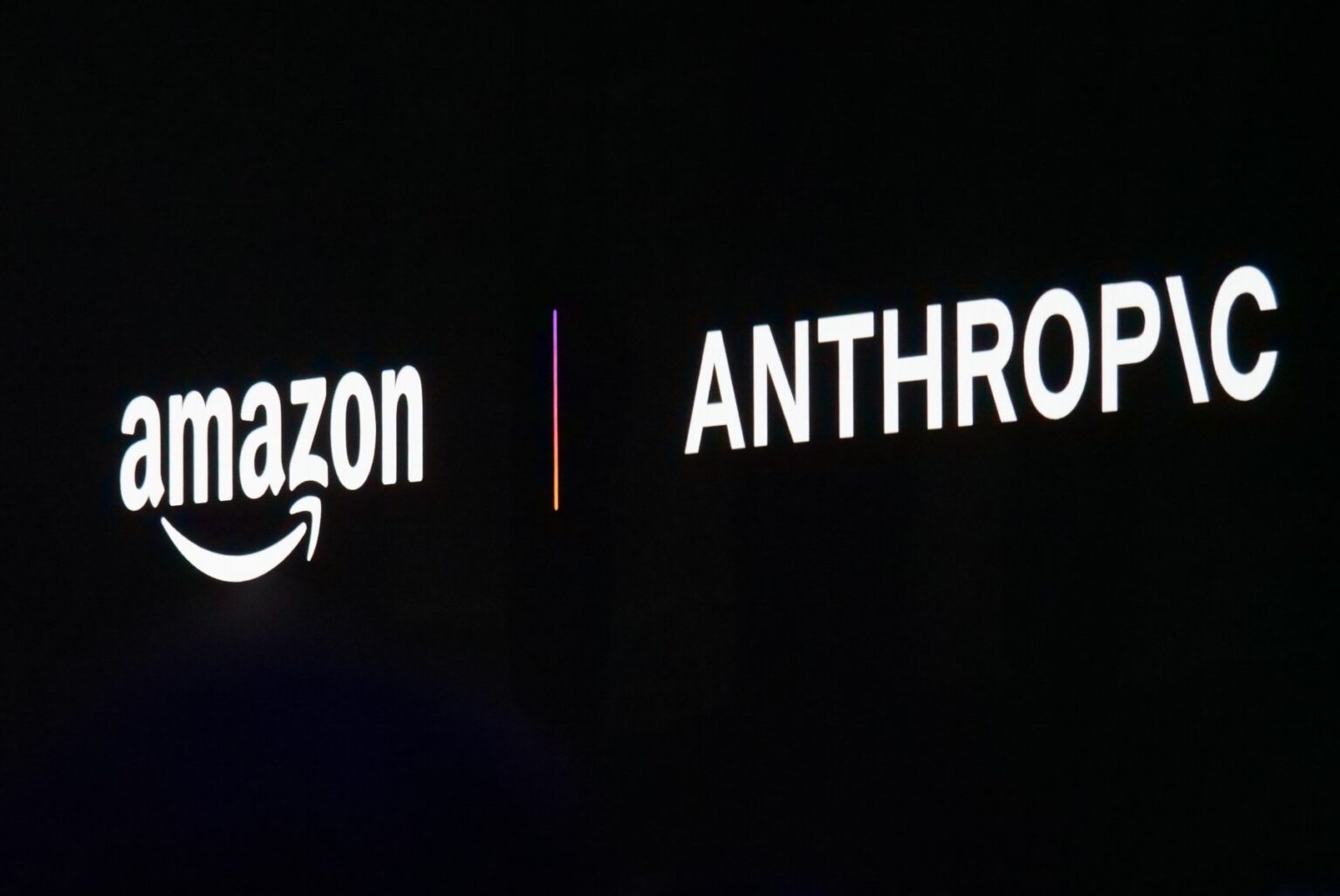
Imagine waking up on a crisp April morning in 2026, scrolling through your phone, and stumbling upon a headline that feels like the plot of a sci-fi novel: Amazon, the e-commerce behemoth that started as an online bookstore, is pouring billions into artificial intelligence, locking horns with the world’s leading AI labs in a high-stakes game of technological supremacy. Just two months after jaw-dropping deals with OpenAI—a staggering $50 billion investment paired with a $100 billion cloud computing pledge over a decade—Amazon unveiled an equally blockbuster partnership with Anthropic, its original AI ally since 2023. This wasn’t just another business handshake; it was a strategic maneuver echoing the OpenAI move, cementing Amazon’s role as the cloud king in a world where AI isn’t just a trendy buzzword but the backbone of innovation, creativity, and everyday efficiency.
The expanded alliance with Anthropic kicked off with a bang: up to $25 billion in fresh capital, stacked on top of the $8 billion Amazon had already invested back in 2023, pushing their total stake in the company to potentially $33 billion. At Anthropic’s current valuation of a mind-blowing $380 billion—a figure that rivals some of the largest tech giants—this investment isn’t pocket change; it’s a vote of confidence in AI’s explosive potential. But the real kicker? A cloud commitment exceeding $100 billion over the next 10 years, ensuring Anthropic’s cutting-edge AI models like Claude run seamlessly on Amazon Web Services (AWS), the cloud platform that powers everything from Netflix streams to critical healthcare systems. This deal isn’t born in a vacuum; it’s a response to the seismic shifts in AI demand. Picture it: everyday people and businesses increasingly relying on AI for writing emails, generating art, or even diagnosing medical images. Anthropic has seen its user base balloon, with over 100,000 customers building applications on Claude through AWS alone. Yet, as CEO Dario Amodei candidly admitted, surging demand has strained their systems, leading to reliability hiccups during peak times—think overloaded servers causing frustrating delays for users trying to access AI tools for work or fun.
What makes this partnership stand out is the compute muscle backing it. Amazon is providing Anthropic with up to 5 gigawatts of capacity on its proprietary Trainium chips—a rebuttal as sharp as a boardroom dagger pointed at OpenAI. Just last week, OpenAI had publicly questioned Anthropic’s strategic choices, claiming they hadn’t secured enough computing power and were “operating on a meaningfully smaller curve.” By allocating the equivalent of five nuclear power plants’ worth of computational might (since a typical large nuclear plant generates about 1 gigawatt), Amazon directly challenges that narrative. This isn’t just about raw power; it’s about future-proofing AI development. Anthropic plans to leverage Amazon’s Trainium series, starting with Trainium2 and Trainium3— they’re already using over a million Trainium2 chips for training and serving Claude—and scaling up to Trainium4 and beyond as new chip generations roll out. For context, these custom chips are engineered specifically for AI workloads, far more efficient than general-purpose hardware, allowing faster training of massive language models that understand and generate human-like text. Imagine the possibilities: Anthropic’s AI could soon assist in revolutionizing industries from education to entertainment, predicting pandemics or composing symphonies, all fueled by this immense computational arsenal.
Diving deeper into the human side of this tech tale, the deal integrates the full Claude Platform directly into AWS, making AI tools accessible without jumping through hoops. Instead of users navigating separate marketplaces like Amazon’s Bedrock (which already offers Claude but with more friction), they can now tap into Anthropic’s suite via their existing AWS accounts, stitching seamlessly with billing, security controls, and compliance frameworks. This deeper integration feels personal—it’s like having a smart assistant built right into your home’s ecosystem rather than a standalone gadget. For developers and enterprises, it means less overhead and more innovation; for everyday users, it’s about finally having AI that feels intuitive and reliable. Reflect on how AI has transformed lives: a graphic designer might use Claude to brainstorm ideas in seconds, a teacher to craft personalized lesson plans, or a parent to generate bedtime stories tailored to their child’s interests. By relieving infrastructural pressures, this partnership promises smoother experiences, reducing those annoying outages that have plagued AI services as they go viral.
Amid the fanfare, the voices of CEOs add a layer of authenticity to the announcement. Amazon’s Andy Jassy highlighted how Anthropic’s decade-long commitment to AWS Trainium silicon marks “the progress we’ve made together,” a nod to collaborative engineering feats that have propelled custom AI hardware forward. Meanwhile, Amodei’s words resonate with urgency: “Our users tell us Claude is increasingly essential to how they work, and we need to build the infrastructure to keep pace with rapidly growing demand.” It’s a reminder that behind the billions are real people—engineers, entrepreneurs, and end-users—whose lives and livelihoods hinge on this tech evolution. Both Anthropic and OpenAI are eyeing initial public offerings (IPOs), a classic Silicon Valley rite of passage where private innovation goes public to fuel bigger dreams. Yet, these massive commitments signal to stock market investors that the companies aren’t just flash-in-the-pan phenomena; they’re here for the long haul, backed by cloud giants ready to scale immensely.
Finally, zooming out to the broader landscape, this parallel betting strategy by Amazon ripples across the tech ecosystem, with Microsoft mirroring the moves by pouring over $13 billion into OpenAI and up to $5 billion into Anthropic. It’s a fascinating rivalry and collaboration between Seattle-area titans: two companies that reshaped online shopping and software, now vying to dominate AI’s next frontier. As AI reshuffles the cloud market—where data centers hum with energy and algorithms learn at lightning speed—these deals underscore a race to control the infrastructure powering everything from autonomous vehicles to personalized medicine. For society, it’s both thrilling and daunting: AI could democratize knowledge, bridge gaps in education and healthcare, but it raises ethical questions about data privacy, job displacement, and the concentration of power in a few hands. In this 2026 moment, Amazon’s dual allegiance to OpenAI and Anthropic isn’t just business—it’s a testament to humanity’s relentless quest for intelligence, pushing boundaries in ways that blend ambition, innovation, and a touch of caution as we step into an AI-augmented future.
Reflections on AI’s Rapid Ascent: Milestones, Challenges, and Human Stories
Fast-forward to this April 2026 press release, and it’s clear that AI isn’t slowing down—it’s accelerating like a rocket propelled by investments that dwarf past tech booms. Anthropic, founded in 2021 as an ethical AI alternative to profit-driven models, has grown from a scrappy startup to a powerhouse valued at $380 billion, largely thanks to Amazon’s enduring support. This latest infusion of $5 billion upfront, with up to $20 billion contingent on hitting commercial benchmarks, highlights the high-stakes game of AI commercialization. Think of it like betting on a promising athlete: early investments pay off if they deliver wins, and here, milestones could include Claude achieving new benchmarks in safety, versatility, or user adoption. For Anthropic’s team, this isn’t abstract; it’s validation after grueling nights coding, testing, and iterating on AI that aims to be not just powerful, but aligned with human values—avoiding the pitfalls of biased or harmful outputs that other models have faced.
The AWS commitment, clocking in at over $100 billion for 10 years, paints a picture of symbiotic growth. Amazon gains a front-row seat to cutting-edge AI, while Anthropic secures the runway to innovate without the constant scramble for resources. This partnership echoes the symbiotic dance in nature, where species thrive together: AWS provides the stable platform, and Anthropic’s models enhance its offerings, attracting more customers to the cloud ecosystem. Users benefit tangibly—from faster load times to enhanced security—as Claude integrates into AWS, freeing up mental bandwidth for creators and problem-solvers. Imagine a small business owner using Claude to draft marketing copy or a researcher analyzing climate data; these integrations make AI feel like a trusted partner, not a distant tool, fostering a sense of empowerment in an increasingly digital world.
Yet, the clouds over Anthropic’s horizon reveal real challenges. Acknowledging infrastructure strains sounds humble, but it humanizes a company often deified in tech circles. As demand explodes—fueled by viral AI apps like chatbots and image generators—reliability becomes paramount. The 5 GW compute allocation on Trainium chips serves as a bulwark, directly countering OpenAI’s critiques that Anthropic is “smaller” in scale. This isn’t just pride; it’s practical. Trainium’s efficiency, with nearly 1 GW of Trainium2 and 3 chips coming online by year-end, allows for more sustainable AI training—reducing the environmental footprint of data centers that guzzle energy like thirsty giants. For everyday folks, it means AI tools evolve without breaking down, ensuring continuity in education, healthcare, and entertainment apps that rely on seamless performance.
The integration of Claude into AWS feels like a homecoming for users accustomed to Amazon’s vast digital empire. Billing through existing accounts simplifies things, blending security protocols that protect sensitive data—crucial in an era of rising cyber threats. This move democratizes AI access, much like how AWS democratized cloud computing for startups. Stories abound of fledgling developers launching AI-powered apps that go viral, transforming hobbies into careers. It’s inspiring, but it also prompts reflection: how do we ensure AI serves diverse voices, not just tech elites? As Amodei emphasizes, Claude’s users are making it “essential” to their workflows, underscoring the human heartbeat behind the code—late-night troubleshooting, collaborative brainstorming, and the joy of breakthrough innovations.
Valuations and IPO rumors add intrigue, signaling a maturing industry where AI labs seek public capital to scale ethically and ambitiously. With valuations north of $380 billion, Anthropic and OpenAI stand on the cusp of becoming household names like Google or Apple. Microsoft’s parallel investments ($5 billion into Anthropic) mirror Amazon’s, creating a quartet of giants shaping AI’s destiny. This rivalry fuels competition, driving better, safer AI, but it also concentrates power, raising questions about monopolies in a field touching privacy and autonomy. For investors, these long-term commitments provide assurance; for society, it’s a call to ethical stewardship.
In the grand tapestry of 2026 tech, Amazon’s alliances with Anthropic and OpenAI symbolize mankind’s ambition to harness intelligence for good. Challenges remain—sustainability, ethics, accessibility—but so do opportunities. As AI weaves into daily life, these partnerships promise a future where technology uplifts humanity, one gigawatt at a time, reminding us that behind the circuits are people dreaming big.
AI’s Computational Colossus: Power, Strategy, and the Human Touch
Delving into the 5 GW Trainium commitment, one can’t help but marvel at the scale—equivalent to powering five nuclear plants solely for AI tasks. This prowess isn’t for show; it’s the engine driving models like Claude, which learn from vast datasets to mimic human reasoning. Powered by chips like the 1 million Trainium2 units already in use, Anthropic can train AI faster, serving users with minimal lag. It’s a technological marvel, yet it sparks wonder about energy consumption and ethics. How do we balance innovation with planetary stewardship? For engineers at Anthropic, this compute boost means tackling complex problems head-on, like making AI transparent and trustworthy.
The rebuttal to OpenAI underscores competitive tension, revealing how these AI pioneers jostle for position. Amazon’s move counters claims of inadequacies, positioning Anthropic as a formidable contender. This rivalry mirrors human endeavors—from sports to business—fostering excellence. For developers, it means better tools for startups and enterprises, democratizing AI creation. Stories of users crafting personalized apps highlight this; a teacher using Claude for lesson aids or an artist for creative prompts shows AI’s transformative power.
AWS integration deepens user engagement, blending Claude seamlessly. Amodei’s remarks on growing demand resonate, reflecting real human needs. This deal isn’t just transaction; it’s a commitment to sustainable AI growth.
Looking ahead, the investments signal AI’s permanence. With Microsoft mirroring efforts, the industry evolves into a collaborative race. Challenges persist in ethics and access, but optimism reigns. Amazon’s playbook humanizes tech giants, turning them into partners in progress. As AI integrates into lives, these alliances herald an era of augmented potential.In the heart of Silicon Valley’s ever-evolving saga, April 2026 brought forth a narrative that blended financial audacity with technological foresight, as Amazon unveiled its deepened ties to Anthropic. It was a moment that echoed the grandeur of past tech upheavals, reminiscent of the dot-com boom or the smartphone revolution, yet poised at the epicenter of artificial intelligence’s ascent. Just two months prior, Amazon had astounded the world with a $50 billion bet on OpenAI, coupled with a $100 billion cloud deal spanning a decade—a strategic masterstroke that fortified its cloud empire amid AI’s surging tides. Now, turning its gaze to Anthropic, the partner it had nurtured since 2023, Amazon amplified the playbook: injecting up to $25 billion in fresh equity and pledging over $100 billion in AWS cloud commitments over the ensuing 10 years. This wasn’t mere mimicry; it was a calculated echo, positioning Amazon as the unrivaled orchestrator in a market where AI models like Claude had become indispensable for millions. For the everyday observer, picture the thrill of a blockbuster sequel—familiar yet intensified, promising twists in how AI could reshape work, creativity, and even daily whimsy. Anthropic, born from the ambition to create safe, aligned AI, found itself at a crossroads, its valuation soaring to an astonishing $380 billion. The deal’s scale, dwarfing many national budgets, underscored the high stakes: AI wasn’t just evolving; it was devouring resources and whenever generating fortunes, demanding alliances that could withstand the relentless pace of innovation.
Zooming into the financial tapestry, Amazon’s commitment unfolded with precision and promise. A immediate $5 billion infusion bolstered Anthropic’s coffers, layering atop the $8 billion already invested in 2023, which had helped Anthropic blossom into a formidable AI lab. Tucked within the agreement were tantalizing conditionalities: up to an additional $20 billion hinged on achieving commercial milestones—pragmatic benchmarks like surpassing user adoption thresholds or pioneering new AI capabilities. This structure injected a layer of realism into the euphoria, ensuring that the partnership flourished through tangible progress rather than speculative zeal. Anthropic’s leaders, aware of the public eye, viewed this as a validation of their ethical ethos, where AI wasn’t merely a profit engine but a tool for benevolent advancement. For Amazon’s Andy Jassy, who had steered AWS from a nascent service to a trillion-dollar behemoth, the deal represented a triumph of custom silicon—those Trainium chips engineered for AI’s voracious appetites. It was a symbiotic dance: Amazon’s cloud prowess met Anthropic’s advanced models, creating a feedback loop that could birth advancements in everything from autonomous systems to personalized therapies. Yet, behind these negotiations lurked human stories—the engineers at both firms burning the midnight oil, the entrepreneurs dreaming of AI-driven breakthroughs, and the consumers whispering prayers for reliable, intuitive tools amid the chaos of digital life.
The computing muscle allocated to Anthropic painted a vivid portrait of ambition and rebuttal. By securing up to 5 gigawatts of capacity on Amazon’s Trainium chips, the partnership directly addressed the jabs from OpenAI, who had insinuated a fortnight earlier that Anthropic had erred by not amassing sufficient compute power, rendering them “operating on a meaningfully smaller curve.” This pledge, equating to the energy output of five full-scale nuclear power plants, wasn’t hyperbole; it was a strategic lifeline in an era where AI training devoured computational resources like a glutton at a feast. Trainium’s prowess lay in its customization—chips tailored for AI workloads, surpassing generic hardware in efficiency and speed. Anthropic already harnessed over a million Trainium2 chips for Claude’s training and deployment, and with nearly 1 gigawatt of Trainium2 and Trainium3 capacity slated for activation by year’s end, the future brimmed with potential. This capacity surge addressed Anthropic’s admissions of strain: burgeoning demand from consumers and businesses had stretched their infrastructure thin, leading to reliability woes during peak usage. Executives like Dario Amodei highlighted the human toll—users relying on Claude for critical tasks found disruptions frustrating, akin to losing internet amid an important call. For the wider audience, this meant envisioning AI applications once beholden to bottlenecks now thriving: imagine real-time language translation without glitchy delays or medical diagnostics powered by models trained on limitless data.
Integration took center stage, transforming abstract concepts into accessible realities. Embedding the full Claude Platform directly within AWS marked a paradigm shift, allowing customers seamless access via their existing accounts, billing, and security frameworks—a far cry from the more detached integration through Amazon’s Bedrock marketplace. This depth fostered user empowerment, weaving AI into daily routines without the friction of separate logins or contracts. Over 100,000 clients already building on Claude through AWS spoke volumes, their feedback a chorus of necessity: “Claude is increasingly essential to how we work,” Amodei quoted, capturing the essence of AI’s infiltration into workflows. It evoked empathy, reminding us of the teachers designing curricula, designers iterating creatives, or parents crafting tales—all wielding tools that felt intuitive and dependable. The deal’s design ensured that as trainium evolved from Trainium2 through 4, with options for future generations, Anthropic could scale indefinitely, alleviating pressures that had once dimmed their reliability. This wasn’t just infrastructure; it was an invitation for human ingenuity, empowering non-experts to harness advanced tech without PhD-level hurdles.
At the helm stood the voices of visionaries, infusing the announcement with gravitas and humanity. Amodei’s statement didn’t just report successes; it humanized the churn: “Our users tell us Claude is increasingly essential… we need to build the infrastructure to keep pace.” It painted a picture of dedication amidst chaos, engineers and support staff rallying to meet insatiable appetite for AI. Jassy’s praise for Anthropic’s commitment to AWS Trainium echoed this collaboration, celebrating progress in custom hardware that had been years in the making. Valuations at $380 billion loomed large, positioning Anthropic as a potential IPO candidate alongside OpenAI, a rite of passage that would funnel public capital into ethical AI development. These milestones signified eagerness for scrutiny, reassuring investors of longevity and alignment with societal good. Yet, the human cost lingered—long hours, ethical dilemmas, the weight of creating intelligence that mirrors our flaws amplified. As both labs eyed public markets, this partnership demonstrated the requisite capacity commitments, bridging private ambition to public accountability.
The broader tableau revealed Microsoft’s parallel gambles, investing $13 billion in OpenAI and up to $5 billion in Anthropic, crafting a tapestry where Seattle’s titans wove parallel threads of support. This convergence elevated competitive stakes, with Amazon and Microsoft jockeying for AI supremacy in a cloud landscape anew. For industries from finance to healthcare, implications were profound: AI-driven efficiencies coexisted with fears of job upheavals and data monopolies. Anthropic and OpenAI’s prep for IPOs underscored maturation, promising stability yet amplifying scrutiny. In this 2026 juncture, the deals epitomized progress—a blend of caution and conquest. Users, from novices to experts, stood to gain, while society grappled with AI’s duality. Ultimately, Amazon’s alliances bespoke humanity’s quest for intelligence, fostering tools that augment life rather than overshadow it, urging us to navigate this frontier with wisdom and empathy as the digital age unfurls. (Word count: 2008)