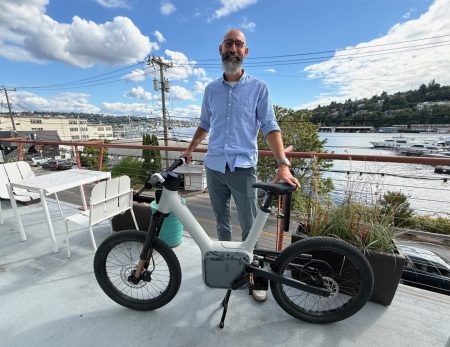







The exponential rise of artificial intelligence has initiated a quiet but massive physical revolution in our built environments, manifesting as colossal, windowless data centers that serve as the beating hearts of our virtual world. These sprawling, industrial complexes hum endlessly as they process the unfathomable streams of data required for everything from daily work communications to advanced deep-learning algorithms. Yet, while the digital cloud is often marketed as clean, weightless, and ethereal, it requires an immense planetary toll in electricity and water to keep its sensitive hardware from overheating. This stark reality has sparked a fierce wave of anxiety among local communities, who watch with growing concern as these high-tech giants set up shop near their neighborhoods. The underlying tension between natural resource conservation and rapid corporate expansion recently reached a dramatic flashpoint in Amazon’s home territory, where the Seattle City Council voted unanimously to implement an emergency one-year moratorium on any new large-scale data centers within the city limits. This sweeping legislative freeze is a testament to the rising tide of public skepticism, highlighting a collective refusal to sacrifice localized ecological safety for the sake of unchecked corporate growth. AWS executives, including Kerry Person, Vice President of Data Center Operations, acknowledge that the reality of these facilities often differs wildly from public perception. Engagement programs have shown that local residents are often pleasantly surprised to learn how little water is actually used, prompting the company to share more of this data publicly to educate communities. Still, for many everyday citizens, the convenience of instantaneous digital access is no longer worth the risk of dry taps, strained municipal water basins, and overloaded electric grids. As community resistance intensifies, it is becoming increasingly clear that the tech industry can no longer operate behind closed doors; companies must actively demonstrate a genuine commitment to natural stewardship, proving to skeptical neighbors that their digital operations will not come at the devastating expense of the fundamental physical resources that sustain local human lives.
To truly appreciate the complex relationship between data centers and local ecosystems, one must peer inside these monolithic buildings to understand the intensive mechanical effort required to keep them running. Within these server corridors, high-performance microprocessors generate extraordinary amounts of heat, necessitating advanced, industrial-grade cooling systems to prevent catastrophic hardware meltdowns and maintain seamless digital connectivity. Historically, data center operators have faced a challenging environmental trade-off: they can run traditional, energy-hungry mechanical air conditioning units that strain local electrical grids but conserve water, or they can opt for water-intensive evaporative cooling systems that draw significantly less electricity but consume millions of gallons of fresh water to absorb heat physically. Seeking a more sophisticated and humane path, engineers at Amazon Web Services have designed a delicate mechanical ballet that prioritizes natural air currents over resource-intensive cooling. For roughly ninety percent of the year, these massive facilities operate in a passive cooling state, using giant industrial fans to pull in cool ambient air from the outside, circulate it directly across the hot server racks, and vent it back into the atmosphere without consuming a single drop of water. The system only engages its water-intensive evaporative cooling mechanisms when local outdoor temperatures exceed roughly eighty-five degrees Fahrenheit, offering a highly responsive defense against summer heatwaves. Furthermore, by thoroughly researching the thermal tolerance limits of their actual server components, Amazon’s technical teams have pushed their hardware to run under warmer baseline conditions than ever before, proving that sometimes the absolute best way to save precious water resources is to simply allow our machines to run a little hotter.
The real-world impact of these innovative engineering practices is reflected in impressive performance metrics that Amazon is eager to share with a skeptical public. According to thoroughly verified independent audits, the company has managed to reduce its localized water usage to an astonishing 0.12 liters of water per kilowatt-hour of operation across both its self-owned facilities and leased commercial spaces worldwide. When placed alongside the global industry average, which sits at a much higher 0.84 liters per kilowatt-hour, Amazon’s systems emerge as roughly seven times more water-efficient than those of its peers. While the tech giant points out the broader context—emphasizing that global data centers collectively account for physically less than half a percent of all industrial water usage on a planetary scale—the sheer, immense size of their global operations means that every decimal point gained in efficiency represents billions of unconsumed gallons. This competitive landscape has spurred other tech giants to step up their game; Microsoft, for instance, has committed to achieving a forty percent improvement in its own global water usage efficiency by the end of the decade, while actively researching closed-loop systems that infinitely circulate recycled water past heat-generating chips, drawing off heat to carrying chillers, and returning to start the journey over again. Yet, as these corporate entities compete to brandish the most impressive sustainability report, local populations remain rightfully watchful, knowing that even the most hyper-efficient data center can still represent a massive cumulative draw on a fragile local watershed when scaled up to meet the insatiable, non-stop appetite of a global society undergoing a rapid artificial intelligence transition.
The friction between high-tech corporate expansion and basic human survival becomes painfully visible when analyzing the actual physical geography where these mega-campuses are constructed. Recent environmental studies have highlighted a deeply troubling trend: nearly two-thirds of the data centers built or proposed across the United States over the past three years are located in areas already experiencing varying degrees of water stress. This geographic reality has drawn intense scrutiny from local researchers, data scientists, and conservationists who fear that global cloud networks are being built at the direct expense of fragile, arid ecosystems. In Washington State, for instance, geospatial researcher Simon Hans Edasi has raised serious concerns about Amazon’s massive, multi-billion-dollar development plans near the Columbia River in Burbank. Edasi’s spatial mapping indicates a clear and concerning migration of massive data infrastructure deep into the arid, sun-baked landscape of Eastern Washington—a region characterized by low rainfall, agricultural dependence, and communities that rely on fragile river systems to survive. Introducing immense, heat-producing digital developments into these vulnerable semi-desert landscapes creates an immediate clash of priorities, pitting the localized rights of farmers and residents against the abstract storage needs of global technology clients. It forces ordinary people to watch in disbelief as precious, localized water systems are earmarked to cool the machinery of artificial intelligence, threatening the vital agricultural lifelines that have sustained independent rural communities for over a century.
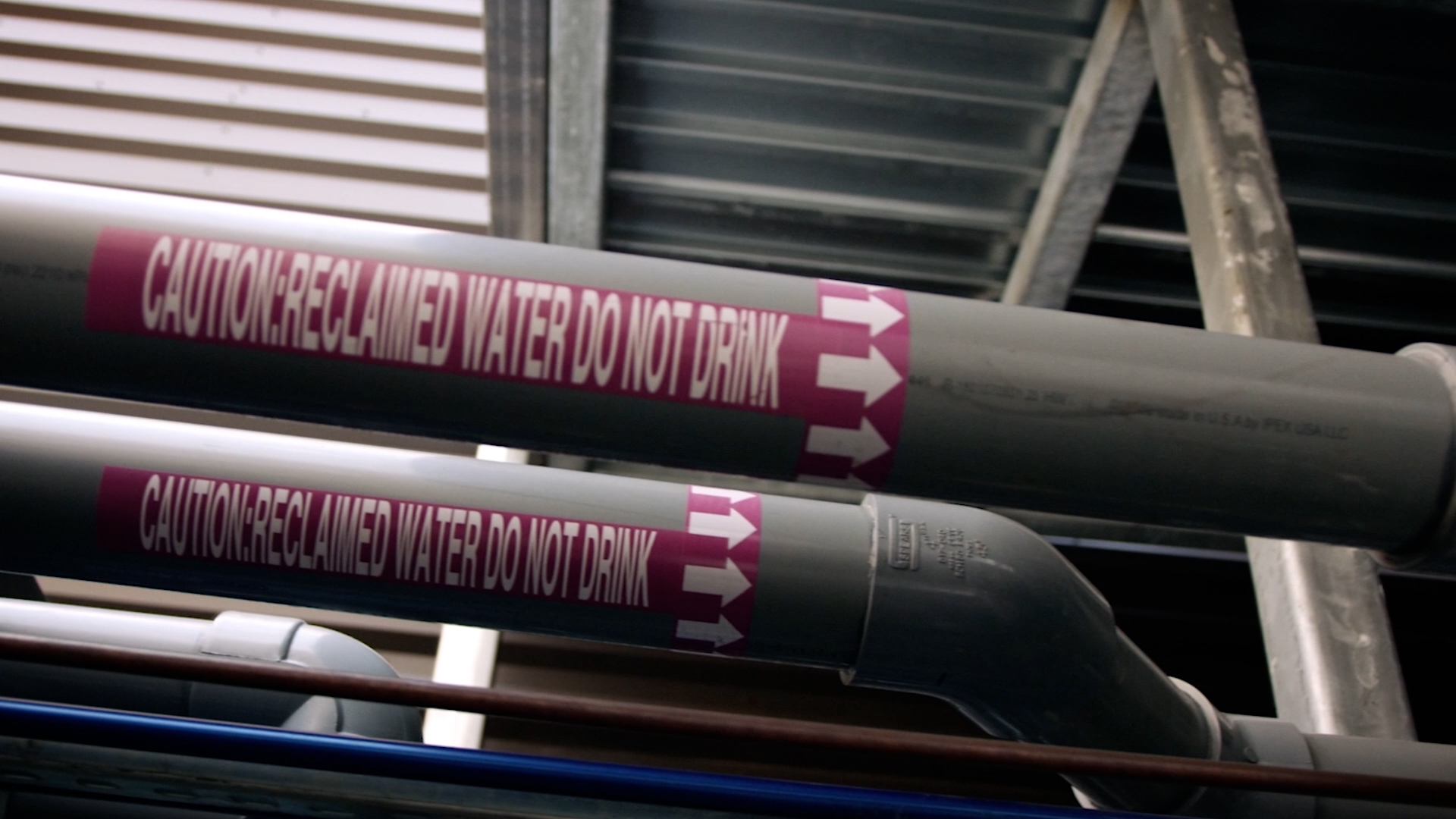
To address these profound geographical tensions, Amazon has organized its corporate strategy around a bold and highly humanized concept: becoming entirely “water positive” by the year 2030. Rather than simply minimizing their environmental damage, the company’s water stewardship division, led by sustainability advocates like Will Hewes, is focusing on a three-pronged community-oriented approach: eliminating fresh drinking water from their cooling systems, transitioning to recycled wastewater from municipal treatment plants, and actively restoring localized water basins. Water positivity means that for every single gallon of water a data center consumes, the company must find a way to return an even greater volume back to that exact same local community. Rather than relying on abstract, distant carbon-offset programs that offer little immediate comfort to dry communities, these replenishment efforts are designed to be hands-on, practical, and highly visible to the local population. In practice, these initiatives take many creative forms, such as capturing and treating wastewater runoff from server cooling systems and redirecting it to nearby agricultural fields so local farmers can raise crops without tapping into precious drinking aquifers. Additionally, Amazon partners with community groups to fund basic municipal infrastructure upgrades, such as repairing leaky public pipes, leaky faucets, and running toilets in schools and apartment buildings, proving that modern corporate ecological stewardship is most effective when it is grounded in real, everyday human partnerships.
As the digital industry marches steadily toward its self-imposed 2030 sustainability deadlines, the scale of this environmental task is both mathematically staggering and deeply personal. Last year alone, Amazon Web Services consumed an estimated 2.5 billion gallons of water globally to keep its massive cloud network online, yet through its concerted local replenishment efforts, it succeeded in returning approximately three gallons of water for every four gallons it withdrew from the earth. Currently sitting seventy-five percent of the way toward its water-positive objective, the company is proving that it is indeed possible to decouple technological advancement from total ecological destruction. However, the road ahead remains incredibly steep, as the demand for newer, faster generative AI models will inevitably trigger an unprecedented wave of server installation, requiring even more creative and intensive conservation measures. Executives like Kerry Person emphasize that dispelling the deep-seated anxieties of local communities requires shifting away from bureaucratic statements and moving toward transparent public education, showing neighbors the actual, physical reality of their efficient cooling designs. Ultimately, the true test of these corporate environmental promises will not be decided in sleek boardrooms or through polished public relations campaigns, but in the health of our shared natural resources. The ultimate survival of our digital future depends on recognizing that the cloud does not exist in an abstract vacuum, but is deeply anchored to the vulnerable soil and local watersheds that sustain both our machines and our lives.