


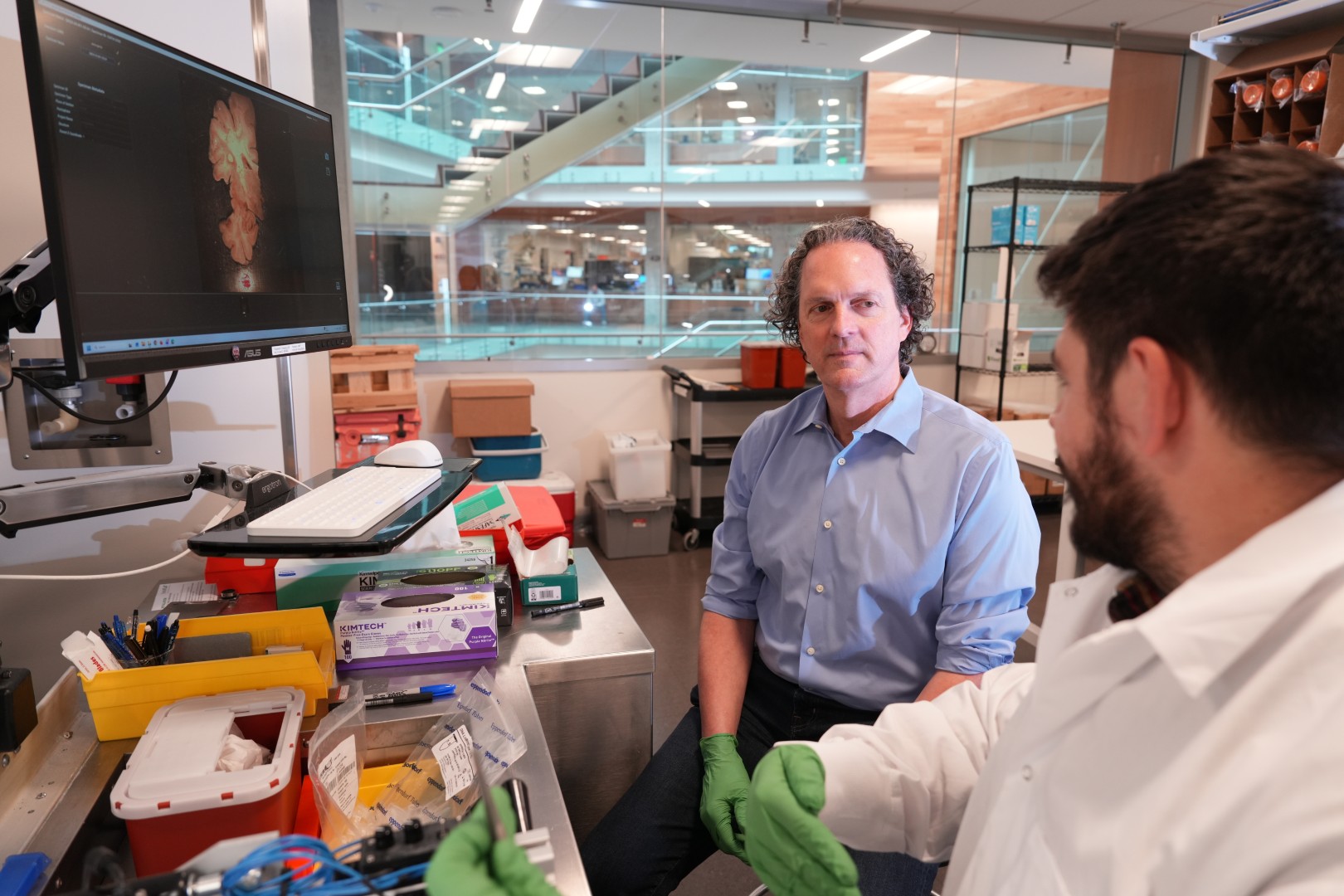
For more than two decades, the Allen Institute in Seattle has operated as a quiet temple of pure science, dedicated to mapping the impossibly intricate pathways of the human mind with the patient, methodical gaze of a cartographer. Founded in 2003 by the visionary Microsoft co-founder Paul Allen, the institute’s mission was simple yet extraordinarily vast: to understand the brain’s architecture. Scientists looked through microscopes not to cure a specific disease, but to construct a foundational map of our innermost selves. Now, that era of quiet observation is transforming into a bold, active crusade to heal. Under the leadership of Ed Lein, a veteran neuroscientist who has been with the institute since its infancy in 2004, the organization has officially launched the Brain Health Accelerator. Flanked by emerging talents like scientist Aaron Garcia, Lein is steering a massive transition from merely describing the brain to actively designing therapies for it. It is a deeply emotional milestone for those involved, colored by the bittersweet absence of Paul Allen, who passed away in 2018. The launch represents the ultimate fulfillment of Allen’s curiosity-driven dream—to take the colossal mountains of data they have gathered over twenty years and finally weaponize them against some of the most devastating, cruel, and historically untreatable neurodegenerative diseases known to humanity.
At the core of this transition is an ambition backed by serious financial and structural scaffolding. The Brain Health Accelerator is not just a nominal shift in focus; it is a newly formed, highly specialized unit carved out of the institute’s existing Brain Science division. Starting with a dedicated cohort of nearly 60 researchers, the initiative is meticulously designed to scale up to an absolute powerhouse of 200 scientists over the coming years. This monumental 14-year commitment is fueled by a newly announced $400 million funding pool, showcasing a remarkable masterclass in modern scientific philanthropy and collaboration. Half of this fortune—$200 million—comes directly from the Fund for Science and Technology, a $3.1 billion endowment left by Paul Allen’s estate to advance bioscience, the environment, and artificial intelligence. The remaining $200 million is a tapestry of support from prominent partners, including a landmark $100 million gift from the family of Amazon founder Jeff Bezos, alongside crucial support from Amazon Web Services (AWS), the National Institutes of Health (NIH), and the dedicated patient-advocacy nonprofit EverythingALS. This blend of estate assets, tech-industry philanthropy, and federal support creates what Ed Lein describes as a highly effective public-private partnership. The philanthropic seed money builds the cutting-edge research infrastructure rapidly and without bureaucratic delay, federal grants scale the operations, and the resulting insights are delivered back to the world as public scientific resources.
To understand why this accelerator represents such a profound paradigm shift in medicine, one must look at how traditional therapeutics have historically failed us. For decades, drug research has treated complex brain disorders with a relatively blunt instrument: targeting specific rogue proteins throughout the entire brain or body, which often leads to severe side effects and tragically low success rates. The Brain Health Accelerator aims to discard this broad-brush approach in favor of a brand-new class of highly precise gene therapies. This level of precision is made possible because of the institute’s breakthrough work in single-cell genomics, which Lein famously describes as “the equivalent of the human genome meets Google Earth.” By mapping the brain cell by cell, researchers have created an interactive ultra-resolution map that defines thousands of distinct cellular types by their unique genetic expressions. This map does not just show us what healthy and diseased brains look like; it reveals the exact genetic “switches” that turn specific genes on and off within highly localized groups of cells. Equipped with this genetic atlas, scientists can build molecular tools designed to travel into the brain and activate only within the specific, malfunctioning cells affected by a disease, leaving the surrounding healthy brain tissue entirely untouched.
The ultimate test of this incredibly advanced technology lies in how quickly it can transition from the sterile environment of a laboratory bench to the bedside of a suffering patient. The Brain Health Accelerator has set a fiercely ambitious target timeline, aiming to initiate its very first human clinical trials within the next five years. While Lein and his team remain cautious about overpromising, they acknowledge that Amyotrophic Lateral Sclerosis (ALS), often known as Lou Gehrig’s disease, represents one of the most promising and urgent candidates for their first therapeutic trials. ALS is a brutal, rapidly progressing disease that selectively attacks the motor neurons in the spinal cord and cortex, leaving patients paralyzed while their minds remain completely intact. Because scientists already know exactly which cellular circuits are destroyed by ALS, and because the disease moves with such devastating speed, patients are often highly motivated to participate in experimental gene therapies. By focusing their initial efforts on such a clear cellular target, the team hopes to prove that their circuit-specific gene therapies can successfully halt the progression of neurodegeneration, opening the floodgates for similar therapies targeting Alzheimer’s, Parkinson’s, Huntington’s, and Lewy body dementia.
This grand scientific endeavor is accompanied by a sheer volume of genomic data that is utterly unprecedented in the history of neuroscience. Analyzing genetic switches across trillions of cells and predicting how complex biological networks will react to gene therapy is a challenge far too massive for human minds alone to solve. To bridge this gap, the Allen Institute is relying heavily on the cutting-edge frontiers of artificial intelligence, leveraging advanced machine learning and massive foundation models to run predictive simulations on disease progress and drug design. This digital effort is powered by AWS, continuing a long-standing collaborative relationship, and is closely integrated with the Seattle-based Allen Institute for AI (Ai2), an independent champion of ethical, open AI research also founded by Paul Allen. The effort is anything but an isolated pursuit; it is a sprawling, global web of synergy. The accelerator is collaborating with more than two dozen world-class research institutions, bridging minds from the University of Washington, Fred Hutchinson Cancer Center, Stanford, and MIT, while extending its collaborative reach across the oceans to the Sanger Institute in the United Kingdom and the Riken Institute in Japan.
At its heart, this massive technological and scientific endeavor is a deeply human story about legacy, hope, and the relentless passage of time. For Ed Lein, who has dedicated twenty years of his life to navigating the mysterious, winding corridors of the human brain, this moment is profoundly personal. He reflects on his long journey of mapping the brain with a sense of immense pride, but also with a quiet, reflective grief that Paul Allen is no longer here to see his vision reach its ultimate, practical destination. Allen was a man defined by his endless, childlike curiosity and a grand, sweeping ambition, always hoping that his heavy investments in basic science would eventually blossom into direct, lifesaving impacts on human health. With the launch of the Brain Health Accelerator, that transition from quiet observation to active healing has officially begun. The scientists at the Allen Institute are no longer just cartographers drawing beautiful, distant maps of the mind’s mysterious terrain; they have finally become the active architects of its recovery, stepping forward with courage, passion, and the tools to rewrite the future of brain medicine.