





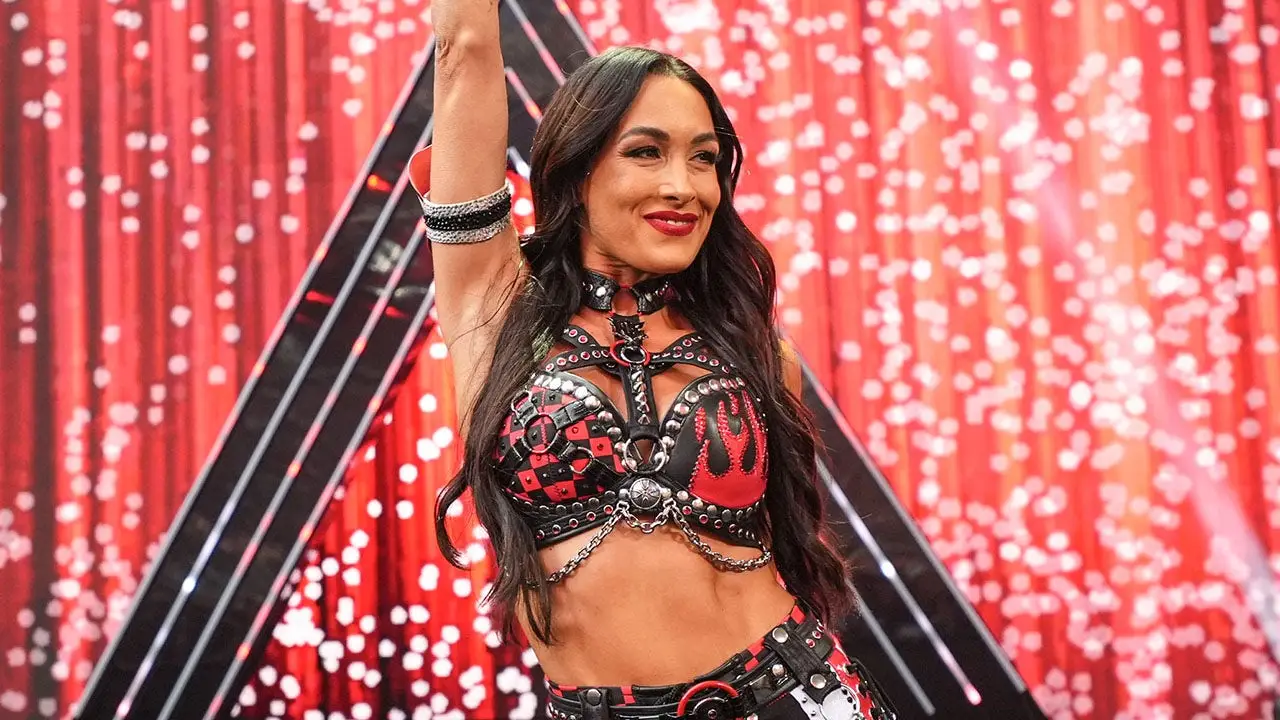
The grand spectacle of WWE SummerSlam has always been a stage where triumph and tragedy walk a razor-thin line, a reality that became painfully clear during a chaotic six-woman tag team match on Saturday night. Amidst the flashing lights, roaring crowd, and theatrical intensity of the premium live event, a moment of genuine, unscripted horror unfolded when WWE superstar Brie Bella suffered what appeared to be a severe shoulder injury. Positioned on the floor next to the unforgiving steel ring steps, Brie became the target of a high-impact running senton delivered by her opponent, Jacy Jayne. The collision was swift and brutal, and as Jayne rolled away, the atmosphere in the arena subtly shifted from the choreographed suspense of sports entertainment to the raw, visceral anxiety of a real-life physical emergency. Spectators nearby and viewers watching at home watched in concern as Brie immediately began clutching her right shoulder, her face contorting in genuine pain. For the remainder of the high-stakes match, she could be seen repeatedly rubbing and cradling the joint, attempting to preserve her physical composure while soldiering through the remaining sequences alongside her twin sister, Nikki Bella, and their teammate, Paige.
The immediate aftermath of the match only heightened the drama, blending the harsh realities of physical injury with the complex, soap-operatic narratives that define professional wrestling. Despite Brie’s obvious distress, the performers adhered to the industry’s unwritten code of finishing the match, culminating in Jacy Jayne scoring a decisive pinfall victory over Paige to secure the win for her team, which also included Lainey Reid and Fallon Henley. However, the emotional climax of the segment occurred moments later when Nikki Bella suddenly turned on Paige, unleashing a vicious assault that signaled a dark, villainous shift in the Bella twins’ on-screen personas. This shocking betrayal left the audience reeling, creating a bizarre juxtaposition where the live crowd was processing a massive storyline development while simultaneously harboring deep concern for the legitimate well-being of the injured Brie. The heavy burden of executing a complex, high-profile heel turn under the stadium lights while harboring intense anxiety for a wounded sister is a testament to the immense psychological pressure these athletes face, demonstrating how the lines between personal trauma and professional performance constantly blur in the wrestling business.
The following morning, as fans clamored for updates on Brie’s condition, Nikki Bella provided a candid, emotional glimpse into the family’s private anxiety during an interview on Busted Open Radio. Speaking just hours before the second night of the premium live event was set to commence, Nikki confirmed that her sister was in a significant amount of pain, though concrete medical answers remained elusive. The bond between the Bella Twins has always been the cornerstone of their public and private lives, making Nikki’s distress palpable as she navigated the difficult boundary between sisterly protectiveness and corporate discretion. She admitted to the radio hosts that she had been strictly instructed by WWE management to “zip it” regarding the specifics of the medical diagnosis, leaving fans to read between the lines of her carefully chosen words. This enforced silence highlighted the intense corporate pressure that often surrounds high-profile injuries in modern professional wrestling, where medical updates are treated as highly sensitive assets, leaving loved ones to carry the emotional weight of a relative’s suffering behind closed doors while maintaining a professional facade for the media.
The gravity of Brie’s injury was further validated by WWE’s Chief Content Officer, Paul “Triple H” Levesque, who addressed the situation during a post-show press conference following Night 1 of SummerSlam. Levesque, a legendary competitor who has survived numerous devastating, career-threatening injuries himself, spoke with the quiet gravity of an executive who intimately understands the physical toll of the squared circle. He confirmed to reporters that Brie had been immediately taken from the arena to a local hospital to undergo a battery of diagnostic scans, noting that while a definitive answer had not yet been reached, the initial assessment was grim. “It seems pretty bad,” Levesque admitted with characteristic honesty, acknowledging that while everyone hoped the damage would be less severe than initially feared, physical devastation is simply the nature of the game. His comments painted a sobering picture of the post-match reality for injured wrestlers, who are quickly whisked away from the adulation of tens of thousands of cheering fans into the sterile, quiet isolation of emergency room corridors, waiting under harsh fluorescent lights for a radiologist’s verdict to determine the future of their careers.
This sudden physical setback carries a particularly cruel irony given the hard-fought journey Brie Bella had undertaken to return to the active WWE roster. After making a triumphant and highly praised return at the Royal Rumble in January, Brie had set her sights on a historic tag team run alongside Nikki, with plans locked in for a blockbuster match at WrestleMania 42. However, those dreams were initially derailed when Nikki suffered a severe injury of her own, forcing Brie to pivot and form an alliance with Paige, a partnership that quickly yielded gold when they captured the WWE Women’s Tag Team Championship. To have her hard-earned momentum halted so abruptly by a freak accident on one of the grandest stages of the year is a heartbreaking reminder of the fragility of a wrestler’s career, where months of grueling physical rehabilitation and creative planning can be instantly erased in a fraction of a second. The cyclic nature of injuries within the Bella family highlights the relentless physical sacrifice demanded of these women, who have spent over a decade breaking barriers and redefining the physical expectations of female competitors in a male-dominated industry.
As the wrestling world waits in suspended animation for the official medical results, the focus shifts to the long, grueling road of recovery that lies ahead for Brie Bella, both as an elite athlete and as a mother and entrepreneur outside the ring. The transition from the high-octane lifestyle of a touring WWE superstar to the quiet, painful monotony of physical therapy is a psychological challenge that is rarely discussed but deeply felt by injured performers. Sidelined from the passion that defines her, Brie must now summon the mental fortitude to heal her body while her colleagues continue to travel, perform, and advance the storylines she was once destined to lead. Yet, if her storied career has proven anything, it is that Brie Bella possesses an unbreakable spirit that extends far beyond the physical confines of the wrestling ring. While the immediate future of her championship reign and her in-ring career remains clouded in painful uncertainty, the outpouring of support from the WWE Universe serves as a powerful reminder that her legacy is already secure, and the true measure of her strength will be defined not by how she fell, but by how she rebuilds herself to rise once again.