





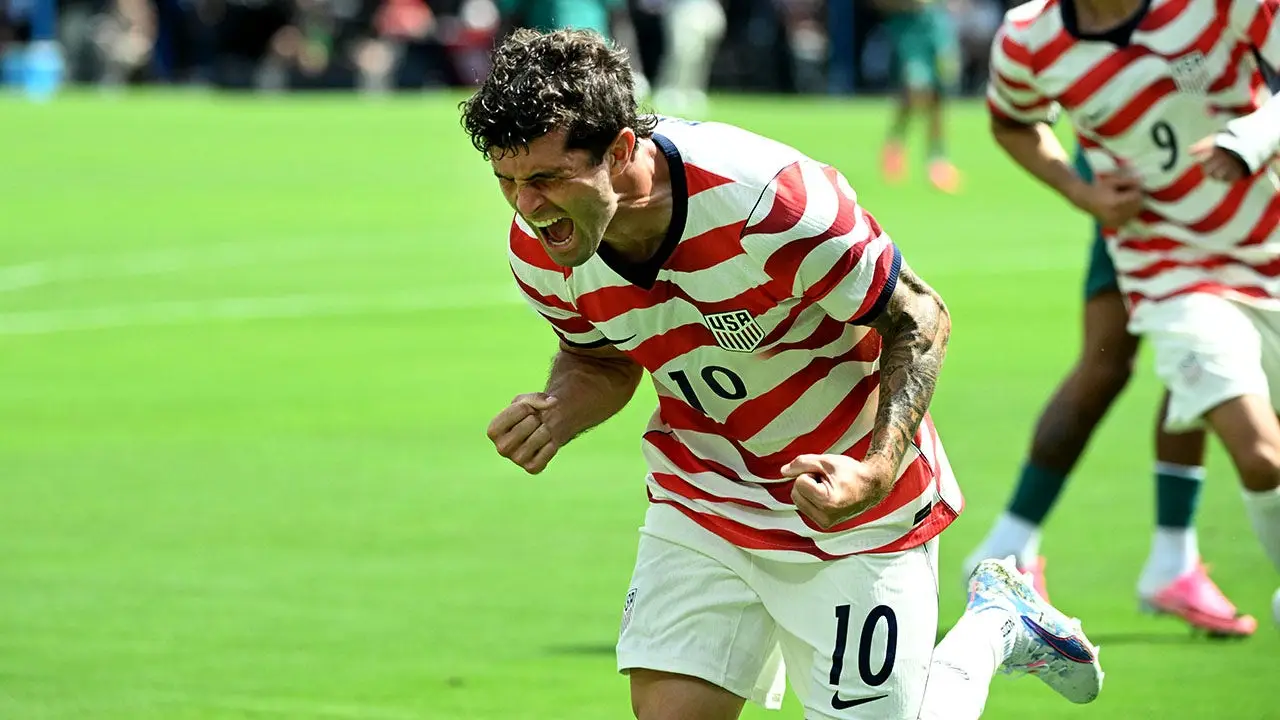
In the hyper-analytical, relentlessly fast-paced world of modern professional soccer, where player performance is continuously dissected by fans, pundits, and sophisticated metrics, Christian Pulisic occupies a uniquely pressurized space. As arguably the most iconic American-born soccer player of his generation—affectionately yet heavily dubbed “Captain America”—his every move on the pitch is scrutinized as a barometer for the sport’s progress in the United States. When Pulisic is of sound form and thriving, it feels to American supporters like the nation is finally claiming its rightful seat at the high table of global football; conversely, when he struggles, a palpable anxiety sweeps through the entire soccer community. This weight of expectation became a suffocating emotional burden during a recent, inexplicable goal drought that stretched across his club commitments with Italian giants AC Milan and his outings for the United States Men’s National Team (USMNT). Prior to a critical international friendly against Senegal, Pulisic had not found the back of the net since late December during a Serie A victory over Hellas Verona. For a world-class winger whose identity and confidence are intrinsically linked to offensive output, a nineteen-match dry spell with his club, coupled with an eight-match scoreless streak for his country, was more than just a statistical slump. It was a psychological wall that threatened to overshadow his preparations for the upcoming World Cup, bringing an unrelenting wave of media questioning and public doubt that grew louder with each passing week, casting a shadow over his undeniable talent and making his quest for self-redemption a focal point of national athletic drama.
The breakthrough finally arrived in the nineteenth minute of a high-stakes friendly against an athletic and resilient Senegal squad, serving as a visceral, cathartic reminder of why Pulisic remains the undisputed focal point of the American attack. As the ball crossed the goal line, signaling his long-awaited return to the scoresheet, the collective sigh of relief from the team, the coaching staff, and thousands of fans was almost audible through the stadium speakers. Far from a simple tap-in, the goal was the culmination of relentless off-the-ball movement, tactical positioning, and a sharp finishing instinct that had briefly seemed dormant under the weight of his recent struggles. Senegal, led by their world-renowned talismanic forward Sadio Mané, fought back valiantly, with Mané leveling the score early in the second half to put the American defense under immense pressure. However, the U.S. squad demonstrated a newfound collective resilience, recapturing the lead in the sixty-second minute thanks to a highly decisive and confident strike from forward Folarin Balogun to ultimately secure a hard-fought 3-2 victory. While the win itself was an incredibly vital confidence booster for a team fine-tuning its tactical identity under intense international scrutiny, the true narrative of the night belonged entirely to Pulisic’s sudden redemption, a pivotal moment that did not just alter the scoreboard but fundamentally shifted the emotional energy of the entire American roster as they build momentum.
When Pulisic stood before the flashing cameras and microphones after the match, his response was a potent mixture of profound relief and quiet, defensive frustration, reflecting the heavy mental toll that the media’s obsession with goal-scoring statistics takes on elite athletes. “Now maybe we can stop talking about it,” he remarked with a weary, knowing smile, a candid admission of how exhausting the persistent, negative narratives surrounding his drought had truly become to his daily peace of mind. Pulisic went on to eloquently elaborate on the profound disconnect between how an elite player assesses their own contribution and how they are judged by the public, explaining that he felt he had actually been playing exceptionally well over the preceding months, contributing to build-up play, creating space, and tracking back defensively to help his teammates. Yet, in the modern sporting landscape, where nuance is frequently sacrificed for sensational headlines and social media engagement, the only currency that seemed to matter to the outside world was goals. This candid human moment highlighted the vulnerability of a global superstar who, despite his fame and fortune, still feels the sting of persistent criticism, emphasizing that the relief of scoring was less about silencing his own internal doubts and more about finally quietening the external noise so he could focus on the team’s objectives.
Crucial to Pulisic’s journey through this challenging period has been the steady, demanding guidance of U.S. head coach Mauricio Pochettino, whose managerial philosophy looks far beyond simple box scores to the daily competitive habits that build world-class sports programs. Speaking after the Senegal victory, Pochettino was quick to praise his star player’s performance, but his words were wrapped in an elite coach’s standard of continuous improvement, noting that while Pulisic’s first forty-five minutes on the pitch were exceptional, there is still immense potential left to unlock. Pochettino pointed out that Pulisic’s goal was not a stroke of random luck but the direct result of the intense commitment, positive attitude, and exceptional energy he had displayed in training sessions from his very first day with the squad. The Argentine manager emphasized that the challenge now is to translate those elite habits and high-intensity displays from a brilliant half of football into a dominant, ninety-minute performance that can withstand the rigors of tournament football. By publicly championing Pulisic’s daily work rate and training commitment rather than just celebrating the goal itself, Pochettino demonstrated a masterclass in modern man-management, shielding his captain from excessive pressure while simultaneously challenging him to elevate his standards to the heights required to compete against the powerhouse nations of world football.
This strategic emphasis on holistic preparation is vital as the United States navigates its final preparations for a World Cup that represents a watershed moment for the sport domestically, carrying a deep-seated responsibility to grow the game for future generations. For legendary US soccer figures like Clint Dempsey, who has frequently spoken about the team’s profound responsibility to elevate soccer’s profile in America, the current generation represents an unprecedented opportunity to capture the imagination of a nation, but this opportunity of a lifetime comes with the immense pressure of performing under a global microscope. A firing and fully confident Christian Pulisic is not just an asset to this endeavor; he is an absolute necessity, serving as the cultural and tactical anchor around which the U.S. attack is built. When the star player is bogged down by individual anxieties and statistical droughts, the entire team’s offensive fluidity can suffer, leading to tentative play and a noticeable lack of creative risk-taking. By shattering his goal-scoring drought in such dramatic fashion against a top-tier opponent like Senegal, Pulisic has effectively injected a therapeutic dose of belief into the entire roster, transforming the tactical narrative from one of concern over individual form to a collective celebration of offensive potency and resilience.
As the team turns its focus toward the immediate future, the competitive challenges will only intensify, offering Pulisic and his teammates the perfect crucible to test their World Cup readiness and prove their true mettle. Up next is a highly anticipated and prestigious friendly on Saturday against Germany, a traditional footballing superpower that will provide a rigorous, unforgiving examination of the Americans’ defensive organization and counter-attacking efficiency. Following that high-profile clash, the squad will transition from friendly preparations to the ultimate reality of World Cup Group D, where they will open their campaign against a highly disciplined, physical, and tactically demanding Paraguay team. These upcoming fixtures represent the culmination of years of hard training, personal sacrifice, and developmental growth for Pulisic and the entire American soccer program. While the road ahead remains fraught with tactical obstacles and intense global competition, the victory over Senegal—and Pulisic’s defiant, emotional return to the scoresheet—suggests that this American side is finding its stride and mental fortitude at precisely the right moment, eager to prove that they are no longer just optimistic participants on the global stage, but true, battle-tested contenders ready to write an unprecedented and historic new chapter in American sporting history.