





Under the brilliant, cascading lights of SoFi Stadium in Southern California, soccer history did not merely unfold; it roared to life in spectacular, unforgettable fashion. The 2026 FIFA World Cup opener was already destined to be an emotional and monumental affair, representing the first time in thirty-two years—since the landmark 1994 tournament that forever changed the sporting landscape of the nation—that the United States has hosted the world’s most watched sporting event on its own soil. Yet, what took place on Friday night went far beyond a ceremonial kickoff, transforming into a historic 4-1 triumph over Paraguay that served as a statement of intent to the global footballing community. To understand the sheer gravity of this victory, one must look past the immediate jubilation and study the staggering numbers and the weight of decades of expectation. For the first time in the long, often painstaking history of the United States Men’s National Team (USMNT), the squad scored at least four goals in a single World Cup match, shattering an offensive glass ceiling that had stood since the tournament’s inception in 1930. This dominant display didn’t just ignite the passions of the home fans; it bridged a historical chasm to that legendary 1930 squad, which was the last American team to beat Paraguay by three goals in a World Cup setting. By matching and exceeding those ancient milestones, this current group of players did more than win three vital points in the tournament standings; they proved that their modern, dazzling style of play is capable of capturing the imagination of a nation and challenging the world’s elite on the grandest stage possible.
The magical evening got off to a dream start for the Americans, who took the pitch with an aggressive, front-foot mentality designed to suffocate their South American opponents from the opening whistle and delight the sea of red, white, and blue in the stands. The tactical blueprint laid out by the coaching staff paid immediate, breathtaking dividends in just the sixth minute of play, triggering a wave of pure, unadulterated electricity through the packed arena. As the USMNT mounted a fierce, high-speed attack down the flank, sending a dangerous, low cross whipping through the penalty area, Paraguay’s defense was thrown into complete and utter disarray. In a frantic, desperate attempt to clear the ball away from the charging American forwards who were hungry for an early breakthrough, Paraguayan midfielder Damián Bobadilla accidentally diverted the ball past his own stranded goalkeeper and into the back of his own net. This sixth-minute own goal was the ultimate catalyst the Americans needed, settling any opening-night nerves and putting the young squad firmly in the driver’s seat. Seizing such an early advantage allowed the team to play with an infectious sense of freedom and creative expression, dominating the tempo of the midfield, executing crisp passes, and keeping a shell-shocked Paraguay pinned deep in their own territory. The sheer noise from the American faithful in Southern California served as a constant, powerful wind at the team’s back, setting a triumphant, relentless tone for the rest of the first half.
At the absolute center of this unfolding masterpiece was Folarin Balogun, whose journey to this World Cup stage is one of the most culturally rich, complex, and deeply human narratives in modern international sports. Born in Brooklyn to Nigerian parents but raised in the vibrant, football-mad metropolis of London, the twenty-four-year-old striker grew up navigating the complex cultural identities and sporting heritages of three different nations. His raw footballing genius was discovered at the tender age of eight while playing in a local “Sunday League” park in London, a discovery that quickly led him into the prestigious youth academy of Arsenal, one of England’s most iconic and historic professional clubs. As he developed into a lethal, elite-level forward on the European stage, he faced a massive, career-defining choice that kept the global soccer media in suspense: commit his international future to England, Nigeria, or the country of his birth, the United States. In the spring of 2023, while weighing this monumental decision, Balogun decided to take a quiet, introspective vacation to the United States to connect with his roots. During his trip, he was profoundly touched by an unexpected, overwhelming wave of love and encouragement from American soccer fans, who flooded his social media accounts with heartfelt messages urging him to represent the United States. Experiencing that genuine warmth and sense of belonging convinced Balogun that his true sporting destiny was to wear the Stars and Stripes, a decision that would change the trajectory of American soccer forever.
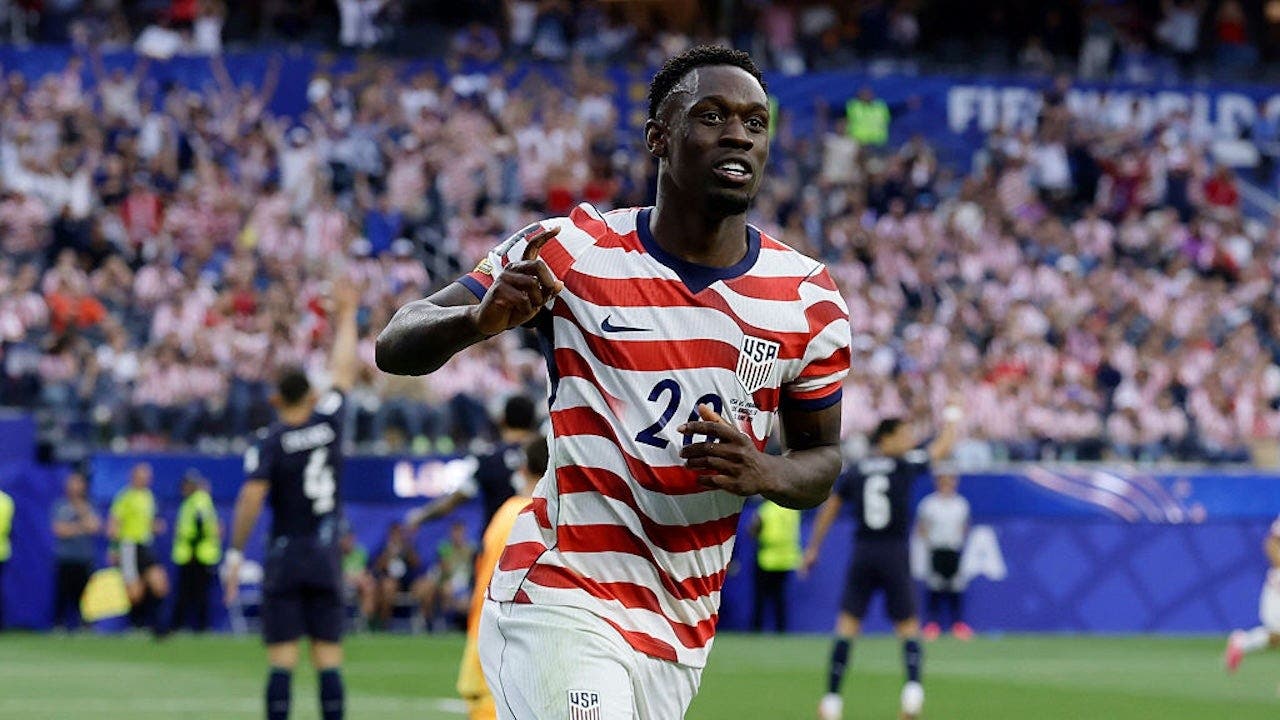
Balogun channeled that gratitude and newfound sense of belonging into a virtuoso first-half performance, cementing his status as America’s newest star in a tournament played on home soil. In the thirtieth minute, he scored his first-ever World Cup goal, latching onto a loose ball with feline quickness and unleashing a clinical, low strike that gave the United States a crucial two-goal cushion. This rapid strike represented the third-fastest time the Americans had ever reached a two-goal lead in World Cup history, adding to an elite legacy that includes the legendary 2002 match against Portugal and the ancient 1930 duel with Paraguay. But the young striker was far from finished with his historic run; just moments before the referee blew the whistle for halftime, Balogun brought the home crowd to its feet once again in a moment of sheer artistic brilliance. Running onto a perfectly weighted, defense-splitting pass from teammate Malik Tillman, Balogun took a precise, fluid touch and curled an exquisite, pinpoint shot directly into the top-left corner of the net, leaving the goalkeeper completely helpless. With that spectacular second goal, the Brooklyn-born forward became the first American player since the pioneer Bert Patenaude in 1930 to score multiple goals in a single World Cup match. The stadium erupted in a deafening crescendo of joy as Balogun celebrated with his teammates, having firmly established himself as a world-class force and a hometown hero.
Despite the comfortable three-goal advantage at the halftime interval, the second half would challenge the emotional and physical resilience of this young, ambitious American squad. Instead of retreating into a defensive shell and contenting themselves with preserving their lead, the USMNT continued to press forward in search of a fourth goal, demonstrating the relentless attacking ambition that has come to define this generation. However, the jubilant mood inside the stadium took a sudden, somber turn when captain Christian Pulisic went down with a painful-looking injury, silencing the crowd. Pulisic, long considered the emotional heartbeat, creative engine, and undisputed leader of this modern era of American soccer, had to be tended to by medical staff, casting a brief shadow of worry over the historic evening. Capitalizing on the sudden disruption in the American ranks and the emotional lull in the stadium, Paraguay began to fight back with desperate intensity, pouring men forward and fighting to regain their dignity. Their efforts were rewarded in the seventy-third minute when they finally found a gap in the American defense, slipping a well-placed shot into the back of the net to make the score 3-1. Instantly, a wave of nervous tension rippled through the stands of SoFi Stadium, as fans recalled past tournament heartbreaks and wondered if the young Americans could steady their nerves and withstand the mounting late-game pressure.
In those high-stakes, final moments of the match, it was twenty-three-year-old Gio Reyna who stepped up to write the ultimate, triumphant closing chapter of this historic night. With the clock winding down and Paraguay pushing everyone forward in a desperate, final bid to close the gap, the Americans launched an explosive, textbook counter-attack that caught their opponents completely off guard. Reyna, possessing the sublime technical vision, footballing pedigree, and composure that runs in his legendary soccer family, found himself in a prime scoring position in the dying seconds of stoppage time. With cool precision and ice in his veins, he slotted the ball into the back of the net to secure the historic fourth goal, sending the crowd into a final, euphoric celebration and guaranteeing all three points in the World Cup standings. This final exclamation point of a goal finalized the historic 4-1 scoreline, matching the biggest World Cup margin of victory in program history and signaling to the footballing world that this USMNT is ready to compete with absolute authority on home soil. As the players embraced on the pitch amidst a shower of red, white, and blue confetti, it was clear that this victory was more than just a successful World Cup opener; it was the dawn of a thrilling, confident new era for soccer in the United States, proving that when the world comes to play, the home team is more than ready to stand tall.