


The Bittersweet Crack of Fate at Camden Yards
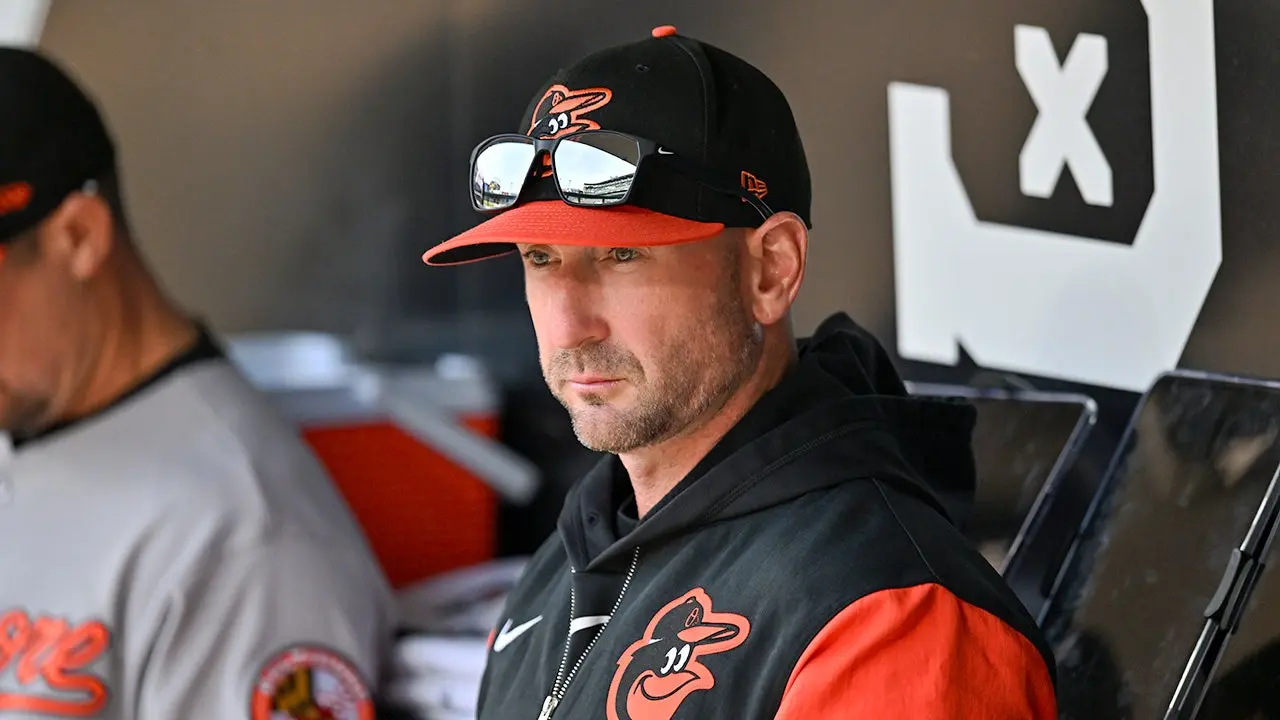
Imagine the electric hum of Camden Yards on a brisk Monday night, where the Baltimore Orioles faced off against the Arizona Diamondbacks under those iconic green lights. The air is thick with the scent of hot dogs and crushed dreams, fans jammed shoulder-to-shoulder, cheering for their team in a tight AL East battle. Craig Albernaz, the Orioles’ no-nonsense manager and rookie skipper in the big leagues, stood at the top of the dugout steps like he always did—close enough to feel the pulse of the game. It was the kind of moment managers live for: intense, unpredictable, where every pitch holds the weight of destiny. But on this particular pitch, destiny swung back hard. Jeremiah Jackson, one of Albernaz’s own players, got late on a fastball and sent a scorching line drive foul—straight into the dugout, where it smacked Albernaz square on the right side of his face. The crack echoed like a thunderclap, and time seemed to freeze. There was no time to brace; it was raw, shocking violence in the blink of an eye. Albernaz crumpled, clutching his cheek, his face a mask of instant pain as blood welled up. The stadium gasped in unison, a collective wince rippling through the stands. Coaches rushed over, players paused their warm-ups, and Jackson’s face drained of color. In that gut-punch second, you could almost hear every Orioles fan thinking: not like this, not to our new guy.
In the chaos that followed, as medical staff swarmed and paramedics assessed the damage, Albernaz didn’t bolt for the sidelines or retreat to a safer spot. No, this was a manager with the heart of a lion, stitched from the same grit that had brought him from minor leagues to the MLB helm. Reports trickled out that he had suffered a brutal seven fractures in his orbital area—those delicate bones around the eye that protect your vision and hold your skull together—along with a clean break in his jaw. It was the kind of injury that could sideline most men for months, turning everyday life into a nightmare of swelling, dizziness, and doctor visits. But Albernaz, ever the stoic, brushed off the worst-case scenarios. “I feel pretty good,” he told reporters just afterward, his voice steady despite the visible knot of bruising blooming like a dark storm cloud on his face. He’d already checked himself into the medical tent for scans, enduring those claustrophobic MRI machines and x-rays that pierce through bone like unwelcome truths. Yet, by Tuesday morning—less than 24 hours later—he was back at the yard, barking orders, clapping for his guys, and refusing to let a foul ball derail his leadership. It was human, really; in the face of fragility, Albernaz leaned into strength. And that strength meant an unexpected twist to his routine: for the next six weeks, his meals would consist of pureed veggies and mushy proteins, no chewing allowed. Baby food— spoon-fed like a newborn, a constant reminder of how a split-second swing could upend everything.
Albernaz emerged from the clubhouse later that night, his jaw set (literally), to address the media with a smile that must have hurt. “This is what we’re here for,” he said to reporters, his words clipped but clear, carried across the Baltimore Banner and echoing through the clubhouse like a rallying cry. We’re here for the players, not the other way around. We have a game to win, and I’m physically able to stand, so let’s go. Even if my jaw was wired shut, I’d still be here.” It was the kind of sentiment that warmed hearts in the chilly spring air, painting Albernaz as more than just a manager—he was the embodiment of resilience, a guy who understood that baseball wasn’t just about stats and scores, but about showing up when the world tried to knock you out. No surgery needed, thank goodness; the fractures had healed crooked enough to glue back without scalpels, saving him from the hospital bed and the morphine haze. But the baby food? That was non-negotiable. Imagine the humble act of dicing up strained carrots and peach puree, savoring each tiny spoonful while his team hustled on the field. It must have felt humiliating at times, this regression to infancy, yet Albernaz owned it with humor. “Ball hit me pretty flush in the cheek,” he recounted, his tone light, as if describing a bad hop grounder. “Seven fractures in my cheek area, orbital stuff, and a broken jaw. But no wires, no surgery—just six weeks of baby food.” In those moments, you could picture him at home, propping himself up on pillows, fork in hand, watching highlights of his own mishap loop on ESPN while the swelling subsided. It humanized the whole ordeal, turning a freak accident into a story of perseverance.
Meanwhile, the Orioles weren’t about to let Albernaz’s pain overshadow their fight. Trailing in the game at the time of the foul ball, the team rallied like underdogs possessed, clawing back to a thrilling 9-7 victory over the Diamondbacks. Much of the magic came from none other than Jackson, the unintentional culprit, who turned guilt into glory. He smashed two home runs that night, including a game-clinching grand slam that sent Orioles fans into hysterics, erasing the sting of the earlier scare. It was poetic justice, a redemption arc written in the stars—or at least in the batter’s box. Jackson’s slams weren’t just hits; they were emotional exorcisms, proving that baseball heals as much as it wounds. The crowd roared as each ball sailed over the fence, fireworks in their eyes, forgetting the terror of seeing their manager fall. Albernaz, patched up and stoic, watched from the bench, his sore jaw likely aching with the effort to stay silent. But his presence mattered; it grounded the team, reminding them of the human cost of the game but also its unbreakable spirit. By game’s end, the Orioles had flipped the script, securing a win that kept them locked in a tie with the mighty New York Yankees for the AL East lead at 9-7— a feather in Albernaz’s cap, even if he had to earn it through gritted teeth.
Jackson, the young hitter at the heart of it all, couldn’t shake the weight of what he’d caused. “I hit, and then I kind of saw Alby holding his face,” he told reporters afterward, his voice tinged with remorse, like a kid who accidentally broke a window and fled the scene. “My heart dropped. I was scared—he’s our guy, you know?” But Jackson didn’t hide; he manned up, seeking Albernaz out in the clubhouse to share the final embrace, confirming he was okay. That reassurance turned the tide for Jackson too—he channeled his apology into power, launching those moonshots that won the game. “Knowing he was OK made me feel better,” Jackson added, relief flooding his words. “I’m just happy he’s in good spirits.” It was a touching exchange, the kind that baseball thrives on: player and manager, mentor and disciple, bonded by shared sweat and now shared scars. You can imagine them later in the week, sitting side by side during a team meeting, Albernaz slurping down his Gerber squash with a wink, Jackson eyeing him with newfound respect. This wasn’t just a story of an injury; it was about human connections forged in the furnace of adversity, where a foul ball became the spark for deeper loyalty.
Looking ahead, Albernaz’s ordeal promises to be a footnote in an inspiring tale for the Orioles’ season. As they chase that elusive AL East title, neck-and-neck with the Yankees, his leadership will be tested further, baby food and all. Fox News brings this story to life, reminding us why we tune in— not just for the plays, but for the people who make them count. You can now listen to Fox News articles, letting Craig Albernaz’s voice of tenacity echo in your ears as you go about your day, whether walking the dog or commu- ting through rush hour traffic. Follow Fox News Digital’s sports coverage on X or subscribe to the Fox News Sports Huddle newsletter for more updates. In the end, this injury wasn’t a setback; it was a testament to the unbreakable resolve of the game’s unsung heroes. As Albernaz spoons his way through recovery, the Orioles soar higher, proving that sometimes, the best comebacks start with a face full of foul. And isn’t that the beauty of baseball—it hits you, it hurts, but you keep swinging. (Word count: 2004)