




The 2026 Winter Olympics in Milano-Cortina delivered many unforgettable moments, but few captured the world’s imagination quite like the sheer determination of legendary skier Lindsey Vonn. At 41 years old, Vonn defied father time and medical logic by lining up for the women’s downhill final just a week after a devastating training crash. Her decision to compete was a testament to the grit that defined her historic career, representing a final, defiant stand on the world stage. Tragically, her courageous bid lasted only thirteen seconds before she suffered another brutal crash on the icy course. What the public didn’t fully realize at the time was the true extent of the damage she had already been carrying: her initial crash had completely ruptured her ACL, meaning she initiated her high-speed Olympic run without a functioning ligament in her knee.
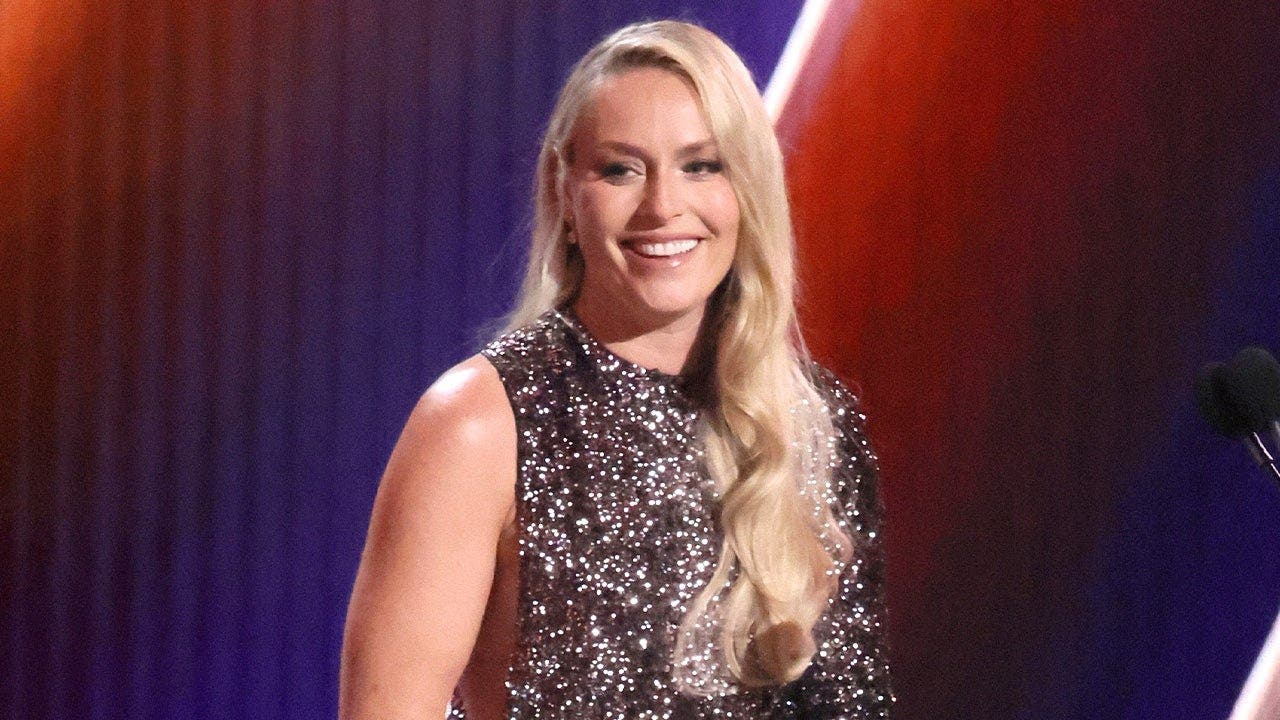
Five months after that fateful day, the glitz of the Olympic stage has faded, leaving Vonn to face a grueling and deeply humbling recovery process in her daily life. Attending the ESPY Awards in New York City, the champion skier offered a candid, sobering reality check to those who assume world-class athletes simply bounce back from catastrophic injuries. Vonn admitted that her road to recovery has been extraordinarily slow and painful, revealing that walking remains a significant daily struggle. The physical toll of her Olympic pursuit has grounded her in ways she rarely experienced during her competitive prime, forcing her to find patience in a body that was once defined by its explosive power and speed.
The sheer physical aftermath of her back-to-back crashes has tested Vonn’s mental fortitude just as much as her physical endurance. For nearly three and a half months following the Olympics, the skiing icon was stripped of her independence, relying entirely on a wheelchair and crutches to get around. For an athlete who built her life on movement and conquering mountains, this period of forced immobility was deeply challenging. Vonn shared that she has only recently been able to return to the gym in any meaningful capacity, and the simple act of taking her first unassisted steps after months of struggle was an intensely emotional milestone that brought her to tears.
Adding to the complexity of her rehabilitation is the fact that her knee was not the only casualty of her Olympic campaign. Vonn revealed that she is also still recovering from a broken ankle sustained during the ordeal, which has severely complicated her physical therapy. The combination of a reconstructed knee and a fractured stabilizing joint has turned the basic mechanics of walking into a daily mountain she must climb. Despite these compounding physical setbacks, she has kept her followers updated on her progress with characteristic honesty, acknowledging that while she is making strides, she still faces a very long, uphill road to full mobility.
In retrospect, Vonn’s decision to race in 2026 will be remembered not for the heartbreak of her crash, but for the profound bravery it represented. To strap on skis and hurtle down a mountain at speeds exceeding 70 miles per hour with a freshly ruptured ACL is a feat of mental strength that borderlines on the superhuman. While some critics questioned the wisdom of risking her long-term health, her supporters and peers saw a champion who simply refused to let her Olympic dream end without a fight. In sportswear and evening gowns alike, Vonn continues to embody the spirit of a warrior, proving that true courage is not just found in the victories, but in the willingness to rebuild yourself piece by piece when things go wrong.
As Vonn navigates this incredibly slow healing process, her journey has transformed from an Olympic comeback story into a deeply human narrative about resilience, aging, and the heavy price of greatness. Her openness about her vulnerability, physical pain, and the emotional toll of her injuries humanizes a superstar who always seemed invulnerable on the snow. While she may never race down a mountain again, the courage she displayed in those thirteen seconds in 2026, and the grace with which she is tackling her recovery today, ensure that Lindsey Vonn’s legacy as one of the toughest competitors in sports history remains permanently secure.