


At 39 years old, Novak Djokovic continues to redefine the boundaries of athletic longevity and grit on the tennis court. In a breathtaking display of stamina and willpower, the legendary Serbian secured his spot in history by winning the longest quarterfinal in Wimbledon history on Wednesday. Defeating Canadian powerhouse Felix Auger-Aliassime in a grueling five-set thriller that stretched over five hours and 15 minutes, Djokovic proved once again why he is considered one of the greatest competitors the sport has ever seen. The final score of 7-6 (12-10), 3-6, 6-3, 6-7 (7-4), 7-6 (10-4) only begins to tell the story of a match that was as emotionally charged as it was physically demanding.
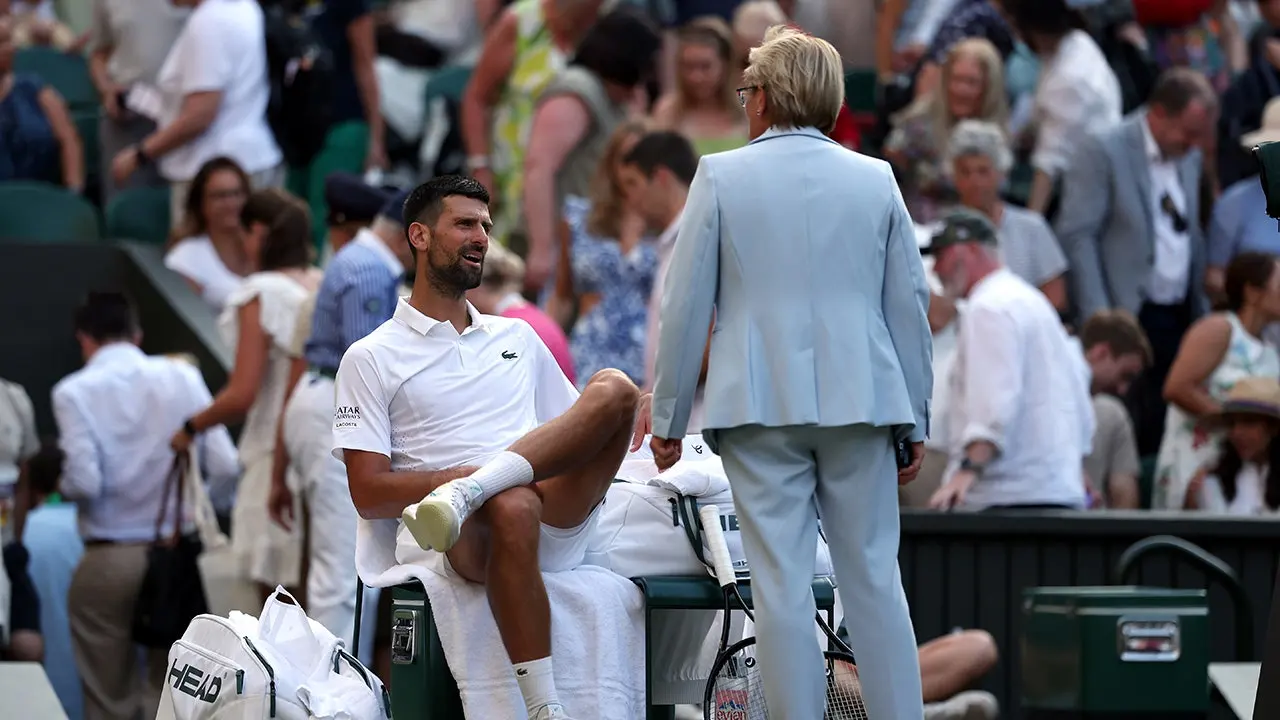
While the tennis itself was of the highest caliber, the match was further elevated by a tense, high-stakes drama off the court. Deep into the battle, tournament supervisor Denise Parnell decided that the approaching evening conditions justified closing the roof over Centre Court. This decision did not sit well with Djokovic, who strongly preferred to keep playing in the open air, arguing that Wimbledon is, at its heart, an outdoor tournament. A fiery debate ensued, with the 24-time Grand Slam champion passionately challenging Parnell’s consistency regarding the roof-closing policy.
Djokovic did not mince words as he pointed out what he perceived as a double standard in the tournament’s scheduling decisions. “The other day you didn’t want to close it until 8:30 PM. Now you want to close it at 7:40 PM. Where’s the consistency?” he asked, visibly frustrated. When Parnell tried to justify the decision by referencing a previous match involving Jannik Sinner, Djokovic quickly shut down the comparison, insisting that his only focus was the match he was currently playing. He accused the tournament officials of being proud of their rules yet failing to stick to them, adding a sharp edge to an already intense evening.
Interestingly, Auger-Aliassime seemed to quietly side with his opponent during the heated exchange, questioning the sudden decision himself as the officials finalized the call to close the roof. Despite Djokovic’s vocal protests, the roof was ultimately rolled shut, shifting the playing conditions to an indoor environment. However, the interruption and the change in atmosphere did little to derail the Serbian veteran’s focus. Channeling his frustration into his performance, Djokovic quickly claimed the third set 6-3, demonstrating his legendary ability to compartmentalize external distractions and perform under pressure.
With this monumental victory, Djokovic has written yet another chapter in the tennis history books, becoming the oldest man to reach the Wimbledon semifinals in over half a century. His journey to the title now goes through the reigning champion, Jannik Sinner—the very player whose previous match was brought up during the roof dispute. Scheduled for Friday on Centre Court, this upcoming semifinal clash promises to be an absolute blockbuster, pitting the veteran Master of the game against one of the brightest young stars of the new generation.
For tennis fans around the world, this victory is a reminder of the raw human emotion and relentless drive that makes professional sports so captivating. Djokovic’s willingness to fight for every advantage, whether against his opponent on the grass or officials on the sidelines, highlights the fierce competitive fire that still burns within him. As he prepares to face Sinner, the world will be watching to see if the timeless champion can keep his historic run going and capture yet another historic title on the hallowed lawns of London.