


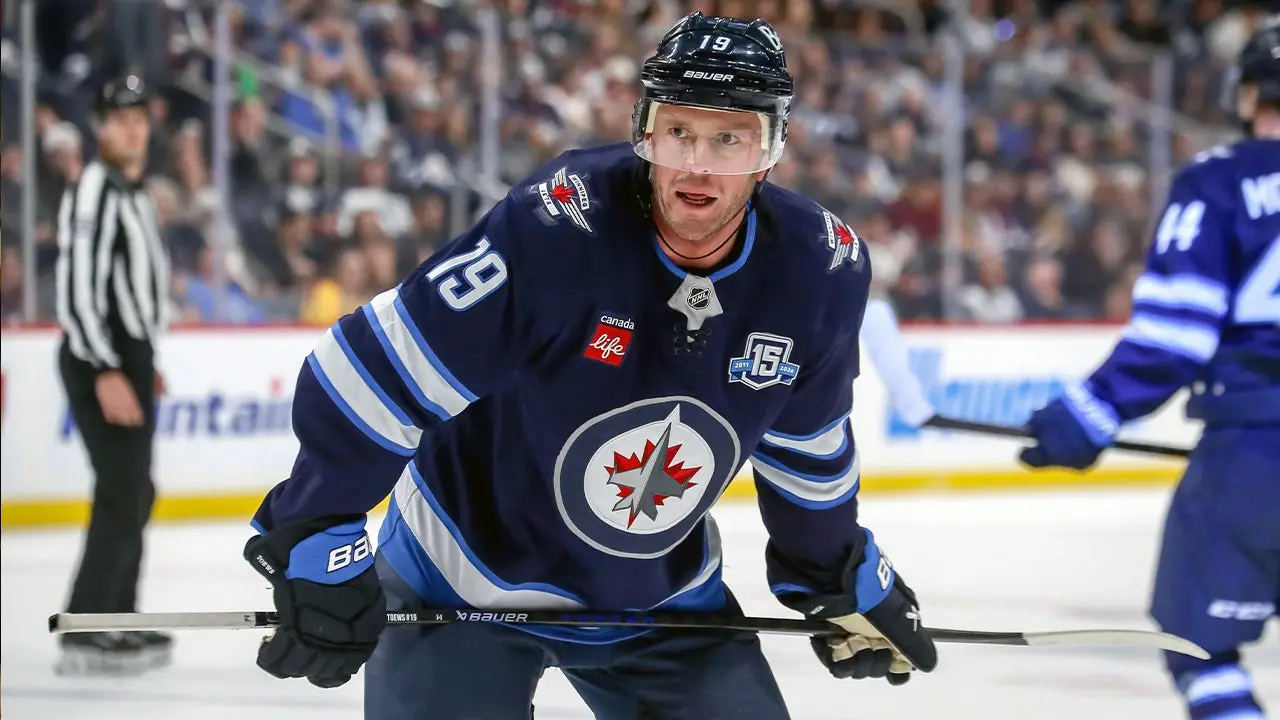
There is a striking, almost disarming vulnerability when a sports icon, who has spent nearly two decades navigating the violent, high-velocity theater of the National Hockey League, confesses to being nervous before a room of quiet microphones and blinking cameras. Jonathan Toews, the legendary captain who carried the hopes of Chicago on his shoulders for fifteen years, stood at a press podium on Friday and admitted to feeling a flutter in his chest that he had rarely shown on the ice. Stepping out of the spotlight is often harder than stepping into it, and for Toews, announcing his retirement was a moment of profound transition. Rather than projecting the stoic, unshakeable aura that earned him the nickname “Captain Serious,” Toews chose absolute sincerity. He opened his heart to the media and fans, acknowledging that the chance to say a proper goodbye to the sport of hockey and the NHL is a rare privilege not afforded to every player who laces up skates. His farewell was marked by the same quiet dignity and deep respect for the game that characterized his entire career, proving that even in retirement, he remains a class act who understands the gravity of his journey and the collective joy he brought to millions of fans.
To fully appreciate the depth of Toews’ legacy, one must journey back to 2006, when a storied but struggling Chicago Blackhawks franchise pinned its resurrection on a disciplined teenager from Winnipeg. Drafted third overall, Toews did not just join the Blackhawks; he transformed their entire organizational culture. Alongside a young Patrick Kane, Toews energized a dormant fanbase and led a renaissance that culminated in three Stanley Cup championships in 2010, 2013, and 2015. Those early 2010s Chicago teams were absolute powerhouses—tenacious, highly skilled, and ruthlessly competitive—and they were all built in the image of their captain. Whether he was scoring clutch playoff goals, layout out to block shots, or lifting the Stanley Cup over his head to the roar of a packed United Center, Toews was the beating heart of a modern hockey dynasty. For fifteen unforgettable seasons, he wore the “C” on his chest with an unparalleled sense of duty, establishing himself as one of the greatest leaders in the history of professional sports and breaking the hearts of rivals across the league with his relentless pursuit of victory.
While the team success in Chicago defined his era, Toews’ individual accolades paint the picture of a player who mastered the art of the 200-foot game. He was never a player who chased personal glory or padded his stats at the expense of defensive responsibility; instead, he embraced the grueling, often thankless work of a shutdown center. This selflessness was rewarded with a Conn Smythe Trophy as the playoff MVP in 2010, a Frank J. Selke Trophy as the league’s top defensive forward, and the prestigious Mark Messier Leadership Award. His greatness was not confined to North American ice, either; as a key pillar of Team Canada, Toews secured two Olympic gold medals, earning a reputation as a big-game player who rose to the occasion whenever the stakes were highest. He possessed an innate ability to elevate the play of everyone around him, combining a fierce competitive drive with a brilliant hockey IQ that made him virtually impossible to play against in high-pressure situations.
Yet, the true measure of Toews’ character is found not in his triumphs, but in how he confronted the silent, agonizing physical battles that threatened to cut his career short. In the latter years of his tenure in Chicago, Toews began dealing with debilitating health issues, eventually diagnosed as chronic immune system inflammatory syndrome. The physical toll was devastating, forcing a world-class athlete to sit out entire seasons and grapple with the frightening reality of an elite body suddenly breaking down. The frustration of being sidelined, unable to help his teammates or play the game he loved, was a test of mental fortitude far more demanding than any playoff series. Rather than quietly slipping into retirement during those dark and uncertain years, Toews fought his way back with remarkable resilience. His battle against chronic illness humanized him in the eyes of the public, shifting the narrative from his athletic perfection to his raw, relatable humanity as he struggled, adapted, and persevered through adversity.
This arduous journey of healing and determination eventually led to a deeply sentimental final chapter, as Toews returned to the ice to play for his hometown team, the Winnipeg Jets, after sitting out for two full seasons. Wearing the jersey of the city where his hockey dreams first began was a poetic bookend to a legendary career, offering him a chance to find closure on his own terms. Although his time in Winnipeg was a departure from his decades in Chicago, it allowed local fans to celebrate a homegrown hero who had reached the absolute pinacle of the sporting world. Returning to play at the highest level after such a prolonged and painful health battle was a triumph of the human spirit, demonstrating that his love for the game surpassed any physical limitations. It was a beautiful, nostalgic farewell tour that allowed Toews to transition away from the ice with a sense of peace, knowing he had emptied his tank and given everything he had to the sport.
As Toews officially hangs up his skates, the hockey community prepares to honor a legacy that will undoubtedly culminate in a first-ballot induction into the Hockey Hall of Fame. His departure leaves a massive void in the league, but his influence on the next generation of players, leaders, and fans is securely permanently. Beyond the three Stanley Cups, the Olympic gold, and the individual trophies, Toews will be remembered as a symbol of integrity, resilience, and class. He showed us that true leadership is not defined by loud speeches, but by consistent, daily execution, sacrifice, and the courage to face life’s unexpected hardships head-on. As he steps away from the locker rooms and the roaring arenas to focus on his health, his family, and the next chapter of his life, Jonathan Toews leaves behind a blueprint of what it means to be a true captain, both on the ice and in the game of life.