





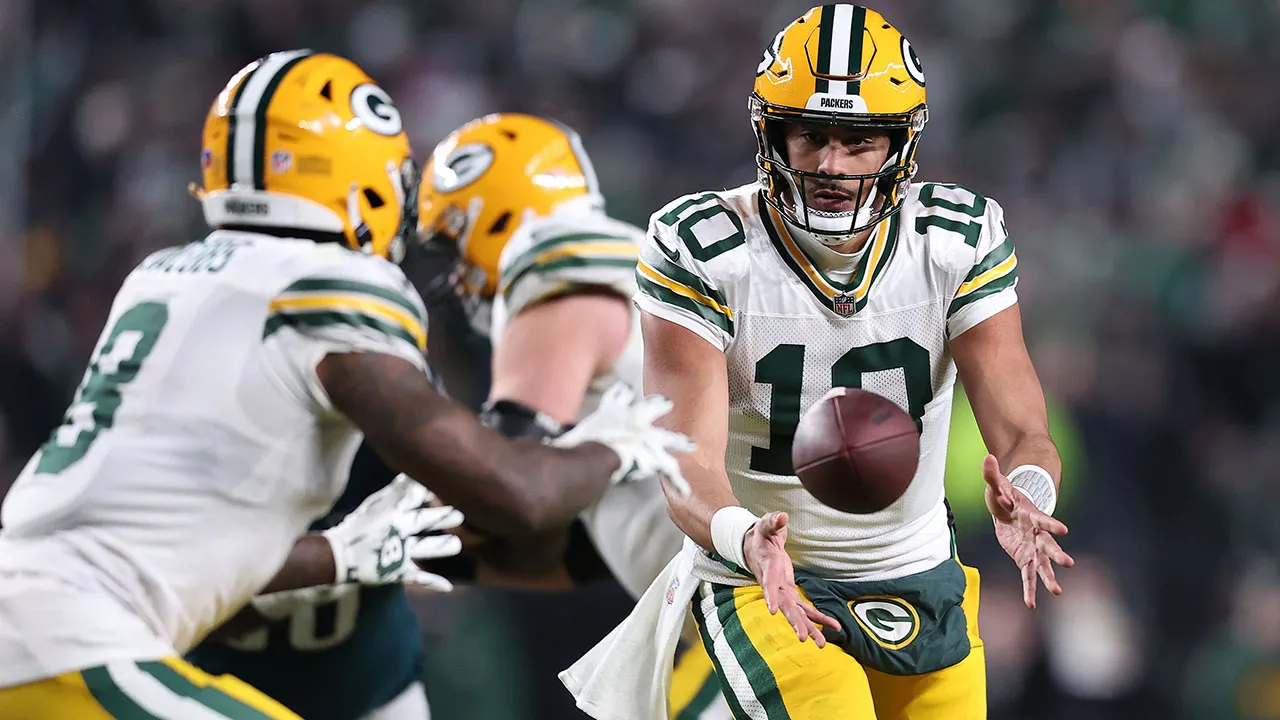
In the highly scrutinized world of professional sports, where every pass, stride, and facial expression is analyzed under a relentless microscope, NFL quarterbacks are trained to anticipate the unexpected at all times. For Green Bay Packers quarterback Jordan Love, possessing exceptional on-field vision and the ability to read complex, shifting defensive schemes on the fly has quickly become his trademark as the historic franchise’s new leader. However, no amount of intense film study, playbook dissection, or situational training could have prepared the young signal-caller for the jarring off-field headline that abruptly disrupted the quiet, hopeful optimism of the team’s spring workouts. The sudden and deeply troubling news concerning his newly acquired teammate, Pro Bowl running back Josh Jacobs, struck the organization with the shocking force of an unblocked blitz on a crucial third down, leaving everyone in a state of utter disbelief. On a quiet Sunday afternoon in late May, Jacobs was booked into the Brown County Jail following a rapid police response to a domestic disturbance complaint at his residence. The arrest instantly shifted the media narrative surrounding the Packers from dreams of an explosive offense to a sober, deeply complex human crisis. For Love, who is tasked with guiding this legendary franchise both on the turf and within the emotional confines of the locker room, the news was a stark, sobering reminder of the fragile, volatile nature of the lives behind the plastic helmets. In an era where elite athletes are often treated as invulnerable modern gladiators, this incident forced an immediate, uncomfortable confrontation with the messy, painful realities of human frailty, domestic turmoil, and the legal system. As reporters gathered around Love’s locker during Organized Team Activities (OTAs), the young quarterback was forced to step out of his comfort zone as an offensive leader and step into the far more delicate role of an empathetic, yet cautious, public front man for a franchise in sudden transition. A professional sports locker room is ultimately more than just a seasonal collection of highly paid athletes; it is a surrogate family, and when one family member struggles, the entire collective house inevitably feels the emotional tremors of their personal battles.
The gravity of the situation surrounding Josh Jacobs cannot be understated, as the dark details emerging from the Brown County Sheriff’s Department paint a distressing and complex picture of the events that transpired on May 26. The veteran running back, who signed a highly publicized and lucrative free-agent contract with Green Bay in the offseason to serve as the physical engine of their rushing attack, faces five distinct criminal charges arising from the incident. Most severe among these charges is a felony count of strangulation and suffocation—a charge that carries profound legal, physical, and societal weight—accompanied by four misdemeanor counts including domestic battery, criminal damage to property, disorderly conduct, and the intimidation of a victim. In the court of public opinion, such allegations immediately trigger intense scrutiny and condemnation, sparking necessary and urgent conversations about domestic violence and the broader culture of professional sports. Conversely, Jacobs’ legal representation has strongly denied the accusations and urged the public to exercise restraint, pleading for fairness and reminding observers of the vital constitutional tenet of the presumption of innocence until proven guilty in a court of law. This clash between the severity of the charges and the legal right to a fair defense creates a heavy, static tension that hangs over the entire Packers community, from the front office down to the casual fan. When domestic violence enters the sports conversation, it acts as a harsh mirror reflecting societal issues that extend far beyond any stadium’s parking lot. The emotional and physical well-being of the alleged victim, the safety and integrity of families, the reputation of a historic franchise, and the future of a talented young athlete’s career are all tangled in a legal web that cannot be easily or quickly unraveled, leaving everyone involved in a state of anxious, quiet contemplation. This emphasizes that the local judicial system must perform its duty without prejudice, ensuring a meticulous and fair hearing for all parties involved in this unfortunate dispute.
Addressing the media for the first time since the news broke, Jordan Love did not attempt to mask his genuine astonishment, offering a transparent and vulnerable glimpse into how professional athletes digest personal crises within their sporting fraternity. “There’s always questions,” Love admitted to reporters, his voice devoid of the usual bravado and rehearsed speaking points associated with NFL press conferences. “I was shocked when I saw it.” This candid admission of shock from a team’s primary leader humanizes the locker room experience in a profound way, reminding the public that despite their massive wealth and national fame, these players are ultimately young men who experience confusion, disappointment, and concern just like anyone else in their daily lives. Love’s reaction highlights the profound disconnect between the high-flying optimism of offseason roster-building and the unpredictable, chaotic reality of human behavior. When the Packers signed Jacobs away from the Las Vegas Raiders, he was envisioned as a cornerstone of their budding offense, a powerful rusher who would lighten Love’s load and help carry the young team deep into the postseason. To see that same teammate’s mugshot splashed across national news feeds is a psychological jolt that disrupts the carefully constructed illusion of team unity and athletic invincibility. For Love, who spent years patiently waiting in the shadows behind Aaron Rodgers to finally claim the mantle of leadership in Green Bay, this crisis represents an entirely new kind of test. Leadership in the NFL is frequently measured in fourth-quarter comebacks and touchdown-to-interception ratios, but the true measure of a franchise quarterback often lies in his ability to navigate these quiet, deeply uncomfortable moments of off-field turbulence with grace, maturity, and a steady, reassuring hand for his teammates and coaches alike. Indeed, Love’s words carried the heavy weight of a young athlete realizing that representing a team means answering or speaking for the actions of others just as much as executing a perfect play.
Behind the closed doors of the Packers’ training facility, away from the flashing cameras of the media and the relentless, speculative noise of social media platforms, a different kind of critical work has begun as the team tries to heal. Love revealed that while the public-facing side of the organization has chosen a path of strategic silence and extreme caution, the locker room has been actively engaged in quiet, earnest dialogues to process the unfolding situation as a unit. “Yeah, we’ve talked internally,” Love disclosed, shedding light on the supportive yet fragile ecosystem of a professional sports team trying to stay whole during a storm. “Everyone knows what the situation is there. We’ve talked, but obviously the details, everyone’s keeping that under wraps right now, out of respect for the situation and obviously all the legal stuff that’s going to be playing out.” This internal discretion speaks to a protective brotherhood and a collective understanding that public speculation can jeopardize both legal fairness and the emotional stability of everyone affected by the case. In these intense private conversations, players must balance their professional loyalty to a teammate with their own personal ethics, values, and concerns regarding domestic abuse. There is no playbook for how to speak to a teammate accused of a felony, nor is there a guide on how to comfort a locker room that is suddenly divided between professional obligation and moral discomfort. By keeping these intimate discussions strictly confidential, Love and his teammates are attempting to build a sanctuary of privacy where they can support one another, ask difficult questions, and maintain their focus on their craft without the damaging interference of external speculation, online rumors, and the relentless media frenzy that inevitably surrounds high-profile legal issues. They must build a quiet bridge of trust that allows them to continue to co-exist and work together professionally, while reserving final personal judgment until the local legal process runs its course.
What makes the current state of affairs particularly complex—and highly controversial in the public eye—is the swift, almost seamless resumption of business as usual on the green grass of the Packers’ practice fields. Following his release from custody on May 27, Jacobs wasted little time returning to the team, donning his helmet and practice jersey to actively participate in OTAs alongside his peers. While the District Attorney’s Office meticulously reviews the evidence to make a formal charging decision, the fluid legal gray area allows Jacobs to continue working, presenting a bizarre visual contrast of a man facing serious felony charges running handoff drills in the bright Wisconsin sunshine. Love acknowledged this awkward juxtaposition, noting the therapeutic power of routine while simultaneously recognizing the dark cloud that refuses to dissipate from the facility. “But it’s great to have Josh here with us, being able to work with us and getting back to work,” Love remarked, highlighting the sports world’s unique capacity to compartmentalize trauma, controversy, and legal jeopardy in the relentless pursuit of physical preparation. To the outside observer, this immediate return can feel jarring, even insensitive to the gravity of the accusations. To the team, however, the football field often functions as a therapeutic sanctuary, a safe space where the chaotic, uncontrollable variables of real-life legal battles are temporarily replaced by predictable yard lines, familiar play calls, and the physical release of athletic exertion. This duality of holding space for a serious legal investigation while continuing to run offensive plays exemplifies the high-wire act of modern professional sports, where the show must go on even when the foundation is shaking underfoot, and the lines between public entertainment and private morality become blurred. The field provides a much-needed, temporary escape from the harsh spotlight of public judgment, offering a comforting return to the physical patterns and simple joy of play they have known since childhood.
Ultimately, the path forward for Jordan Love, Josh Jacobs, and the Green Bay Packers is defined by a heavy, unavoidable waiting game that will test the character of the entire roster. As the legal authorities in Brown County slowly dissect the evidence to determine the running back’s legal fate, the team must exist in an uncomfortable state of limbo, balancing the high expectations of the impending NFL season with the sobering knowledge that life can alter its course in a single, devastating moment. This entire situation serves as a poignant reminder of the fragile humanity that underpins the multi-billion-dollar sports industry; underneath the jerseys, statistics, and fantasy football projections are complicated, vulnerable human beings capable of profound mistakes and subject to the same laws as the fans who cheer for them. For Jordan Love, this crisis is an early, defining chapter in his legacy as the unquestioned leader of one of sport’s most historic and community-owned franchises. How he guides his teammates through this period of intense uncertainty, how the organization handles the ultimate legal outcome, and how the individuals involved heal from this trauma will resonate far longer than any single victory or defeat on a Sunday afternoon. In the end, the football world will continue to spin, the games will inevitably be played, and the stadiums will be filled with cheering fans, but the quiet lessons of responsibility, empathy, and accountability learned in the shadow of this spring controversy will remain deeply etched in the hearts of this young team as they wait for the truth to unfold. It is a powerful reminder that while sports provide us with an escape, the real-world trials of life require our deepest attention, care, and integrity. This complex intersection of professional sports, modern law, and deep human vulnerability challenges us all to look far beyond the scoreboard and recognize the complicated, evolving lives of those who play the game.