


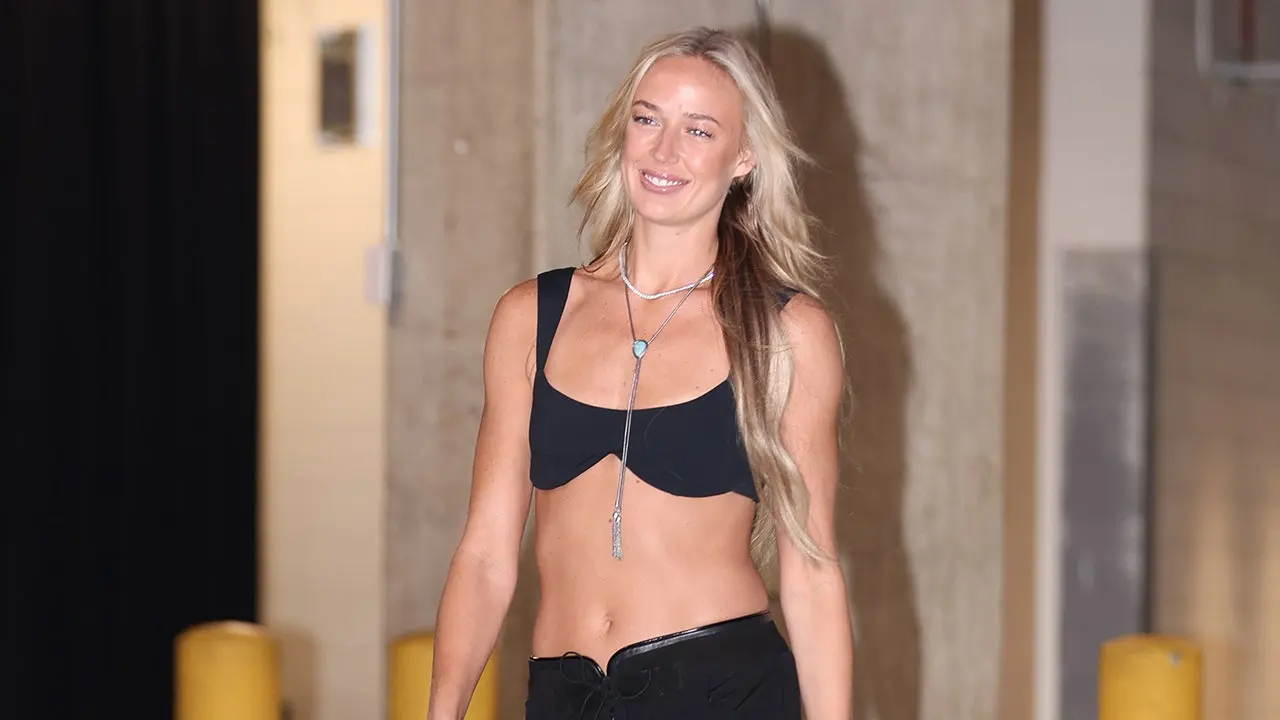
Behind the bright lights, the roar of cheering crowds, and the undeniable triumphs of professional women’s basketball lies an often unseen, deeply exhausting vulnerability that players are forced to navigate when they step away from the court. For Indiana Fever guard Sophie Cunningham, this painful reality manifested in a relentless, unwanted digital and physical intrusion that transformed her daily life from a pursuit of athletic excellence into a psychological trial of survival. When an individual crosses the line from being a passionate fan to a fixated presence, the psychological damage is immediate, profound, and far-reaching. The human experience of stalking is characterized by a gradual erosion of peace, where the home ceases to feel like a sanctuary and the public arena becomes a geography of potential threats. When security personnel alerted Cunningham to the pattern of harassment directed at her, it disrupted her sense of reality, shifting her world from one focused on training and team dynamics to one plagued by nightmares, constant vigilance, and the paralyzing sensation of always needing to watch her back. This was not merely a series of harmless online notifications but a targeted campaign of terror that forced an elite professional athlete into a state of hyper-vigilance, demonstrating how easily the parasocial dynamics of modern celebrity can be weaponized to strip a woman of her fundamental right to feel safe in her own skin, her own home, and her own workplace.
The terrifying evolution of this specific case began to take shape transitionally, moving chillingly from digital spaces into the physical environment where Cunningham lived and worked. On Sept. 30, 2025, the boundary between the online and physical worlds was actively breached when Kevin C. Singh, a 49-year-old Indianapolis resident, entered Gainbridge Fieldhouse under the guise of an innocent errand, delivering a package he claimed was from his daughter for a player. In reality, the package contained an intensely personal, highly disturbing collection of items: a Guns N’ Roses T-shirt heavily saturated with men’s cologne and a deeply personal letter addressed directly to Cunningham, thanking her for a “very special season” and signed with a moniker connected to an active social media account. Following this intrusion, investigators began tracking an X account linked to Singh, revealing a barrage of sexually explicit, invasive, and escalating comments. The digital harassment quickly took on an even more menacing tone when the posts began detailing his geographical proximity to her, referencing specific landmarks visible in her social media photographs and stating, “You’re literally down the street from me!” This explicit decoding of Cunningham’s private environment transformed her personal posts from harmless connections with fans into a map used by a stalker, leaving her with the suffocating realization that her movements were being cataloged, analyzed, and followed in real-time.
As the threat escalate beyond the point of internal management, the protective apparatus of Pacers Sports & Entertainment stepped in, creating a secondary front in this battle for safety and, consequently, drawing the stalker’s wrath onto those trying to protect the athlete. In late April 2026, John Ball, the vice president of security and event services, took formal action by issuing a strict cease-and-desist letter to Singh, demanding he halt all communication and imposing an absolute ban on his presence at team facilities, properties, and official events. Instead of de-escalating the situation, this formal boundary acted as a catalyst, provoking a hostile shift in Singh’s behavior. After calling Ball’s office to express his defiance, Singh’s social media output transitioned from obsessive tracking of Cunningham to direct, menacing threats leveled at the security executive himself. The digital posts became violently overt, warning Ball that “Pain is coming. I promise.” Instilling a deep sense of personal dread, Singh began referencing Ball’s wife and the specific county of his residence, transforming a professional security directive into a deeply personal, terrifying threat of domestic harm. Faced with a hostile actor who knew where his family slept, Ball was forced to dynamically alter his daily life—carrying a firearm for personal protection, modifying his daily commutes, and coordinating with local law enforcement for persistent police patrols around his family home, illustrating how the ripples of stalking trauma quickly expand to engulf the lives of those who stand as protectors.
The gravity of these actions ultimately culminated in a swift intervention by the Marion County justice system, where prosecutors laid out a mounting case of stalking, intimidation, and harassment against Singh. Reviewed court filings from Marion Superior Court 26 revealed a pattern of behavior so severe that prosecutors filed Level 6 felony charges for stalking and intimidation, alongside a Class B misdemeanor for harassment, capturing a timeline of relentless conduct spanning from late September 2025 through June 2026. This legal intervention was not merely preventative but reactionary to a known, chronic history of behavioral violence; the state revealed that Singh was already on probation in neighboring Hendricks County for two separate invasion-of-privacy convictions and possessed a criminal record dotted with prior stalking and intimidation offenses. Recognizing the high probability of continued escalation, the state successfully argued for a bond significantly higher than standard limits, resulting in a seven-day preliminary hold, followed by a demanding $40,000 cash bond. Furthermore, should Singh secure release, the court mandated stringent protective boundaries: continuous GPS tracking, home detention with highly calibrated exclusion zones keeping him physically away from team facilities like Gainbridge Fieldhouse, and an absolute no-contact order designed to build a legal fortress around Cunningham and Ball as the judicial process begins to grind forward.
Cunningham’s ordeal is not an isolated incident of modern fandom gone wrong, but rather a prominent, alarming chapter in a wider, systemic crisis currently targeting elite women’s basketball players as the sport ascends to unprecedented heights of global popularity. The vulnerability of female athletes to obsessive, life-altering harassment has been highlighted by several recent high-profile cases, including that of Fever superstar Caitlin Clark, whose stalker, Michael Lewis, was sentenced to two and a half years in prison after sending her a barrage of threatening and sexually explicit messages. Similarly, college phenom and current Dallas Wings guard Paige Bueckers faced a terrifying pursuit by Robert Cole Parmalee, who actively harassed and threatened her during her collegiate career at UConn, resulting in legal intervention and mandatory protective orders. Even gymnasts like Olivia Dunne have publicly wept over the paralyzing fear of being stalked, illustrating that the meteoric rise in the viability, visibility, and commercial success of women’s sports has been accompanied by a dangerous, dark side of unchecked fan access. This systemic exposure reveals a deeply troubling cultural cross-section where public consumption of women’s physical excellence is twisted by entitlement, leaving female athletes to carry the invisible, exhausting tax of constantly securing their own survival in a world that often demands they remain entirely accessible to the public eye.
Reclaiming a sense of peace, agency, and safety after such intensive violation is a long, non-linear journey for both Cunningham and the security specialists who put their lives on the line to shield her. It requires a profound, systemic shift in how professional sports franchises, digital platforms, and the legal system collaborate to treat harassment not as an inevitable “price of fame,” but as a serious violation of human rights that demands decisive, systemic intervention. For Cunningham, returning to the court and performing at the highest level of her sport under the weight of such trauma is a testament to an incredible personal resilience, yet it is a strength she should never have been forced to summon. As this legal battle plays out in the Marion County courts, it serves as a critical reminder that behind the statistics, the legal filings, and the media updates are real human beings who deserve to live, work, and thrive without the shadow of fear hanging over them. True progress in women’s sports must be measured not only by attendance records, television ratings, and endorsement deals, but by the safety, dignity, and peace of mind guaranteed to the women who carry the game forward, ensuring that the arenas where they make history remain places of joy, rather than sites of fear.