

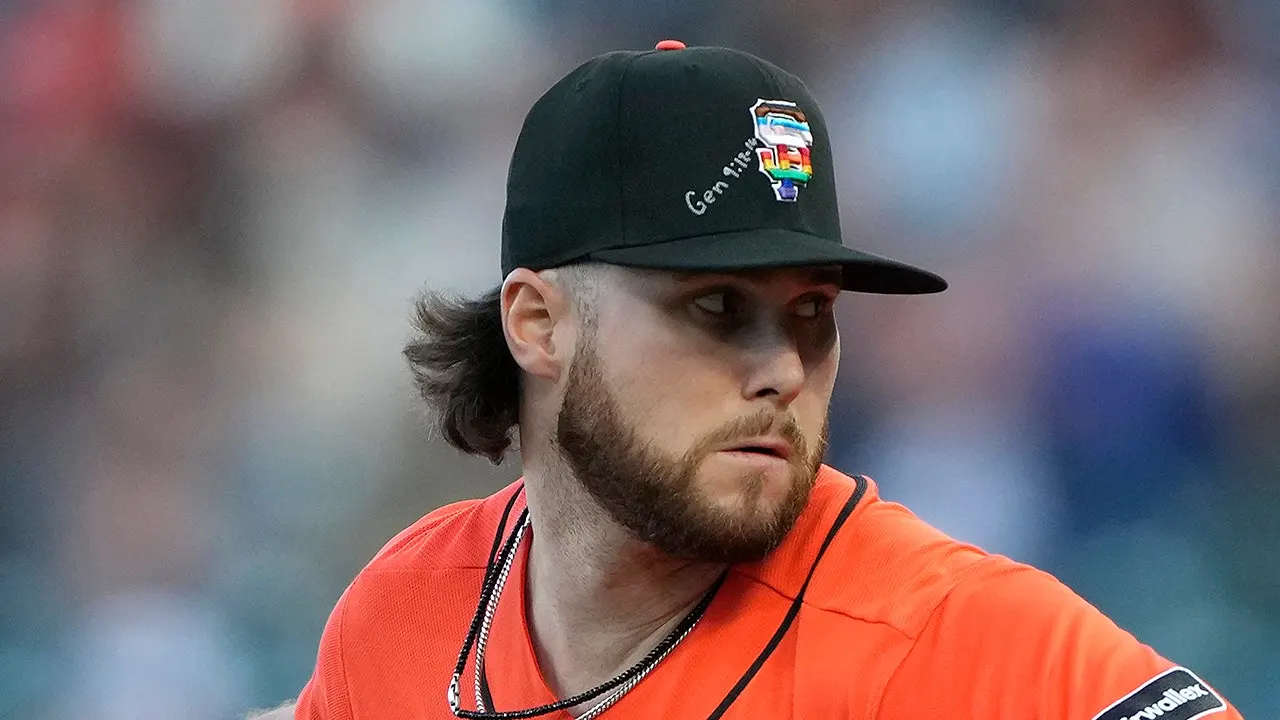
Under the bright lights of Oracle Park on a mid-June evening, the San Francisco Giants’ annual Pride Night was meant to be a celebration of inclusivity, community, and the diverse fabric of the Bay Area. However, beneath the festive atmosphere, a quiet personal conflict was unfolding in the clubhouse, one that would soon spill over into a national debate on religious freedom, corporate expression, and individual conscience. Pitchers Landen Roupp, JT Brubaker, and Ryan Walker found themselves at a crossroads of faith and team solidarity. Adorning their heads were the special Pride Night caps, featuring the team’s classic logo rendered in the vibrant colors of the rainbow. Feeling a deep-seated spiritual conflict, the players decided to express their personal convictions by hand-scribbling biblical references on the visors of their caps. Specifically, Roupp wrote “Gen 9:12-16,” a passage from the Book of Genesis where God designates the rainbow as a holy covenant of mercy and peace to humanity after the great flood. To these players, the act was a deeply personal reclamation of a symbol central to their Christian faith. Yet, what the players intended as a quiet, private declaration of devotion was quickly flagg-ed by Major League Baseball officials as a violation of official uniform guidelines, igniting a high-profile controversy that highlighted the delicate balance between personal expression and corporate conformity in modern professional sports.
The league’s prompt issuance of an oral warning to the players immediately reverberated far beyond the outfield walls, catching the attention of prominent political figures who viewed the incident as a symptom of a larger, systemic hostility toward religious expression. United States Senator Josh Hawley, a Missouri Republican, quickly stepped into the fray, drafting a sharp letter to MLB Commissioner Rob Manfred that accused the league of harboring a “pattern of discrimination” against Christian athletes. Hawley demanded to know why athletes publicly demonstrating their faith were being threatened with administrative discipline, arguing that the league was selectively enforcing its rules to suppress traditional religious views. The political momentum grew even stronger when Harmeet Dhillon, the Assistant Attorney General for Civil Rights, revealed that the Justice Department had referred the matter directly to the Equal Employment Opportunity Commission. This escalation transformed a simple locker room misunderstanding into a federal civil rights concern, prompting deep questions about whether professional sports organizations, in their rush to embrace progressive social initiatives, were inadvertently creating hostile work environments for employees who harbor traditional religious beliefs.
In the face of mounting political scrutiny and legal pressure, Commissioner Rob Manfred responded with a detailed letter to Senator Hawley, aiming to de-escalate the situation while defending the integrity of the league’s uniform policies. Manfred clarified that the warning issued to the Giants players was merely a routine administrative reminder and firmly stated that none of the players involved had been fined or disciplined, nor would they face any future penalties for their actions. The Commissioner explained that the policy prohibiting uniform alterations is a collectively bargained rule, mutually agreed upon by MLB and the MLB Players Association. This regulation is designed to prevent individual players from transforming their uniforms into billboards for personal, political, or social messaging, regardless of the merit or intent of the message itself. Manfred emphasized that this policy is enforced with strict neutrality, applying equally to all causes in order to protect the game from becoming a polarizing cultural battleground. By maintaining a clean, uniform look on the field, the league seeks to preserve the stadium as a shared, unifying public space where fans of all backgrounds can come together, free from the cultural and political divisions that fracture the rest of modern society.
However, the core of the controversy lay not in the strictness of the league’s rules, but in a profound breakdown of communication within the San Francisco Giants organization itself. In his correspondence, Manfred candidly admitted that the Giants’ front office had been “inadequate and not clear” in communicating with their roster prior to the game. Under the agreement worked out between Major League Baseball and the individual franchises, no player or uniformed staff member is ever required to wear pride-themed apparel if doing so conflicts with their personal values or religious faith. The league had explicitly mandated that clubs must ensure their athletes feel comfortable with any theme-night gear and provide standard, unmodified uniforms as an alternative. Because the Giants failed to clearly explain this opt-out policy, several players felt they had no choice but to wear the Pride caps to avoid defying team management, leading them to write the Bible verses as a compromise of conscience. Notably, reliever Sam Hentges, who was aware of his rights, quietly chose to wear the team’s standard, non-rainbow cap during the game. This revelation shifted the blame away from league-wide discrimination and toward an organizational failure of internal communication, highlighting how a lack of nuance and transparency from management can unfairly force employees into difficult ethical dilemmas.
This incident is far from an isolated event, as Major League Baseball has spent several years navigating the complex waters of theme-night uniforms and player advocacy. In 2022, several members of the Tampa Bay Rays organization drew national media attention when they chose not to wear pride logos on their sleeves and caps, citing their Christian faith. The following year, legendary Los Angeles Dodgers pitcher Clayton Kershaw made a similar statement by inscribing the same Genesis reference on his cap during his team’s Pride event. In response to these recurring challenges, MLB adopted a comprehensive policy in 2023 that largely banned teams from wearing specialty uniforms or altered logos for commemorative celebration days, with very few exceptions. However, the Giants and the Dodgers were granted grandfathered exceptions to continue using Pride emblems due to the historic relationship both franchises share with the exceptionally large LGBTQ communities in San Francisco and Los Angeles. Manfred defended this exception as a good-faith effort to celebrate local communities while strictly conditioning it on the absolute freedom of players to opt out—a delicate compromise designed to foster an inclusive environment for fans without violating the personal liberties of the athletes on the field.
Ultimately, the resolution of this dispute offers a valuable blueprint for how modern institutions can navigate the intersection of diverse communities and deeply held personal faiths. By confirming that the Giants players would face no repercussions, and by acknowledging the franchise’s administrative shortcomings, Manfred sought to validate the rights of religious players while upholding the league’s commitment to its diverse fanbase. The Commissioner concluded his correspondence to Capitol Hill by reaffirming that Major League Baseball believes wholeheartedly in the right of players and fans to express their faith openly, while simultaneously supporting the LGBTQ community and other marginalized groups who love the sport. As professional sports continue to reflect the broader cultural negotiations of the nation, this episode serves as a powerful reminder of the human element behind the statistics. It highlights the absolute necessity of open communication, empathy, and mutual respect, demonstrating that true inclusivity cannot be achieved by forcing compliance, but rather by creating space where both a rainbow logo and a handwritten scripture can coexist under the same stadium lights.