


The scent of stale coffee and nervous anticipation hung heavy in the Baton Rouge courtroom. For RJ Luis Jr., the polished wooden benches and fluorescent lights represented the final frontier of a tumultuous journey that had veered wildly off course. For months, the former St. John’s standout had been trapped in a bureaucratic limbo, caught between the shattered dream of an NBA career and the rigid, often baffling rules of the NCAA. On this particular Monday evening, however, the gavel of East Baton Rouge Parish District Court Judge Ronald R. Johnson signaled a seismic shift. In a decision that felt more like a lifeline than a legal ruling, Johnson granted Luis a preliminary injunction, instantly clearing the path for the talented forward to practice and play for the LSU Tigers this season. The air left the room in a collective exhale. For Luis, it was a victory, but the relief was tangible—a moment where months of frustration, legal fees, and personal anguish dissolved, at least temporarily, into a simple, profound reality: he could play the game he loved again.
The scene that followed was one of pure, unfiltered emotion. Luis, a young man whose athletic prowess had once made him a college basketball darling, embraced LSU head coach Will Wade in a tight hug—a gesture of gratitude and sheer relief. Standing beside them was his attorney, Tony Clayton, a firebrand from Baton Rouge whose voice boomed with the confidence of a man who had just slayed a dragon. Clayton, alongside his co-counsel Elliot Abrams from Raleigh, understood the magnitude of the moment. “This is precedent. It is monumental,” Clayton declared to the swirling media, his words ringing with a sense of historical weight. He wasn’t just talking about a single game or a single season; he was talking about the dismantling of an archaic system. Across the aisle, the NCAA’s representation sat in stoic silence, their calculated arguments having failed to sway the judge. Clayton’s subsequent comments acknowledged the fight was far from over, hinting at the massive discovery phase ahead. “This allows him to go practice, go play, and we’ll let the legal process work itself out,” he said, adding with a knowing grin, “We’ve got a lot of questions.” It was a clear warning that this temporary injunction was merely the opening salvo in a war against the deeply entrenched amateurism rules governing college athletics.
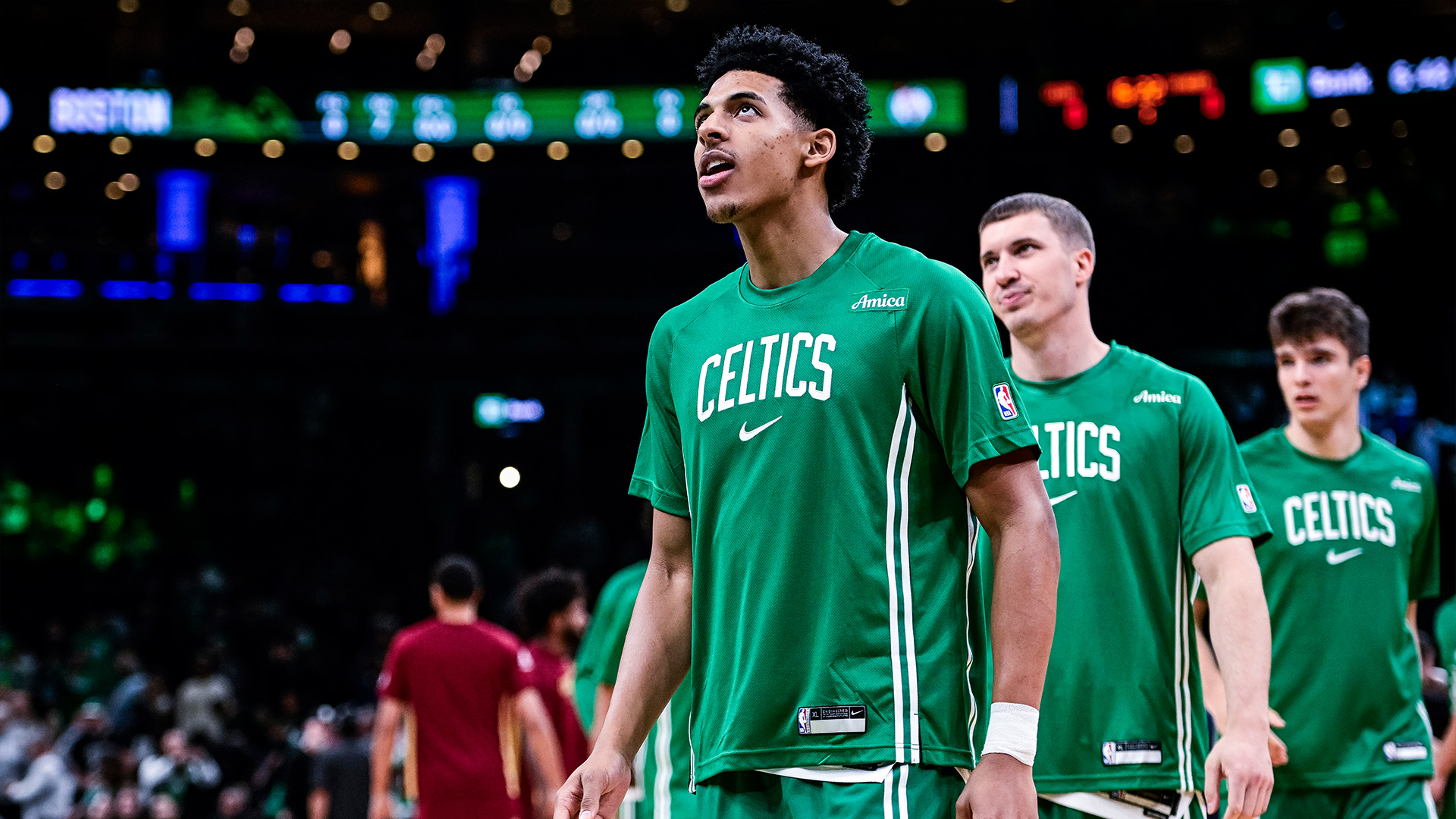
To truly understand the weight of this ruling, one must rewind the tape of Luis’s confusing odyssey. He was a standout at St. John’s, a player with NBA aspirations who decided to forgo his remaining college eligibility to chase the professional dream. He signed with the Utah Jazz, then moved to the Boston Celtics organization. But the harsh reality of professional basketball is that it is a brutal meritocracy, and injuries wait for no one. Luis never suited up for an NBA regular-season game; worse, he never even played for the Celtics’ G-League affiliate, the Maine Celtics, because of a lingering injury that sidelined him entirely. His professional résumé was, in essence, blank—a resume filled with contracts, rehab stints, and cancelled flights, but zero actual game minutes. Facing the financial and psychological toll of a stalled pro career, Luis sought a route back to the college ranks, finding a welcome home at LSU under Coach Wade. It seemed like a logical, even sympathetic, path. Yet, the NCAA, the governing body that has historically treated its student-athletes as indentured servants to the college sports industrial complex, slammed the door shut, declaring him permanently ineligible. Their logic? By entering the NBA Draft, he had forfeited his collegiate future, regardless of whether he had ever actually played a professional minute.
In the courtroom, the philosophical chasm between the two sides became starkly evident. The NCAA’s attorney, Taylor Askew, presented a rigid, letter-of-the-law argument that bordered on tautological. He pointed to the case of Charles Bediako, who had faced a similar dilemma—leaving college for the pro ranks, failing to catch on, and seeking a return. Bediako had won a temporary restraining order to play for Alabama last season, but an Alabama judge ultimately flipped the script, siding with the NCAA’s assertion that he was indeed ineligible. Askew used this history to argue that Luis’s situation was not unique and that the precedent should remain. His words carried a cold, moralistic weight: “Actions have consequences. Decisions have outcomes and they’re not always the right ones or the ones that you want.” It was a philosophical stance that prioritized compliance over compassion, and rules over redemption. In contrast, Clayton and Abrams dismantled this argument with surgical precision. They pointed out a glaring hypocrisy: the NCAA routinely grants waivers to international players who return to college after playing professionally overseas. Why should a player who played in Lithuania or Spain retain his eligibility, while an American kid who tried the NBA and failed due to injury be permanently banished? The distinction seemed to rest solely on the arbitrary geography of where the athlete attempted their professional career.
Judge Johnson, however, saw the human being behind the legal briefs. He was not swayed by the NCAA’s police-like enforcement of a rule that seemed designed to trap young men in vulnerable moments. His ruling hinged on a simple, yet devastatingly effective, observation. “In the court’s mind,” Johnson stated, “Luis did not actually play professional basketball.” This single sentence cut through the bureaucratic fog. If Luis never played, then the NCAA’s primary justification for stripping his eligibility—that he had accepted the benefits of a professional career—was factually hollow. Furthermore, Johnson delved into a deeper question of fairness and proper counsel. He noted that whether Luis was properly advised of his options at the time he left St. John’s “lingers heavily before this court.” This was a pointed jab at the NCAA and the shadowy world of agents and advisors who often steer young athletes into decisions with devastating consequences. The judge’s language suggests he was acutely aware that Luis might have been misled, given incomplete information, or simply abandoned by the professional basketball mercenaries who profited from his decision. In granting the preliminary injunction, Johnson weighed the balance of equities: if the NCAA was wrong, Luis would have been irreparably harmed by losing an entire season of college eligibility and prime developmental years; if Luis was wrong, the NCAA only suffered the minor inconvenience of letting a young man play basketball.
This ruling, though temporary, is a shot across the bow of the NCAA’s crumbling empire. The legal precedent, as Clayton noted, is genuinely monumental. In recent years, the NCAA’s monopoly on power has been systematically eroded—through NIL rights, the transfer portal, and a series of Supreme Court decisions that have chipped away at its amateurism model. This case represents the next logical battleground. By challenging the rule that penalizes players for merely attempting a professional career, Luis’s legal team is attacking the very foundation of the “one-and-done” loophole and the draconian draft forfeiture rules. The implications extend far beyond Baton Rouge. Every college athlete who has ever been denied a second chance after a failed pro experiment will now have a legal precedent to point to. The NCAA’s attorney warned of the slippery slope, but the judge effectively declared that the slope had been steep for too long for athletes. The “discovery” phase that Clayton promises will be brutal—it will likely expose the NCAA’s secretive waiver process, the coercion involved in athlete decisions, and the arbitrary enforcement that has historically favored rich, powerful programs over the players themselves.
As the courtroom emptied, the immediate future for RJ Luis Jr. became bright. He will soon don the purple and gold, practice with his new teammates, and perhaps play in front of a raucous home crowd in the Pete Maravich Assembly Center. But the shadow of uncertainty still looms. The full hearing is yet to come, and while the injunction allows him to play now, the NCAA could potentially win the war later, clouding his season with a potential retroactive nullification. Yet, for now, Luis is a symbol of resistance. He represents the modern athlete—empowered, legally savvy, and no longer willing to accept the whims of a governing body that treats them as commodities. The “questions” his attorney wants to ask will likely shake the foundations of college basketball. As Luis ties his sneakers on the LSU court, he carries the weight of precedent on his shoulders. He is not just playing for a rebound or a fast break; he is playing for every player who was told “no” by the NCAA, for every dream deferred by a contract that turned out to be a mirage, and for the simple, human justice that a young man who never played a minute of pro ball should never be told that the college game is forever closed to him. The legal process will grind on, but for one night, a kid who almost lost everything is simply a basketball player again.