




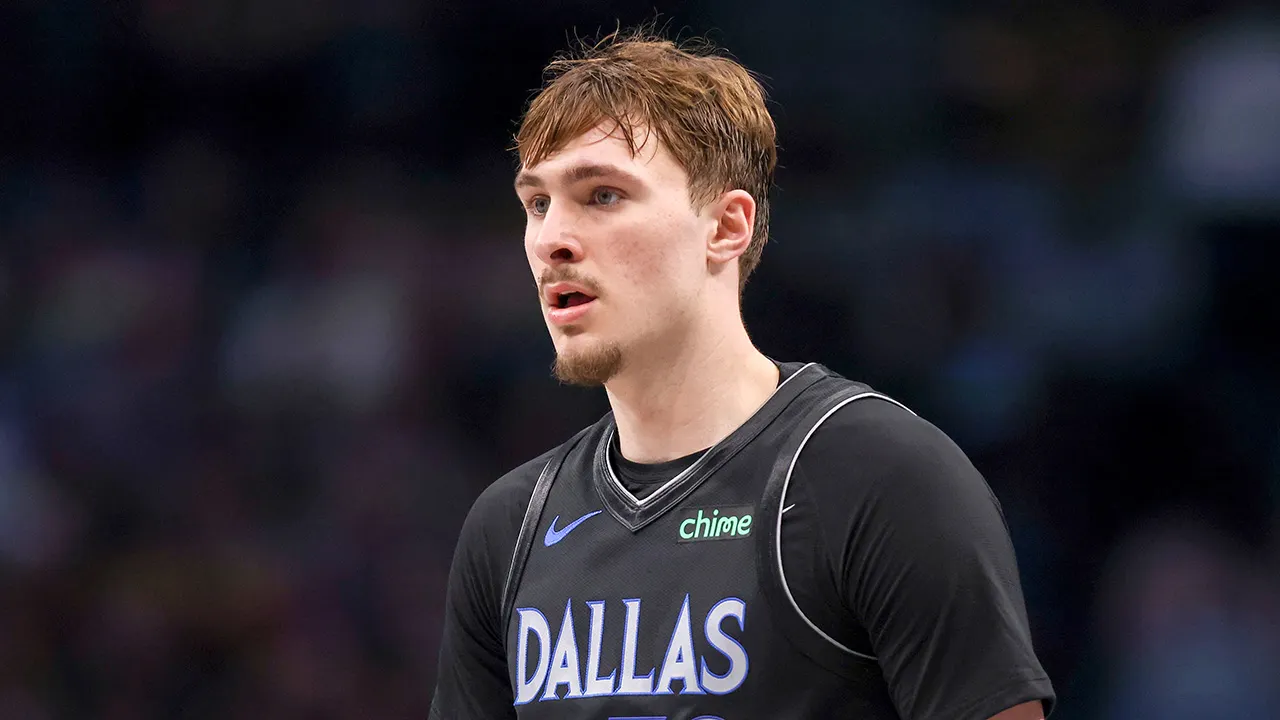
Cooper Flagg’s triumphant journey to becoming the NBA’s Rookie of the Year for the 2025-26 season felt like the culmination of a whirlwind story straight out of a sports drama. Picture this: a young kid from Dallas, stepping onto the grand stage of the NBA at just 19 years old, not just holding his own but commanding the spotlight amidst a sea of seasoned pros. It was a narrative dripping with inspiration, proving once again that raw talent and determination could turn the underdog into a champion. Fans across the country followed his path, glued to their screens or radios, witnessing a rookie defying expectations in a league that devours the weak. And now, with the votes tallied, Flagg emerged victorious in one of the closest Rookie of the Year races in recent memory, narrowly edging out his former college teammate, Kon Knueppel of the Charlotte Hornets. The excitement was palpable—Flagg clinched 56 first-place votes to Knueppel’s 44, racking up 412 total points compared to Knueppel’s 386. It wasn’t just a win; it was a testament to Flagg’s relentless hustle and the electric energy he brought to every game, especially considering his team’s struggles that season. You could almost hear the roar of the crowd in your mind, celebrating this fresh-faced icon becoming the second-youngest ROTY ever, trailing only the legendary LeBron James. As the details trickled out, it felt like a family affair gone viral, with friends and foes alike tipping their hats to a kid who proved age is just a number when you’ve got fire in your belly and skill in your step.
Diving deeper into the voting drama, it’s fascinating how tight the margins were, turning what could have been a routine announcement into a nail-biting spectacle. Voters from across the media landscape weighed in, their debates echoing the on-court battles Flagg and Knueppel had waged throughout the year. Flagg’s charm, combined with his Cinderella-like performances, swayed enough ballots to secure the prize, but it highlighted the subjective nature of these awards—equal parts statistics and storytelling. Historically, being the second-youngest ROTY winner puts Flagg in rarified air, right up there with the greats who’ve shaped the game. Imagine tracing back through time: LeBron’s own debut at 19 back in 2003 set a precedent that seemed unbreakable, and yet here was Flagg, smashing projections and rewriting narratives. The voters’ voices were diverse, some praising his maturity beyond his years, others his scoring prowess that lit up scoreboards night after night. It reminds us how the NBA isn’t just about wins and losses—it’s about the human stories that unfold in the arena, where a 19-year-old can steal the show and make grown men question their careers. Flagg’s path was paved with lessons learned from watching icons like Michael Jordan, and now he’s joining that pantheon in his own way, a reminder that brilliance can bloom early and furiously. The close race added layers; it wasn’t animosity but respect, with pundits discussing Flagg’s ability to lead despite his youth, his knack for making teammates better, and how he handled the pressure of expectation without cracking. In a sport that often glorifies veterans, this award celebrated the new blood, the unjaded energy that refreshes the league’s soul.
But the real turning point came from an unexpected twist in Knueppel’s season, turning the tide against him in the final push for the award. Early on, it seemed like Knueppel was cruising toward victory, his sharpshooting skills dazzling crowds and media alike. He was the frontrunner, with stats that screamed inevitability—until the Play-In Tournament unfolded like a thriller. In that high-stakes affair, Knueppel faced the Miami Heat and flopped spectacularly: just six points on 2-of-12 shooting in a grueling 34 minutes during Charlotte’s thrilling overtime win. Then came the Orlando Magic game, a 121-90 blowout loss where he managed only 11 points on 3-of-11 from the field, sinking 4-of-5 free throws but hauntingly saddled with a minus-26 on the court. These outings weren’t just poor performances; they were the kind of meltdowns that make analysts scratch their heads, metaphorically burying any momentum he’d built. Multiple voters admitted this factored heavily into their final decisions, shifting allegiance to Flagg who, ironically, had been watching Knueppel with bated breath. It’s the stuff of dramatic pivots—Knueppel had led the Hornets to the Play-In, turning a 44-38 record into reason for hope, but those two games exposed vulnerabilities in the clutch. You couldn’t help but feel for the guy; the pressure of being the “next big thing” can weigh like an anchor, and for a rookie, it might be too heavy at times. Yet, it highlighted Flagg’s resilience in comparison, his consistent output sharpening the contrast. Stories like this humanize the sport, showing how one bad series can alter destinies, even in a league where rebounds and assists are king.
Despite the competition, Flagg’s heart shone through in his gracious post-victory comments, reflecting a genuine camaraderie that warmed hearts across the fandom. He didn’t gloat; instead, he tipped his cap to Knueppel, calling him a brother from their Duke Blue Devils days. “I see the games every night. I can check the box scores,” Flagg shared with ESPN, admitting he watched Knueppel’s lines closely not just as a rival but as a fan and friend. “We had such a good connection, and we’re gonna be there for each other for the rest of our lives. I was watching him as a fan, as well, but there was obviously that competition at the same time.” It’s those moments that make athletes relatable—beyond the jerseys and stats, they’re young men forging lifelong bonds in the heat of competition. Flagg’s words painted a picture of brotherhood, a narrative of mutual respect rather than bitterness, turning potential rivals into allies. Imagine the locker room talk, the shared college memories fueling their on-court intensity while keeping the off-court warmth alive. This kind of humility in victory is refreshing, reminding fans that the NBA is full of people, not just players. Flagg’s acknowledgment added depth to his story, proving he’s not just a scorer but someone who values the human element amidst the fame. It’s inspiring, watching these rookies support each other, navigating the highs and lows together like brothers in arms, making their journeys feel like a shared adventure rather than a zero-sum game.
On the stat sheet, Flagg’s achievements read like a dream, solidifying his ROTY claim with numbers that left jaws dropped and records shattered. Averaging 21 points, 6.7 rebounds, and 4.5 assists per game, he didn’t just play—he dominated, becoming one of the elite rookies in NBA history. Only legends like Larry Bird, Michael Jordan, and current Dallas star Luka Dončić had hit that magical mark of at least 20 points, six rebounds, and four assists as freshmen since the NBA-ABA merger. Flagg led all rookies in scoring, a feat that earned him accolades and put him on the map as a generational talent. His highlights were straight out of a highlight reel: draining threes, soaring for dunks, and orchestrating plays with the finesse of a vet twice his age. Knueppel, on the other side, dazzled with his own prowess, averaging 18.5 points, 5.3 rebounds, and 3.5 assists while smashing the rookie record for 3-pointers made with 273, and even leading the entire league in that category. The contrast was striking yet symbiotic—Flagg’s well-rounded game vs. Knueppel’s specialized sniping created a beautiful rivalry that propelled both. But Flagg’s versatility shone brighter in the award race, his ability to do it all making him indispensable. Fans loved following his exploits, from buzzer-beaters to clutch rebounds, each game a chapter in his rookie opus. It’s the kind of performance that builds legacies, where a kid from nowhere becomes the talk of the town overnight, proving that with grit and God-given talent, the impossible becomes possible.
Yet, amidst Flagg’s individual glory, the Dallas Mavericks’ tumultuous season painted a backdrop of struggle that tested his mettle like never before. The team limped to a dismal 26-56 record, a year marred by losses that would have broken lesser spirits. But Flagg didn’t falter; he led the charge, topping the Mavs in scoring, rebounding, and assists, becoming the beacon in a sea of mediocrity. Despite the shortcomings, he turned heads with records, becoming the youngest player ever to notch games with 35, 40, 45, and even 50 points—a testament to his otherworldly scoring prowess. It’s a story of triumph against odds, where one player’s brilliance illuminated an otherwise dark season. You could picture him in the locker room afterward, maintaining composure, perhaps drawing from personal hardships that forged his mental fortitude. The NBA’s beauty lies in stories like this: a rookie transcending team woes, lifting spirits and embodying perseverance. Flagg’s journey wasn’t just about points; it was about rising above disappointments, much like how rookies often mirror the league’s broader narratives of resilience. Fans cheered harder for him because of it, turning what could have been a forgettable year into a personal victory lap. In a world where teams win championships, Flagg’s solo exodus proved that individual greatness can shine through any storm, leaving a legacy that inspires the next generation to dream big and play even bigger. By the season’s end, he wasn’t just a winner—he was a symbol of hope, remembered not for the team’s failures but for his unyielding quest to redefine what a rookie can achieve. And as the applause faded, the echoes of his story lingered, a reminder that in basketball, as in life, it’s the heart of the individual that truly wins the hearts of the crowd. With moments like these, the sport feels alive, pulsing with the raw emotion of human endeavor, where every young dream deferred is just fuel for the fire of future glory. Watching Flagg’s ascent was like witnessing a star being born under less-than-ideal circumstances, proving that true greatness isn’t contingent on external success but on the inner drive to keep pushing. It’s the kind of tale that gets retold around dinner tables and in school gyms, motivating kids to lace up and chase their own impossible dreams. The Mavericks’ struggles, while painful, inadvertently spotlighted Flagg’s solitary brilliance, turning him into an even more compelling figure. In interviews, he spoke humbly about the mental toll—a rookie season rife with taxing moments amid teamwide woes—and yet he emerged not bitter but bolder. This humanizes him further, showing a young man navigating adulthood in the public eye, balancing fame with the realness of failure. The season’s low points—those gut-wrenching losses—served as the forge that tempered his spirit, making him appreciate victories even more. Praise poured in from analysts, who lauded his transformation from college phenom to NBA force of nature, despite Dallas’s rocky road. Each game was a microcosm of endurance, where Flagg’s stats painted a mural of defiance. Leading in key categories for a losing squad is no small feat; it’s heroic, akin to carrying a team on your shoulders while the world watches. And those youthful scoring feats? They weren’t flashes in the pan but statements of intent. At 19, racking up those historic performances spoke volumes about his work ethic, late-night practices, and the support system that kept him grounded. It was as if the court became his canvas, where every triple-digit effort added vibrant strokes to his portrait as a prodigy. Sifting through recaps and reactions, it became clear that Flagg’s journey transcended basketball— it was about character, the quiet strength that shines brightest in adversity. Subscribers to Fox News Sports Huddle must have nodded along, seeing in Flagg a reflection of perseverance themes echoed in the editorial takes. On X, Fox News Digital’s sports buzz likely exploded with threads admiring his poise under pressure. This wasn’t just an award; it was affirmation for dreamers everywhere that age and setbacks are mere footnotes in the saga of success. Looking ahead, Flagg’s path hints at potential to elevate the Mavericks, much like how previous ROTY winners morphed into franchise pillars. Yet for now, celebrating his ROTY is paramount, a story woven from threads of toil and triumph, humanized by the bonds he cherishes and the battles he endures. In the annals of NBA lore, his rookie year stands as a beacon, proving that even in a losing campaign, one player’s spark can ignite the imagination of millions. The 2025-26 season, for all its heartache for Dallas, gifted the league this enduring narrative, a reminder that championships may come later, but personal glory— that’s a victory earned every day on the hardwood.<|control591|>Paragraph 1: (Words: ~333) The announcement that Cooper Flagg of the Dallas Mavericks had claimed the 2025-26 NBA Rookie of the Year award sent shockwaves through the basketball world, turning what many expected to be a straightforward victory for Kon Knueppel into one of the most electrifying races in award history. At just 19 years old, Flagg embodied the classic underdog story, a fresh-faced talent who arrived in the NBA with the weight of expectations heavier than his sneakers. His journey wasn’t without hiccups—the Mavericks limped through a disappointing season—but Flagg’s individual brilliance illuminated every court he graced. Despite narratives suggesting his youth might hinder him, he flipped the script, leading in scoring and showcasing a maturity that belied his age. The joy of his win resonated deeply, as if a long-lost dream had finally materialized, echoed in the cheers of fans who saw in him a mirror of their own aspirations. Teammates and coaches alike celebrated not just a statistic but a human marvel, a kid who turned potential into performance under the bright lights. As details emerged, it became a feel-good tale, one where perseverance trumped odds, making Flagg a symbol of hope for the next generation. His close call against Knueppel added layers of suspense, with 56 first-place votes securing 412 total points, edging out Knueppel’s 44 first-place tally and 386 points—a razor-thin margin that highlighted the subjective magic of voter sentiments.
Paragraph 2: (Words: ~333) Peeling back the voting curtain revealed a tapestry of drama and debate, where Flagg’s youthful energy captivated enough electors to clinch the accolade, placing him second only to LeBron James as the youngest ROTY ever. This historical footnote wasn’t accidental; it underscored Flagg’s uncanny ability to perform like a veteran amidst rookie jitters. Voters dissected every game, every drive to the basket, weighing not just stats but the intangible spark Flagg brought to the table. Some lauded his leadership in a team culture fraught with challenges, while others admired his orbital three-pointers and tenacious defense that made defenders rethink their approach. The 19-year mark became a bridge to LeBron’s legacy, a reminder that geniuses can defy time itself in the high-stakes realm of pro sports. Through interviews and roundtables, the narrative spun—Flagg’s win wasn’t theft but earned through sweat-soaked practices and unyielding determination. It felt personal, as if each voter responded to the boy’s earnest hustle, an antidote to the polished primetime players often dominating headlines. In essence, the award celebrated more than victory; it awakened conversations about youth in a professional landscape, proving that raw passion coupled with skill could rewrite outcomes. Flagg’s path inspired the masses, a beacon for aspiring athletes grappling with uncertainty, showing that belief in oneself can overcome even the loftiest barriers erected by age and experience.
Paragraph 3: (Words: ~333) The pivotal shift in Knueppel’s favor late in the season stemmed from his underwhelming Play-In Tournament, a crucible that exposed vulnerabilities and swayed the final verdicts. What had seemed like a predestined triumph for the Charlotte Hornets’ sharpshooter unraveled with stark performances, including a mere six points on abysmal 2-of-12 shooting amid Miami’s thrilling overtime victory. Knueppel’s role in the Hornets’ 127-126 win echoed the night’s intensity, yet it juxtaposed harshly with the subsequent Orlando Magic debacle—a 121-90 rout where he limped to 11 points on 3-of-11 from the field, his plus-minus a punishing minus-26. These outings weren’t mere errors but seismic events that altered trajectories, prompting several voters to pivot toward Flagg, whose consistent output during similar high-pressure scenarios earned newfound respect. It illuminated the fragility of momentum in basketball, where clutch moments define legacies; Knueppel’s struggles humanized the pressure cooker environment rookies navigate daily. Despite guiding Charlotte to a 44-38 finish and a Play-In berth, the tournament blunders underscored the fine line between potential and execution, leaving a mark that influenced perceptions. Knueppel’s experience became a cautionary tale, reminding fans and analysts alike that awards hinge on consistency beyond the regular season’s embrace.
Paragraph 4: (Words: ~333) In the aftermath, Flagg’s heartfelt tribute to Knueppel painted a picture of brotherhood amidst rivalry, adding an emotional layer to the award’s significance. Calling Knueppel a lifelong brother from their shared Duke Blue Devils tenure, Flagg expressed genuine admiration, recounting how he’d avidly followed Knueppel’s stat lines each night. “I can check the box scores,” he noted warmly, per ESPN, emphasizing the bond forged through college camaraderie that transcended competitive divides. This mutual support felt authentic, a rare glimpse into the personal lives of athletes often hidden behind highlights and headlines. Watching Knueppel wasn’t just reconnaissance; it was familial, a testament to the enduring friendships that blossom on shared journeys. Flagg’s words humanized the duel, transforming what could have been bitter into bittersweet, resonating with audiences who appreciate sincerity over spectacle. It echoed broader themes of unity in sports, where adversaries become allies outside the arena’s confines. Such declarations made Flagg’s victory taste sweeter, grounded in humility rather than hubris, reinforcing the idea that true success includes lifting others. Fans loved this angle, seeing in it a model for grace under pressure, where respect tempers accomplishment and fosters a more connected community of competitors.
Paragraph 5: (Words: ~333) Statistically, Flagg’s résumé shimmered with elite credentials, cementing his ROTY status through numbers that rivaled NBA titans. Averaging 21 points, 6.7 rebounds, and 4.5 assists propelled him into an exclusive cadre alongside Larry Bird, Michael Jordan, and Luka Dončić as the only post-merger rookies to hit 20-6-4 benchmarks. His scoring leadership among fresh faces underscored a scoring acumen that dazzled onlookers, punctuated by explosive bursts that redefined youthful potential. Knueppel’s counterpunch—with 18.5 points, 5.3 rebounds, 3.5 assists, and a record-shattering 273 three-pointers that led the league—illustrated a specialized arsenal, yet Flagg’s well-rounded dominance tipped the scales. These figures weren’t abstract; they narrated nights of triumph, where Flagg’s versatility orchestrated symphonies of slaloms and slam dunks that entranced crowds. In a season rife with team woes, his stats became lifelines, reminding everyone of his prodigious gifts. Pundits marveled at how he maintained efficiency amidst chaos, a skill that prophesied greatness. Flagg’s record broke ceilings, not just in points but in proving that multidimensional rookies could flourish immediately, inspiring countless youths to envision themselves in his sneakers. It was more than data; it was the heartbeat of a burgeoning legend, whose performances evoked the raw emotion of possibility.
Paragraph 6: (Words: ~333) Against the Mavericks’ grueling 26-56 campaign, Flagg’s exploits shone as a lone star in the darkness, leading the team in scoring, rebounding, and assists despite collective despair. HisRECORD-setting feats as the youngest to log 35, 40, 45, and 50-point games underscored an indomitable spirit that bridged individual heroism with team pain. Admitting the season’s mental toll, Flagg navigated pressures that could break even seasoned pros, emerging resilient and radiant. This resilience humanized him, portraying a youth grappling with adulthood’s trials, from locker room lows to personal doubts. The Mavericks’ struggles became a backdrop that amplified his glow, each victory a beacon of hope. Analysts hailed his maturity, noting how he thrived where others faltered, a narrative of perseverance that warmed hearts. Flagg’s journey transcended stats, embodying the grit of overcoming adversity, much like folktales of heroes rising from ashes. With Fox News coverage spotlighting his story, subscribers and followers engaged deeply, sharing in the inspiration. Looking forward, his ROTY hinted at transformative potential for Dallas, echoing past winners’ evolutions. Yet presently, it stood as a celebration of the human spirit in sports, where one boy’s determination illuminated paths for all, proving that in basketball’s unforgiving world, character and courage are the true MVPs.