


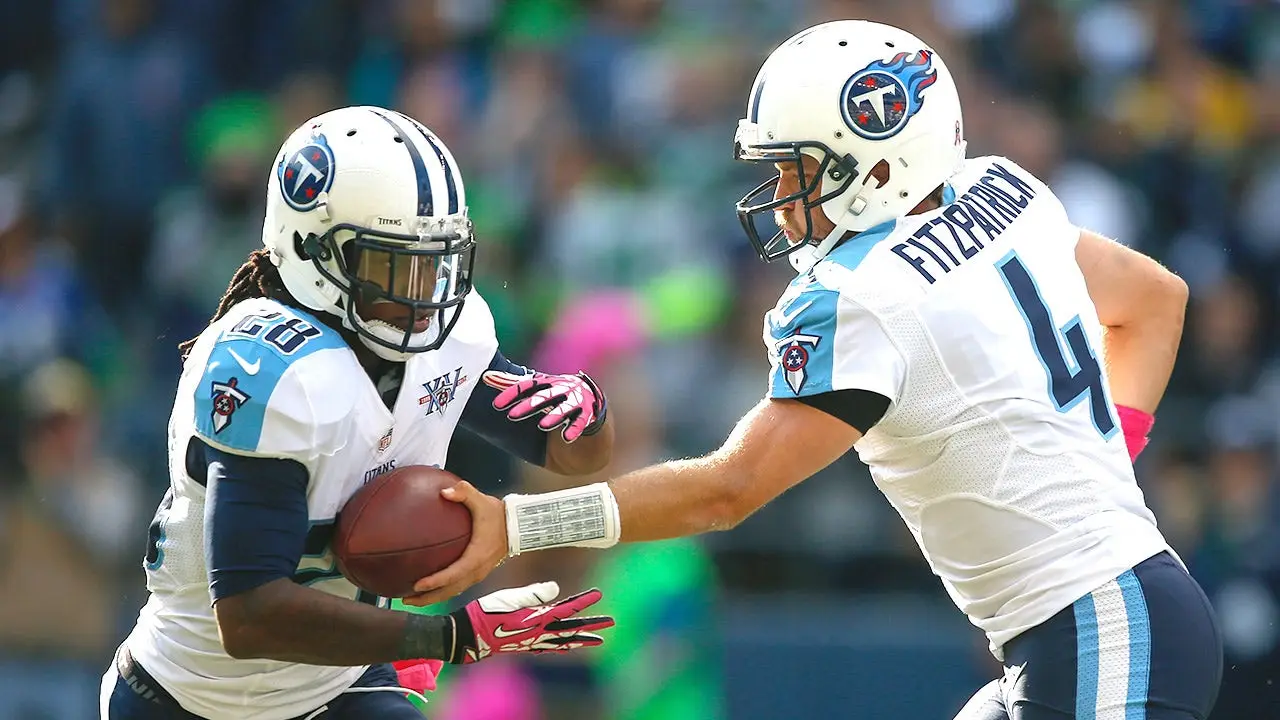
The national football community was deeply shaken by the devastating announcement that former running back Chris Johnson, a legendary athlete and one of the elite few to rush for over 2,000 yards in a single NFL season, has been diagnosed with ALS (amyotrophic lateral sclerosis). This heartbreaking news struck a deeply personal chord for former quarterback Ryan Fitzpatrick, who shared the backfield with Johnson during their time with the Tennessee Titans. Reflecting on their season together, Fitzpatrick fondly recalled their unique bond and shared a cherished memory of his 100th career touchdown pass, which he threw to Johnson. To commemorate the milestone, Johnson signed the football with a playful, affectionate message that became a lifelong badge of pride for the quarterback, illustrating the genuine camaraderie and mutual respect that often defines the brotherhood of professional athletes.
Despite the lightheartedness of their past memories, the reality of Johnson’s diagnosis brings a heavy sadness, prompting Fitzpatrick to express profound empathy for the immense mental and physical struggles his former teammate now faces. ALS is a merciless, progressive disease that systematically severs the brain’s connection to the body’s muscles, slowly stripping away an individual’s ability to walk, speak, eat, and ultimately breathe, while leaving their cognitive faculties entirely intact. Fitzpatrick voiced the collective heartache of the sports world, acknowledging the terrifying frustration of having a sharp, active mind trapped inside a failing body. He extended his deepest love and unwavering support to Johnson, his wife, and his entire family as they navigate this incredibly difficult chapter of their lives.
In his public announcement, Johnson shed light on the sobering connection between his diagnosis and his football career, pointing out the growing body of scientific research linking repetitive head trauma to neurodegenerative diseases. Studies have revealed a grim statistic: NFL players are four times more likely to develop ALS than the general population. This revelation has reignited critical conversations about the long-term health risks associated with the violent nature of professional football. For players who spent years absorbing high-impact collisions on the gridiron, the physical toll of the game often lingers long after the stadium lights go down, transforming the sport’s triumphs into a complex legacy of personal and physical sacrifice.
When confronted with the frightening realities of these long-term health risks, Fitzpatrick offered a candid and nuanced perspective on the bargain players make with the game of football. He admitted that while modern athletes are increasingly aware of the dangers, the sport offers life-changing opportunities and a sense of fulfillment that makes the sacrifice worth it for many. Speaking for himself, Fitzpatrick confessed that he would choose to play the game all over again in a heartbeat because of how much football has enriched his life, and he happily supports his own children in pursuing the sport. Yet, he acknowledged that this passion exists alongside a heavy awareness of the potential consequences, displaying the complicated relationship players have with the game they love.
This diagnosis hits close to home for Fitzpatrick not just because of his connection to Johnson, but because of his own personal encounters with the devastating disease. He shared that one of his closest friends from high school was also diagnosed with ALS, giving him a front-row seat to the agonizing, daily challenges the illness inflicts on both the patients and their caregiving loved ones. Facing these harsh realities, Fitzpatrick reflected on the inevitable, sobering truths of growing older, noting that aging inevitably brings loss, illness, and difficult trials. Having lost his own mother several years ago, the former quarterback spoke open-heartedly about the emotional weight of watching friends and family members face severe health crises as time marches on.
Chris Johnson’s historic NFL career spanned nearly a decade, during which he thrilled fans while playing for the Titans, New York Jets, and Arizona Cardinals. Today, his battle off the field is unites former teammates, rivals, and fans alike in a collective wave of support. As the sports world rallies around the former running back, his diagnosis serves as a poignant reminder of the human cost behind the entertainment of professional sports. While there is currently no known cure for ALS, the outpouring of love and advocacy sparked by Johnson’s announcement shines a vital spotlight on the disease, fostering hope for future medical breakthroughs and offering comfort to a beloved athlete fighting his toughest battle yet.