

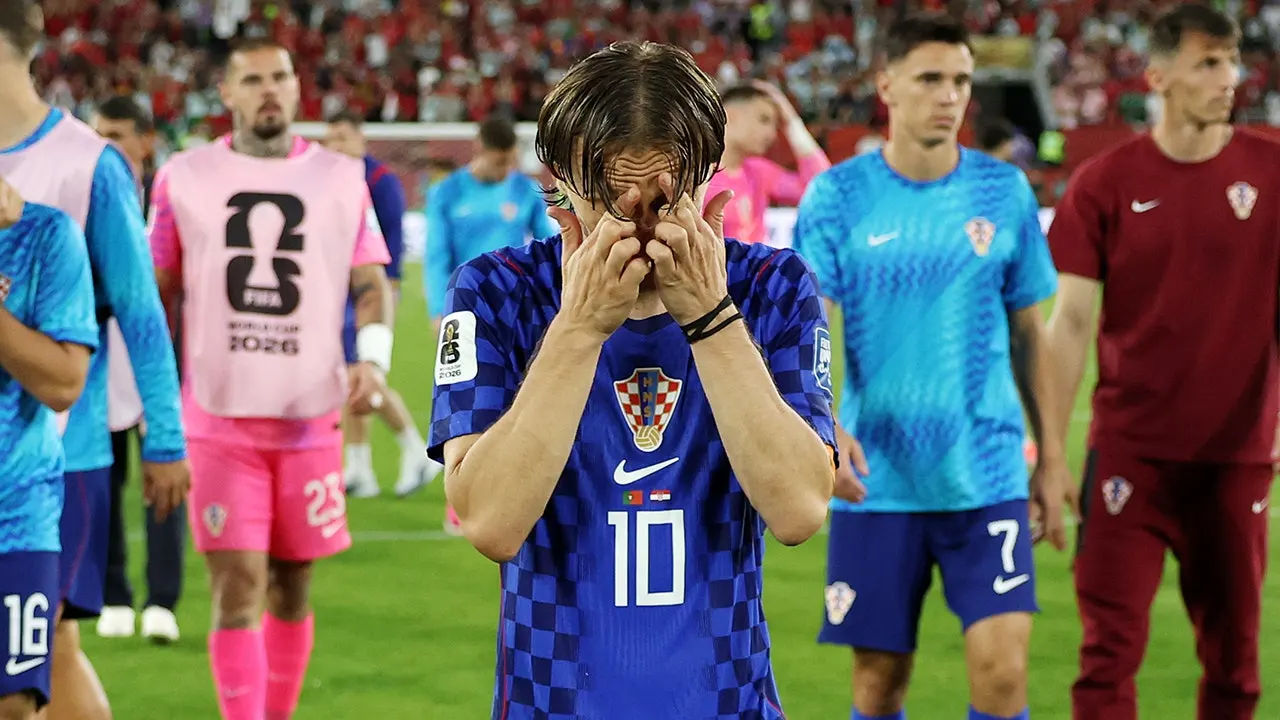
Football is a game of millimeters and heartbeats, a truth Croatia learned in the cruelest fashion imaginable during the dying seconds of stoppage time. When the ball rippled the back of the net, a wave of pure ecstasy washed over the Croatian squad and their traveling supporters, who believed their World Cup dream had been miraculously saved from the brink of extinction. For a fleeting moment, Mario Pasalic was the savior, his teammates mobbing him in absolute disbelief as the scoreboard hinted at extra time. But the modern game, governed as much by silicone chips as by human sweat, quickly intervened. The Video Assistant Referee (VAR) cast its cold, analytical eye over the play, utilizing state-of-the-art ball-sensor technology to detect the faintest, almost imperceptible touch by Igor Matanovic. This microchip, nested deep within the match ball, provided the digital evidence that Pasalic was indeed offside. With the stroke of a referee’s whistle, the elation evaporated, replaced by a crushing, deafening silence. It was the tenth goal overruled by VAR in this tournament, a statistic that does little to comfort the broken hearts of a Croatian nation that fought with every ounce of their being, only to be undone by the uncompromising precision of modern sports science.
Beyond the technological drama, this match will be remembered as a poetic, bittersweet monument to a golden era of football. On the pitch stood Luka Modrić and Cristiano Ronaldo—two former Real Madrid brothers-in-arms, now representing the twilight of their legendary careers. Together, they made history as the first two players aged 40 or older to share a World Cup pitch, a testament to their otherworldly longevity and dedication to their craft. For Modrić, the maestro whose elegant vision has defined Croatian football for nearly two decades, this match likely marked the final chapter of his fifth and last World Cup campaign. Watching the 40-year-old midfielder glide across the grass, orchestrating plays with the same quiet dignity he has shown throughout his career, was a deeply emotional experience for spectators worldwide. While one legend prepares to gracefully hang up his international boots, another continues to defy the very concept of aging, proving that passion and discipline can triumph over the hands of time.
At 41 years and 147 days old, Cristiano Ronaldo did not merely participate; he conquered. By stepping onto the field, he cemented his status as the oldest player to ever grace a World Cup knockout stage match, but he was far from finished writing his script. When Croatia’s Ivan Perisic opened the scoring with a brilliant, deflating strike that left Portugal with their backs firmly against the wall, the burden of a nation fell squarely onto the shoulders of number seven. The opportunity for salvation arrived in the 67th minute when a frantic foul inside the Croatian penalty box gifted Portugal a lifeline. Standing over the spot, carrying the weight of a historic drought—having never scored in a World Cup knockout stage before—Ronaldo did what he has done his entire life. With cool, unwavering execution, he dispatched the penalty into the net, instantly becoming the oldest goalscorer in knockout history. The ensuing celebration was a release of pure, unadulterated passion; Ronaldo bolted to the corner flag, leaped into the air, and delivered his iconic “SIU!” shout, a battle cry echoed by thousands of adoring fans in the stadium who knew they were witnessing football royalty defy the laws of nature.
To truly appreciate the weight of Portugal’s 2-1 victory, one must look at the history of a team that has rarely been forced to claw its way back from a deficit on the world’s grandest stage. Indeed, this historic triumph marked only the second time in Portuguese history that the Seleção successfully mounted a comeback win in a World Cup tournament, showcasing a newfound resilience and mental fortitude. While Ronaldo provided the emotional spark, it was young Gonçalo Ramos who delivered the knockout blow in the agonizingly tense 94th minute of the match. Forging through a congested penalty area as the seconds ticked away, Ramos met a curving cross with defensive defiance, leaping high to plant a spectacular, soaring header into the back of the net. It was a moment of sublime athletic poetry, shifting the paradigm of the match and sending the Portuguese bench into a state of wild, uncontrollable frenzy. This combination of veteran leadership and youthful exuberance proved to be the winning formula, illustrating how Portugal has evolved from a one-man show into a cohesive, deeply dangerous unit capable of weathering any storm.
Amid the soaring highs of athletic victory, the match also served as a poignant reminder of the fragile, human threads that bind these athletes together. After the final whistle blew, as the stadium reverberated with cheers, the Portuguese team showed that their hearts were with someone who could only be there in spirit. Cristiano Ronaldo donned the jersey of their late teammate, Diogo Jota, who tragically lost his life in a devastating car accident just a year prior. When the squad gathered on the pitch for their post-match victory photograph, they did not just celebrate their ticket to the next round; they stood side-by-side, holding Jota’s jersey high for the world to see. It was a profoundly moving gesture that transcended sports, revealing the deep grief and enduring brotherhood that fuels this team. In that quiet, shared moment of remembrance, football was stripped of its commercial glamour, reminding everyone that behind the multimillion-dollar contracts and global fame are human beings who carry the heavy burdens of loss, playing not just for glory, but to honor the memories of those they have lost along the way.
With their emotional victory secured and their spirits bolstered by destiny, Portugal now looks ahead to a monumental challenge in the Round of 16: an epic Iberian Derby. Their opponent is none other than a formidable Spanish side that recently dismantled Austria in a dominant 3-0 masterclass, showing the world that they are prime contenders for the crown. Scheduled to kick off at Dallas Stadium on July 6th at 3:00 p.m. Eastern Time, this highly anticipated clash promises to be an absolute thriller, pitting Spain’s mesmerizing possession and tactical precision against Portugal’s emotional grit and legendary firepower. Fans across the globe are already counting down the days, eager to see if Ronaldo and his brothers can continue their fairytale run or if the youthful vitality of La Roja will prove too steep a hill to climb. Regardless of the outcome, this historic World Cup journey has already etched itself into the annals of football history, celebrating a generation of aging titans who refuse to go quietly into the night and proving that the beautiful game still has the power to grip our hearts, break our spirits, and inspire our souls.