





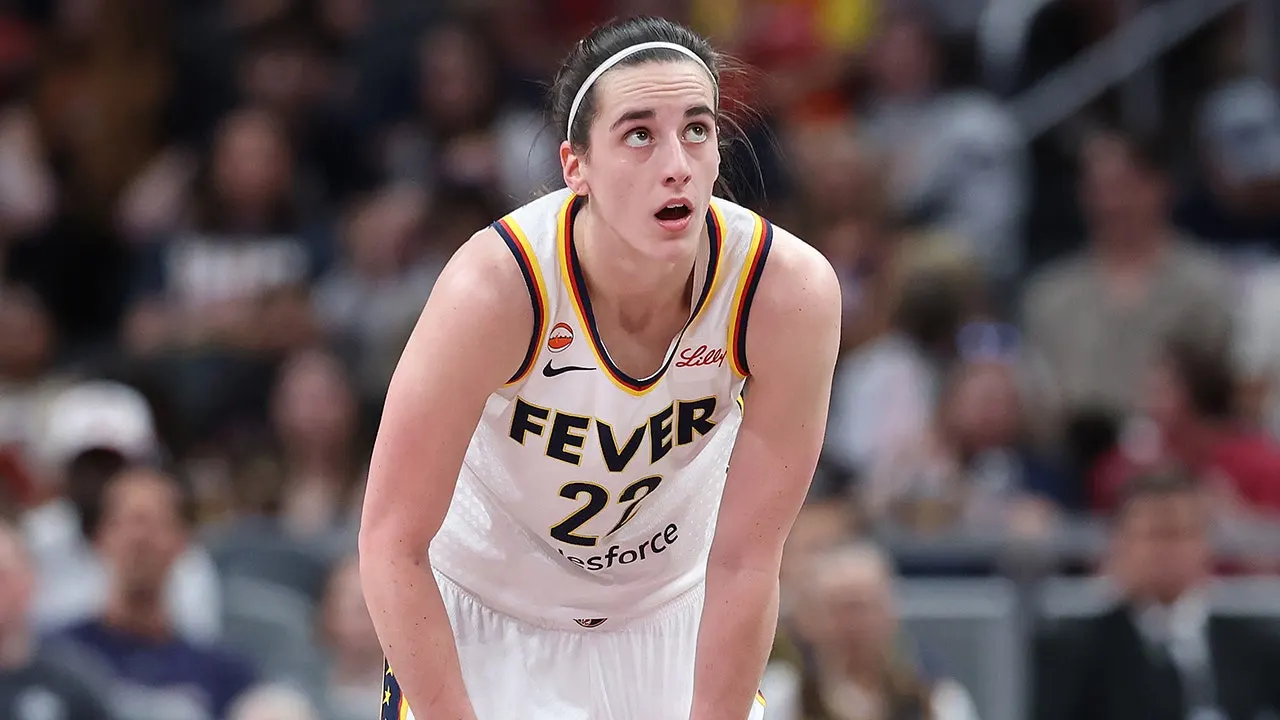
When Caitlin Clark stepped onto the professional hardwood for her highly anticipated debut WNBA season in 2024, she carried more than just the hope of the Indiana Fever franchise; she carried the collective, intense focus of a sporting world eager to witness a generational revolution. Her legendary collegiate career at Iowa had been a masterclass in transcendent athletic theater, pulling millions of new eyes to women’s basketball with her audacious logo-distance three-pointers, mesmerizing court vision, and cold-blooded competitive fire. She became a symbol of Midwestern grit, bringing a direct, unapologetic passion that resonated emotionally with fans across multiple generations. Yet, transitioning from the relatively protected collegiate landscape to the battle-tested, ultra-physical arena of the pros was never going to be an easy stroll in the park. It quickly proved to be a baptism by fire, characterized by physically punishing defenses, relentlessly hard screens, and a level of defensive scrutiny rarely seen for a rookie in any sport. On Wednesday night, as the Indiana Fever hosted the Phoenix Mercury in what promised to be another showcase of elite women’s basketball, that physical reality caught up with the young phenom in a visceral, heartbreaking fashion. The atmosphere inside the Gainbridge Fieldhouse was, as always, utterly electric—charged with the unique anticipation and high-pitched screams of young fans wearing her matching number 22 jersey—but that vibrant energy was abruptly and sorrowfully snuffed out before the final frame even began. To understand the true gravity of her premature exit from the game, one must understand how much her kinetic presence dictates the entire rhythm of the arena, making her departure not just a devastating tactical blow to her team, but an emotional deflation for the thousands of fans who had gathered to watch her play. Her night was cut disappointingly short, leaving a silent, anxious arena to wonder about the physical cost of her meteoric rise to fame, and whether her body could withstand the relentless grind of professional basketball.
The physical trouble began to brew silently in the second quarter, a period marked by the high-octane tempo and chaotic transitions that define Indiana’s modern playstyle. Clark, known for her relentless motor and desire to push the pace, found her body protesting after a particularly demanding sequence on the court. While the exact moment her back began to rebel remains somewhat hazy to observers, onlookers pointed to a hard drive and a subsequent collision in the second quarter as the definitive catalyst for her growing discomfort. As the game progressed into the third quarter, it became painfully obvious to anyone watching closely that the young superstar was operating at a mere fraction of her usual fluid, kinetic capacity. She grimaced between possessions, clutched at her lower back while jogging back on defense, and her signature explosive first step was visibly compromised by a deep, nagging ache that she could no longer hide. With just over five minutes remaining in the third period, the decision was made to pull her from the game—a moment captured by concerned television cameras and accompanied by the hushed, worried whispers of the home crowd. She did not merely sit on the bench to catch her breath or cheer on her teammates; instead, she made the slow, agonizing trek down the tunnel and directly into the locker room, officially ruled out for the remainder of the evening with a recurring back issue. Behind those locked doors, away from the flashing cameras and the noise of the arena, she was shielded from the public eye as trainers began the immediate, hands-on process of physical therapy. For an athlete whose game relies on torquing her core to launch deep jump shots and twisting past defenders in mid-air, a back injury is particularly debilitating, robbing her of her foundational balance. Her interactions with the training staff on the sideline showed a young woman fighting through frustration, desperately trying to stretch out the muscle tension before ultimately conceding to her body’s limitations, leaving a palpable sense of worry hanging over the court.
The national discussion surrounding her early exit quickly pivoted back to the controversial, uncompromising physicality that has shadowed Clark throughout her entire rookie campaign. This conversation reached a boiling point during the second quarter when Clark drove aggressively toward the basket, only to be met by a wall of defenders and a sequence of contact that reignited nationwide debates over how she is refereed in this league. Replays of the play in question paint a harrowing picture: as Clark drove through the lane, contact was made, sending her crashing hard toward the hardwood floor. Slow-motion footage appeared to show an opponent’s knee, specifically belonging to Thomas, making direct, forceful impact near Clark’s groin area, quickly followed by what appeared to be a stray fist striking her near the throat as she fell. Shockingly, the officials on the floor let play continue without blowing a whistle, a non-call that left local fans in a state of sheer disbelief and social media in an absolute uproar. Critics and supporters have argued for months that Clark has been subjected to a double standard of physicality, a “welcome-to-the-league” treatment that occasionally crosses the boundary of healthy, competitive physical play into dangerous territory. The WNBA has long prided itself on its bruising, defense-first identity, but critics argue that the line between physical boundary-pushing and targeted aggression is easily blurred under the bright lights of national television. This uncalled incident stood as a stark, troubling monument to that sentiment, illustrating the fine line between the WNBA’s celebrated grit and the critical need to protect its marquee stars from avoidable, cumulative physical harm that could derail their careers. For Clark, the physical toll is not just a matter of bruises and sore muscles; it is also a psychological battle. The frustration of enduring high-impact collisions without the benefit of a whistle can wear down even the most mentally resilient competitors, creating a sense of isolation on the court that her coaching staff has fought hard to voice and defend.
In the immediate wake of Clark’s departure, the game on the floor transformed into a chaotic, high-scoring theater of survival and raw willpower. The Indiana Fever refused to lie down without their leader, rallied by a magnificent, gutty performance from veteran guard Kelsey Mitchell. Mitchell put the entire offensive game plan on her shoulders, slashing through the Phoenix defense, driving fearlessly into the paint, and draining crucial shots to finish the night with a spectacular 30 points, proving that this Indiana roster possesses a deep-seated resilience. However, the Phoenix Mercury, recognizing the massive void left by Clark’s absence, seized the momentum with ruthless, veteran efficiency. Led by Kahleah Copper’s dazzling 28-point showcase, the Mercury began to systematically erase Indiana’s hard-earned lead, turning the final minutes of the match into a nail-biting, possession-by-possession chess game. The contest ultimately slipped through the Fever’s fingers in the closing seconds, culminating in a heartbreaking 111-109 victory for the visiting Phoenix squad. It was only the Mercury’s sixth win of what has been a challenging, up-and-down season for them, making the triumph all the more sweet for the visitors, while leaving the Fever to contemplate what might have been had their young maestro remained on the floor to orchestrate the final, critical possessions. The game became a masterclass in offensive perseverance as each team traded spectacular baskets, keeping the crowd on the absolute edge of their seats until the final buzzer. In the final possessions, the lack of Clark’s gravity on the court was felt deeply; without her drawing double-teams, the Phoenix defense was able to rotate more effectively and choke off Indiana’s passing lanes. Mitchell’s valiant scoring burst kept them afloat, but the collective defensive exhaustion eventually took its toll on the Fever. As the final buzzer sounded, the quiet disappointment in the arena was palpable, a mix of sorrow over a winnable game slipping away and deep apprehension regarding the health of their franchise cornerstone.
Yet, even as her physical body falters under the heavy demands of the WNBA schedule, Clark’s cultural and commercial momentum remains absolutely unstoppable. Just hours before the physical toll of her rookie season took center stage on Wednesday, the basketball world was buzzing with the official announcement and preview of her highly anticipated signature sneaker, the Nike “Caitlin 1.” Scheduled for an October release, the shoe represents a monumental milestone in sports marketing, placing her in an elite tier of legendary athletes who have secured a signature line so early in their professional careers. The aesthetic of the shoe aims to capture her relentless drive, a visual celebration of a legacy that is still actively being written in real-time under intense scrutiny. This duality has become the defining theme of Clark’s year: on one hand, she is an emerging corporate titan, a cultural phenomenon whose marketing allure is single-handedly reshaping the economics of women’s sports and driving historic sneaker deals. On the other hand, she is a twenty-two-year-old athlete nursing a chronically aching back, nursing painful bruises from uncalled hits, and trying to navigate the grueling, unglamorous day-to-day physical realities of professional basketball. The announcement of the “Caitlin 1” serves as a poignant reminder of the immense, almost unfair pressures resting on her young shoulders, where she must simultaneously project the image of a flawless, invincible global icon while privately managing the harsh, painful physical demands of her everyday job. This juxtaposition of corporate stardom and physical vulnerability is a unique burden borne by only a handful of athletes in history. The expectation to perform at an elite level night after night while serving as the primary ambassador for a rising sport leaves very little room for human error or physical weakness. When her sneaker hits the shelves in October, it will symbolize a historic shift in the visibility of women’s basketball, but the journey to that release date is paved with the grueling, untelevised labor of recovery.
Looking forward, the immediate concern for the Indiana Fever and their passionate fanbase is the long-term, strategic management of Clark’s health, as this back issue is far from an isolated incident. The rookie guard has found herself listed on Indiana’s injury report multiple times this season due to persistent back discomfort, a recurring warning sign that her body is crying out for rest amidst a packed WNBA calendar that offers very little downtime. With a critical homestand continuing this Saturday against the Los Angeles Sparks, the coaching staff and medical team face an incredibly delicate balancing act: deciding whether to let their fiercely competitive star fight through the pain to secure vital wins or to mandate the rest her body so desperately needs to heal for the future. The long-term success of the franchise rests on her health, making every decision regarding her playing time a high-stakes calculation. The true test of Clark’s rookie season will not merely be measured by her statistical dominance or her highlight-reel passes, but by her ability to endure, adapt, and protect her physical longevity in a league that tests every ounce of an athlete’s physical and mental resolve. As fans across the country hold their collective breath hoping for a speedy recovery, Clark’s journey continues to be a compelling human drama of resilience, illustrating that true athletic greatness is forged not just in the moments of triumphant celebration on the court, but in the painful, quiet, and vulnerable spaces of the training room where an athlete must gather the strength to stand back up and play another day. This journey of self-preservation is perhaps the most human aspect of her story, transforming her from an untouchable sports icon into a relatable young woman striving to overcome adversity. Ultimately, Caitlin Clark’s first year in the WNBA is setting the template for how modern athletes navigate the intense intersection of fame, physical toll, and personal grit.