





For months, Todd Monken went around telling anyone who would listen that he could win in Cleveland. He said it in press conferences, he said it in private conversations, he said it with the kind of conviction that coaches sometimes fake. But people heard him, nodded politely, and then laughed the moment he walked away. Why wouldn’t they? This was the Browns, after all—a franchise that had spent the better part of two decades turning hope into heartbreak, a team that had won only eight games in the previous two seasons combined. The idea of this man, in his first year as head coach, walking into the AFC North and making noise felt like the kind of optimism that gets people fired by November. Nobody is laughing now. One month into the season, Monken’s Browns sit alone in first place in the AFC North, and they got there in the most dramatic way possible: a wild, chaotic, emotional Thursday night showdown in Cleveland against the Pittsburgh Steelers, a game that ended with a 56-yard field goal from Andre Szmyt as time expired. That kick gave the Browns a 27-24 victory and a 3-1 record, and it turned a franchise that has been a punchline for years into the most interesting story in football. It wasn’t perfect. It wasn’t pretty. But it was real, and it was enough. For a team that has spent so long searching for relevance, this felt like more than just a win. It felt like proof that maybe—just maybe—the people laughing all offseason were wrong.
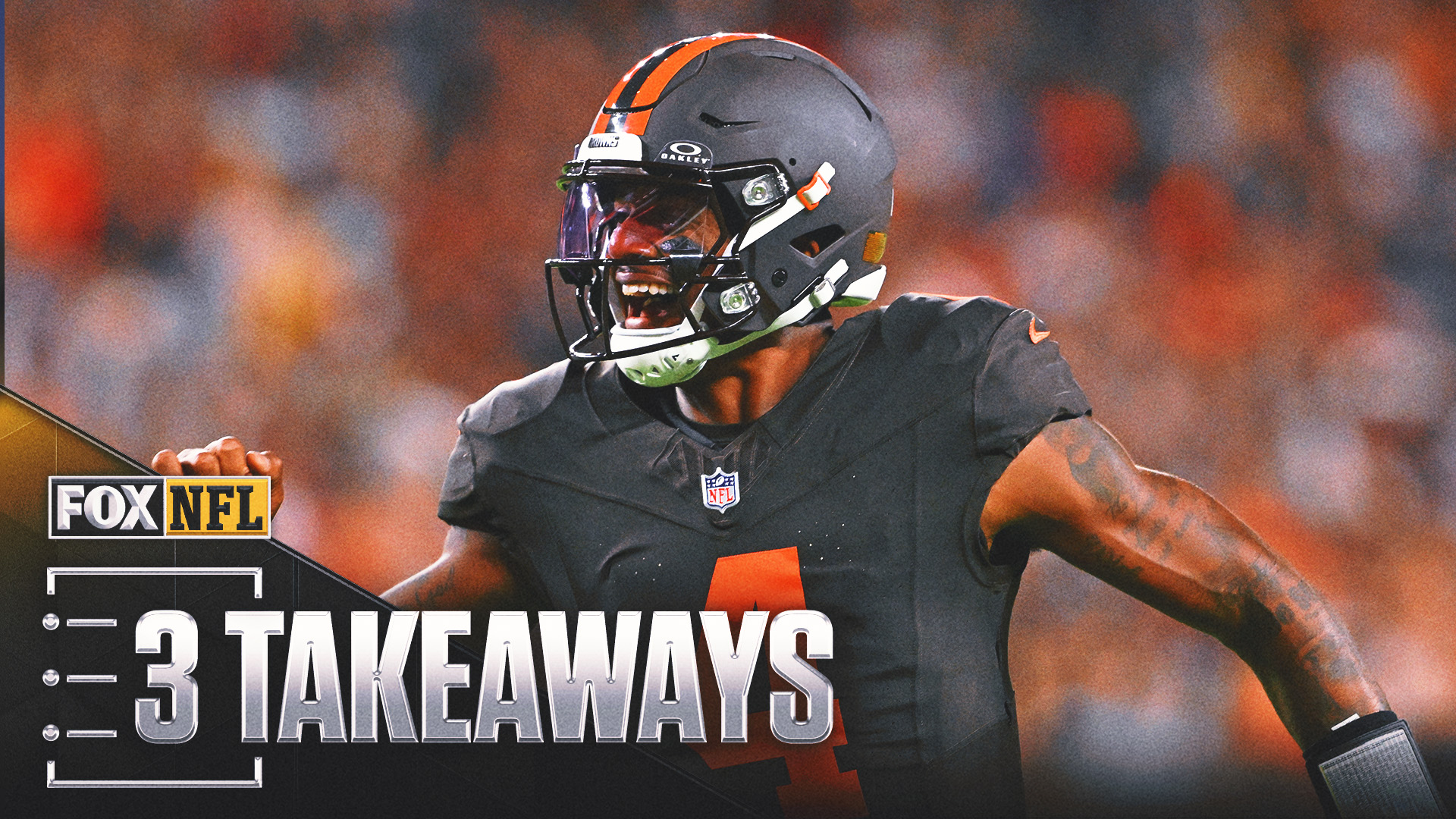
The biggest question all summer was whether the Browns had finally found their quarterback, and Monken himself was the first to admit he didn’t know. When a reporter visited training camp back in August, Monken was honest about his biggest concern. His job, as he saw it, was to “find a quarterback,” and he seemed to believe that might take the entire season. There was talk of giving second-year pro Shedeur Sanders a shot, of building something for the future, of treating the position as an open competition that might not have a clear winner until December. But one month into the season, the answer has arrived in the form of Deshaun Watson. Watson wasn’t perfect against Pittsburgh, but he was close enough. He completed 24 of 33 passes for 268 yards, threw one touchdown and one interception, and looked like the player the Browns thought they were getting when they made the biggest commitment of his career. In the first half, he was outstanding, moving the ball at will, making throws into tight windows, and using his legs to escape pressure that would have buried a less mobile quarterback. He faded a bit in the second half, as the Steelers adjusted and started bringing more heat, but when the game mattered most, he was there. On the final drive, with the clock ticking down and the season hanging in the balance, Watson went 4-for-5 for 46 yards, calmly marching his team into position for the winning kick. It was the kind of performance that makes you believe in something, even when you’ve been burned before. Watson is 31 now, and he has barely played over the last five seasons, so nobody knows how long this version of him will last. His contract—that fully guaranteed $230 million albatross—will eventually expire, and it’s hard to imagine the Browns bringing him back under any circumstances once it does. But that’s a problem for another day. Right now, Watson is giving Cleveland everything it needs, and any thoughts Monken might have had about handing the keys to Sanders have been quietly pushed to the back burner. There will be time to think about the future later. For now, the present is working.
While the Browns celebrated their young quarterback’s revival, the man on the other sideline spent the night reminding everyone that time is undefeated. Aaron Rodgers, the 42-year-old signal-caller for the Steelers, looked like his old self for a few glorious moments in the fourth quarter. He led Pittsburgh back from a 21-10 deficit with a series of throws that made you forget, just for a second, that he was playing on borrowed time. He fired a deep strike to DK Metcalf down the field. He rolled out of a collapsing pocket and threw a 21-yard dart to tight end Darnell Washington for a touchdown. He even threw his aging body over the middle on a quarterback sneak for a two-point conversion, showing the kind of guts and grit that has defined his Hall of Fame career. It was fantastic to watch, the kind of performance that makes you want to believe in fairy tales. But here’s the problem: those moments are becoming increasingly rare. Rodgers finished the game 22-of-40 for 299 yards, three touchdowns and two interceptions, which sounds okay until you realize how much of that production came in garbage time and desperate situations. For most of the night, he struggled to throw the ball more than 15 yards downfield. His deep passes were wobbly, floating, off-target—the kind of throws that used to be lasers but now look like they’re being pushed by the wind. Worse, he has become a statue in the pocket. When he tries to escape pressure, he moves in slow motion, and the Browns defense made him pay for it all night, sacking him five times and hitting him countless more. Rodgers still has a brilliant mind, one of the best football brains the league has ever seen. He rarely makes a mistake with his decision-making, his release remains lightning quick, and he still knows how to throw his receivers open better than almost anyone. He showed, late in the game, that he can still be clutch when everything is on the line. But the consistency is gone. The big-play ability is now a cameo appearance, not a regular feature. And that has turned Pittsburgh’s offense into something predictable and plodding, a machine that can move the ball in short bursts but struggles to sustain anything. The Steelers need more of the fourth-quarter Rodgers, the one who can move, escape, and fire accurate throws downfield. Unfortunately for them, it just doesn’t look like that player exists on a weekly basis anymore.
What the Browns have, by contrast, is youth—and lots of it. General manager Andrew Berry has taken his fair share of criticism over the years, and some of it has been deserved. But he deserves credit for what he’s built here. This roster is loaded with good, young, dynamic players on both sides of the ball, the kind of talent that can carry a franchise for years if everything breaks right. The problem, at least right now, is that youth cuts both ways. For every brilliant play, there’s a mistake that makes you want to pull your hair out. The Browns committed 14 penalties on Thursday night, including five in the final five and a half minutes. They were the kind of undisciplined, boneheaded penalties that usually lose games: a defensive hold that gave the Steelers another shot at the tying touchdown, an offside penalty by star edge rusher Jared Verse on the ensuing two-point conversion, and a bunch of others that kept drives alive for Pittsburgh and killed momentum for Cleveland. They survived, somehow, but that kind of sloppiness is a dangerous habit. Better teams will make them pay. If the Browns manage to stay in the playoff race, these mistakes will eventually be their undoing. And yet, despite all of that, it’s hard not to be excited about what this team could become. The young players who made those mistakes were also the ones making spectacular plays. They’re learning on the fly, growing up in public, and every week they get a little bit better. The potential is undeniable. The question is whether they can grow up fast enough to win now, or whether they’ll spend the next couple of seasons paying for their inexperience before it all clicks.
Look at the offensive talent on display against Pittsburgh, and you’ll understand why Browns fans are allowing themselves to dream. Denzel Boston, a rookie receiver, caught four passes for 89 yards, showing the kind of speed and route-running that makes defensive coordinators lose sleep. KC Concepcion, another rookie, added five catches for 64 yards, proving that the Browns didn’t just find one potential star in this year’s draft—they found two. Tight end Harold Fannin, a find from last year’s draft, caught three passes for 27 yards and a touchdown, and running back Quinshon Judkins, another second-year player, carried the ball 17 times for 53 yards and a score while also catching six passes for 43 yards. These are the pieces of a future contender, the kind of young, hungry players who can grow together and form the core of something special. On defense, the Browns have their own set of impact players. Jared Verse, acquired in the Myles Garrett trade with the Rams, is already one of the most feared edge rushers in the league, and he showed why against Pittsburgh, pressuring Rodgers all night and disrupting the Steelers’ timing. Linebacker Carson Schwesinger, the reigning Defensive Rookie of the Year, is everywhere on the field, making tackles, breaking up passes, and providing the kind of leadership you don’t usually find in a young player. Add it all together, and you have a roster that is absolutely loaded with talent, the kind of roster that could make the Browns a perennial contender for the next decade. But talent alone isn’t enough. The penalties, the mental mistakes, the youthful lapses in judgment—those are the things that keep good teams from becoming great ones. The Browns have the talent. Now they need to learn how to use it without beating themselves in the process.
In the end, Thursday night was a snapshot of everything this Browns team is and everything it could become. They are fearless, confident, and talented, a team that believes in itself even when the world is laughing. They have a coach who never doubted this was possible, a quarterback who is playing like he has something to prove, and a collection of young players who seem ready to carry this franchise into a new era. They also have a long way to go, because you can’t commit 14 penalties and expect to beat good teams consistently, and you can’t rely on last-second field goals forever. But for now, none of that matters. For now, they are in first place. For now, they are undefeated at home, they have a quarterback who looks like the real deal, and they have a city that is starting to believe again. The Steelers, meanwhile, have to figure out whether Rodgers can still be the answer or whether it’s time to start looking toward the future. And Rodgers, to his credit, isn’t going anywhere quietly. He showed Thursday night that he can still make magic, even if it only comes in flashes. But football is a game of consistency, and at 42, consistency is the one thing he can’t guarantee. The Browns have youth on their side, and they have a coach who believed in them from the very beginning. Nobody is laughing at Todd Monken anymore. And if this keeps up, the rest of the league might be the ones in trouble.