


For the first time in the history of space exploration, astronomers have detected a promising atmosphere wrapping around a rocky planet situated in the habitable “Goldilocks” zone of a neighboring star. For years, scientists hunting for signs of alien life beyond our solar system have focused on rocky exoplanets, hoping to find worlds mirroring our own. However, up until this landmark discovery, every promising candidate observed looked like a barren, airless stone. This breakthrough, recently published in the journal Science, finally proves that rocky worlds orbiting in these sweet spots can indeed hold onto their protective blankets of gas, fundamentally shifting our understanding of where life might take root in the cosmos.
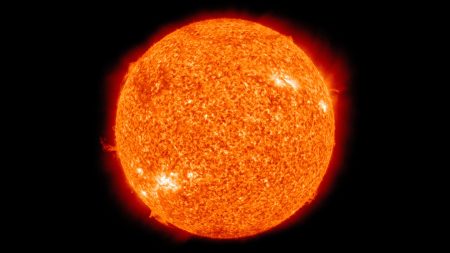
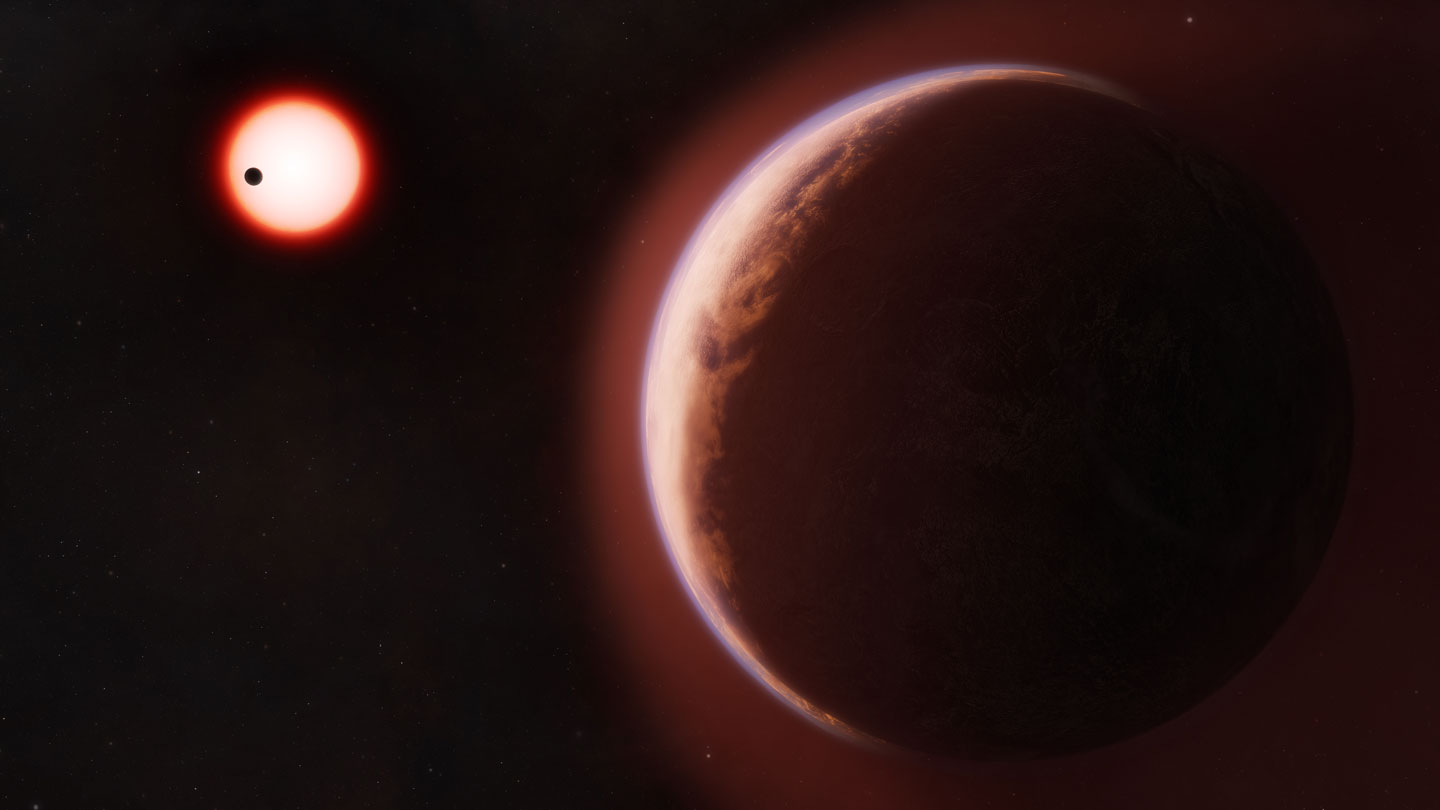
The planet at the center of this excitement is LHS 1140b, a super-Earth about 1.7 times the size of our home planet and more than five times as massive. Its physical dimensions suggest a composition of rock and metal like Earth, potentially covered by a vast, global ocean. Crucially, LHS 1140b sits at just the right distance from its host star for surface temperatures to allow liquid water to exist without freezing solid or boiling away. While this sounds like prime real estate for potential habitability, the planet’s host star is a dim, cool M dwarf—the most common, yet notoriously volatile, type of star in the Milky Way. These stellar neighbors are famous for unleashing violent flares and harsh radiation that easily strip away the atmospheres of nearby planets, leaving researchers skeptical that any atmosphere could ever survive there.
To solve this cosmic mystery, planetary astronomer Collin Cherubim and his team at the Harvard-Smithsonian Center for Astrophysics aimed the powerful Magellan Clay telescope in New Mexico toward LHS 1140b. They watched closely as the planet transited, or passed directly in front of, its star. By analyzing the starlight filtering through the edges of the planet, the researchers detected a distinct molecular signature: an excess of helium gas absorbing light. This observation revealed a stream of helium escaping the planet’s gravitational pull into space, which ironically served as the definitive proof the scientists needed. The leaking gas confirmed that LHS 1140b possesses a rich, active atmosphere.
While astronomers have previously witnessed helium escaping from much larger gas worlds known as “mini-Neptunes” as they slowly erode into bare rocks, LHS 1140b is a very different beast. Because it orbits a cooler star and sits further away than those scorched giants, LHS 1140b is losing its gas at a incredibly slow rate. Cherubim’s calculations indicate that the planet has successfully held onto its atmosphere for over 3 billion years and will likely remain stable for at least another billion. Even if it eventually loses its lighter helium, the planet has a strong chance of maintaining a secondary, heavier atmosphere dominated by gases like nitrogen or carbon dioxide, much like Venus or Earth.
The discovery has breathed a fresh wave of optimism into the astronomical community. Laura Kreidberg, an astronomer at the Max Planck Institute for Astronomy, admits she is far more hopeful now about the realistic prospect of finding habitable environments beyond our solar system. She notes that a rocky planet wrapped in a helium-rich envelope is an entirely new category of celestial body—an “exotic weirdo planet” that behaves unlike anything we have observed before. Its atmosphere is uniquely transitional: far thicker than Earth’s, yet nowhere near the crushing envelope of a gas giant like Neptune.
Moving forward, the international community is eager to point the James Webb Space Telescope (JWST) toward LHS 1140b. These highly anticipated follow-up observations will serve two critical purposes. First, they will provide a vital independent confirmation to seal the discovery. Second, JWST’s advanced infrared instruments will allow scientists to peer deeper into the chemical makeup of this alien sky, determining exactly how much helium is present and testing for other life-friendly molecules. By taking a closer look at this strange, resilient world, humanity takes one giant step closer to answering the age-old question of whether we are alone in the universe.