




Have you ever wondered why your dominant hand is so much better at writing, eating, or catching a ball than your other hand? It is easy to assume that we are simply born with one “smart” side of the brain and one “dumb” side when it comes to coordination. While it is true that babies show a natural preference for using one side over the other even before they are born—likely due to a mix of genetics and early brain development—a fascinating new study suggests that this biological head start does not actually explain our dominant side’s superior skills. Instead, our coordination is shaped almost entirely by a lifetime of repeating the same movements over and over.
The study, published in the Proceedings of the National Academy of Sciences, offers an encouraging look at just how adaptable the human brain remains throughout our lives. Researchers wanted to unpack a classic chicken-and-egg question: Is one half of our brain fundamentally better at controlling movement, or does our favorite hand only seem superior because we use it constantly? By designing a creative experiment, scientists were able to isolate the biological preference we are born with from the sheer power of daily repetition.
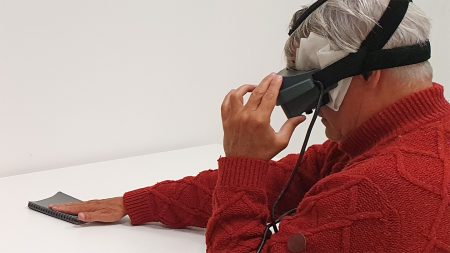
To test this, neurologist and neuroscientist Ahmet Arac and his team at UCLA’s David Geffen School of Medicine asked eleven participants to write the letter “A” and the number “8” using both their dominant and nondominant hands. Unsurprisingly, the dominant hands produced much cleaner, more legible results. But then came the real challenge: the researchers strapped pens to the participants’ elbows. When asked to write the same characters using their dominant and nondominant elbows, the results were equally messy. The biological “dominance” of one side of the body completely vanished when transferred to a muscle group that had never been trained to write.
The breakthrough came when a new group of twelve participants spent a few hours practicing writing with their pen-equipped elbows. With just a little time and repetition, their elbow-writing improved dramatically. Crucially, the improvement was identical for both the dominant and nondominant elbows. This symmetry strongly suggests that what we call “handedness” or “dominance” is not a permanent, hardwired limitation of our brain’s physical structure. Instead, as the researchers concluded, dominance is simply a reflection of practice.
This discovery has profound, hopeful implications for anyone looking to learn a new physical skill, but its most critical impact lies in the field of medical rehabilitation. For stroke survivors or individuals recovering from traumatic brain injuries, relearning basic motor functions can be an incredibly daunting journey. Understanding that the brain maintains this extraordinary level of flexibility means that therapy and rehabilitation are not limited by a physical loss of “dominant” brain territory. If our brains can train an elbow to write through sheer repetition, they can adapt to help recover lost movements after an illness or injury.
While most of the participants in this particular study were right-handed, the researchers hope to expand their future work to include left-handed individuals and explore a wider variety of complex bodily actions. Ultimately, this research reminds us of the incredible, shifting nature of our own minds. We are not entirely bound by the genetic templates we are born with; rather, our daily habits, patience, and dedication physically reshape our brains and determine what our bodies are capable of achieving.