





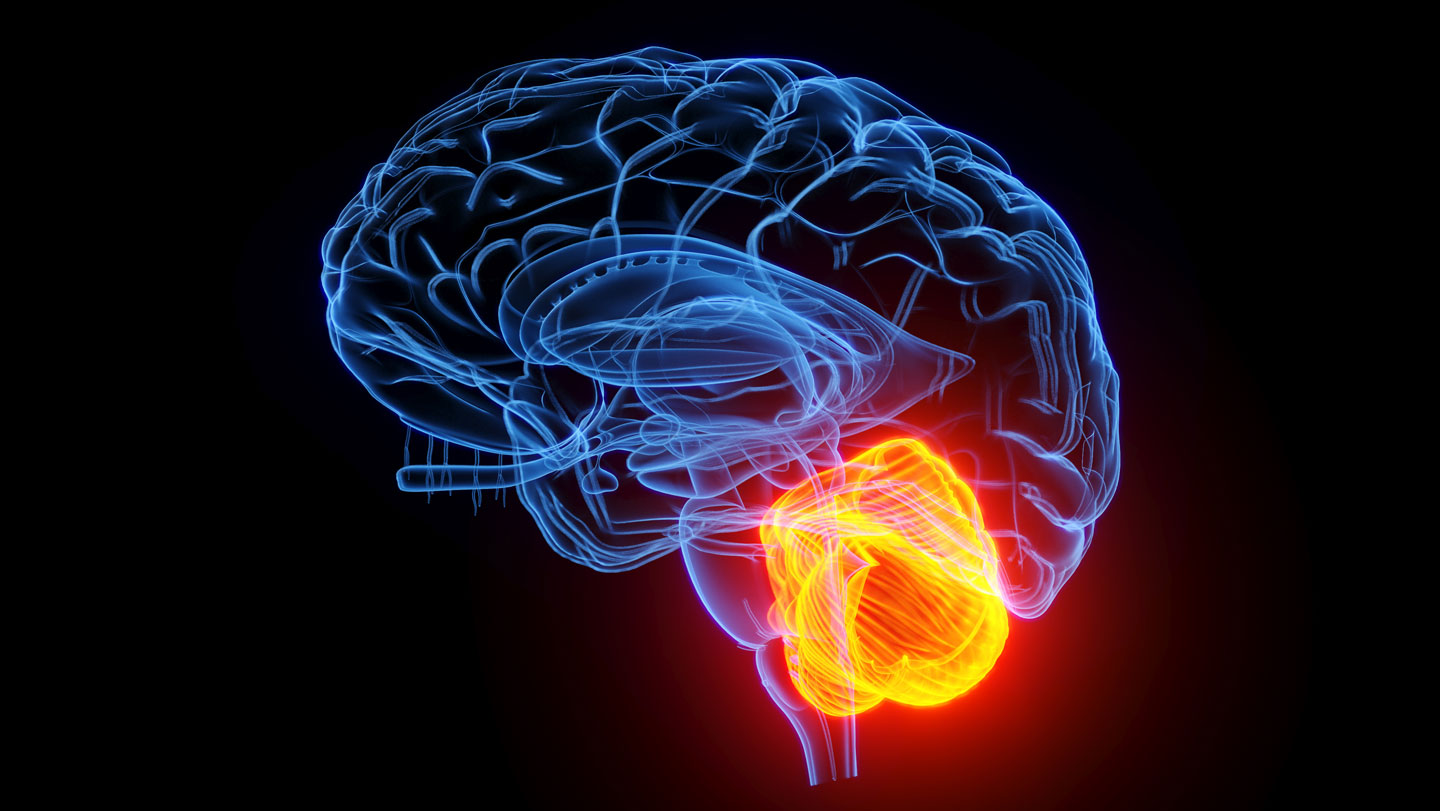
For generations, the cerebellum—a wrinkled, fist-sized structure tucked quietly at the very base of our skull—was treated by science as a sort of biological administrative assistant. Known historically as the “little brain,” it was long believed to restrict its duties strictly to the physical realm, quietly coordinating our balance, smoothing out our gait, and ensuring we did not trip over our own feet. Yet, as we grow older and face the deeply human anxiety of losing our mental agility, a quiet revolution in neuroscience is rewriting the story of this overlooked brain region. A groundbreaking study published in Nature Neuroscience suggests that the cerebellum may actually be one of our most vital allies in the fight to stay sharp, creative, and cognitively resilient during our twilight years. By examining the structural integrity of this ancient brain structure, researchers are discovering that certain regions at the back of the cerebellum possess an uncanny ability to resist the typical shrinkage associated with aging, acting as a structural shield that helps preserve our memories, language skills, and spatial reasoning.
This exciting shift in perspective is the result of rigorous work led by Princeton University neuroscientist Frederick d’Oleire Uquillas and his colleagues, who sought to understand why some minds remain remarkably vibrant while others fade. Historically, brain aging research has focused almost exclusively on the cerebrum—the massive, outer portion of the brain responsible for high-level thinking. By turning their attention downward to the cerebellum, Uquillas’s team recognized a fascinating phenomenon: this “little brain” does not age uniformly. Instead, its decay is highly localized and asymmetric. The researchers discovered that while some areas of the cerebellum succumb to the passage of time, the regions located at the far rear of the structure show a stubborn, beautiful resistance to the natural processes of decay. The preservation of these specific tissues, the study reveals, is directly linked to superior cognitive performance in older adults, offering a fresh target for scientists looking to map the uncharted territories of healthy cognitive aging.
To confirm this theory, the research team embarked on an analytical journey across some of the most massive biomedical datasets in existence, beginning with the Human Connectome Project. By analyzing the brain scans and detailed cognitive test scores of more than 700 American adults, the scientists looked at essential everyday mental tasks including short-term memory retrieval, concentration, language processing, and the ability to mentally manipulate 3D shapes. Across the board, a powerful trend emerged: while the cerebellum generally shrank as participants advanced in years, those individuals who maintained larger, denser rear cerebellums scored significantly higher on cognitive evaluations. To ensure this was not a statistical fluke, the team expanded their search to the U.K. Biobank, evaluating more than 35,000 additional adults. This massive validation confirmed that a larger cerebellum correlates with richer neural wiring, denser gray matter, and stronger cellular connections, effectively explaining the physiological framework behind this mysterious protective buffer.
Perhaps the most poignant and hopeful dimension of this research is its profound implication for those standing on the precipice of cognitive decline and neurodegenerative diseases like Alzheimer’s. To test whether the cerebellum’s protective buffer could withstand the onslaught of severe pathology, the research team analyzed data from the Alzheimer’s Disease Neuroimaging Initiative, tracking approximately 1,350 adults across the United States and Canada. Among this group, nearly half had already accumulated high levels of amyloid plaques—the toxic protein clusters that gradually choke off communication between brain cells in Alzheimer’s patients. Astonishingly, the researchers discovered that during the early, fragile stages of the disease, patients who possessed a larger, more robust cerebellum consistently maintained higher cognitive scores despite the encroaching pathology. It appears that the cerebellum acts as a built-in backup generator; when the primary areas of the cerebrum begin to flicker and fail under the weight of disease, this resilient little structure steps in to temporarily shoulder the burden and keep the lights on.
Dr. Vonetta Dotson, a prominent neuropsychologist at Brigham and Women’s Hospital in Boston and a leading voice in cognitive health promotion, views these findings as a monumental leap forward for clinical science. While she was not directly involved in the study, Dotson emphasizes that understanding the cerebellum’s role in healthy aging and neurodegenerative disease opens up entirely new frontiers for medicine. For years, therapies and diagnostic tools have largely ignored the cerebellum, but this study suggests it should be actively targeted for therapeutic interventions. If we can understand how to stimulate, protect, or even physically strengthen the connections within the rear cerebellum through targeted cognitive exercises, physical therapies, or non-invasive medical treatments, we might find a way to proactively delay the onset of dementia and enhance the quality of life for millions of aging individuals worldwide.
Of course, as with any pioneering scientific endeavor, the researchers advise caution and emphasize that many details have yet to be uncovered. At this stage, the team cannot definitively state that a larger cerebellum directly causes better cognition, only that a powerful and undeniable relationship exists between the two. Furthermore, because the vast majority of the data studied came from highly educated, white participants, there is a critical need to expand this research to more diverse global populations to ensure these findings apply to all of humanity. Nevertheless, the concept of the cerebellum serving as a hidden “cognitive reserve” offers an incredibly comforting and optimistic outlook on the twilight of our lives. As Dr. Uquillas beautifully notes, the narrative of growing older does not have to be a tragic tale of inevitable decline. There is a quiet, resilient hope built into the very architecture of our biology, reminding us that even in the face of time, our bodies possess remarkable ways of fighting to keep us who we are.