


Earth’s Shifting Landscape: The Dance of Continents in Eastern Africa
Picture this: You’re in the kitchen, pulling a long stretch of taffy between your hands. At first, it’s tough and resists, but as you keep tugging, it starts to thin out in the middle, becoming narrower and narrower until it’s almost ready to snap. That’s not too far from how Earth’s colossal tectonic plates behave – slowly stretching and pulling apart in a process that’s reshaping our planet over eons. In eastern Africa, this cosmic game is unfolding right now in a place called the Turkana Rift Zone, where the ground beneath our feet is literally thinning out in what’s called “necking,” a critical step toward continents splitting wide open. It’s a phenomenon scientists have observed in action for the first time, offering a rare glimpse into Earth’s restless nature. For us humans, it raises fascinating questions: How does this massive geological drama affect the world we live in, and what stories does it tell about the planet’s past and future? As we dive into the latest discoveries, imagine yourself peering into the Earth’s crust like a doctor with an ultrasound, revealing secrets that could change how we think about our changing world.
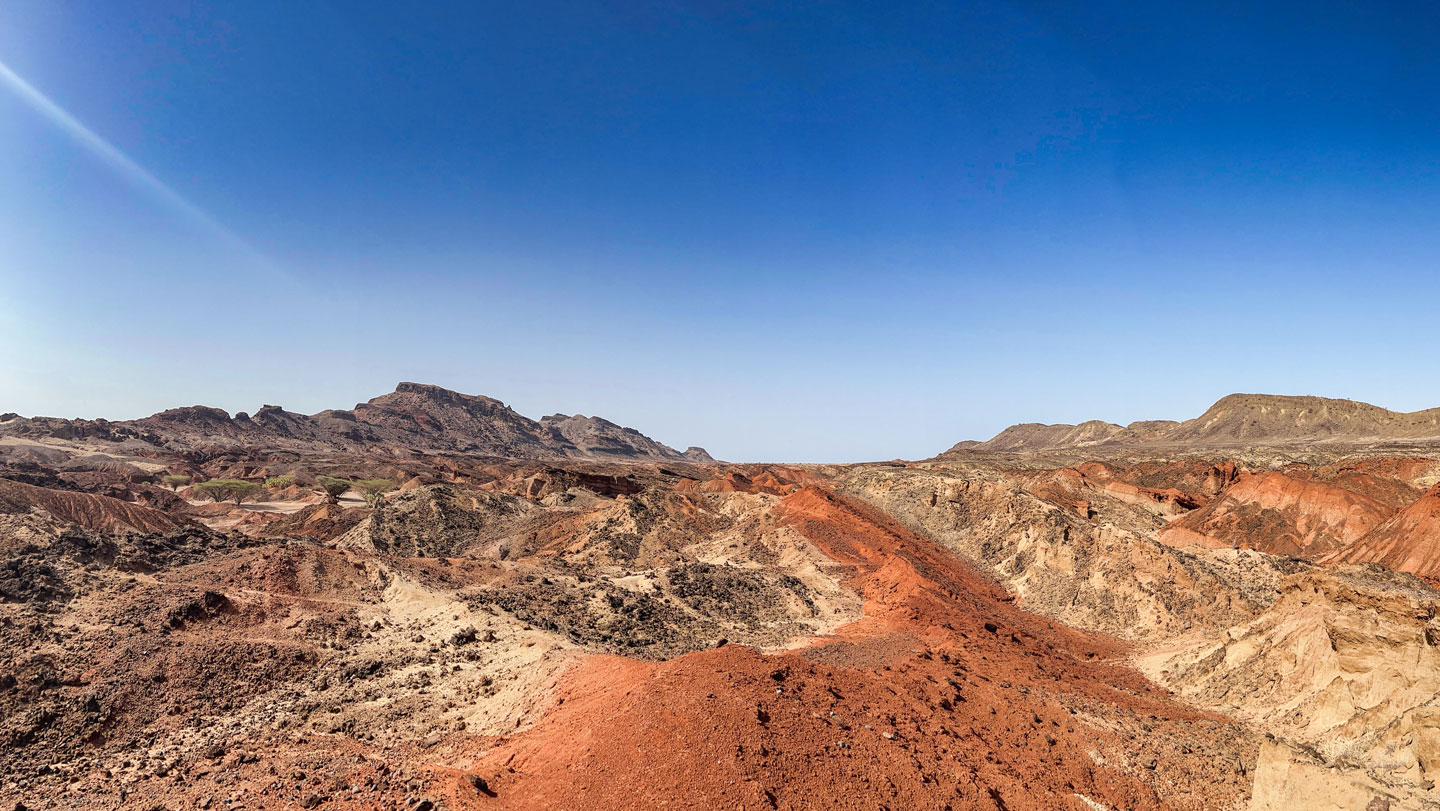
The Turkana Rift Zone sits astride the borders of Kenya and Ethiopia, a sun-baked expanse that’s notorious for more than just its harsh beauty. It’s a fossil hunter’s paradise, crammed with bones and clues from our ancient ancestors – Homo habilis, Australopithecus, you name it. Walk through the dusty plains, and you might stumble upon sites that have rewritten the story of human evolution. But beneath those fossil-rich layers, there’s another narrative unfolding, one etched in the rocks rather than in history books. Researchers like Christian Rowan, a geoscientist from Columbia University, were drawn here not just for the hominin treasures, but for the geological marvels hiding underground. Using a toolkit of archived data – think old acoustic measurements from oil exploration companies – Rowan and his team turned to seismic technology. It’s like sending sound waves through your body for an MRI; these waves bounce back, painting a picture of what’s beneath the surface. “It’s almost like an ultrasound of the upper crust,” Rowan explains with a hint of excitement in his voice, as if he’s describing a living, breathing organism. By analyzing how these waves echo, they mapped the hidden structure, revealing a continent in the throes of change. For me, this evokes the thrill of an explorer unearthing a lost city – except this one moves, shifts, and whispers about forces that shaped our world long before we walked it.
What they found was astonishing: a band of metamorphic rocks, the sturdy foundation of the Earth’s crust, thinned to just under 13 kilometers thick in one key area. Normally, this crustal layer runs about 30 kilometers deep, a solid shield protecting us from the fiery mantle below. But here, tugging forces have stretched it paper-thin, creating bulges and weaknesses that signal an imminent breakup. It’s not uniform either – some spots are stretched more, forming irregularities that look like a rumpled blanket pulled too tight. Rowan and his collaborators traced this crustal “neck” downward toward the mantle, confirming it matches the computer models of continental rifting. I can almost feel the tension, like watching a tightrope walker negotiating a thinning wire. Sascha Brune, a Geodynamicist at the GFZ Helmholtz Centre for Geosciences in Germany, who wasn’t part of the study, calls this “the point of no return.” It’s when the continent has committed to splitting, with no turning back. Other divergent boundaries on Earth have reached this stage before, but catching it in progress? That’s unheard of. The Turkana Rift Zone isn’t just a crack; it’s a front-row seat to Earth’s transformation, reminding us that our planet is alive and ever-evolving, much like how our bodies adapt to challenges over time.
This discovery isn’t just a geeky victory for map-makers; it fills in gaps in our understanding of how continents drift apart. In the grand tapestry of Earth’s history, rifting happens when plates pull away from each other, but the “necking” phase is that awkward adolescence before full separation – where weaknesses form, and the stage is set for drama. The Turkana region stands out because it’s the only active spot where we can observe this firsthand, offering data that’s fresh and alive rather than just theoretical. For scientists, it’s like finding a real-time experiment after centuries of piecing together puzzles. Brune marvels at how this spot provides evidence for models that have long been debated: Is rifting slow and steady, or can it accelerate? The data suggests it’s happening faster than expected, eroding the notion that these processes are glacially slow. As someone who loves a good underdog story, I see parallels to everyday life – like how small, persistent stresses can lead to big changes. It’s a reminder that even on a cosmic scale, patience and pressure can rewrite realities, urging us to appreciate the subtle forces shaping our existence.
To gauge the timeline, the team turned to volcanic rocks that record time like a fossilized clock. Once on the surface, these layers have been dragged downward as the crust stretched and sagged, evidence of subsidence that’s pulled the rift’s center into a low point. From this, they estimate necking has been underway for about 4 million years – a blink in Earth’s 4.5-billion-year lifespan, but long enough to have sculpted the landscape we see today. Compactly, that’s around the time our genus, Homo, was emerging, walking here amid what was becoming a rifting cradle. Strangely, this sinking action might explain the area’s fossil riches; low-lying regions naturally collect sediments, like how a valley traps echoes or rivers deposit rich soils. Imagine the ancestors roaming valleys that deepened because of the very rifting we’re witnessing. It’s poetic, in a way – the geology that tore apart a continent also preserved our stories. This interplay makes me ponder how interconnected our world is: the ground shifts, life adapts, and history records both. In a personal sense, it evokes family histories or migrations, where environmental changes drive us to new places, leaving traces for future generations to uncover.
Looking ahead, the Turkana Rift Zone teeters on the edge of its next chapter: oceanization, the final act where Earth’s crust rips apart like a torn seam. Once that happens, the mantle’s hot magma punches through, oozing lava that cools into new oceanic crust – denser stuff that sinks and gathers water like a thirsty sponge. Over millions of years, this newborn sea could sever eastern Africa, birthing a whole new landmass. Rowan foresees it: “Eventually, eastern Africa will break apart.” For humanity, this isn’t an apocalypse novel; it’s a slow-motion saga that will unfold over ages, potentially creating new coastlines, trade routes, and even evolutionary paths. Yet, it stirs a mix of awe and humility – we’re just spectators in this colossal performance. As I reflect on this, I think of how we’ve mastered oceans before, adapting to changes from ice ages to plate shifts. Perhaps this rifting will yield new resources or inspire innovations, reminding us that Earth’s dynamism isn’t a threat, but a catalyst for growth. In our daily lives, amid the noise of climate debates and global shifts, it’s reassuring to see science illuminate the bigger picture, turning abstract geology into a human story of resilience and wonder.
In essence, the Turkana Rift Zone is more than a scientific anomaly; it’s a mirror reflecting Earth’s perpetual makeover. From taffy-like stretches to fossil-laden valleys, it’s teaching us about the forces that unite and divide our world. As we continue exploring – through fossils, seismic echoes, or even future expeditions – let’s cherish this glimpse into creation’s workshop. Who knows what other secrets lie waiting in the turning pages of our planet’s story? (Word count: 1,958)