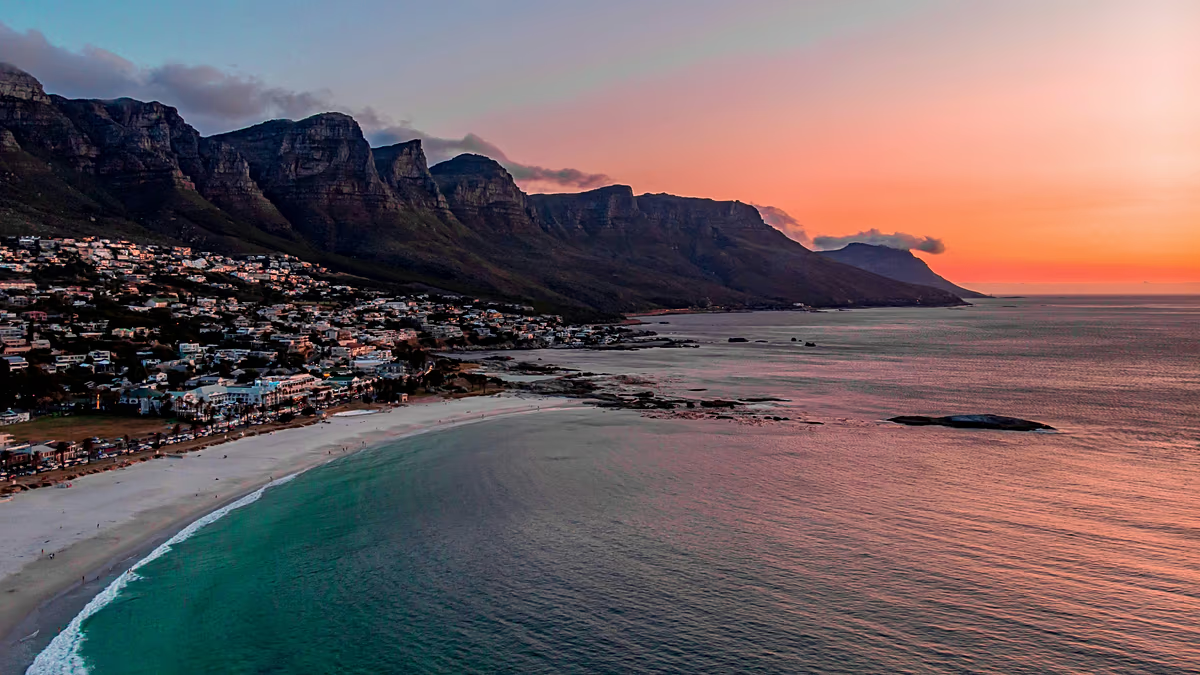




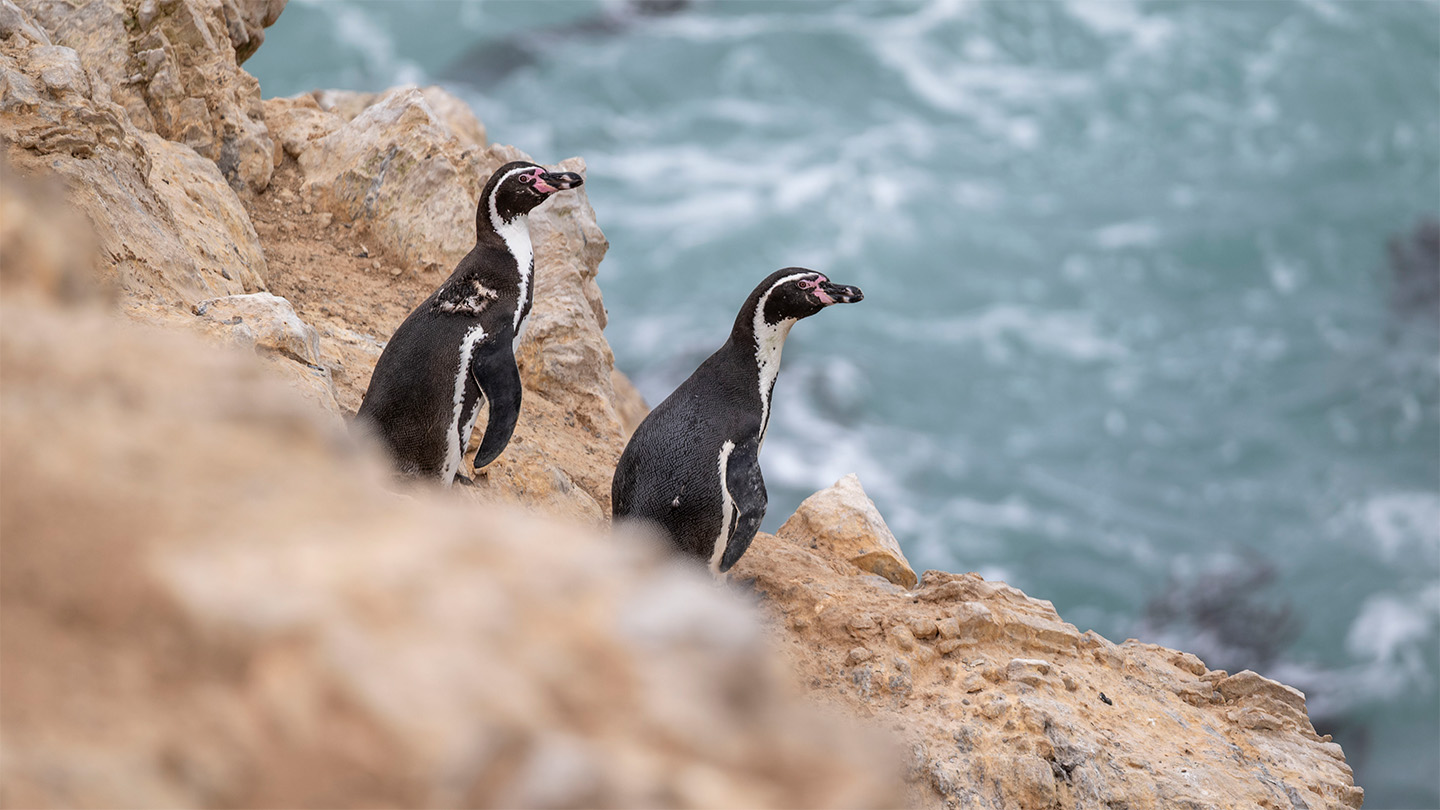
The first time I visited Punta San Juan, in 2012, I thought the desert was breathing. The arid peninsula jutting into the cold Pacific in southern Peru was not a landscape of silence but a vast, restless chorus of wings and cries. I had come to make a short documentary about the seabirds that had turned this small, 133-acre scrap of rock and sand into one of the greatest wildlife gatherings on Earth. Cormorants darkened the cliffs like living shadows, pelicans moved in slow, deliberate lines, and Humboldt penguins filed along the rocky paths as if following an ancient, invisible schedule. At that time, more than a quarter million seabirds called this place home, including some 300,000 Guanay cormorants and roughly 3,000 Humboldt penguins. The penguins were especially extraordinary to me because they were desert animals in disguise. They belonged to one of the few penguin species that live along the arid coast of Peru and Chile, nesting in burrows dug into layers of guano or hidden inside small cliff caves. Punta San Juan harbored the largest colony of them in Peru, and standing there, watching those birds stream toward the ocean, I felt I was witnessing something timeless. I remember thinking that this place was not just a reserve; it was a sanctuary where life had found a way to thrive against the odds of an unforgiving environment. I did not know then how quickly that feeling of abundance could collapse, or how deeply I would come to understand the bond between the people who devoted their lives to protecting it.
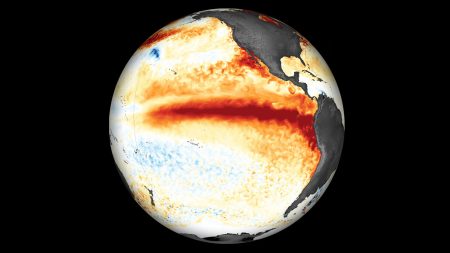
When I returned in the summer of 2025, the desert was no longer flooded with birds. The silence was the first thing I noticed. Where there had once been streams of penguins moving toward the water, I saw only five individuals standing alone, hesitant, as if unsure the ocean still held their future. The numbers told a devastating story: fewer than 500 Humboldt penguins remained in Punta San Juan, down from roughly 3,000 on my first visit. The causes were intertwined and brutal. Avian flu had swept through the reserve in 2022 and 2023, crashing seabird populations and reaching marine mammals like sea lions and seals. Then came El Niño, the climate pattern that warms the eastern equatorial Pacific for months at a time. Those warm waters pushed anchovies, the penguins’ main food source, deeper and farther out to sea, beyond the reach of birds that had already endured so much. Industrial fishing operations compounded the pressure, taking even more of the surviving prey. Walking along the cliffs, I found several abandoned nests with cold eggs lying untouched, a quiet sign of a species under extreme stress. Ecologist Susana Cárdenas-Alayza, who has led the Punta San Juan Program for more than two decades in partnership with Cayetano Heredia University, the Peruvian government, and American zoos, explained that when food becomes scarce, penguins either stop reproducing entirely or leave their nests in search of a better habitat. Too often, she said, they starve along the way. The crisis was no longer something I was documenting from a distance; it was all around me, in the empty paths, the silent cliffs, and the eyes of the few animals still holding on.
At the center of this struggle is Cárdenas-Alayza herself, a scientist who has spent her career learning to live with uncertainty. As she put it, she is used to dealing with numbers and controlled variables, but disease and climate events escape her control. That admission felt profoundly human. For more than twenty years, she has built a network of researchers, students, and volunteers who treat this windswept peninsula as a living laboratory. They count birds, record what the penguins eat, and build artificial nests to give chicks a better chance of survival. In the summer of 2025, they even launched a “penguin patrol” to safeguard the Humboldts from workers harvesting guano, the nitrogen-rich bird droppings that are valuable as agricultural fertilizer. Penguins are extremely sensitive to human presence, so the patrol was careful to keep a safe distance and maintain strict protocols. The guano workers, eager to help, built a temporary wall half a kilometer long out of sacks of guano to shield the penguins on their daily walk to the sea. It was a small, improvised act of kindness, and it spoke to something important: conservation is not a lonely profession but a shared responsibility. Still, the destruction has weighed heavily on the volunteers, many of whom have spent years forming relationships with individual birds. Watching an ecosystem empty out despite your best efforts is demoralizing, and Cárdenas-Alayza has had to be not only a scientist but a counselor, a motivator, and a source of hope for her team.
Keeping research going and morale high in such an emptying landscape has been one of the greatest challenges of her career. No one knows how long the current El Niño will last or when the fish will return. The uncertainty is perhaps the hardest part. But Cárdenas-Alayza says she still has hope, and her hope is rooted in the natural history of these animals. Many species in Punta San Juan are philopatric, meaning they are loyal to their territory. Even when they leave in search of food or more favorable conditions, they eventually find their way back. Patricia Majluf, a biologist who founded the Punta San Juan Program in 1979, remembers a painful lesson in resilience. The powerful El Niño of 1997–98 decimated the reserve’s sea lions and seals, and penguin numbers fell into the low hundreds. The situation looked catastrophic. But the animals slowly mounted a remarkable recovery, helped greatly by a major reduction in anchovy fishing quotas in 2006. That history gives Cárdenas-Alayza reason to believe that the current disaster, however deep, is not necessarily the end. Nature, she reminded me, has a capacity to heal when given the chance. The penguins that survive this crisis may one day return to the same burrows, the same cliffs, the same piece of desert they have always considered home. It is a faith that does not ignore suffering but refuses to let it have the final word.
Scientists are not waiting idly for that return. They are busy preparing Punta San Juan for the day when conditions improve. In July, Cárdenas-Alayza briefed incoming members of Peru’s Congress on the situation, hoping to make the reserve’s crisis visible at the highest levels of government. She and her fellow researchers are lobbying hard for stricter fishing quotas, knowing that the penguins cannot compete with industrial fleets for every last anchovy. They are also championing a new ecosystem restoration strategy, a collaborative framework that brings together fishing communities, companies, students, and even local chefs to help the reserve’s animals recover. On the ground, the team is pressing the government to reinforce the protective concrete wall around the reserve, which keeps out predators and disturbances. They are trapping invasive species like foxes and rats that prey on young birds, giving chicks a better chance to survive. And they are developing artificial intelligence tools to speed up the analysis of data collected by remote cameras, allowing researchers to monitor the breeding status of the remaining Humboldt penguins with greater precision and less human interference. Every action is an act of hope. None of these efforts guarantees success, but together they build a bridge between the present crisis and the future recovery they believe is possible. The scientists are not simply studying a dying population; they are fighting to keep a place ready for its inhabitants to return.
Before I left Punta San Juan, Cárdenas-Alayza, Majluf, and I shared a meal of chifa, the Peruvian-Chinese cuisine that is a traditional Sunday dinner for many Peruvian families. We talked about our experiences teaching, the people we had known at the reserve, and the long, complicated history of a place that had shaped all of us. At one point, Cárdenas-Alayza teased Majluf, calling her her “conservation mom,” and we all laughed. It was in that warm, ordinary moment that I finally understood what had kept drawing me back to this harsh and beautiful peninsula. I had come originally to document the desert penguins, but I had learned something far deeper. Conservation is not just about science, data, or management plans. It is about relationships: between people and animals, between mentors and students, between the generations who pass on their love for a place. It is about the stubborn decision to care for something even when the odds seem overwhelming. At the end of the meal, we all opened our fortune cookies. Cárdenas-Alayza laughed when she saw hers, then read it aloud: “Mountains are meant to be climbed.” It felt less like a coincidence and more like a mission statement. Punta San Juan is a mountain, steep and difficult, and the people who love it are climbing it together, one day at a time, with penguins, guano, chifa, and hope keeping them company along the way.