


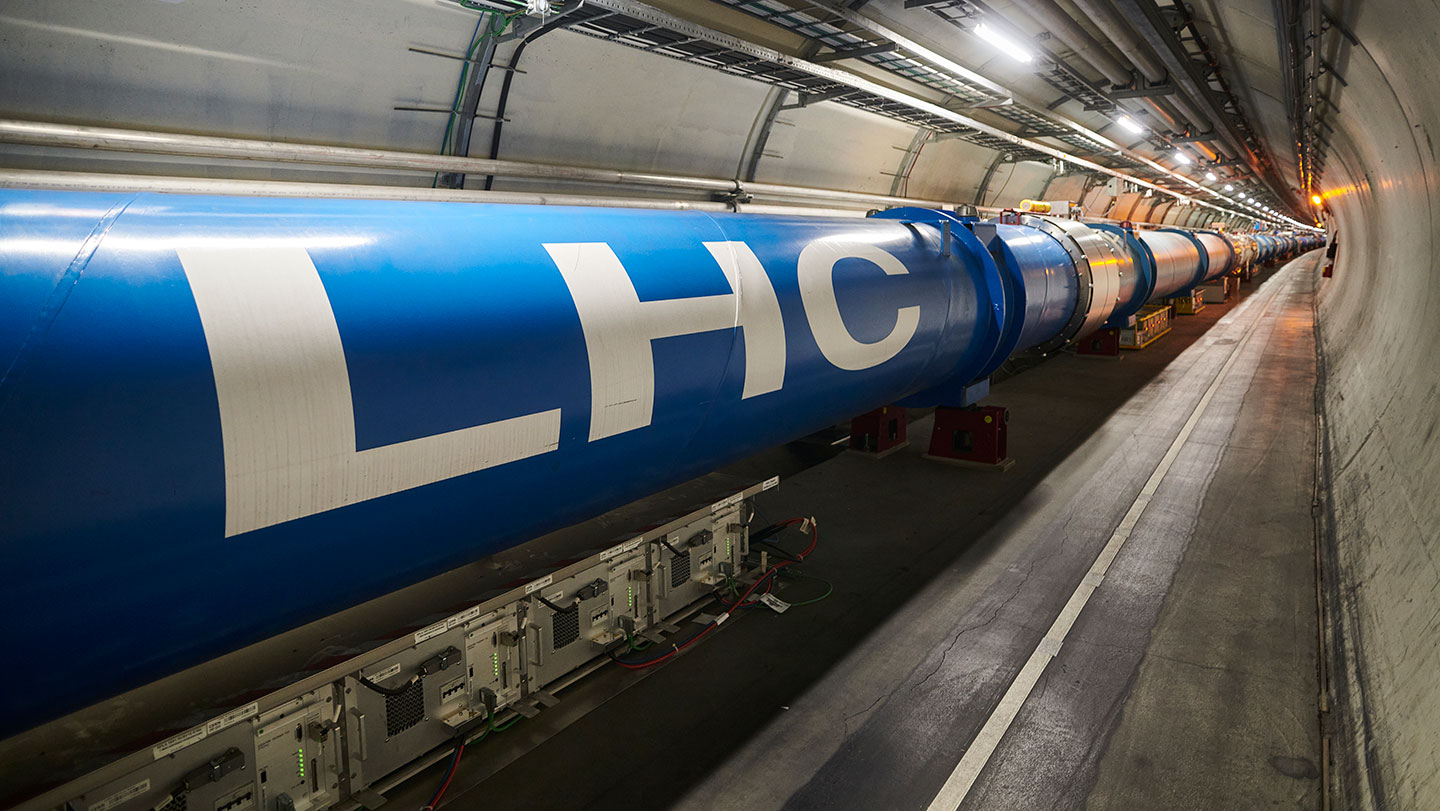
For as long as humans have looked up at the night sky, we have been driven by an insatiable, almost spiritual desire to understand our place in the cosmos. We began by tracing constellations with our fingers, progressed to building massive telescopes to peer into the deep past of distant galaxies, and eventually realized that to truly comprehend the infinite canvas of the universe, we had to look in the opposite direction—down into the unimaginably small subatomic realm. Located deep beneath the quiet French and Swiss countryside, CERN’s Large Hadron Collider (LHC) has served as humanity’s ultimate looking glass, a 27-kilometer ring of superconducting magnets designed to recreate the raw, energetic conditions of the infant universe. Now, as the current machine reaches the limits of its original design, a monumental transformation is underway to prepare for the year 2030: the arrival of the High-Luminosity Large Hadron Collider (HL-LHC). This major upgrade is not just a triumph of engineering; it represents a generational leap forward in our quest to unravel the fundamental laws of nature. By packing more raw power and precision into this subterranean ring than ever before, scientists are preparing to peer through a freshly polished lens at the quantum forces that govern our existence, seeking answers to the deepest, most persistent puzzles of reality.
To appreciate what makes the 2030 upgrade so revolutionary, one must understand the concept of “luminosity,” a term that sounds poetic but carries a deeply practical meaning for particle physicists. In the subatomic world, discovering a new particle or observing an incredibly rare cosmic process is not simply a matter of looking closely; it is a game of statistics, clean data, and immense patience. When beams of protons are accelerated to nearly the speed of light and smashed together inside the LHC, only a tiny fraction of those collisions yield the rare, high-energy phenomena that physicists are searching for. Luminosity is essentially a measure of how many potential collisions can occur in a given area over a specific timeframe; the higher the luminosity, the more data points scientists can collect. By dramatically squeezing and focusing these proton beams into incredibly dense packets before they collide, the High-Luminosity upgrade will increase the rate of collisions by a factor of five to ten compared to the original design. This means that in just a single decade of operation, the HL-LHC will produce up to ten times more data than the original collider generated during its entire prior lifetime. For the global scientific community, this massive data deluge will turn once-in-a-career, needle-in-a-haystack anomalies into clearly visible, mathematically undeniable scientific discoveries, transforming our blurred, speculative sketches of the quantum world into high-definition masterpieces.
At the very heart of this high-luminosity revolution is a mysterious, ghost-like entity that changed physics forever in 2012: the Higgs boson. Often referred to in popular culture as the “God Particle,” the Higgs boson is the physical manifestation of an invisible field that permeates the entire universe, acting as a sort of cosmic molasses that gives mass to elementary particles. While its initial discovery was celebrated as the final missing piece of the Standard Model of physics, it was actually just the opening chapter of a much larger, more complex story. Currently, our understanding of the Higgs boson is akin to catching a fleeting glimpse of a rare creature in the wild; we know it exists, but we do not fully understand its behavior, its internal structure, or how it interacts with itself. The HL-LHC will function as an unprecedented “Higgs factory,” producing an estimated 15 million Higgs bosons every single year, allowing physicists to study this unique particle with a level of precision that was previously thought to be impossible. By observing how the Higgs decays into other particles and measuring its self-interaction, scientists hope to determine whether the Higgs is truly an elementary particle or a composite entity made of even smaller, undiscovered parts. Furthermore, these precise measurements could reveal whether the Higgs field is perfectly stable, or if it harbors a hidden instability that could, in the unimaginably distant future, trigger a cosmic phase transition that rewrites the laws of physics across the entire universe.
Beyond the Higgs boson lies an even darker, more profound mystery that has baffled astronomers and physicists for nearly a century: the composition of the universe itself. When we look out at the magnificent tapestry of stars, planets, and gas clouds that populate our night skies, we are looking at ordinary baryonic matter—the protons, neutrons, and electrons that make up everything we can see, touch, and measure. However, astronomical observations of rotating galaxies and gravitational lensing have revealed a humbling truth: this familiar, visible matter accounts for a mere five percent of the total mass and energy in the universe. The remaining ninety-five percent is split between dark energy and dark matter, invisible entities that hold galaxies together and drive the expansion of space, yet completely escape our standard methods of detection. The HL-LHC represents our best hope of bridging this vast gap in our cosmic ledger by attempting to produce dark matter particles directly in the laboratory. Because dark matter does not interact with electromagnetic forces—meaning it does not emit, absorb, or reflect light—it cannot be seen directly by the collider’s giant detectors. Instead, physicists will search for its unmistakable signature: an apparent imbalance of energy and momentum after a high-energy collision, a telltale sign that an invisible, heavy particle has escaped into the wilderness of the laboratory, carrying a piece of the collision’s energy with it.
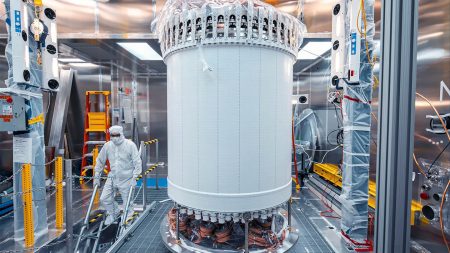
Achieving this level of scientific precision requires an engineering effort of historic proportions, transforming CERN’s underground complex into one of the most technologically advanced workspaces ever constructed by human hands. To pack more protons into the colliding beams, engineers are installing revolutionary superconducting “crab cavities” that will rotate the bunches of protons just before they meet, ensuring they collide head-on rather than crossing at a slight, less effective angle. Alongside these cavities, brand-new, powerful focusing magnets made of a cutting-edge niobium-tin superconductor are being deployed, capable of generating incredibly intense magnetic fields while cooled to temperatures colder than deep space. Additionally, because the sheer volume of collisions will produce an unprecedented, chaotic storm of subatomic debris, the experiment detectors—such as ATLAS and CMS—are undergoing massive overhauls. These colossal instruments, some of which are as large as multi-story buildings, are being fitted with ultra-fast, radiation-hard silicon sensors and state-of-the-art artificial intelligence algorithms designed to sort through petabytes of raw data in real-time, instantly separating meaningless background noise from the prized signatures of new physics. This monumental physical overhaul is a testament to what humanity can achieve when thousands of scientists, engineers, and technicians from hundreds of nations cast aside their geopolitical differences to pool their intellect and resourcefulness for a singular, peaceful purpose.
Ultimately, the High-Luminosity LHC is more than just a grand machine of steel, liquid helium, and silicon; it is a sacred promise made by one generation of dreamers to the next. The planning, design, and construction of this upgrade have spanned decades, meaning that many of the veteran senior physicists who originally conceptualized the HL-LHC will have retired by the time it reaches its peak operational phase in the 2030s and 2040s. The true inheritors of this colossal scientific instrument are the young students, researchers, and engineers who are currently in classrooms and university labs around the globe. They will be the ones sitting in the control rooms deep into the night, looking at glowing computer screens, analyzing the torrents of data, and making the discoveries that will fill the textbooks of the future. Whether the HL-LHC succeeds in finding supersymmetry, unmasking dark matter, discovering extra dimensions of space, or even if it reveals something completely unexpected that turns our current theories upside down, its true value lies in this relentless pursuit of truth. By daring to build such a magnificent machine, humanity asserts that some questions are worth answering, that curiosity is our greatest virtue, and that the light of human reason will always strive to illuminate the deepest, darkest corners of the cosmos.