



For most of us, our daily encounters with the insect world are fleeting, often marked by a minor annoyance when a mosquito buzzes past our ear or a momentary flash of wonder when a butterfly flutters through a garden. Yet, beneath our feet, high in the forest canopies, and deep within the soils of our planet lies a sprawling, hidden civilization that outperforms all other terrestrial life combined. A groundbreaking scientific estimate published in the Proceedings of the National Academy of Sciences has revealed that this miniature world is far more expansive and crowded than we ever dared to imagine. According to the research, there are likely between 14 million and 20 million distinct species of insects teeming across the globe. This astonishing figure is double, if not triple, previous scientific consensus estimates, which generally placed the global insect count at a much more modest six million species. To put this monumental calculation into perspective, humanity has managed to officially identify, name, and study only about one million insect species since the birth of modern taxonomy. This means that for every bug we have cataloged and given a Latin name, there are potentially nineteen others living in complete anonymity, quietly keeping our ecosystems alive without ever receiving our recognition.
This revelation arrives at a bittersweet moment in human history, as scientists warn we are living through a quiet catastrophe known as the “Insect Apocalypse.” Across every continent, insect populations are quietly plummeting at an alarming rate, driven to the brink by a relentless barrage of human-induced threats. Modern agricultural pesticides, rapidly shifting temperature zones caused by climate change, the clearing of ancient forests for urban sprawl, and even the pervasive glow of artificial light pollution at night are disrupting the fragile biological rhythms of these small creatures. Because insects form the foundational base of global food webs, pollinating our crops and decomposing organic waste, their decline threatens the structural integrity of life on Earth. The primary value of this new estimate is that it offers researchers a vital baseline—a target to shoot for in the race against time. Knowing how many species actually exist allows us to grasp the true magnitude of what we stand to lose. As Cornell University entomologist and biodiversity scientist Laura Melissa Guzman thoughtfully explains, this work serves as an essential compass for conservation, reminding us that we must dramatically accelerate our studies of these creatures before their silent disappearance leaves our world permanently diminished.
To reach such a staggering global estimate, scientists could not simply rely on guesswork; instead, they had to dive deep into one of the most biodiverse places on the planet. The research team focused their efforts on Costa Rica’s breathtaking Área de Conservación Guanacaste, a sprawling World Heritage Site that serves as a living laboratory. This protected wilderness is a marvelous tapestry of ecological diversity, containing dry tropical forests, misty mountain cloud forests, and lush rainforests that stretch from the Pacific shoreline up to rugged mountain peaks. For over forty years, passionate local conservationists and international researchers have monitored this area, using tent-like mesh traps to intercept flying insects. Over the decades, millions of bugs have been collected and preserved in jars of ethanol, creating a physical archive of the forest’s invisible diversity. For this specific study, Guzman and her colleagues undertook the monumental task of analyzing the genetic material of more than 1.6 million individual insects belonging to roughly 54,000 distinct species, leveraging modern DNA barcoding technology to uncover the hidden relationships and identities of Costa Rica’s tiny inhabitants.
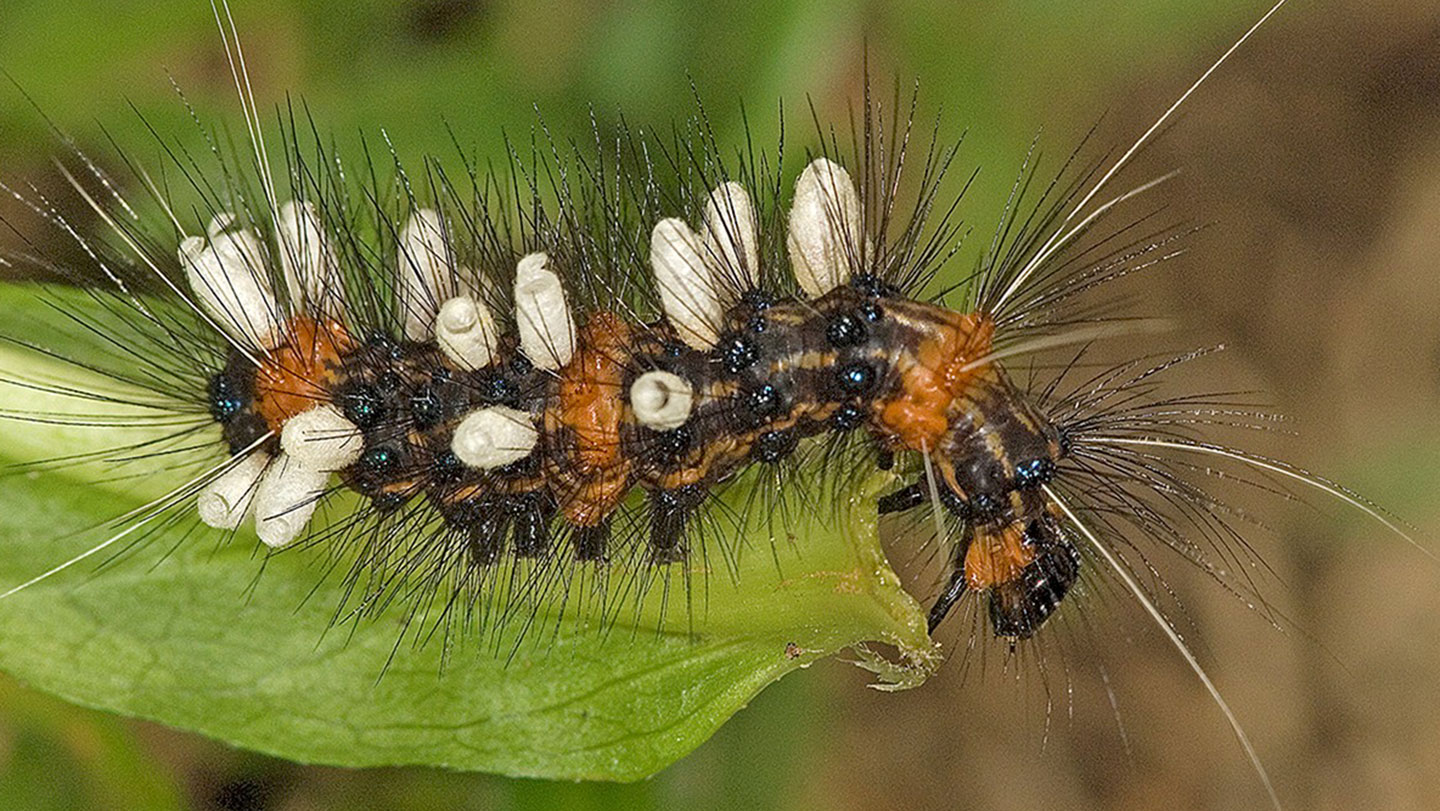
Rather than trying to count every single beetle, ant, and fly across the entire nature reserve, the researchers decided to focus their analytical lens on a highly specialized group of unsung ecological heroes: the parasitoid wasps. While charismatic insects like colorful beetles and majestic butterflies receive the lion’s share of public attention and funding, parasitoid wasps remain massively underappreciated and understudied despite their incredible evolutionary success. These fascinating, miniature wasps are biological masters of precision; they lay their eggs inside or on other host insects, and their larvae eventually consume the host as they develop. Although this lifestyle might sound like something out of a horror film, parasitoid wasps are the ultimate guardians of balance in nature, naturally regulating the populations of other insects and keeping agricultural pests in check. By analyzing more than 11,000 specimens of these wasps representing 388 unique species, the researchers were able to get a highly detailed snapshot of how diversity behaves within a single insect family, laying the foundation for a much larger mathematical breakthrough.
Using this closely examined wasp census as a representative sample, the research team applied sophisticated statistical modeling to estimate how many species had likely slipped past their physical traps. No matter how large a scientific sample is, there will always be rare, elusive species that avoid capture; by calculating the mathematical probability of these missing creatures, the team determined that the Área de Conservación Guanacaste alone likely harbors around 2,400 species of parasitoid wasps and more than 300,000 total insect species. Armed with this incredibly detailed local dataset, the researchers carefully upscaled their mathematical models to project species richness on a global scale. This mathematical leap revealed that our previous assumptions about global biodiversity were incredibly conservative, showing that the true number of insect species hiding in the world’s remaining wild places sits somewhere near the 20 million mark. This suggests that the vast majority of our fellow earthlings have lived completely outside the boundaries of human knowledge, populating deep jungles and remote valleys as an undiscovered majority.
Ultimately, this profound scientific endeavor is a lesson in intellectual humility, reminding humanity of how little we truly understand about the very planet we call home. We live in an era of technological triumph where we can peer at galaxies billions of light-years away, yet we remain remarkably ignorant of the crawling, buzzing marvels that inhabit the grass beneath our boots. As Dr. Guzman beautifully reflects, it is deeply humbling to realize just how much we do not know, and how much work remains to be done before these unseen creatures are lost to history. This study is not just an academic exercise in counting bugs; it is an urgent, poetic call to action for global conservation. Each of these millions of unnamed species represents a unique evolutionary story, a distinct toolkit of genetic survival, and a potential key to keeping our struggling biosphere balanced. If we wish to protect the rich tapestry of life on Earth, we must find the collective will to preserve the wild, quiet corners of our world, ensuring that our undiscovered neighbors are given the chance to finally be found, named, and protected.