





# A Telescope’s Final Journey: The Failed Rescue of NASA’s Swift Observatory
## The Beginning of the End
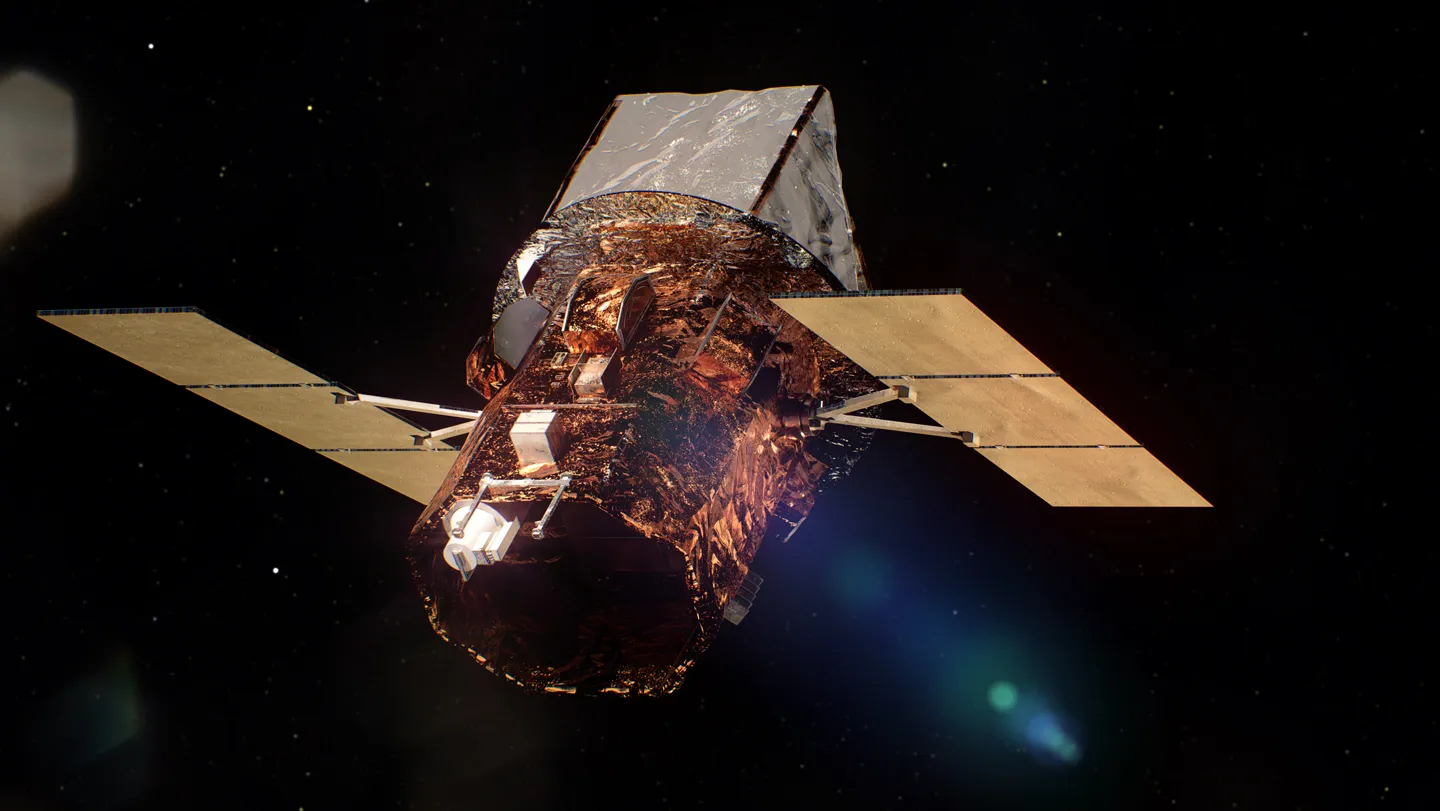
High above Earth, approximately 340 kilometers up, a remarkable piece of human ingenuity is slowly dying. NASA’s Neil Gehrels Swift Observatory, a space telescope that has spent over two decades peering into the deepest corners of the universe, is falling. The relentless pull of gravity, combined with the thin wisps of atmosphere that exist even at that altitude, has been gradually dragging the spacecraft down. Recent solar activity has only accelerated this process, making the situation more dire than mission planners anticipated. Every spacecraft eventually meets its end, and for most, that means a spectacular plunge through the atmosphere, burning up in a fiery display of light and heat. Swift was always destined for this fate, but NASA wasn’t ready to let go without a fight. Last year, the agency enlisted the help of a private company called Katalyst Space, tasking them with building a spacecraft that could grab hold of the aging telescope and push it back to a safer altitude, giving it more time to continue its vital scientific work.
## A Mission of Hope and Ambition
The concept was bold and unprecedented. Katalyst designed a refrigerator-sized spacecraft named LINK, giving themselves just nine months to develop, test, and launch the rescue vehicle. The timeline was brutally tight, and engineers worked at breakneck speed, knowing that every day counted. When the spacecraft finally launched last month, there was cautious optimism in mission control. The plan seemed straightforward enough: LINK would approach Swift, match its orbit, and essentially give the telescope a boost, raising it to an altitude where it could continue operating for years to come. This mission represented more than just saving one telescope; it was a demonstration of a capability that the space industry had dreamed about for decades. The ability to service satellites in orbit, to repair and refuel and reposition the expensive machines that humanity depends on for communication, navigation, weather forecasting, and scientific discovery, has long been viewed as a holy grail of space technology. Hubble, the most famous space telescope of all time, could someday benefit from such a mission. The technology being tested here had implications far beyond Swift’s survival.
## The Promise of a Scientific Workhorse
But this mission was about more than just testing new technology. Swift itself is a scientific treasure that has fundamentally changed our understanding of the universe. Launched in 2004, the telescope was designed to detect gamma-ray bursts, some of the most violent and energetic explosions in the cosmos. These bursts are flashes of radiation that originate from outside our galaxy and last only seconds, yet they carry information about the most extreme events in the universe. What makes Swift unique is its agility. Unlike other space telescopes that must be carefully aimed and can take days or weeks to reposition, Swift can swivel toward a detected burst within minutes, capturing the afterglow that follows the initial flash. This rapid response capability has allowed scientists to pinpoint the sources of these cosmic explosions with unprecedented precision. Most long-duration gamma-ray bursts, researchers believe, are caused by the deaths of massive stars, titanic explosions that occur when these stellar giants exhaust their fuel and collapse. These events are so powerful that they can briefly outshine entire galaxies, and they allow scientists to study the conditions in distant galaxies that they could never otherwise observe.
## A Window into Distant Galaxies
Astrophysicist Huei Sears from Rutgers University explains the importance of these observations with a simple but profound observation: massive stars don’t live very long, and their deaths provide a unique window into the universe’s most extreme environments. When a gamma-ray burst is detected, scientists are essentially being given a brief teleportation to another galaxy, a chance to glimpse what conditions are like in places that would otherwise be completely inaccessible. The explosions allow researchers to study everything from the physics of extreme energy to the formation of heavy elements in the universe’s most violent crucibles. Each burst is like a cosmic beacon, illuminating the environment around it and revealing secrets about star formation, galactic evolution, and the fundamental nature of space and time. The loss of Swift would mean the loss of humanity’s best tool for studying these events, a capability that cannot be easily replaced. Even as the rescue mission was being planned, scientists were acutely aware of what was at stake.
## The Dream of Orbital Repair
The broader field of satellite servicing has been gaining momentum in recent years. Government agencies and commercial companies around the world have been developing the technologies needed to work on spacecraft in orbit. Tech billionaires have also taken notice, recognizing both the scientific and commercial potential of these capabilities. Before he became NASA’s administrator, Jared Isaacman even offered to mount a SpaceX mission to boost Hubble’s orbit, seeing the value in extending the life of humanity’s most famous telescope. The technology is finally maturing, says David Barnhart, an astronautical engineer at the University of Southern California. Advances in rendezvous sensors, which allow spacecraft to find and approach each other in the vast emptiness of orbit, propulsion systems that can make the precise adjustments needed for delicate maneuvers, and the robotic arms that are the all-important element for actually grabbing and manipulating satellites, have all reached the point where servicing missions are becoming practical. In July, the U.S. government dispatched a spacecraft that had been in development for years, a vehicle that will eventually be able to inspect satellites, relocate them, and even attach life-extending propulsion units to keep them operational longer.
## The Promise and Peril of New Capabilities
The potential applications of these technologies are almost limitless. Probes could someday refuel spacecraft that would otherwise become space debris, dragging defunct satellites down to burn up harmlessly in the atmosphere or pushing them into graveyard orbits where they won’t pose a hazard. They might even be able to preserve historically significant objects, raising decommissioned spacecraft into long-lasting orbits where they could be preserved almost like museum pieces, testament to humanity’s first steps into the cosmos. Barnhart is particularly excited about the possibility of salvaging parts from dead satellites, snipping off solar panels and attaching them to new spacecraft, essentially recycling hardware in orbit rather than manufacturing everything from scratch on Earth. But he’s also realistic about the challenges. The first missions, he cautions, may not succeed. Space is an unforgiving environment, and even the most carefully planned missions can fail due to any number of unexpected complications. The difficulty of the work cannot be overstated, and those who attempt it must be prepared for the possibility of failure.
## When the Rescue Mission Fails
The Katalyst mission to save Swift proved to be a perfect illustration of these challenges. LINK’s troubles began almost immediately after launch, just weeks into its mission, when the spacecraft’s maneuvering gear malfunctioned. This equipment is essential for a rendezvous mission, allowing the spacecraft to make the precise adjustments needed to approach and match velocity with its target. The Katalyst team worked frantically to stabilize the spacecraft, which had begun to rotate out of control, using its main propulsion engines as a substitute for the failed maneuvering system. They managed to regain some control over the spacecraft, but the workaround came at a terrible cost. The improvised stabilization maneuvers consumed precious fuel, and by the time the situation was brought under control, both the maneuvering system and the main engines were running dangerously low on propellant. The engineering team calculated the remaining fuel budget and reached a devastating conclusion: there simply wasn’t enough left to complete the rendezvous and boost Swift to a higher orbit. On August 19, with heavy hearts, NASA and Katalyst officially called off the rescue attempt.
## A Double Loss
Now there is no rescue mission for the rescue mission. Katalyst does plan to conduct various rendezvous and proximity operations, bringing LINK close enough to Swift to test its systems and gather valuable data, but the spacecraft that was meant to save the telescope will itself be destroyed. Esthe Jeohn, Katalyst’s marketing director, says the company will attempt to shorten the distance between LINK and Swift to just a few kilometers in the coming weeks, allowing them to validate their technology even in the face of the failed rescue. But the spacecraft must eventually reenter Earth’s atmosphere within five years, burning up just as Swift will. The failure has been a bitter disappointment for everyone involved. Brad Cenko, the NASA astrophysicist who serves as principal investigator on the Swift mission, has been monitoring the telescope’s descent with growing concern. In the last month alone, Swift dropped about 10 kilometers, and the pace of the descent is likely to accelerate as the atmosphere thickens at lower altitudes.
## The Final Countdown
The point of no return, the altitude below which mission managers can no longer control the observatory’s movements, is somewhere below 300 kilometers. Once Swift passes that threshold, its fate is sealed, and the team will simply be watching as the telescope makes its final descent. The latest projections suggest that Swift will plunge into the atmosphere in late November or December, a matter of months away. The team is currently discussing whether to resume scientific operations in the time that remains, a decision that carries significant risks. Activating the telescope’s instruments and performing the maneuvers needed to point them at targets would consume additional fuel and accelerate the descent. But it might also allow Swift to make one final contribution to science, capturing more data on the cosmic explosions that have been its life’s work. The choice is between preserving the telescope for a few more months and using its final days to continue its mission.
## A Cathedral in Space
Sears captures the emotional weight of the situation with an elegant metaphor, comparing Swift to a cathedral in space, something beautiful and fantastic that humanity has built and will soon lose. The loss is not just scientific but cultural, a reminder that even our most impressive achievements are temporary. Yet there is also something profound in the acceptance of this loss. Swift has already exceeded all expectations, providing more than two decades of groundbreaking observations and fundamentally transforming our understanding of the universe. Its legacy will endure long after the spacecraft itself has burned up in the atmosphere. The failed rescue mission, too, will have value, providing lessons that will inform future attempts at satellite servicing. Each failure brings new knowledge, and the technology that Katalyst has developed and tested, even in its failure, will contribute to the development of capabilities that will one day make orbital servicing routine. The dream of repairing and maintaining spacecraft in orbit has not died with this mission. It has merely been deferred, waiting for the next attempt, the next innovation, the next chance to prove that humanity can reach into the heavens and extend the lives of the machines we have sent there. Swift will not be saved, but its story is far from over.