




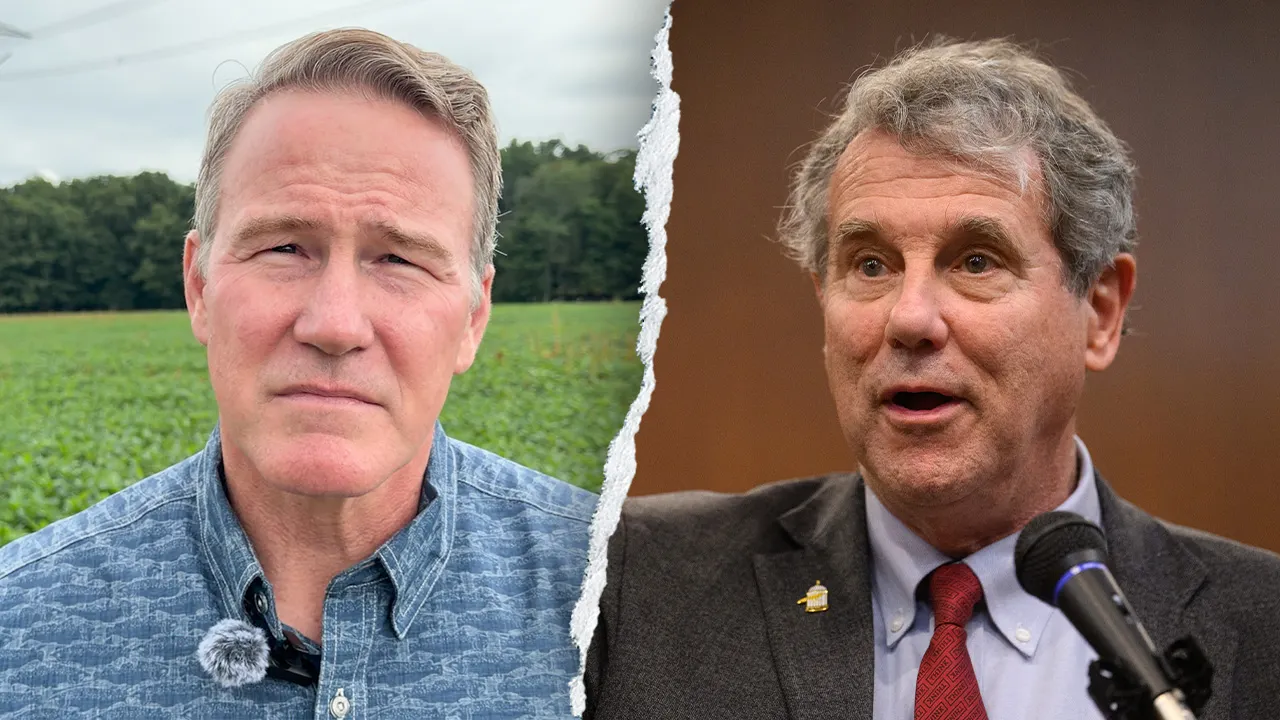
The warm, late summer air in Marysville, Ohio, was filled with the lively sounds of laughter, acoustic music, and the enticing aroma of local food vendors at the annual Summer Farm Fest, under the shade of towering oak trees. Yet beneath this classic scene of Midwestern community life lay the undeniable tension of one of the most consequential political battles in modern American history—a race that could very well decide which political party controls the United States Senate come November. Standing amidst the crowd of local farmers, working-class families, and civic leaders, with children eagerly lining up for tractor rides and neighbors chatting over picket fences, was incumbent Republican Senator Jon Husted, who took office in January 2025 following the departure of JD Vance to serve as the nation’s Vice President. Husted was there to make a passionate, direct case to his constituents, arguing that the fundamental reasons voters rejected his Democratic challenger, former Senator Sherrod Brown, just two years prior are even more urgent and relevant today. As children ran through the fairgrounds and tractors gleamed in the afternoon sun, the stark reality of the national political landscape was impossible to ignore. This election is not merely a localized disagreement over state policy; it is a high-stakes, nationalized referendum on the direction of the country, with Ohio serving as the ultimate proving ground. For Husted, the festival provided the perfect grassroots backdrop to connect with the very people whose daily lives are directly impacted by the decisions made in Washington. By framing the contest around the tangible concerns of ordinary Ohioans, he sought to transform a traditional summer celebration into a vibrant, high-energy forum for the state’s political future, emphasizing that the choice made at the ballot box will resonate far beyond the borders of the Buckeye State.
At the absolute center of Husted’s campaign strategy is a sharp, relentless critique of Sherrod Brown’s nearly half-century career in public office, a record Husted portrays as the epitome of Washington insiderism. Speaking candidly to supporters and reporters at the Farm Fest, Husted did not hold back, pointing out that Brown has spent a staggering thirty-two years in the nation’s capital with remarkably little to show for it in terms of actual, positive impacts on the daily lives of Ohio’s working families. Husted pointedly reminded the audience of the historic 2024 election, in which Ohio voters sent a clear message by defeating Brown by over 200,000 votes in favor of Republican Bernie Moreno during one of the most expensive and fiercely contested Senate campaigns in American history. By highlighting that Brown has been in elected office continuously since 1974 without ever working a single day in the private sector, Husted is tapping into a profound and growing skepticism among voters toward lifelong politicians who seem disconnected from the realities of running a business or holding a regular job. He argued that the electorate has grown weary of career politicians who view public service as a permanent occupation rather than a temporary duty. Husted asserted that there is simply no appetite among Ohioans to rehire a representative whom they already dismissed for failing to deliver on his promises, framing the race as an opportunity to permanently close the chapter on an era of Washington-centric governance that has left local communities feeling ignored and left behind.
To reinforce this narrative, Husted has masterfully connected Brown’s legislative record to the broader, highly controversial policies of the national Democratic leadership, placing national security and public safety at the forefront of the debate. Under the bright Ohio sky, Husted delivered a scathing critique of the current state of the nation’s southern border, characterizing the situation as an unchecked invasion of over eleven million undocumented immigrants. He directly accused Brown of supporting amnesty programs, taxpayer-funded healthcare, Social Security benefits, and pandemic stimulus checks for illegal immigrants, arguing that these positions have actively incentivized illegal crossings and strained local resources. Furthermore, Husted passionately linked these federal border policies to the devastating rise of crime, human trafficking, and the influx of deadly fentanyl that has ravaged communities across the state of Ohio, leaving countless families grieving the tragic loss of loved ones to the ongoing opioid crisis. By painting Brown as a reliable foot soldier for progressive leaders like Senator Bernie Sanders, Vice President Kamala Harris, and President Joe Biden, Husted is making the case that his opponent’s voting record is fundamentally out of step with the increasingly conservative values of modern Ohio. This strategic effort to nationalize the race is designed to resonate deeply with suburban and rural voters who feel that progressive federal policies have directly compromised their economic security and personal safety, transforming the election into a crucial choice between preserving law and order or continuing down a path of unchecked progressive governance.
The fierce ideological struggle has also manifested in highly localized battles over infrastructure, technological modernization, and energy costs, centered around the rapid proliferation of massive data centers throughout the state. Sherrod Brown’s campaign has aggressively saturated local television and digital airwaves with advertisements accusing Husted of championing these energy-intensive data centers at the direct expense of ordinary consumers, claiming the developments have driven up household utility bills. Husted, however, wasted no time in aggressively pushing back against these assertions, presenting a detailed defense of his proactive legislative record during his tenure in the Senate. He pointed out that while Brown spent over three decades in Washington doing absolutely nothing to address the vulnerabilities of the nation’s power grid, Husted has already introduced comprehensive legislation to hold these massive tech corporations accountable. His proposed measures would require data centers to construct their own independent power generation systems, pay their fair share of infrastructure costs, and ensure that the financial and economic benefits of their operations are routed directly back to local municipalities rather than burdening average taxpayers. Husted turned the tables on his opponent by arguing that the high energy prices currently plaguing Ohioans are the direct result of the radical environmental policies championed by Brown, which led to the premature closure of twenty-three vital power plants across the state. Without these crucial energy sources, Husted argued, Ohio is left vulnerable to energy shortages and skyrocketing rates, illustrating a fundamental contrast between Husted’s practical, pro-growth solutions and Brown’s legacy of regulatory overreach.
This intense contest is playing out against the backdrop of a dramatic political transformation in Ohio, which has evolved from its historical status as the nation’s premier bellwether swing state into a reliably conservative stronghold, as demonstrated by Donald Trump’s decisive victories in the 2016, 2020, and 2024 presidential elections. Yet despite this clear red shift, recent polling data indicates a highly competitive and unpredictable race, with some surveys showing Husted locked in a tight battle and occasionally trailing Brown. This statistical reality underscores the unique and historically challenging dynamics of midterm elections, where the political party currently holding the White House often faces steep uphill battles. Recognizing this opening, national Democratic leaders, spearheaded by Senate Minority Leader Chuck Schumer, aggressively recruited Brown to run again, viewing Ohio as one of their absolute best opportunities to flip a Senate seat and claw back control of the upper chamber alongside high-profile battles in states like Alaska, Maine, and North Carolina. This influx of national attention and out-of-state funding has transformed the race into a relentless media war, flooding the state’s media markets with an unprecedented barrage of television commercials, digital ads, and direct mail campaigns. For Husted, overcoming these historical midterm headwinds requires convincing conservative voters that they cannot afford to be complacent, emphasizing that a victory for Brown would directly empower the national progressive agenda in Washington and undo the hard-won political gains achieved by Ohio Republicans over the last decade.
As the campaign enters its crucial final stretch with less than one hundred days remaining before voters head to the polls, the choice before Ohioans has been boiled down to two starkly different visions of leadership, economic philosophy, and personal identity. Jon Husted is banking on his deep roots as a lifelong Ohioan who has dedicated his career to working within state government to drive economic revitalization, foster business-friendly environments, and achieve the lowest unemployment rates and highest job creation numbers in the state’s long history. He presents himself as a pragmatic fighter who understands the unique needs of Midwestern communities, contrasting his record of active problem-solving with what he describes as Sherrod Brown’s decades of passive, ineffective representation that relies on blaming others when crises arise. The ultimate outcome of this fiercely contested race will not only define the political representation of the Buckeye State in Washington but will also serve as a critical indicator of the country’s broader political trajectory heading into the future. For the voters attending the Summer Farm Fest in Marysville, and millions of others across Ohio, the decision is deeply personal, representing a fundamental choice between returning a familiar, long-serving political figure to office or embracing a new generation of conservative leadership dedicated to putting the economic prosperity, security, and independence of Ohioans first. In the end, this election will prove that the true power of American democracy still resides not in the halls of Washington, but in the hands of the everyday people who gather at local festivals and local town squares to decide their own destiny.