


As the United States approaches the historic milestone of its semiquincentennial, the air in Washington, D.C., is thick with an undeniable sense of anticipation, nostalgia, and grand ambition. This landmark 250th anniversary of the nation’s founding represents more than just a notable milestone on a calendar; it is a profound opportunity for a diverse, complex, and sometimes weary nation to reflect on its origins, its journeys, and its enduring promises of liberty. Spearheading the commencement of these monumental celebrations is the Great American State Fair, a spectacular, large-scale event designed to capture the essence of the American spirit on a scale never before witnessed in modern times. Scheduled to be officially kicked off by President Donald Trump under the banner of the “Freedom 250” initiative, this grand opening represents the fulfillment of a pledge to deliver the most magnificent and memorable birthday celebration in the history of the republic. According to Keith Krach, the Chief Executive Officer of Freedom 250, the celebration is intentionally designed to illuminate the very core of what makes the American experiment so distinct and exceptional. At its heart, the event seeks to honor the bedrock values that have sustained the country through centuries of trial and triumph: a fierce devotion to personal freedom, an enduring foundation of faith, an unyielding sense of optimism, and, above all, the resilient character of the American people themselves. As President Trump prepares to address the nation from this historic stage, the event marks the official starting gun for a national jubilee designed to reignite the patriotic imagination of millions of citizens from coast to coast, reminding a fragmented modern populace of the shared heritage and revolutionary ideals that first bound thirteen disparate colonies into a single, indivisible union.
The physical manifestation of this grand celebratory vision is spectacular in both its geographical footprint and its conceptual depth, stretching majestically across the green expanses of the National Mall from the steps of the United States Capitol down to the base of the iconic Washington Monument. Far from being a typical municipal fair, this world-class exposition acts as a vibrant cultural tapestry, physically bringing together representatives, traditions, and innovations from all fifty states and six U.S. territories under one collective sky. The fairgrounds are thoughtfully divided into five distinct immersive thematic pavilions, each curated to tell a vital chapter of the ongoing American story to visitors from all walks of life. Visitors will wander through “Made in America,” which honors the nation’s industrial grit and manufacturing excellence; the “American Heartland,” showcasing the agricultural abundance and rural traditions that feed the globe; “America Innovates,” highlighting the cutting-edge technological and scientific breakthroughs born of American curiosity; “The American Canvas,” celebrating the rich diversity of national art, music, and literature; and finally, “Faith & Family,” which pays tribute to the moral, spiritual, and communal keystones of American life. Yet, amidst these grand displays of national achievement, the organizers have made sure to weave in the timeless, nostalgic joys of classic community gatherings that appeal to the child in everyone. Families can ride a towering 110-foot Ferris wheel that offers sweeping, unprecedented aerial views of the historic capital skyline, or enjoy a spin on the carefully refurbished, historic Smithsonian carousel. Through this harmonious blend of high-concept cultural exhibitions and simple, joyful carnival attractions, the fair seeks to touch the hearts of visitors of all generations, grounding the heavy weight of national history in the lighthearted, unifying memories of family fun.
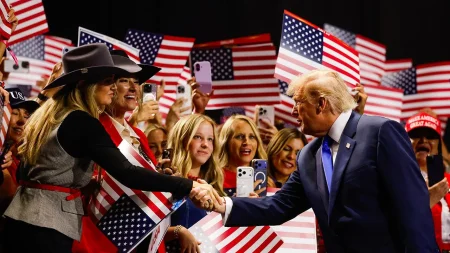
However, preparing a celebration of this magnitude in the modern sociopolitical landscape is rarely without its share of turbulence, and the planning of the Great American State Fair has mirrored the very cultural divisions it aims to heal. Originally envisioned as a broad, non-partisan, and unifying cultural assembly running from June 25 through July 10, 2026, the scheduling and execution of the festival’s musical lineup quickly became a lightning rod for contemporary political tensions. When a handful of prominent musical artists withdrew from their scheduled performances—citing discomfort with the highly charged political climate surrounding the administration—the narrative of a universally harmonious festival encountered the harsh realities of our polarized era. Rather than attempting to placate the detractors or tone down the political volume, President Trump responded in his characteristically head-on fashion, floating the bold idea to transform his opening remarks into a massive, high-energy “Make America Great Again” rally. This pivot turned what might have been a standard ceremonial ribbon-cutting into an electric political spectacle, showcasing the raw, populist energy that has come to define his political movement. For the thousands of supporters flocking to the National Mall, this strategic shift did not diminish the celebration; instead, it transformed the fair into a powerful symbol of their cultural and political resilience. This blending of traditional, non-partisan patriotism with the fiery, modern rallies of the MAGA movement encapsulates the complex duality of the modern American experience—a country simultaneously celebrating its historical unity while actively debating its modern political destiny on the very lawn where history is written daily.
The timing of this grand celebration is also deeply intertwined with high-stakes international diplomacy and monumental domestic efforts, highlighting the dual role of the American presidency as both a global force and a domestic steward. Just days prior to the opening of the fair, President Trump signed a historic Memorandum of Understanding with Iran, initiating a critical sixty-day negotiating window designed to construct a permanent, verifiable framework to prevent Tehran from ever acquiring nuclear weapons capability. This serious geopolitical maneuver serves as a stark reminder of the immense global responsibilities resting on the shoulders of the nation as it marks its 250th year, contrasting the festive atmosphere on the National Mall with the sobering realities of international statecraft. Domestically, the physical setting of the celebration has been vastly improved by a comprehensive beautification push spearheaded by the administration, which has revitalized long-neglected landmarks and breathed vibrant new life into the historic capital. Interestingly, this aggressive restoration effort has won rare, bipartisan praise from traditional Democratic rivals, who have applauded the rapid rejuvenation of the capital’s parks, monuments, and public spaces just in time for the flood of international and domestic visitors. This convergence of decisive foreign policy action, bipartisan local improvement, and grand civic celebration paints a picture of a nation that, despite its internal disagreements, remains fully capable of executing massive undertakings on both the global stage and the domestic front, ensuring that the physical and political foundation of the American capital is as strong and beautiful as the ideals it represents.
In reviving the scale and grandeur of a world’s fair for the semiquincentennial, the organizers of Freedom 250 are tapping into a deeply rooted and incredibly proud American tradition. Since the historic Philadelphia Centennial Exposition in 1876—which served to heal a nation still deeply scarred by the cataclysms of the Civil War—the United States has hosted more than two dozen variations of these grand international expositions, using them as platforms to showcase domestic ingenuity, foster economic growth, and project democratic values to the rest of the world. By coordinating closely with the broader, non-partisan America250 effort, the creators of the Great American State Fair have meticulously designed an experience that honors this legacy while adapting it for a twenty-first-century audience. The fair is not merely an exhibit of past achievements, but a living, breathing marketplace of culture, featuring regional culinary delicacies, interactive educational games, immersive historical exhibits, and themed attractions designed to showcase the diverse tapestry of American life. By offering a platform where the agricultural innovations of the plains sit alongside the technological triumphs of Silicon Valley and the artistic heritage of the Appalachian hills, the fair reminds visitors of the profound strength that lies in the country’s vast geographic and cultural diversity. It emphasizes that the story of America is not a static museum piece to be quietly observed, but an active, ongoing collaboration of millions of individuals, families, and communities, each contributing their unique threads to the grand tapestry of the nation’s enduring democratic experiment.
Ultimately, the true significance of the Great American State Fair and the broader 250th anniversary celebrations lies not in the speeches delivered by politicians, the grandeur of the military flyovers, or the scale of the attractions, but in the ordinary people who gather to experience them. In an era often characterized by digital alienation, political exhaustion, and social fragmentation, events like this serve as essential physical spaces where citizens can look one another in the eye, share a meal, and find common ground under the shade of the monuments built by their ancestors. As families from every corner of the country look up at the night sky illuminated by fireworks, or watch their children laugh on the historic carousel, they are participating in a ritual of renewal that has sustained the United States for two and a half centuries. The semiquincentennial is a powerful reminder that the American experiment is, and has always been, an unfinished masterpiece—a journey defined not by a lack of challenges, but by a persistent, stubborn capacity for self-correction, progress, and hope. By bringing together the stories, the struggles, and the triumphs of fifty states and six territories, the Great American State Fair invites every American to become an active author of the nation’s next chapter. As the festivities kick off in the heart of Washington, D.C., they send a clear message to the world: that despite its challenges, the United States remains a land of unbounded optimism, a beacon of enduring freedom, and a nation whose richest, most inspiring history is still waiting to be written by the hands of its people.