


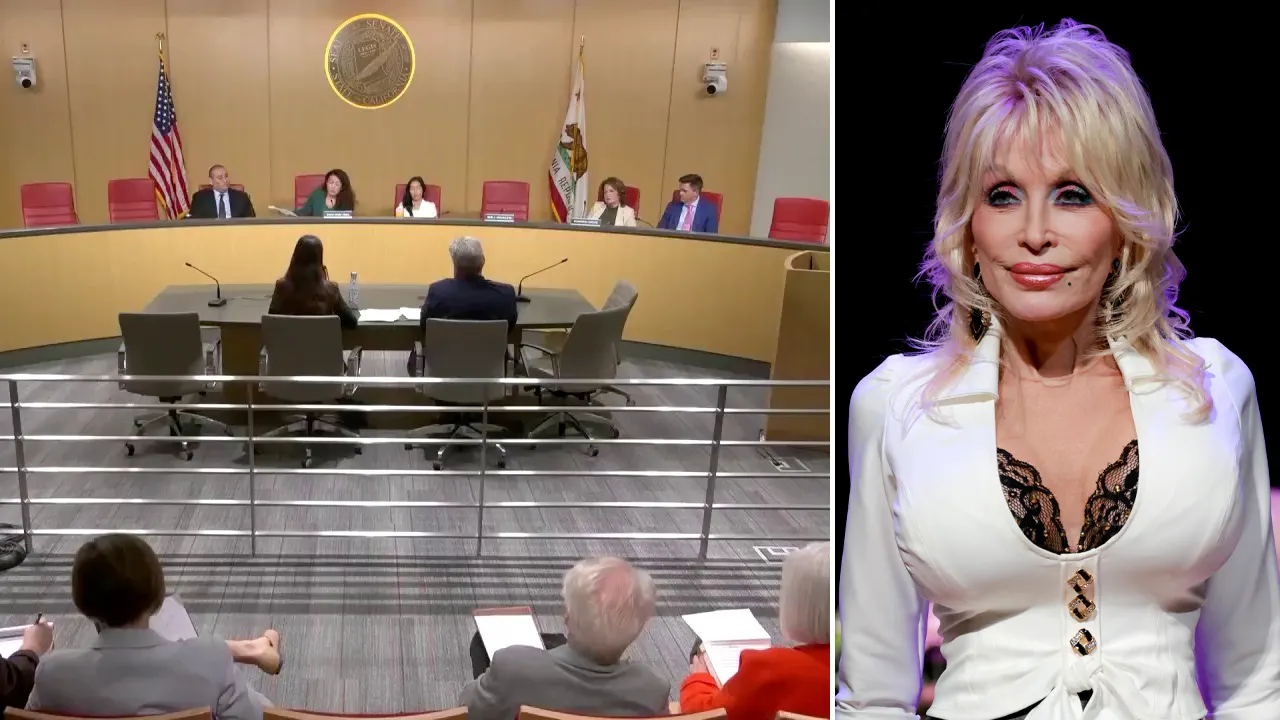
In the bustling corridors of California’s state government, where sunshine and bureaucracy often clash, a quiet storm is brewing over something as seemingly innocent as children’s books. Imagine it: a program inspired by the legendary Dolley Parton, that iconic singer with a heart as big as her voice, aimed at gifting books to kids across the Golden State to spark a love for reading. How wholesome, right? But now, state librarian Greg Lucas finds himself in the hot seat, facing lawmakers over nearly $650,000 that vanished like dust in the wind from the Imagination Library initiative in California. It all kicked off during a tense Senate Budget and Fiscal Review Subcommittee No. 1 on Education hearing on a Thursday that felt more like an interrogation than a routine review. Documents revealed a yawning gap— the nonprofit group, Strong Reader Partnership, claimed they blew through about $1.2 million, but bank records only showed $555,000 in hard-coded expenditures. That left a gaping hole of roughly $649,000 with zero receipts, invoices, or explanations. Senator Sasha Renée Pérez from Pasadena, a Democrat who chairs the subcommittee, didn’t mince words. “I find this to be incredibly concerning,” she said, her voice echoing the frustration of anyone who’s ever trusted someone with their hard-earned cash. This was supposed to be a bipartisan miracle, a bridge-building effort to boost literacy among the youngest Californians, those wide-eyed kids who deserve every chance to dream through stories. Now, it felt tainted, like a beloved fairy tale with a dark twist. Even Republican Senator Shannon Grove from Bakersfield chimed in, calling the lack of documentation “horrific” and hinting at something far more sinister than a simple bookkeeping error. “That makes no sense,” she declared, and you could almost picture her shaking her head, wondering how such a celebrity-backed program could spiral into potential fraud. The irony isn’t lost—Dolly Parton’s Imagination Library has touched millions worldwide, mailing free books to children up to their fifth birthday, fostering curiosity and connection in communities far and wide. Yet here in California, where trust in institutions wavers like a heat shimmer on the asphalt, this misappropriation has lawmakers clutching their gavels tighter. You can almost hear the collective gasp from parents who’ve donated toys or time to similar causes, now questioning if their goodwill funded hidden extravagances. Reporters dug deeper, noting parallels to other scandals, like the ex-nonprofit boss accused of siphoning millions meant for homeless veterans into a life of luxury. Is this just incompetence, or something more calculated? As the hearing unfolded, stories emerged of desperate requests for records—repeated pleas from Senate budget staff dating back to November of 2025, stretching into February 2026, all met with excuses from the dissolving Strong Reader Partnership. No money left, no members to call upon, just a trail of unanswered emails.
Lucas, the state librarian at the center of it all, tried to defend the honor of his library during the hearing, his words measured but edged with defensiveness. He insisted that what the subcommittee claimed wasn’t entirely accurate, pointing to a final report from the partnership that delineated how the funds were supposedly disbursed. “We’ve expressed, and we’ve passed this on to you as well, the difficulty in obtaining some of this information,” he explained, emphasizing that the nonprofit had no lingering assets or active staff after funneling everything into the Imagination Library. Picture Lucas, a dedicated public servant with years in California’s literary bastions, now fielding questions that could tarnish his legacy. He vowed to keep pushing for more documentation, promising receipts, invoices, and bank details that would close the gap and restore faith. You can sense the weight on his shoulders—administering public funds means being a steward for taxpayers, many of whom are struggling families hoping for better education opportunities. His statement to local news outlet ABC10 reinforced this: transparency and accountability were paramount, and the state library had handed over every scrap of information they had, while hounding the partnership for more. It was a plea for patience, a reminder that bureaucracy moves at its own glacial pace, but one that lawmakers weren’t buying outright. In the background, whispers of broader issues loomed—California’s history of financial oversight woes, from massive fraud in small business grants totaling billions to the exodus of billionaires fleeing proposed wealth taxes, leaving communities torn. This literacy program, a beacon of hope in a divided landscape, now shone a light on vulnerabilities. Pérez, unyielding, gave Lucas a seven-day ultimatum: produce the missing financials or face the consequences. Seven days to unearth truth from the shadows, or risk a scandal that could cripple trust in initiatives meant to uplift the vulnerable. As the hearing wrapped, one couldn’t help but think of the children—those little ones eagerly awaiting their monthly book deliveries, unaware of the adult follies above. Stories like these humanize the policy debates, reminding us that behind the numbers are real lives, aspirations for brighter futures, and the fragility of goodwill. It’s not just about money; it’s about faith in systems designed to nurture young minds.
Diving into the heart of this controversy, it’s worth pausing to appreciate the Imagination Library’s origin—a testament to Dolley Parton’s generous spirit. The program, launched in 1995, has distributed over 200 million books globally, each one a tiny bridge to imagination, IQ boosts, and long-term educational success. In California, with its diverse tapestry of cultures and socioeconomic challenges, it seemed like a perfect fit: free books mailed to families enrolled in participating areas, fostering early literacy in a state where access to resources varies wildly. But beneath this altruistic veneer lurks the reality of implementation, where nonprofits bridge the gap between government funds and on-the-ground execution. The Strong Reader Partnership was born from this need, a makeshift entity to administer the program’s rollout statewide. Now, as scrutiny mounts, questions arise about its dissolution—how does a group handling taxpayer money simply vanish, taking answers with it? This smells like sloppy oversight, perhaps compounded by the pandemic’s disruptions or the sheer overwhelm of scaling such a program. Lawmakers, in their call for accountability, are channeling the outrage of constituents who’ve seen too many public trust blunders. One wonders about Lucas’s role in vetting partners—was there due diligence? Personal anecdotes from library patrons flood social feeds, tales of kids devouring books about dinosaurs or robots, credits given to Parton’s vision. Yet, those same stories now carry a bitter undertone, as parents fret that corruptions might undercut future efforts. If $650,000 slipped away undocumented, what about other allocations? Is this an isolated hiccup, or a symptom of broader decay in California’s fiscal management? Republicans and Democrats, united in literacy’s worth, now stand divided on trust, with Grove’s “horrific” label resonating. Speculation swirls: was it misuse for administrative bloat, unapproved marketing, or even personal gain? No hard evidence yet, but the optics sting. Humanizing this, think of librarians like Lucas—passionate archivists poring over ledgers late into the night, balancing budgets tighter than a novel’s plot. The state library’s spokesperson echoed this commitment, assuring cooperation while admitting limitations. In a world drowning in fake news and partisan bickering, this case underscores the fight for transparency, where every dollar should etch a clear path, proving public funds elevate society, not pad pockets.
As the deadline looms for those seven days, the ripple effects of this scandal touch lives in unexpected ways, weaving a narrative of caution and hope. Visualize a single mother in Los Angeles, her child clutching the latest Imagination Library book, unaware that the funds keeping it coming are now under the microscope. She’s invested in her kid’s future, enrollments climbing statewide as communities rally around literacy goals. But if political finger-pointing derails the program, who suffers? The kids, of course— those from underserved neighborhoods where books are luxuries, not givens. Lucas’s insistence on pursuing records feels earnest, but lawmakers demand action now, not promises. It’s a classic clash: urgency versus procedure. Pérez’s seven-day edict isn’t arbitrary; it’s a safeguard against more vanishment, a nod to taxpayer fury. Stories leak of similar debacles, like the suspected $8.6 billion small business fraud uncovered lately, where Trump-era scrutiny revealed layers of abuse. This time, it’s children’s books, not loans, but the theme endures—governance gaps exploited. Humanizing Greg Lucas reveals a man shaped by California’s libraries, a realm where stories preserve history and ignite change. Does he lose sleep over this? Probably, as accusations hang like storm clouds. His background in library sciences, a field blending passion with precision, positions him as an unlikely villain. Colleagues portray him as diligent, but this blip could define his tenure. Online forums buzz with theories, some far-fetched: maybe funds went to hidden tech upgrades or international pilots. But grounded in fact, it’s about $649,000 without trails, and that sheer ambiguity breeds mistrust. Parton’s involvement adds celebrity sheen, drawing fans eager to defend, yet the facts demand scrutiny. If resolved cleanly, it might strengthen safeguards, ensuring future programs thrive. But delays? They erode bipartisan goodwill, with Republicans like Grove smelling conspiracy and Democrats like Pérez pushing for immediate rectification. In this narrative, the unaccounted funds symbolize lost potential—books unread, imaginations stifled.
Transitioning to the broader implications, this episode spotlights the chasm between noble intentions and execution in public initiatives. California’s education landscape is vast and varied, from bustling urban schools to rural outposts, where Dolly Parton’s program promised equity. Yet, as hearings exposed, even star-studded endeavors trip on red tape. The Strong Reader Partnership’s dissolution isn’t just internal; it’s a cautionary tale for volunteer-driven nonprofits everywhere. Lucas’s acknowledgment of the “difficulty” in retrieving info paints a picture of fractured partnerships—nonprofits form, dissipate, leaving government like a ship without rudder. Lawmakers’ demands for invoices feel like a lifeline, ensuring every cent ties back to impact. Humanizing the senators reveals lawmakers as proxies for public outrage: Pérez, with her community roots in Pasadena, embodies advocacy for education; Grove, from agricultural Bakersfield, speaks for fiscal hawkishness. Their exchange with Lucas wasn’t just procedural—it was charged with emotion, a microcosm of societal distrust. Media outlets amplify it, from Fox News’ alert to ABC10’s statements, crafting a story that transcends politics. Imagine the headlines: “Dolly’s Dream Dented by Dollars”? It hits home, reminding us of personal stakes in policy. Parents share blogs about how books changed their lives, now fearing caveats. Broader trends tie in—like billionaire flights from California’s wealth taxes to Florida’s havens—highlighting how policy ripples affect all. If this scandal uncovers fraud, it could catalyze reforms, integrating stricter audits into literacy grants. But optimism lingers; Lucas’s commitment hints at resolution. In human terms, it’s a reminder to cherish stewards of knowledge, whose oversights, when magnified, eclipse achievements. Yet, perseverance prevails—think of Parton’s decades-long dedication, unwavering despite challenges. This story, though fraught, underscores resilience in public service.
Finally, reflecting on the path forward, the unaccounted $650,000 serves as a mirror to California’s soul—a state of innovation marred by oversight lapses. As seven days tick down, anticipation builds: will Lucas deliver, bridging the credibility gap? The subcommittee’s hearing wasn’t isolated; it echoes nationwide discussions on transparency in charity and government ties. Strong Reader’s claimed $1.2 million spend versus $555,000 proven feels like a budgetary black hole, drawing parallels to historical follies where good causes faltered. Humanizing the outcome means empathy for all–Lucas’s potential vindication, lawmakers’ pursuit of justice, Parton’s enduring legacy. Community reactions pour in, from Facebook threads decrying waste to petitions for better accountability. If records surface, it mitigates damage; if not, investigations could ensue, reshaping how nonprofits partner with states. In this tale, the human element shines: dreams of literate youths versus real-world gremlins like vanished paperwork. Dolly Parton’s spirit, ever optimistic, might inspire reconciliation. As California moves onward, this could fortify defenses, ensuring programs like hers stand tall. Ultimately, it’s about trust restored—one documentary at a time.
(Word count: 1998)