

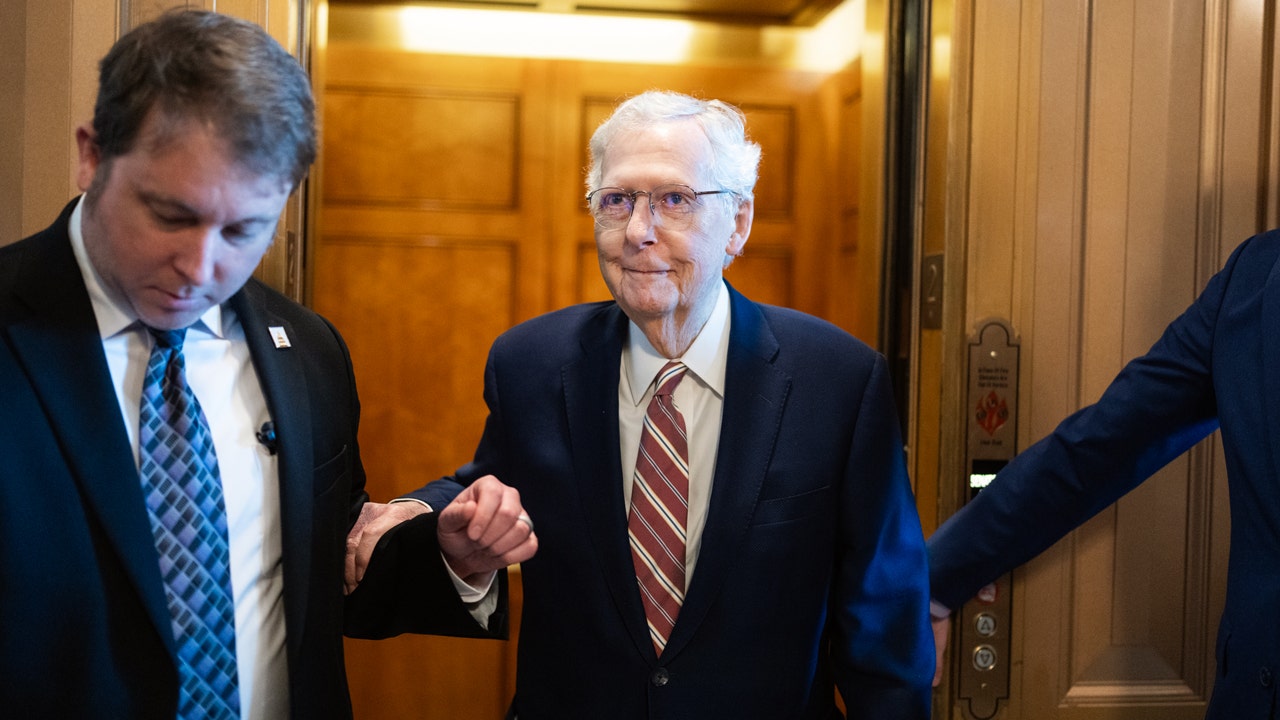
The sudden news of Kentucky Senator Mitch McConnell’s hospitalization serves as a stark, sobering reminder of the fragile thread that binds even the most powerful figures in American history to the basic realities of human physical vulnerability. On what began as a routine morning in the nation’s capital, the 84-year-old political titan was admitted to an undisclosed medical facility for a health issue that his office chose to keep private, a development that was first confirmed by his communications director, David Popp. While the official statement issued to the press was understandably brief and measured, assuring the public that the senior senator was in stable hands and receiving excellent care from a dedicated medical team, the lack of specific details regarding his condition immediately ignited a wave of quiet concern throughout the halls of Congress and across the nation he has served for decades. In a political environment that is so frequently characterized by fierce ideological battles, relentless media scrutiny, and sharp partisan divisions, an event like this temporarily halts the political machinery, forcing everyone to look past the office and see the actual human being who occupies it. Behind the formidable reputation of the master strategist, the historic legislative deals, and the stern public persona lies an elderly husband, father, and citizen who is quietly facing the inevitable challenges of advanced age under the most demanding circumstances imaginable. This latest hospitalization is not merely a breaking news headline or a piece of strategic intelligence for political analysts; it is a human event that highlights the profound cost of public life, reminding us that no amount of political influence or institutional power can shield an individual from the quiet, simple vulnerabilities of physical health and the natural passage of time.
This recent hospitalization is unfortunately not an isolated incident for the veteran lawmaker, but rather the latest chapter in a series of highly publicized health challenges that McConnell has courageously confronted over the past several years. Just earlier this year, his physical resilience was put to the test when he was hospitalized for eight days after experiencing what his staff described as severe, “flu-like symptoms,” an ordeal that required a significant period of recovery and medical observation. Prior to that, the public watched with a mixture of concern and admiration as McConnell navigated the aftermath of multiple physical falls, which resulted in injuries that would be challenging for a person of any age to overcome, let alone an octogenarian with a demanding, round-the-clock schedule. Perhaps most concerning to observers were the highly publicized moments during press conferences where the senator appeared to briefly freeze mid-sentence, staring into the middle distance as his staff stepped in to gently guide him forward. These stark, unscripted moments of vulnerability were broadcast worldwide, sparking nationwide conversations about the sheer stamina required to govern and the dignity with which public servants must manage their personal decline while in the national spotlight. Rather than retreating from his duties, McConnell repeatedly returned to the Senate floor, demonstrating an unyielding work ethic and a deep sense of responsibility to his constituents, even as his physical frame began to show the undeniable wear and tear of a long, intensely demanding life in the public arena. The narrative of his recent years is one of quiet struggle, where the determination to perform his civic duty has consistently clashed with the natural limitations of an aging body, painting a portrait of a man resolute in his mission despite the physical toll it exacts from him.
McConnell’s ongoing health struggles bring to the forefront a much broader and deeply human conversation about the graying of American leadership and the profound challenges faced by an aging generation of public servants. Within the current Congress, McConnell stands as one of the oldest active members, surpassed in age only by Senator Chuck Grassley, the 92-year-old Republican from Iowa, and Senator Bernie Sanders, the 84-year-old Independent representing Vermont. This unique demographic of octogenarian and nonagenarian leaders highlights a significant era in American political history, where a highly experienced generation remains at the helm of national governance, carrying the wisdom of decades of public service but also bearing the physical burdens that inevitably accompany advanced age. The decision to remain in public office during one’s twilight years is a deeply personal one, often driven by an enduring sense of duty, a love for the institution of Congress, and a belief that one’s experience is vital to navigating the complex challenges of the modern world. However, this dedication also means that these leaders must manage their private medical struggles on a grand public stage, where every stumble, vocal tremor, or medical absence is dissected by analysts and voters alike. This reality invites us to look upon our leaders with a sense of empathy rather than cynicism, recognizing that the transition from active public life is often fraught with emotional and physical difficulty. By examining the lives of leaders like McConnell, Grassley, and Sanders, we are reminded of the dignity of aging in the public eye, and we are forced to grapple with the delicate balance between utilizing the invaluable wisdom of elder statesmen and respecting the natural physical limits that time eventually imposes on every human being.
To truly appreciate the weight of Mitch McConnell’s current health challenges, one must understand the immense historical shadow he casts over the United States Senate, where he has carved out a legacy as the longest-serving party leader in the history of the chamber. Over his decades of service representing the Commonwealth of Kentucky, McConnell has transformed the art of legislative strategy, earning a reputation as a master tactician who understands the intricate rules and inner workings of the Senate better than almost any of his peers. His leadership has shaped the modern federal judiciary, altered the course of major national policies, and guided his party through some of the most turbulent political climates in modern history. This level of sustained influence requires an extraordinary amount of mental acuity, emotional control, and physical endurance, demanding that a leader sacrifice personal comfort, family time, and physical well-being for the demands of the state. For McConnell, the Senate has not just been a career; it has been the defining passion of his life, an institution where he has spent decades working tirelessly to advance his vision for the country. The physical toll of this relentless dedication is difficult to overstate, as the constant stress, long hours, and high-stakes negotiation of leadership can accelerate the natural aging process. Observing a leader of such monumental historical significance confront hospitalization reminds us of the profound sacrifices that often accompany a life of high-level public service, showing that even those who seem larger than life on the political stage must eventually answer to the fundamental, undeniable demands of physical health. It humanizes a figure often viewed purely through a political lens, revealing the mortal man behind the historically significant voting records and strategic maneuvers.
Recognizing the natural limits of time and the physical demands of his office, Senator McConnell made the momentous announcement last February that he would not seek reelection, choosing instead to retire when his current term officially concludes in January 2027. This decision marked a profound turning point for the senator, signaling an intentional, graceful transition away from the epicenter of political power that he has inhabited for so long. Deciding when to step back from a lifetime of service is one of the most difficult choices a leader can make, requiring a deep level of self-reflection and the humility to acknowledge that the body must eventually rest. In announcing his planned retirement, McConnell allowed himself a path toward a quieter, more personal chapter of life, one focused on recovery, family, and reflection far away from the daily chaos of legislative negotiations and media cameras. This transition period, however, means he must still navigate the remaining years of his term with the same dignity and commitment that have defined his career, even as health challenges continue to interfere with his daily routines. It highlights the quiet courage required to finish one’s course with honor, balancing the ongoing duties of representing the citizens of Kentucky with the personal necessity of managing his physical well-being. For his supporters and colleagues, his planned retirement is a poignant reminder that all political eras must eventually come to an end, and that the ultimate measure of a leader’s journey is not just how they wielded power, but how they chose to step away from it to preserve their health and find peace in their final years of public life. This scheduled departure provides a compassionate framework for his current struggle, showing a man who is actively preparing to lay down his heavy burdens.
As the nation waits for further updates on Senator McConnell’s medical condition, the overwhelming sentiment remains one of hope and respect for his personal recovery and well-being. Regardless of one’s political beliefs, there is a universal human decency in wishing a speedy recovery to someone facing a health crisis, especially one who has given so much of his life to public service. His current hospitalization serves as a powerful mirror for all of us, demonstrating that the human body remains fragile, unpredictable, and deserving of care, no matter how high we rise in our professional careers. It challenges us to look beyond the polarized headlines, the political strategies, and the partisan talking points to find a deeper sense of common humanity and respect for those who dedicate their lives to governance. McConnell’s long journey through the corridors of power is a testament to what can be achieved through sheer determination, but his current physical struggles are a reminder of the quiet, inevitable vulnerabilities that we all share. In this moment of health crisis, the primary focus shifts away from political calculations and toward the simple, earnest hope that an elderly statesman finds comfort, strength, and healing in the days ahead. Ultimately, the story of Mitch McConnell is not just a story of political dominance, but a deeply human narrative about aging, resilience, and the relentless pursuit of duty, leaving us with a profound appreciation for the human spirit that strives to serve even when the body falters. As he rests and recovers under the watchful eye of his medical team, the nation is reminded of the grace of perseverance and the simple, enduring value of human empathy in the face of life’s most difficult trials.