

1. A New Watchful Eye Over the Nation’s Capital
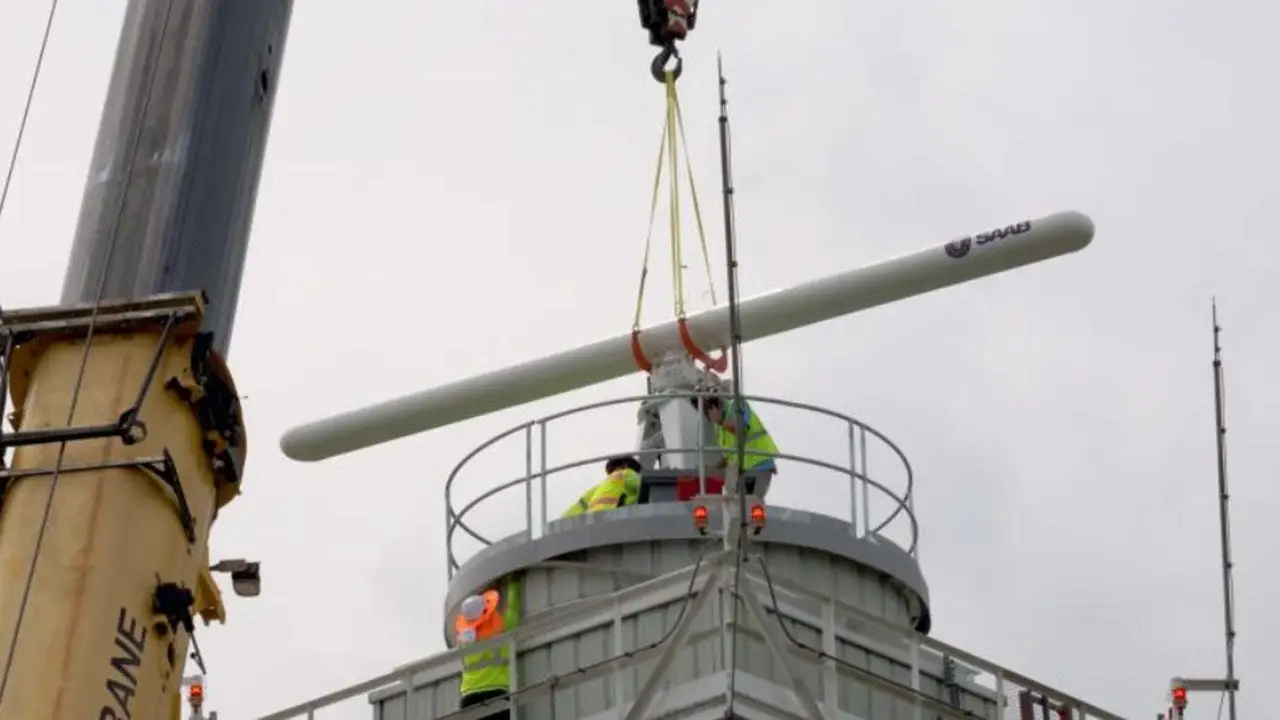
On a quiet Friday morning, a small but deeply significant piece of technology began its work at Ronald Reagan Washington National Airport, just a few miles from the monuments that symbolize American strength and resilience. The Surface Movement Radar, known as SMR-4, was switched on, giving air traffic controllers a sharper, more reliable view of every aircraft and vehicle moving across the airport’s runways and taxiways. To most travelers, this installation might seem like just another bureaucratic improvement—a technical upgrade buried in the routine business of aviation. But for the families who lost loved ones in the dark waters of the Potomac River in January 2025, for the weary controllers who carry the weight of that night in their memories, and for the flying public who trust their lives to unseen hands, this radar is far more. It is a promise. It is a small but tangible step toward making sure that the catastrophic failures that led to 67 deaths are never repeated. Transportation Secretary Sean Duffy announced the installation with a tone of urgency and resolve, framing the radar not as a luxury but as a “reinforcement tool” in an ongoing mission to protect every passenger, every crew member, and every person who works on the airfield. Standing at the threshold of a new chapter in aviation safety, the airport that serves the capital of the free world is now equipped with a second pair of eyes—one that sees through fog, through rain, through the confusion of a busy runway, and through the darkness of a January night that must never happen again.
2. Technology That Sees What Human Eyes Cannot
The new SMR-4 radar system is not just a piece of hardware; it is a transformative layer of awareness for air traffic controllers who manage the high-stakes ballet of aircraft arriving and departing every few minutes. Unlike older systems, which could sometimes struggle to distinguish between a large airliner and a service vehicle, or become obscured during heavy weather, this advanced radar provides a clear, real-time portrait of all activity on the ground. It tracks the precise movement of planes and vehicles along the intricate maze of runways and taxiways, even in the poorest visibility. For a controller sitting in a dim tower at two in the morning, watching a screen while coordinating arrivals, departures, and ground traffic, this technology is like having a set of high-resolution glasses when previously they were squinting in the twilight. Secretary Duffy emphasized that the radar “will give air traffic controllers a clearer portrait of airport activity,” and those words carry weight for anyone who understands the enormous cognitive demands of the job. The human mind can only hold so many moving pieces; the SMR-4 helps bridge that gap, reducing the chance of miscommunication, miscalculation, or outright collision. It does not replace the human judgment that remains at the heart of aviation safety, but it supports it, augments it, and sometimes catches the small mistakes before they become catastrophic ones. In the aftermath of the deadly crash, there were many conversations about what went wrong—about airspace congestion, about training gaps, about oversight failures. But at the most elemental level, the tragedy was a failure to see. Now, a system has been installed that is purpose-built to ensure that the next time a jet and a helicopter share the same airspace or the same runway, the people responsible for untangling that dangerous knot will have the clearest possible picture of what is actually happening.
3. An Investment in the Future, Paid for by the Past
Reagan National Airport is now the fifth airport in the United States to receive the SMR-4 radar, and Newark Liberty International Airport received its own version just days earlier. This rollout is part of a broader $30.5 million investment in safety and technology upgrades at Reagan National over the next three years—a figure that represents not merely money, but a reordering of priorities. For decades, the Federal Aviation Administration has operated on aging infrastructure, with controllers sometimes using systems that were decades old, held together by ingenuity and sheer will. The upgrades signal a shift toward a more modern, resilient air traffic control system. But the investment is also a response to grief. Every dollar spent here is tied to the memory of January 29, 2025, when American Airlines Flight 5342, a regional jet operated by PSA Airlines, collided with a U.S. Army Black Hawk helicopter over the Potomac River, sending both aircraft into the frigid water and leaving wreckage scattered along the shoreline. All 64 people on the American Eagle flight and all three soldiers aboard the helicopter were killed. The dead included figure skaters, coaches, a group of hunters returning from a trip, a young mother, and a dedicated team of flight crew members. For their families, the investments in radar systems and safety reforms are not abstract policy initiatives; they are the only possible justice left in the wake of unfathomable loss. The installation of the SMR-4 is a quiet acknowledgment that the system that failed them must be rebuilt, layer by layer, until the sky above Washington is as safe as the good intentions that built it.
4. The Human Toll Behind the Headlines
It can be easy to read the statistics—67 dead, one midair collision, two aircraft—and overlook the individual stories that make up that terrible accounting. There was the young figure skating champion whose dreams were cut short, her coach who had dedicated a lifetime to nurturing the next generation, the off-duty employees returning home from work, the soldiers who had devoted themselves to serving their country and were simply trying to get back to base. Each of them had a family waiting somewhere, a dinner table with an empty chair, a phone that would never ring again. In the days after the crash, the nation watched as recovery teams searched the icy river, retrieving remnants of the aircraft and the bodies of the victims with solemn care. The grief was collective, but it was also intensely personal. For the families, the federal government’s admission of liability was a small but important step—an acknowledgment that this tragedy was not an act of fate or a freak accident, but the result of failures that could have been prevented. The National Transportation Safety Board’s investigation confirmed what many had suspected: this crash was not the product of a single mistake by a single person on a single night. It was the culmination of long-standing gaps in airspace design, safety oversight, and risk management by both the Federal Aviation Administration and the U.S. Army. That conclusion is both devastating and, in some strange way, reassuring. It means the crash was not inevitable. It means that with the right changes, with the right investment, with the right attention to detail, the next similar situation could be caught in time. The new radar at Reagan National is one of those changes—a monument built not of stone, but of radio waves and software, dedicated to the memory of the lives lost and to the protection of the lives still to come.
5. The NTSB’s Verdict: A Failure of Systems, Not Just Souls
When Jennifer Homendy, chairwoman of the National Transportation Safety Board, released the final report in January 2026, her words were measured but heavy with frustration. “This complex and comprehensive one-year investigation identified serious and long-standing safety gaps in the airspace over our nation’s capital,” she said. “Sadly, the conditions for this tragedy were in place long before the night of Jan. 29.” That statement captures the true tragedy of the crash: it was a disaster waiting to happen, a convergence of structural weaknesses that had been tolerated for years. The airspace around Washington, D.C., is among the most restricted and congested in the world, with military helicopters, commercial jets, private aircraft, and government flights all sharing a limited, complicated patchwork of corridors and altitudes. The NTSB found that the FAA and the Army had failed to properly assess the risks of that busy airspace, had not adequately trained personnel for the specific challenges of the area, and had not implemented recommended safety measures that could have prevented the collision. The report was not just a critique; it was a call to action. For the families, it was validation. For the aviation community, it was a wake-up call. And for the Transportation Department, it was the blueprint for the changes now underway. The SMR-4 radar is one piece of that blueprint, but it is not the only piece. Over the coming years, the expectation is that more technology, more training, and more rigorous oversight will follow, transforming a system that failed into one that protects. It is a long road, and the scars of that January night will never fully heal, but each new installation is a step forward, a commitment that the lessons of the past will not be forgotten.
6. Remembering the Fallen by Building a Safer Sky
As the sun sets over the Potomac River, the waters that once held so much grief now reflect the lights of a busy airport operating into the night. Planes land and take off, carrying travelers who may never know the name of the radar system that quietly watches over them. But somewhere in the control tower, a controller glances at a screen and sees something that might have been invisible before: a small vehicle crossing a taxiway, a nearby aircraft, a potential conflict that can now be spotted and resolved seconds earlier. That second is the difference between a close call and a catastrophe. It is the difference between a family receiving a phone call saying “I’m home safe” and a family receiving a visit from a chaplain and a military officer. The installation of the SMR-4 at Reagan National is a reminder that safety is never finished, that the work of protecting human life is ongoing and demands constant investment, constant vigilance, and constant humility in the face of the skies. The 67 people who died in January 2025 cannot be brought back. Their families will carry that loss for the rest of their lives. But their deaths have not been in vain if they have forced a reluctant system to change, to modernize, and to prioritize safety above convenience. As Transportation Secretary Duffy said, the goal is to deliver a world-class air traffic control system that America deserves. With each new radar, each new upgrade, each new commitment to learning from tragedy, that goal comes a little closer. The airport in the shadow of the nation’s capital now stands as a symbol of that promise—a place where grief has been transformed into action, and where the memory of those lost is honored every time a screen lights up with clarity, every time a controller sees more clearly, and every time another flight lands safely in the heart of Washington.